
UK Road Traffic Signs & Symbols: Meanings and Uses
Written by the Technical Team at Caledonia Signs
Last reviewed: September 2026
What Are UK Road Traffic Signs and Why Are They Important?
UK road traffic signs provide a standardised way of communicating important information to drivers, cyclists, pedestrians and other road users. They are used to warn of hazards, give mandatory instructions, indicate restrictions and provide directions or useful information, helping people understand what is expected of them as they travel on or near the road. Their distinctive shapes, colours and graphical symbols allow important messages to be recognised quickly, often without relying on lengthy written instructions.
In Great Britain, the design and use of road traffic signs are primarily prescribed by the Traffic Signs Regulations and General Directions 2016 (TSRGD). These regulations establish the designs and conditions of use for traffic signs, road markings, traffic signals and certain pedestrian, cycle and equestrian crossings used on or near roads in England, Scotland and Wales*. Supporting guidance is provided through the Department for Transport's Traffic Signs Manual, helping ensure that signs are designed, positioned and used consistently. *This directory primarily covers road traffic signs prescribed for use in Great Britain; separate road traffic signing regulations apply in Northern Ireland.
Road traffic signs can be divided into a number of recognisable groups according to the type of information they communicate. These include warning signs, regulatory and prohibition signs, mandatory signs, speed limit signs, direction signs, information signs, parking and waiting restriction signs, temporary road works signs and signs for pedestrians and cyclists. Shape and colour also play an important role in identification, with triangular signs commonly used for warnings, circular signs frequently giving orders or restrictions, and rectangular signs typically providing directions or other information.
This directory provides a practical guide to UK road traffic signs and their meanings, explaining what individual signs indicate, how they are recognised and where they may commonly be encountered. Whether you are checking the meaning of an unfamiliar road sign, learning about UK traffic signs or looking for information about a particular warning, restriction or direction sign, this guide helps make road signage easier to identify and understand so that road users can respond appropriately to the information being displayed.
| Symbol | Code | Name | Meaning | Typical use |
|---|---|---|---|---|
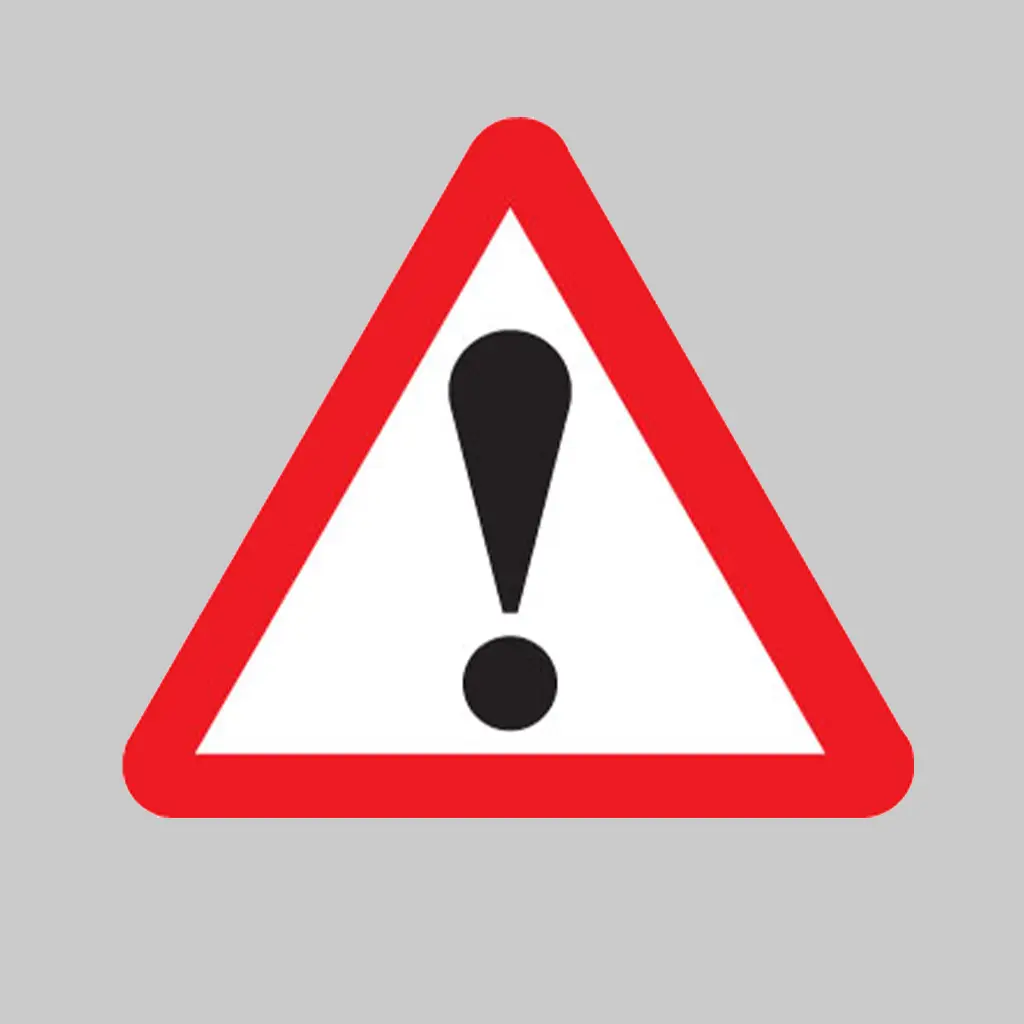 |
Diagram 562 | Other Danger Ahead | The Other Danger Ahead symbol (Exclamation Mark) warns drivers that an unusual or specific hazard lies ahead which is not represented by another standard warning symbol. The sign features a black exclamation mark inside a red-bordered triangle and must be accompanied by a supplementary plate stating the nature of the danger. |
This sign is used where drivers need advance warning of hazards such as a blind summit, hidden dip, road liable to flooding, blasting operations or pedestrians crossing where no more appropriate standard warning symbol is available. The supplementary plate provides the information needed to explain what drivers should expect. Diagram 562 may also be used for temporary or occasional hazards, including accidents, fallen trees, smoke, frost damage or overhead cable repairs. In these situations, the sign should remain in place only while the stated hazard exists or is expected to recur in the near future. Using the Other Danger Ahead sign helps ensure drivers receive clear advance warning of hazards that cannot be communicated adequately by another prescribed traffic symbol. When combined with the correct supplementary plate, it gives motorists time to reduce speed, increase awareness and respond appropriately to the particular danger ahead. |
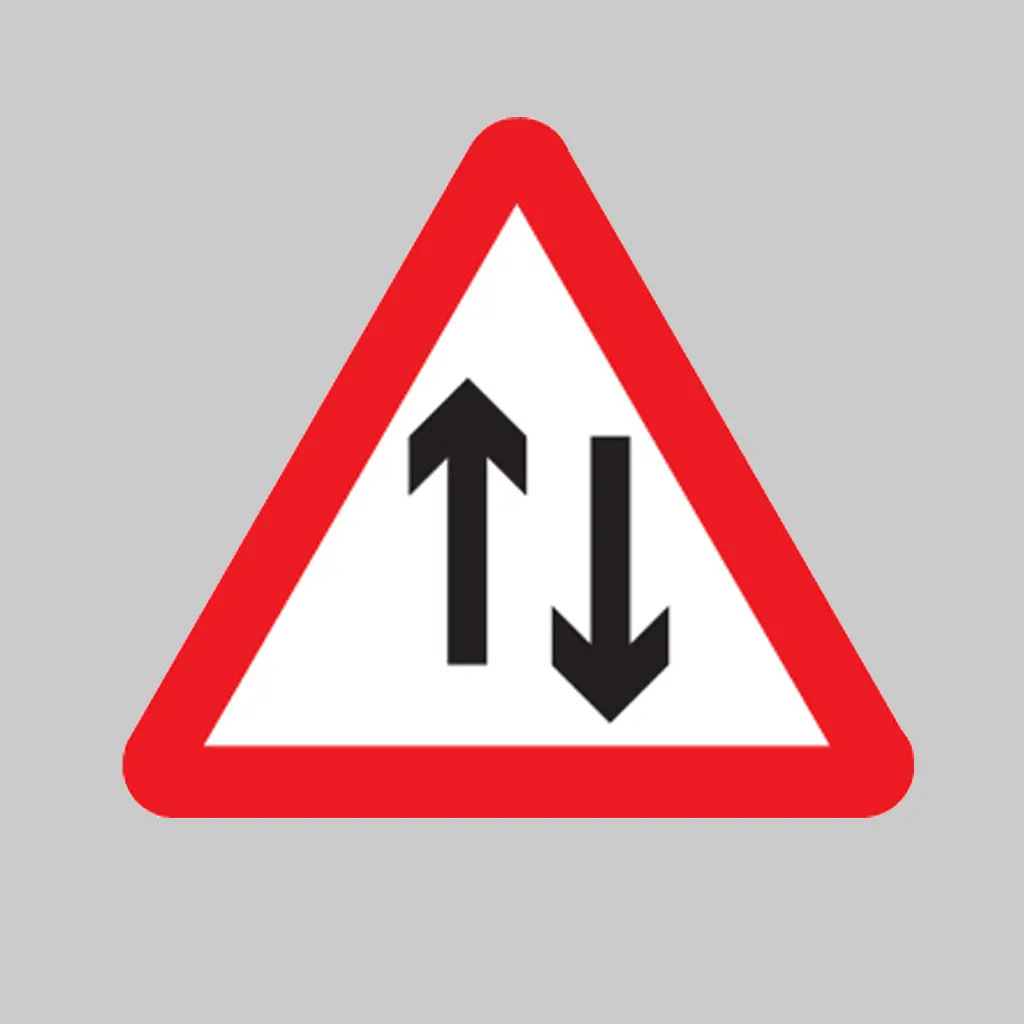 |
Diagram 521 | Two-Way Traffic | The Two-Way Traffic symbol warns drivers that traffic travels in both directions on the road ahead. It is used to alert motorists that they may encounter vehicles approaching from the opposite direction, particularly where they are leaving a one-way road or section of carriageway. |
This sign is commonly used where a one-way road changes to two-way traffic, or where drivers may not otherwise expect oncoming vehicles. It provides advance warning so road users can adjust their position, speed and awareness before entering the two-way section. The sign may also be positioned where temporary traffic arrangements, road layouts or previous restrictions could make the change in traffic flow less obvious. Clear warning is especially important where drivers have been travelling for some distance without meeting opposing traffic. Using the Two-Way Traffic sign helps reduce the risk of head-on conflicts and incorrect road positioning by reminding drivers that vehicles may approach from the opposite direction. It supports safer transitions between different traffic arrangements and encourages drivers to remain within the correct side of the carriageway. |
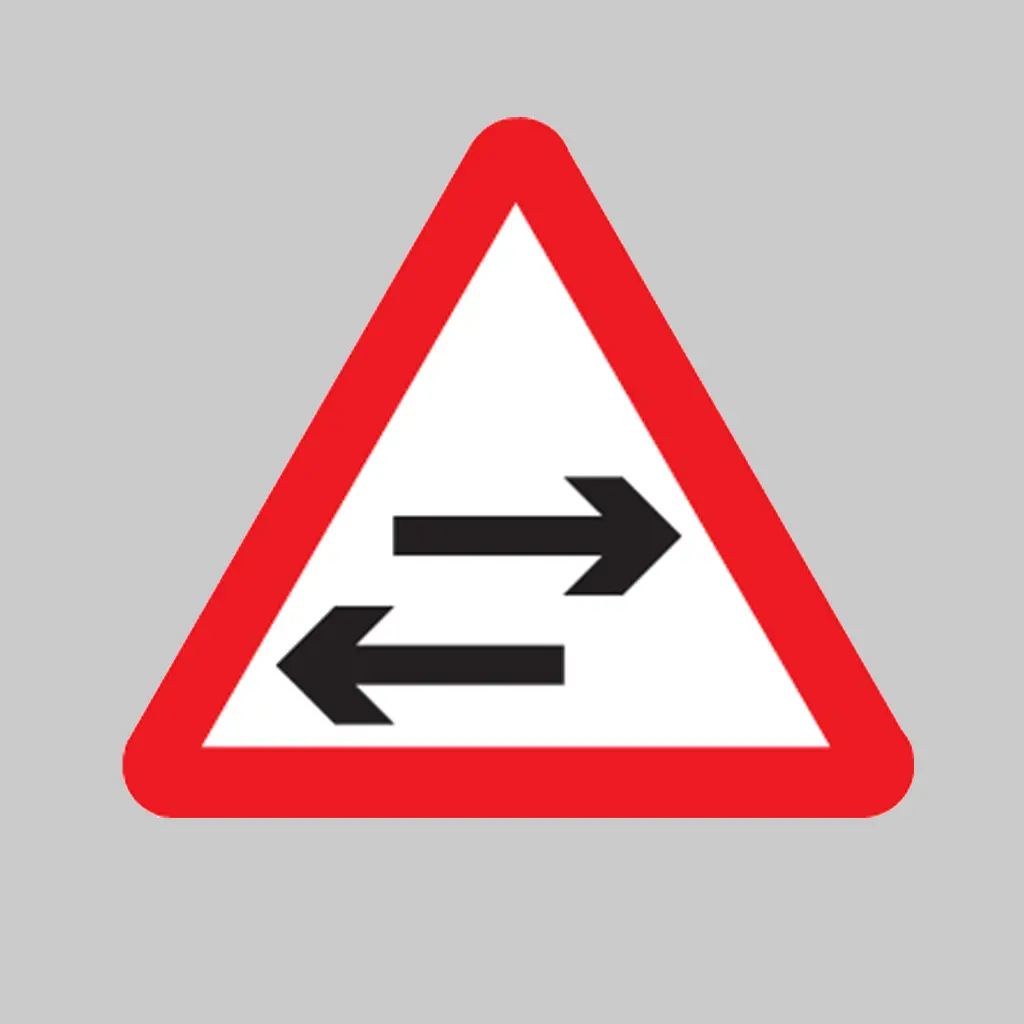 |
Diagram 522 | Two-way Traffic on Route Crossing Ahead | The Two-way Traffic on Route Crossing Ahead symbol warns drivers that the road they are approaching crosses a route carrying traffic in both directions. It alerts motorists that vehicles may approach the junction from both the left and right, so they should be prepared to check carefully in each direction before proceeding. |
This sign is particularly useful on one-way roads or other routes where drivers may have become accustomed to traffic approaching from only one direction. By warning that the crossing road carries two-way traffic, it helps drivers anticipate a different traffic pattern at the junction ahead. The sign should be positioned in advance of the relevant junction where the presence of two-way traffic may not be immediately obvious. Under the TSRGD, Diagram 522 may also be used with a distance plate to indicate how far ahead the crossing route is located. Using the Two-way Traffic on Route Crossing Ahead sign helps reduce the risk of drivers entering a junction without checking for vehicles from both directions. It supports safer observation, better speed adjustment and more appropriate positioning when approaching a crossing road with opposing traffic flows. |
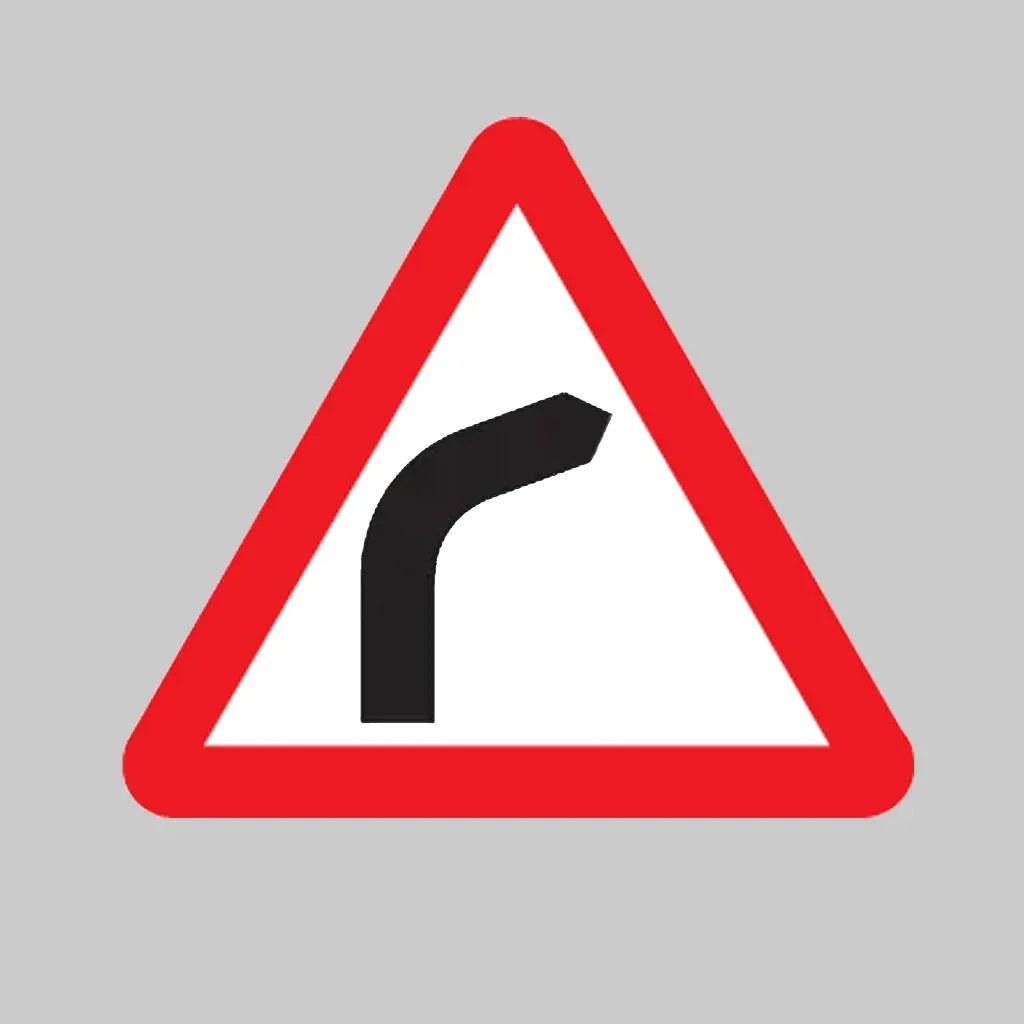 |
Diagram 512 | Bend to the Right | The Bend to the Right symbol warns drivers that the road ahead changes direction sharply or significantly to the right. It is intended to alert motorists that they may need to reduce speed and adjust their road position before entering the bend, particularly where the severity of the curve is not immediately obvious. |
This sign is generally used in advance of a right-hand bend that drivers could find difficult to negotiate safely at their normal approach speed. Factors such as the radius of the bend, visibility, road surface and approach speed can all influence whether the warning sign is appropriate. The sign should be positioned far enough before the bend to give drivers sufficient time to recognise the hazard and respond safely. It may also be used with supplementary plates where additional information is needed, such as warnings about adverse camber, the need to keep in a low gear or the possibility of oncoming vehicles occupying the middle of the road. Using the Bend to the Right sign helps drivers anticipate a significant change in road direction and encourages them to approach at a suitable speed. Correct and selective use of Diagram 512 can improve awareness of bends that are difficult to judge in advance and help reduce the risk of loss-of-control or run-off-road collisions. |
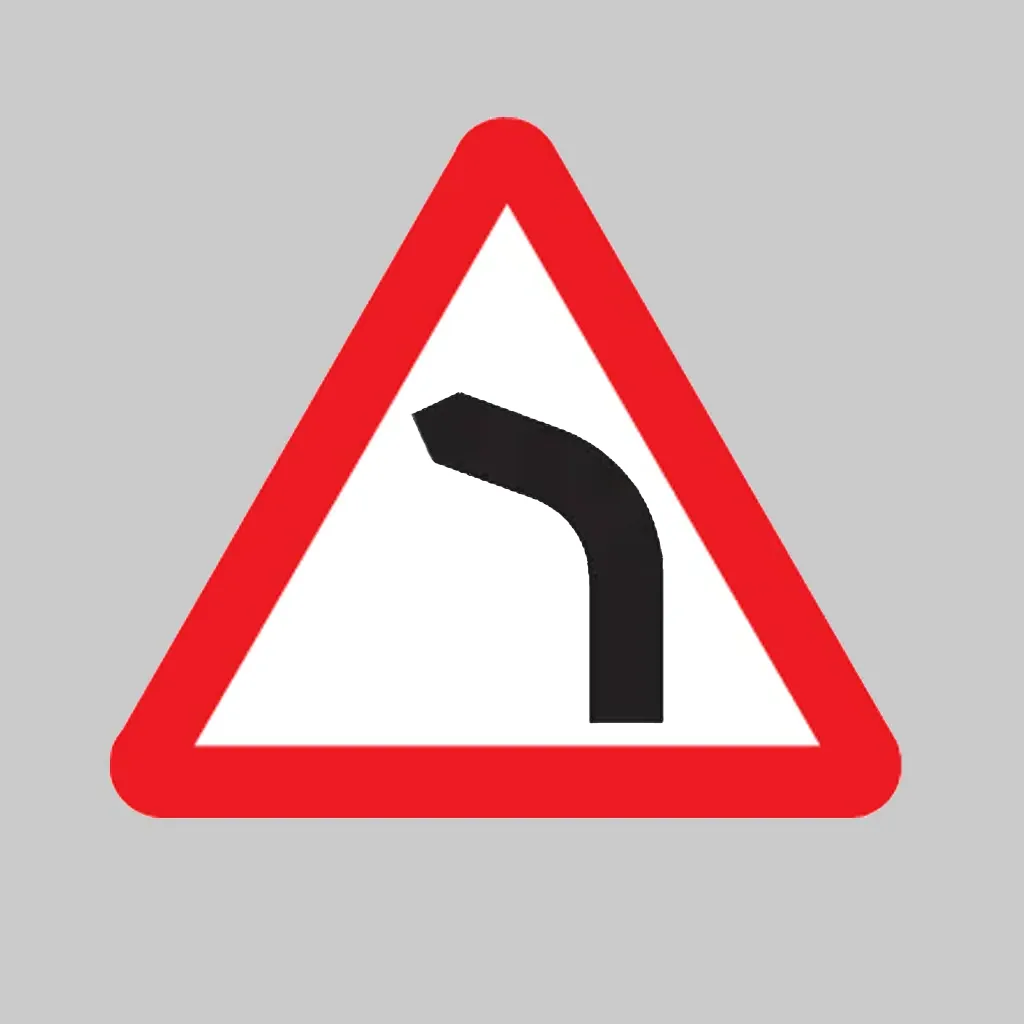 |
Diagram 512 | Bend to the Left | The Bend to the Left symbol warns drivers that the road ahead changes direction sharply or significantly to the left. It is intended to alert motorists that they may need to reduce speed and adjust their position before entering the bend, particularly where the severity of the curve is not obvious from the approach. |
This sign is generally used before a left-hand bend that may be difficult to negotiate safely at the normal approach speed. The need for the sign can depend on factors such as the sharpness of the bend, available visibility, road conditions and the speed at which vehicles are likely to approach. The sign should be positioned far enough in advance of the bend to give drivers adequate time to recognise the hazard and respond appropriately. Where necessary, it can be supplemented with additional information to highlight particular risks associated with the bend or surrounding road layout. Using the Bend to the Left sign helps drivers anticipate a significant change in road direction and encourages them to approach at a suitable speed. Correct use of Diagram 512 can improve awareness of bends that are difficult to judge in advance and help reduce the risk of loss-of-control or run-off-road collisions. |
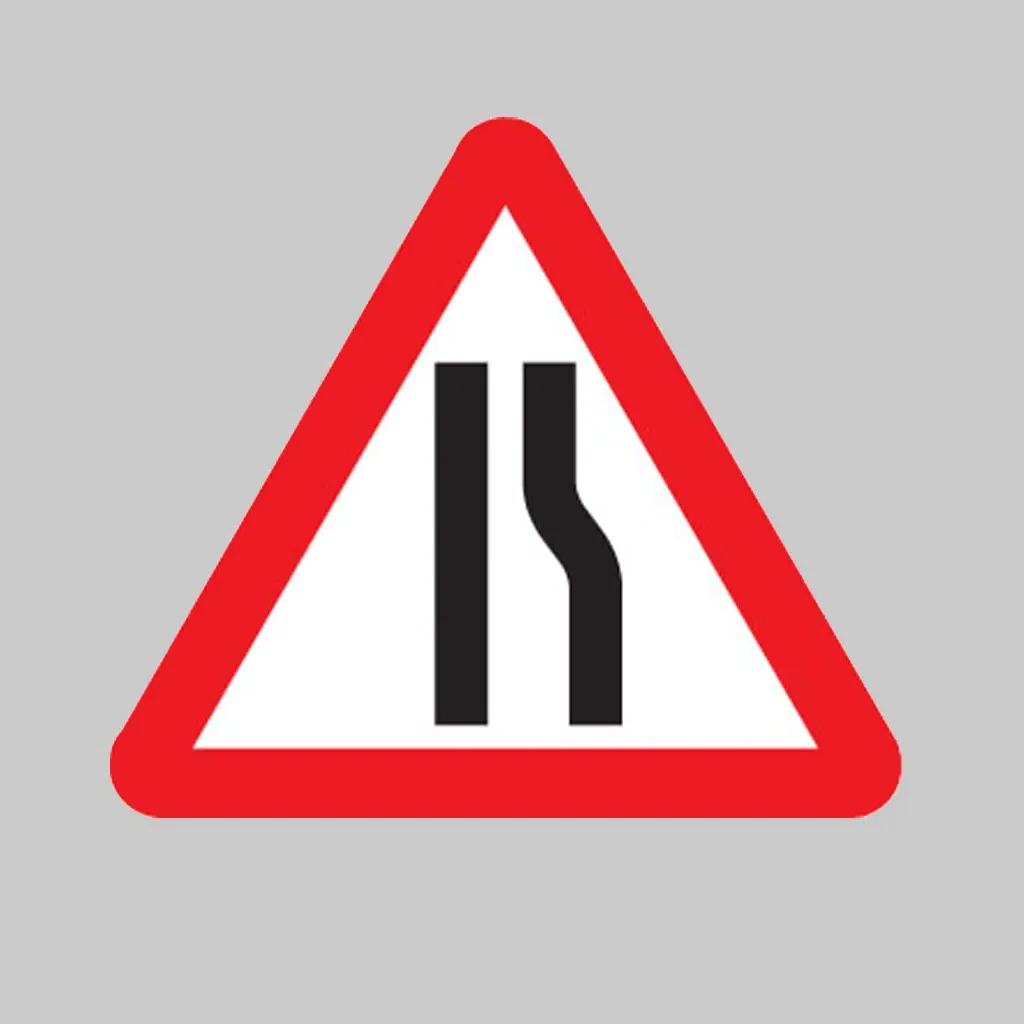 |
Diagram 517 | Road Narrows on Right | The Road Narrows on Right symbol warns drivers that the carriageway becomes narrower on the right-hand side ahead. It is intended to alert motorists that the available road width is reducing and that they may need to adjust their position, speed or spacing before reaching the narrowed section. |
This sign is commonly used where the right-hand edge of the carriageway moves inward because of a permanent road layout, bridge, obstruction, traffic-management feature or temporary works. It should be positioned in advance of the narrowing so drivers have enough time to respond safely. Diagram 517 may also be used with supplementary plates where extra information is needed, for example to indicate single-file traffic or a section of road wide enough for only one line of vehicles. The symbol can be reversed where the narrowing occurs on the left instead. Using the Road Narrows on Right sign helps drivers anticipate a reduction in available carriageway width and encourages earlier, smoother changes in road position. It can improve awareness around constrained sections of road and help reduce the risk of side-swipe collisions, sudden braking or conflicts with oncoming traffic. |
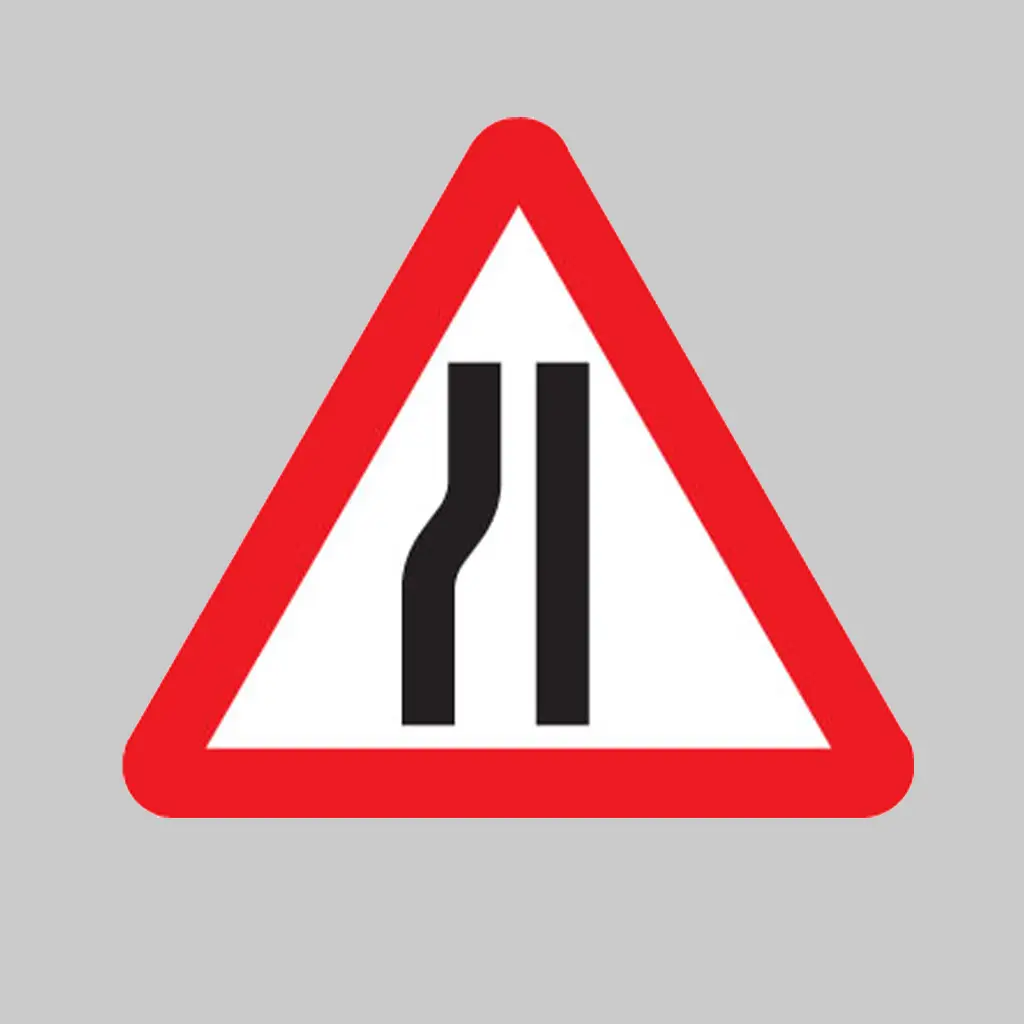 |
Diagram 517 | Road Narrows on Left | The Road Narrows on Left symbol warns drivers that the carriageway becomes narrower on the left-hand side ahead. It is intended to alert motorists that the available road width is reducing and that they may need to adjust their speed, road position or spacing before reaching the narrowed section. |
This sign is commonly used where the left-hand edge of the carriageway moves inward because of a permanent road layout, bridge, obstruction, traffic-management feature or temporary road works. It should be positioned in advance of the narrowing so drivers have sufficient time to recognise the change and respond safely. The symbol is particularly useful where the reduction in width may not be immediately obvious from the driver’s approach. Clear advance warning can help motorists move away from the narrowing edge and maintain a safer position relative to other traffic. Using the Road Narrows on Left sign helps drivers anticipate a reduction in available carriageway width and encourages smoother, earlier adjustments in road position. It can improve awareness around constrained sections of road and help reduce the risk of sudden braking, side-swipe collisions or conflicts with other vehicles. |
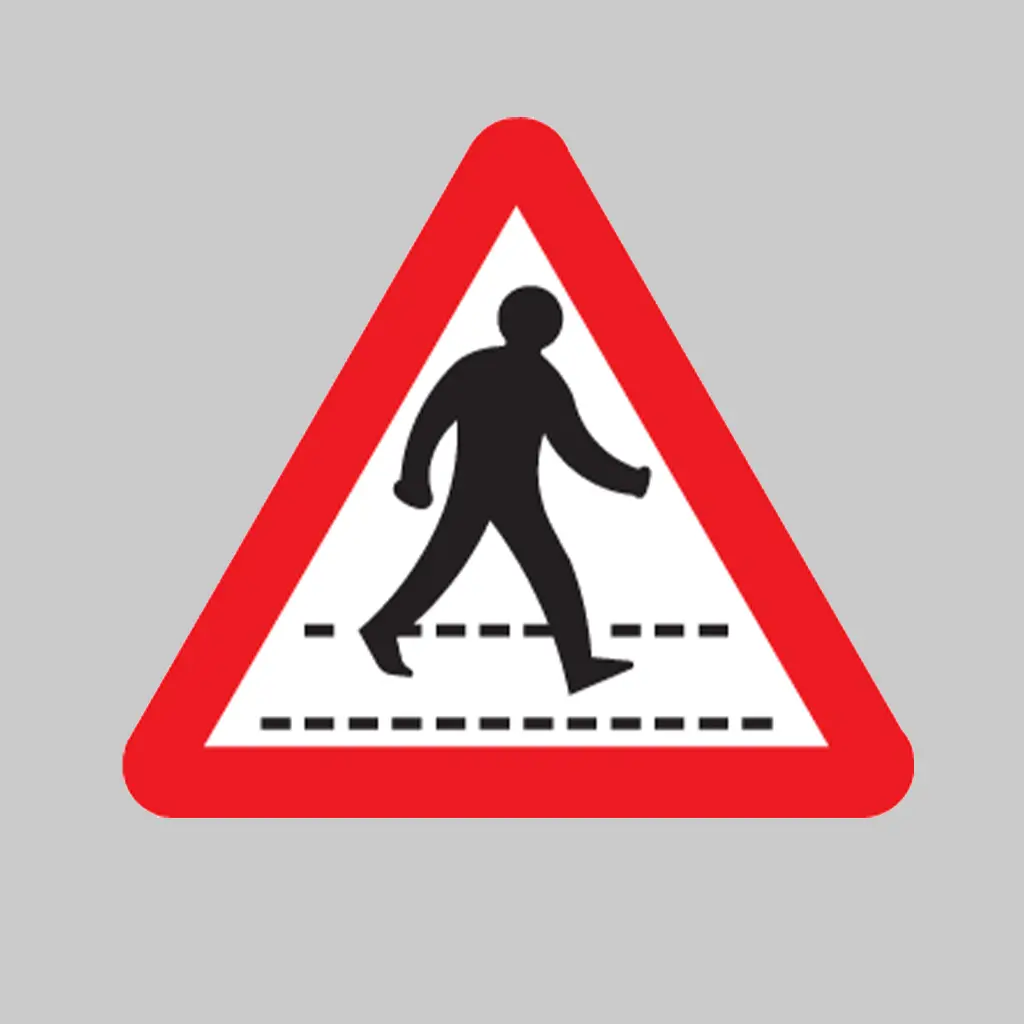 |
Diagram 544 | Zebra or Parallel Crossing Ahead | The Zebra or Parallel Crossing Ahead symbol warns drivers that a Zebra or Parallel crossing is located ahead. It is intended to alert motorists to the possible presence of pedestrians, and at Parallel crossings cyclists, so they can reduce speed, increase observation and be prepared to stop or give way as they approach the crossing. |
This sign is specifically used in advance of Zebra and Parallel crossings where additional warning is necessary. A Parallel crossing is similar to a Zebra crossing but also incorporates a cycle route alongside the pedestrian crossing, allowing both pedestrians and cyclists to cross. Diagram 544 is particularly appropriate where visibility of the crossing is restricted by a bend, hump or other feature of the road. The Traffic Signs Manual advises that the sign should generally only be used where the crossing cannot be seen clearly enough on the approach, rather than automatically being installed at every Zebra or Parallel crossing. Using the Zebra or Parallel Crossing Ahead sign gives drivers additional time to recognise that vulnerable road users may be crossing ahead and to adjust their speed accordingly. It can improve awareness on approaches with limited visibility and help drivers prepare to give way safely to pedestrians or cyclists using the crossing. |
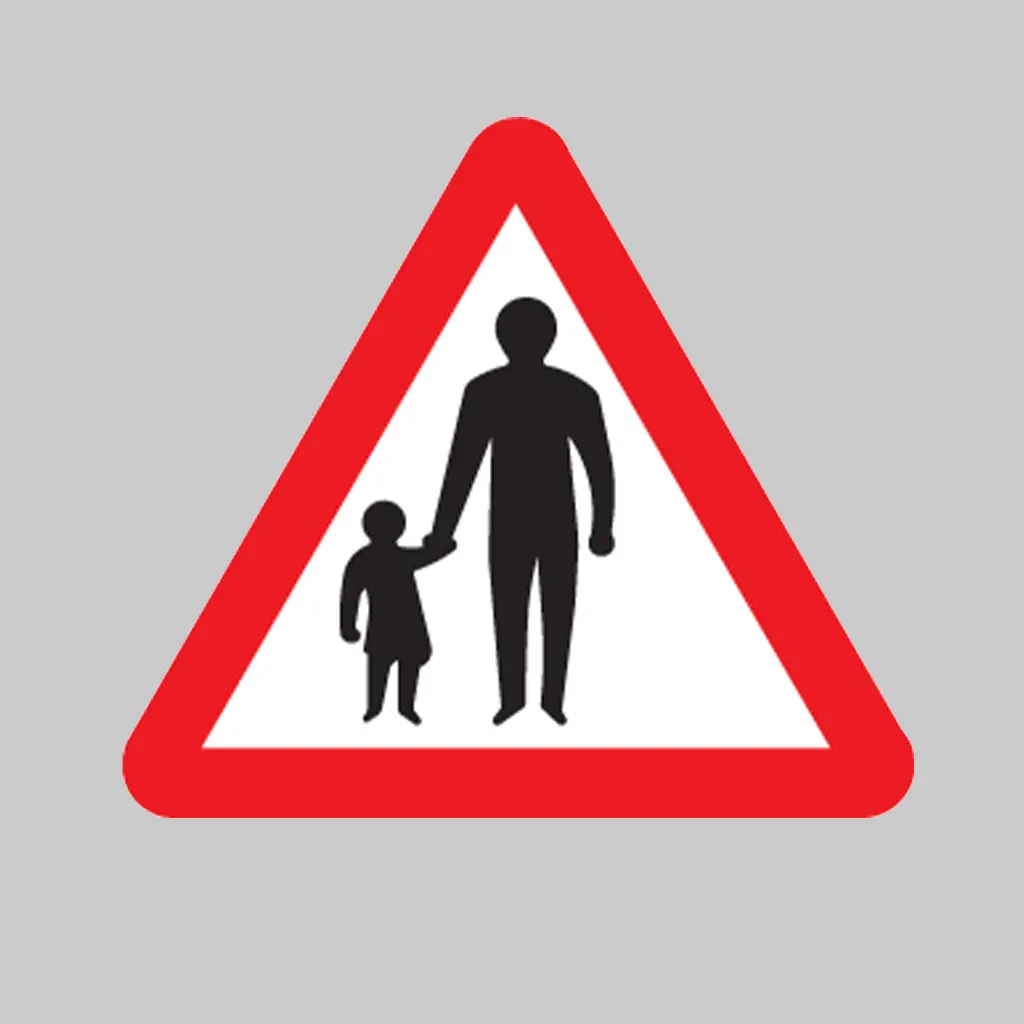 |
Diagram 544.1 | Pedestrians in Road Ahead | The Pedestrians in Road Ahead symbol warns drivers that pedestrians may be walking in or close to the carriageway ahead. It is intended to alert motorists to reduce speed, increase observation and be prepared to give pedestrians additional space where there may be no suitable footway or where people are likely to enter the road. |
This sign is particularly useful on rural roads, village routes, narrow roads and other locations where pedestrians may need to walk in the carriageway because a pavement or footway is absent or unsuitable. It should be positioned far enough in advance to give drivers sufficient warning before they reach the affected section. Diagram 544.1 may also be used with supplementary information, including a distance, an arrow, or a plate stating that there is no footway for a specified distance. This helps drivers understand how long the pedestrian hazard may continue and where additional care is required. Using the Pedestrians in Road Ahead sign helps improve awareness where people and vehicles may need to share the same road space. It encourages safer speeds, closer observation and more considerate passing, helping reduce the risk of collisions with pedestrians in areas where separation from traffic is limited. |
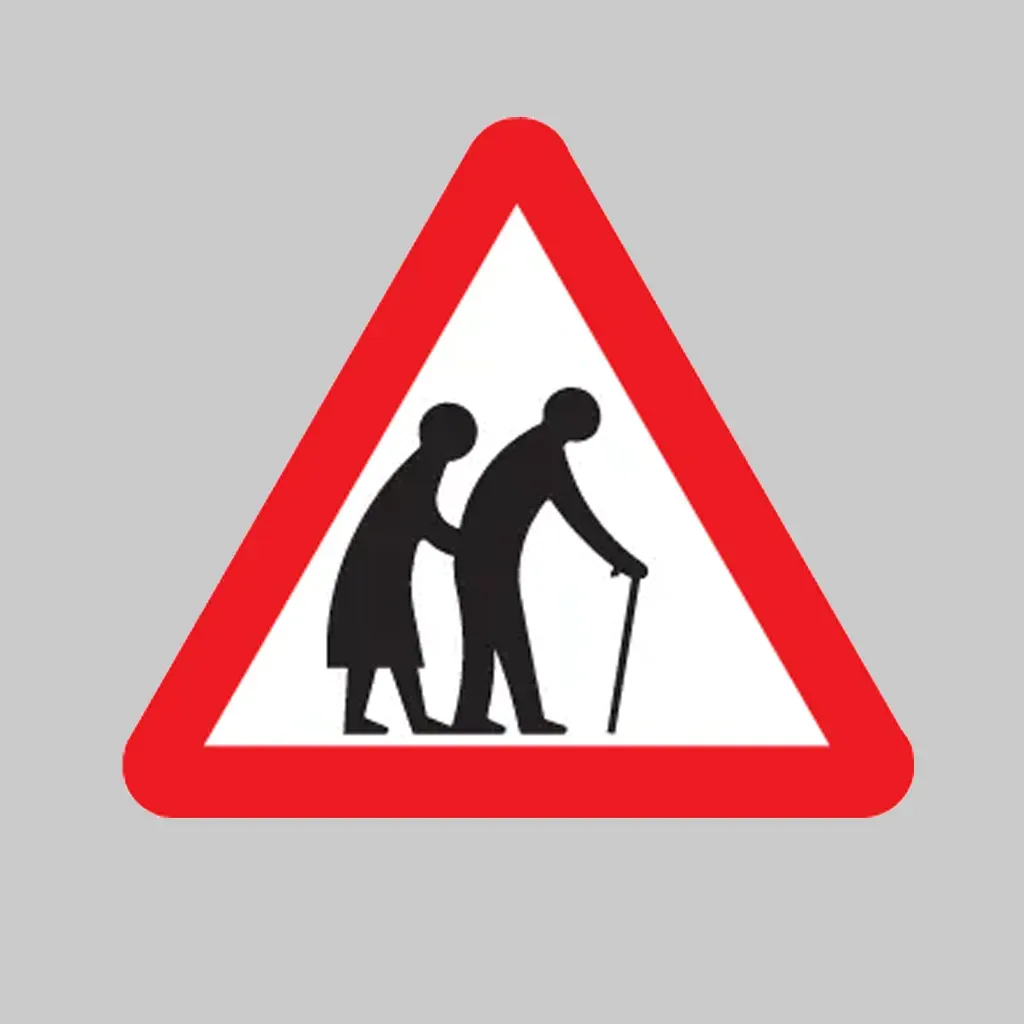 |
Diagram 544.2 | Frail or Disabled Pedestrians Likely to Cross Road Ahead | The Frail or Disabled Pedestrians Likely to Cross Road Ahead symbol warns drivers that frail or disabled pedestrians may be crossing the road ahead. It is intended to encourage motorists to reduce speed, remain alert and be prepared to stop where pedestrians may take longer to cross or may have difficulty judging approaching traffic. |
This sign is particularly suitable near residential areas, care homes, sheltered housing, hospitals, community facilities and other locations where frail or elderly pedestrians are likely to cross the road. It should be positioned where it provides useful advance warning before drivers reach the relevant crossing point or area. The sign may be combined with supplementary information where greater clarity is needed. Under the TSRGD, Diagram 544.2 can be used with a distance, an arrow, or plates referring to disabled or blind people, depending on the nature and location of the hazard. Using the Frail or Disabled Pedestrians Likely to Cross Road Ahead sign helps drivers anticipate pedestrians who may require more time or care when crossing. It supports safer speeds, improved observation and greater awareness in areas where vulnerable road users are more likely to be present. |
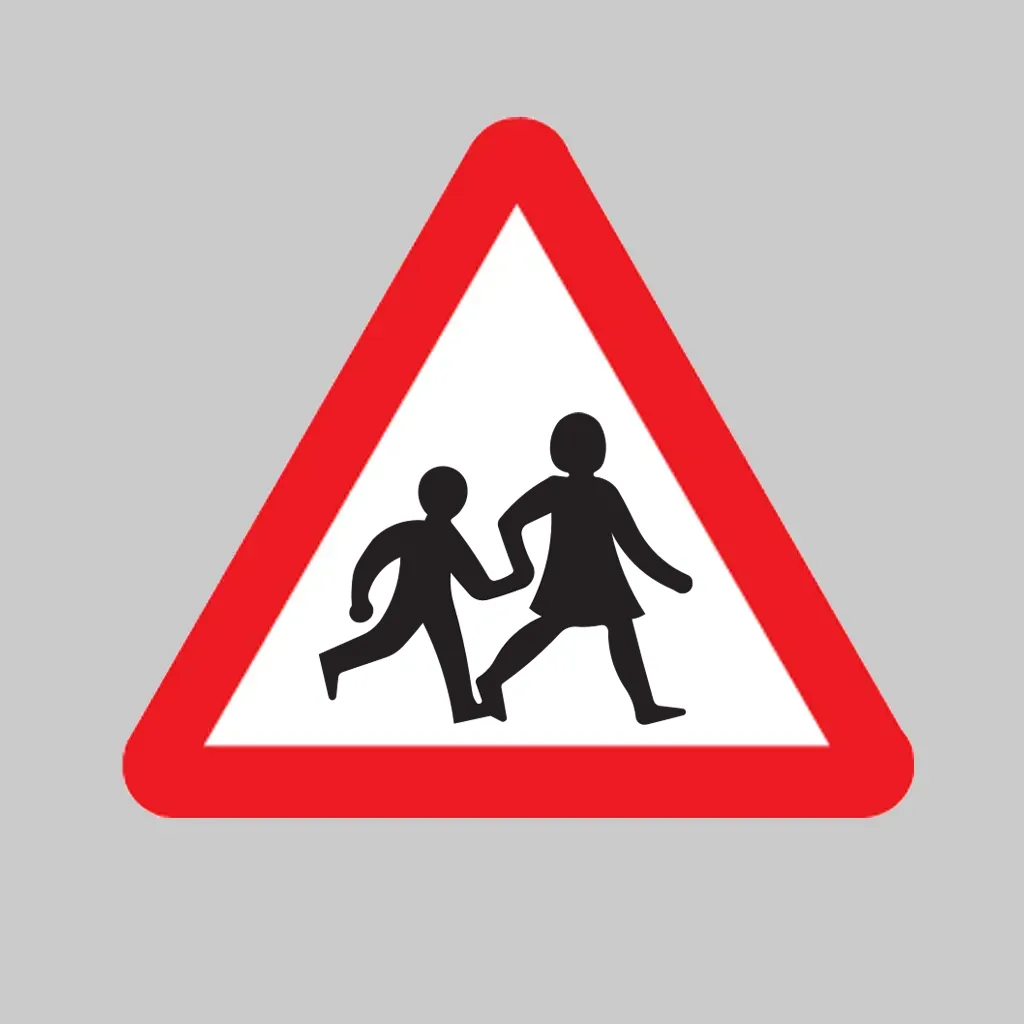 |
Diagram 545 | Children Going to or from School or Playground Ahead | The Children Going to or from School or Playground Ahead symbol warns drivers that children may be crossing or entering the road ahead, typically near a school or playground. It is intended to encourage motorists to reduce speed, increase observation and be prepared to stop where young pedestrians may appear unexpectedly. |
This sign is commonly used outside schools, near playgrounds and at other locations where significant numbers of children regularly cross the road. The Traffic Signs Manual advises that it should generally be restricted to the immediate area around a school or to locations where children are known to cross in significant numbers. Diagram 545 is used with a supplementary plate identifying the particular hazard, such as School, Playground or Patrol. Variants can also refer to disabled, blind or deaf children, and distance or directional information may be added where necessary to clarify where the hazard is located. Using the Children Going to or from School or Playground Ahead sign gives drivers advance warning that young and potentially vulnerable pedestrians may be present. It supports lower approach speeds, greater awareness and safer stopping behaviour, helping reduce the risk of collisions in areas where children regularly move between the roadside and the carriageway. |
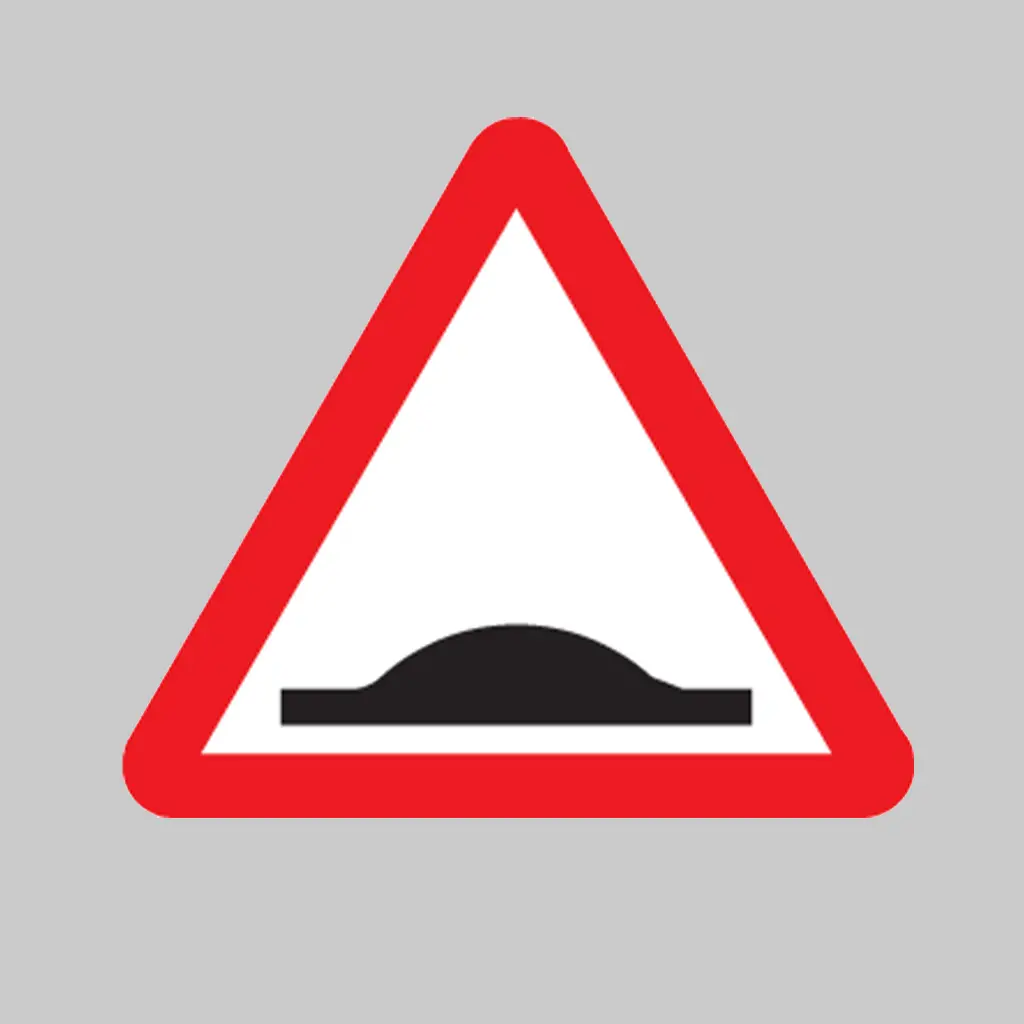 |
Diagram 557.1 | Road Hump or Series of Road Humps | The Road Hump or Series of Road Humps symbol warns drivers that one or more raised traffic-calming features are present on the road ahead. It is intended to encourage motorists to reduce speed before reaching the hump and to be prepared for repeated changes in road level where several humps are installed. |
This sign is commonly used at the beginning of roads or sections of road where traffic-calming humps have been introduced. It must be used with an appropriate supplementary plate indicating information such as the distance over which the humps continue, the distance to an individual hump or the direction in which the humps are located. Using the Road Hump or Series of Road Humps sign gives drivers advance notice of a physical change in the carriageway and helps them approach at a suitable speed. Clear warning can reduce harsh braking, improve vehicle control and help drivers negotiate speed humps more safely and comfortably. |
| Symbol | Code | Name | Meaning | Typical use |
|---|---|---|---|---|
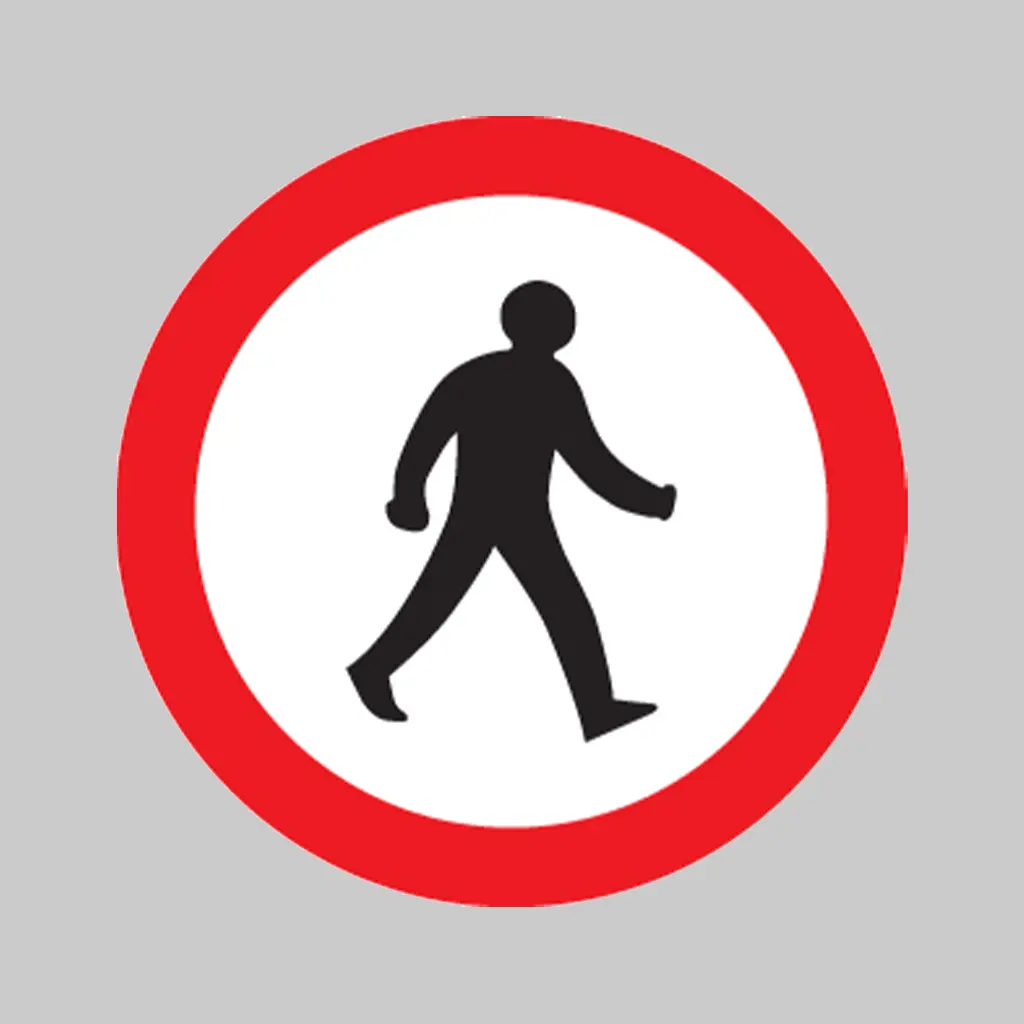 |
Diagram 625.1 | No Pedestrians | The No Pedestrians symbol means that pedestrians are prohibited from entering or using the road, route or area beyond the sign. It is a regulatory sign rather than a warning sign, so it communicates a restriction that road users must obey. |
This sign is used where pedestrian access would be unsafe, inappropriate or specifically prohibited, such as certain high-speed roads, tunnels, bridges, restricted routes or areas where people on foot could be exposed to serious traffic hazards. It should be positioned at the point where the pedestrian restriction begins. Diagram 625.1 may also be used as part of temporary traffic management where pedestrians need to be kept away from a particular road or section for safety reasons. In these situations, suitable alternative pedestrian arrangements or diversions may be provided where necessary. Using the No Pedestrians sign provides a clear and standardised way of preventing pedestrian access to unsuitable or dangerous routes. It helps reduce the risk of conflicts between pedestrians and moving traffic and reinforces restrictions intended to keep people away from areas where walking is not permitted. |
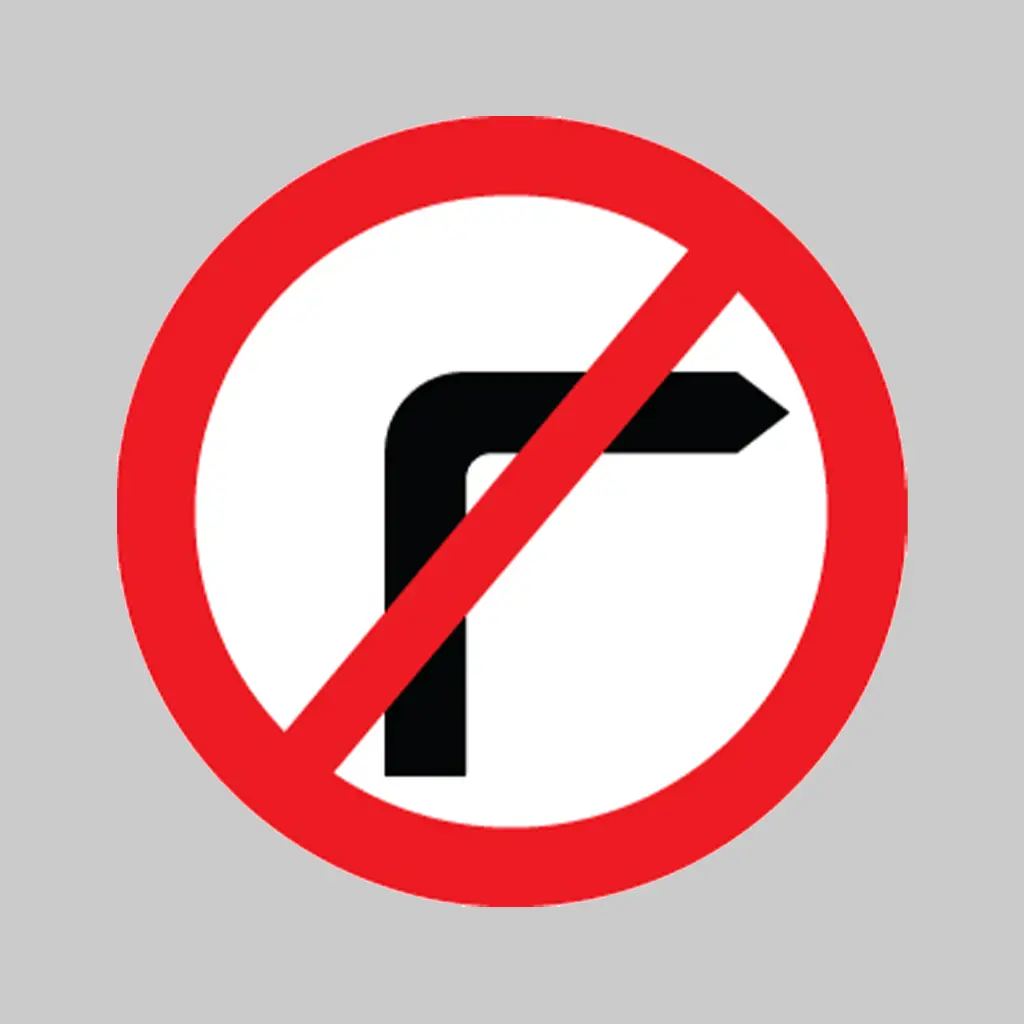 |
Diagram 612 | No Right Turn | The No Right Turn symbol means that vehicular traffic must not turn right at the junction or access point where the restriction applies. It is a regulatory prohibition sign and is used to prevent a right-turn manoeuvre where that movement would be unsafe, unsuitable or specifically restricted. |
This sign is commonly used at junctions where traffic is not permitted to enter a side road from the right-turning direction. It may be introduced because of road layout, traffic flow, visibility, one-way arrangements or other traffic-management requirements, and it should be positioned where drivers can clearly see the restriction before attempting the turn. Diagram 612 can also be used in temporary traffic management, for example where a side road is closed and vehicles must continue ahead rather than turning into it. In such situations, the sign is used in conjunction with the necessary traffic order or other legal restriction. Using the No Right Turn sign provides a clear and standardised way of preventing prohibited right-turn movements. It helps drivers understand where a manoeuvre is not permitted, supports safer junction operation and can reduce conflicts with opposing traffic, pedestrians or other road users. |
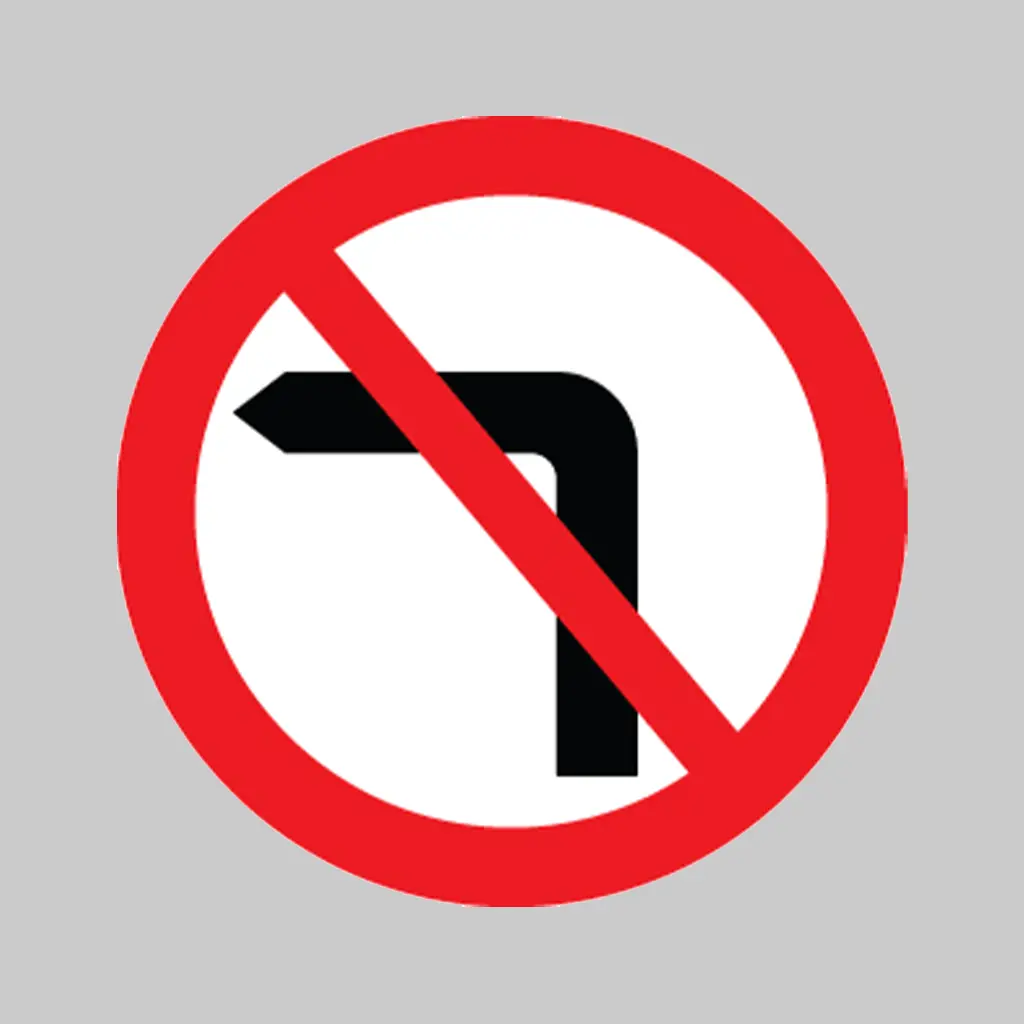 |
Diagram 613 | No Left Turn | The No Left Turn symbol means that vehicular traffic must not turn left at the junction or access point where the restriction applies. It is a regulatory prohibition sign and is used to prevent a left-turn manoeuvre where that movement would be unsafe, unsuitable or specifically restricted. |
This sign is commonly used at junctions where traffic is not permitted to enter a side road from the left-turning direction. It may be introduced because of one-way arrangements, road layout, traffic flow, restricted access or other traffic-management requirements, and it should be positioned where drivers can clearly see the prohibition before reaching the turning point. Diagram 613 may also be used with supplementary information where the restriction applies only at certain times. In some situations, advance direction signs can also incorporate the No Left Turn roundel to warn drivers before they reach the junction and help them choose an alternative route. Using the No Left Turn sign provides a clear and standardised way of preventing prohibited turning movements. It helps drivers understand where a left turn is not permitted, supports safer and more efficient junction operation, and can reduce conflicts with other vehicles, pedestrians or restricted traffic routes. |
| Symbol | Code | Name | Meaning | Typical use |
|---|---|---|---|---|
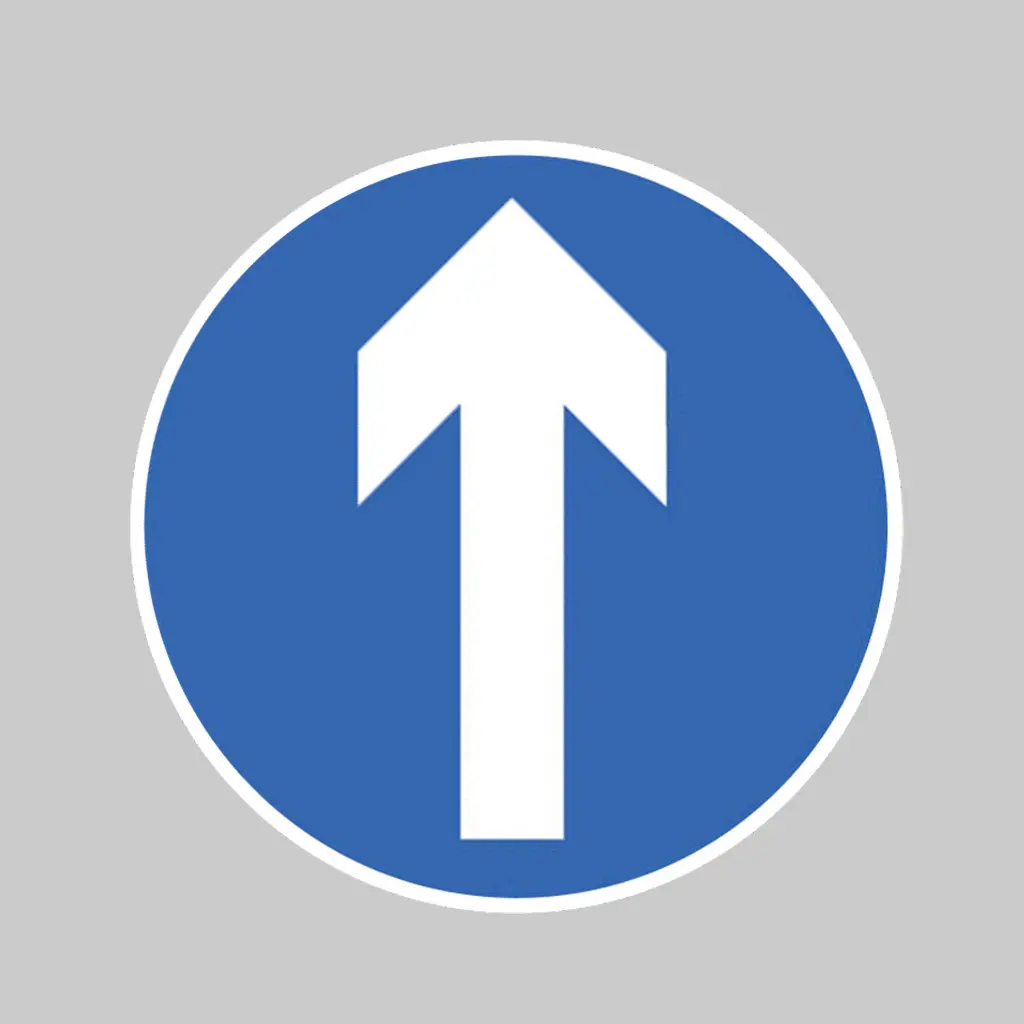 |
Diagram 606 | Proceed in Direction Indicated by the Arrow | The Proceed in Direction Indicated by the Arrow symbol instructs drivers that they must continue in the direction shown by the white arrow. It is a mandatory regulatory sign, meaning that the indicated direction is the permitted route for vehicular traffic at that point and alternative movements are not allowed. |
This sign is commonly used at junctions where traffic is required to turn left, turn right or continue straight ahead. The Traffic Signs Manual specifies that Diagram 606 is used to show the only route that may lawfully be taken through a junction, helping drivers understand the required movement before proceeding. Diagram 606 can be particularly useful where road layouts, one-way systems, dual carriageways or traffic-management arrangements restrict the movements available to drivers. Depending on the situation, it may also be accompanied by supplementary plates such as “One way” or “Dual carriageway” to provide additional information about the road arrangement. Using the Proceed in Direction Indicated by the Arrow sign provides a clear and standardised instruction about the route vehicles must take. It supports orderly traffic movement, helps prevent prohibited manoeuvres and can reduce conflicts at junctions by ensuring drivers follow the required direction of travel. |
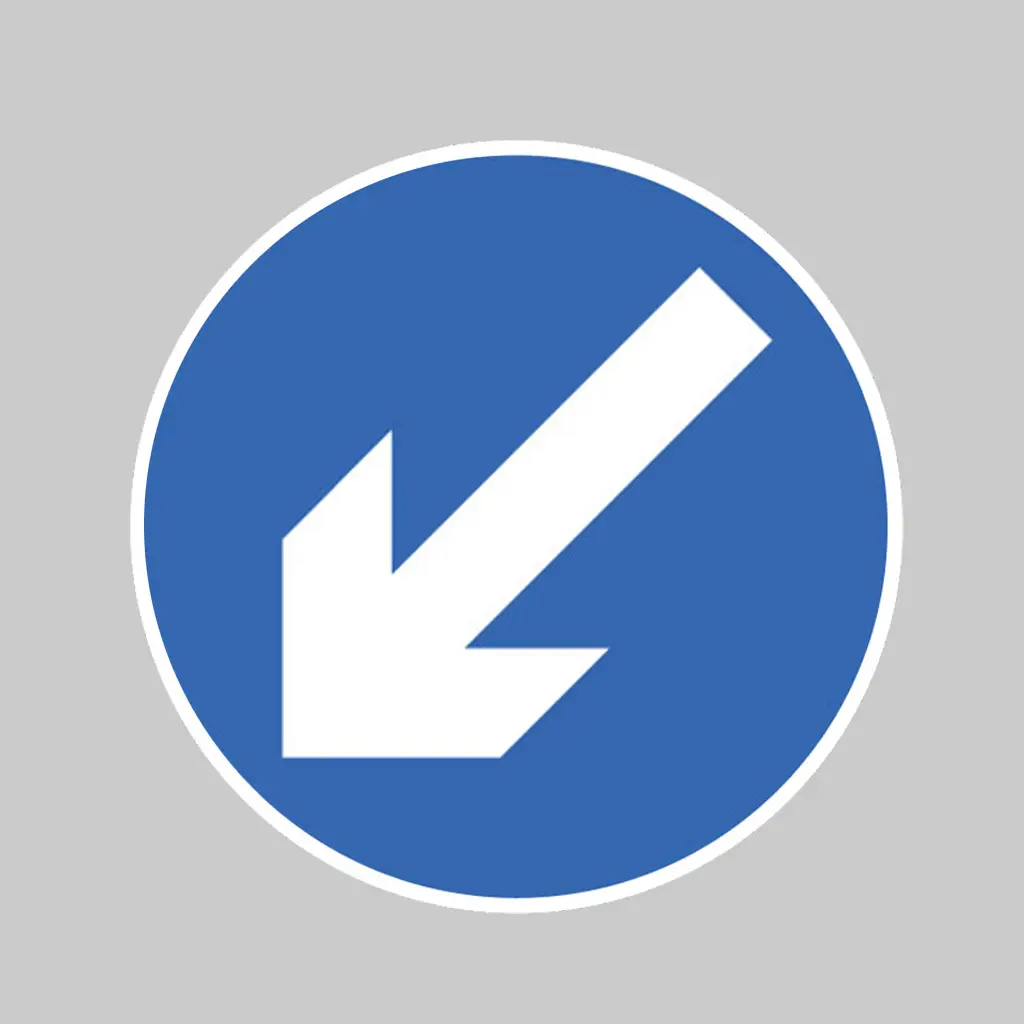 |
Diagram 610 | Keep Left | The Keep Left symbol instructs drivers that they must pass to the left-hand side of the sign. It is a mandatory regulatory sign, meaning that vehicles are required to follow the direction indicated by the downward-pointing arrow rather than choosing an alternative route around the obstruction. |
This sign is commonly used on traffic islands, pedestrian refuges and central reservations where vehicles need to be directed safely around a physical obstruction. It may also be positioned where a central reservation begins or recommences after a gap. Diagram 610 is also widely used at road works and temporary traffic-management layouts to show which side of cones, barriers, works vehicles or other obstructions traffic must pass. The symbol can be reversed to create a Keep Right instruction where vehicles need to pass on the opposite side. Using the Keep Left sign provides a clear and standardised instruction that helps guide vehicles safely around islands, barriers and other obstructions. It supports orderly traffic movement, reduces uncertainty and helps prevent drivers from passing on the incorrect side of a traffic-management feature. |
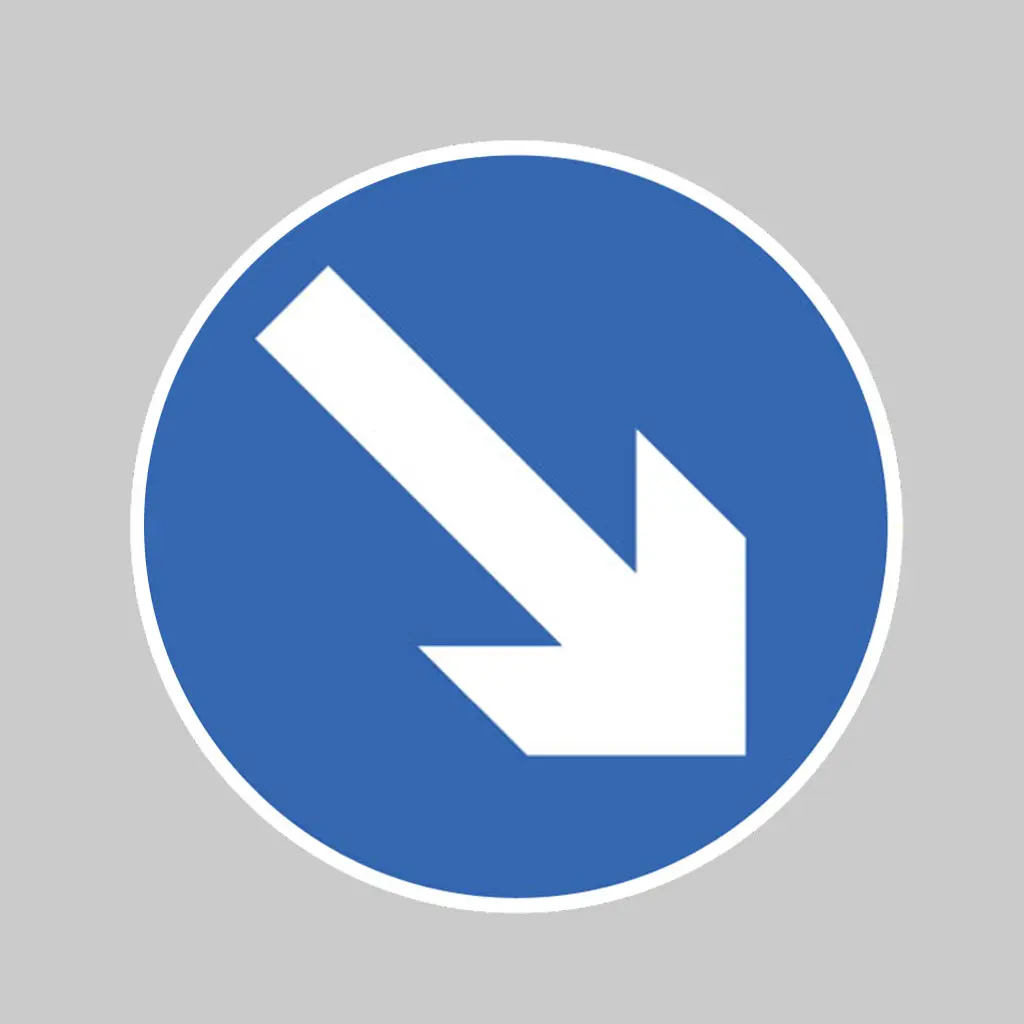 |
Diagram 610 | Keep Right | The Keep Right symbol instructs drivers that they must pass to the right-hand side of the sign. It is a mandatory regulatory sign, meaning vehicles are required to follow the direction shown by the downward-pointing arrow rather than passing on the opposite side of the obstruction. |
This sign is commonly used at traffic islands, pedestrian refuges, road works and other locations where vehicles need to be directed around a physical obstruction. It should be positioned where the required route is clear before drivers reach the island, barrier or traffic-management feature. Diagram 610 may also be used in temporary traffic-management layouts to direct vehicles around cones, barriers, works vehicles or closed sections of carriageway. In this form, the arrow points downwards to the right, distinguishing it from the corresponding Keep Left version. Using the Keep Right sign provides a clear and standardised instruction that helps guide vehicles safely past obstructions and through restricted road layouts. It supports orderly traffic movement, reduces uncertainty and helps prevent drivers from passing on the wrong side of a traffic island or temporary works area. |
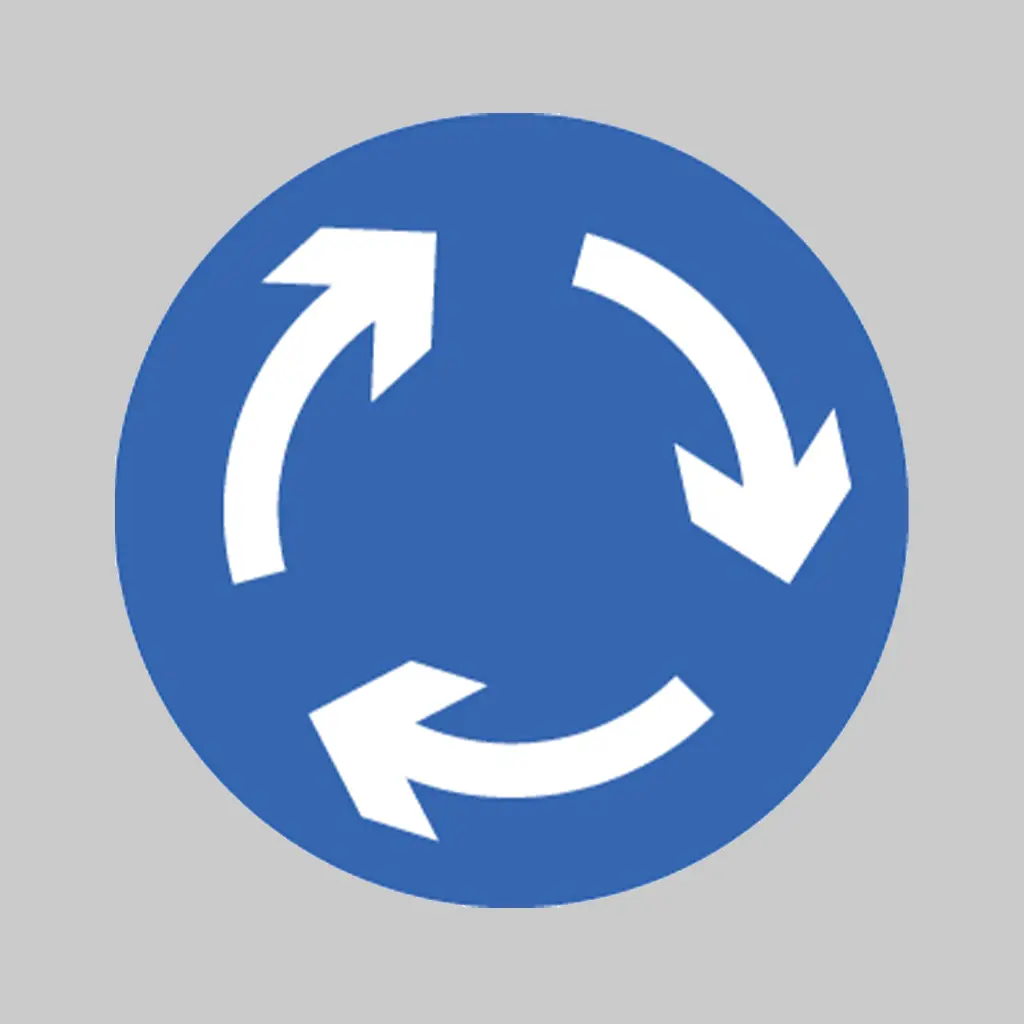 |
Diagram 611.1 | Mini-Roundabout (Give Way to Traffic from the Immediate Right) | The Mini-Roundabout (Give Way to Traffic from the Immediate Right) symbol indicates that drivers are approaching a mini-roundabout and must give way to traffic from the immediate right. It is a mandatory regulatory sign, and drivers should follow the normal clockwise circulation around the central road marking while observing other traffic already using or entering the junction. |
This sign is used on approaches to mini-roundabout junctions, where a small central circular road marking is used instead of the larger physical island found at a conventional roundabout. The Traffic Signs Manual specifies that Diagram 611.1 should normally be placed on the left-hand side of each approach to the mini-roundabout. Diagram 611.1 is used together with the appropriate mini-roundabout road markings, including the transverse give-way marking. The sign is normally positioned approximately 1.5 metres before the give-way line, although this distance may be increased where necessary to ensure that it can be clearly seen by approaching drivers. Using the Mini-Roundabout sign provides a clear and standardised instruction about how drivers should approach and negotiate the junction. It helps establish priority, encourages drivers to reduce speed and look for traffic approaching from the right, and supports safer and more orderly movement through compact junctions where there is less space to manoeuvre than at a conventional roundabout. |
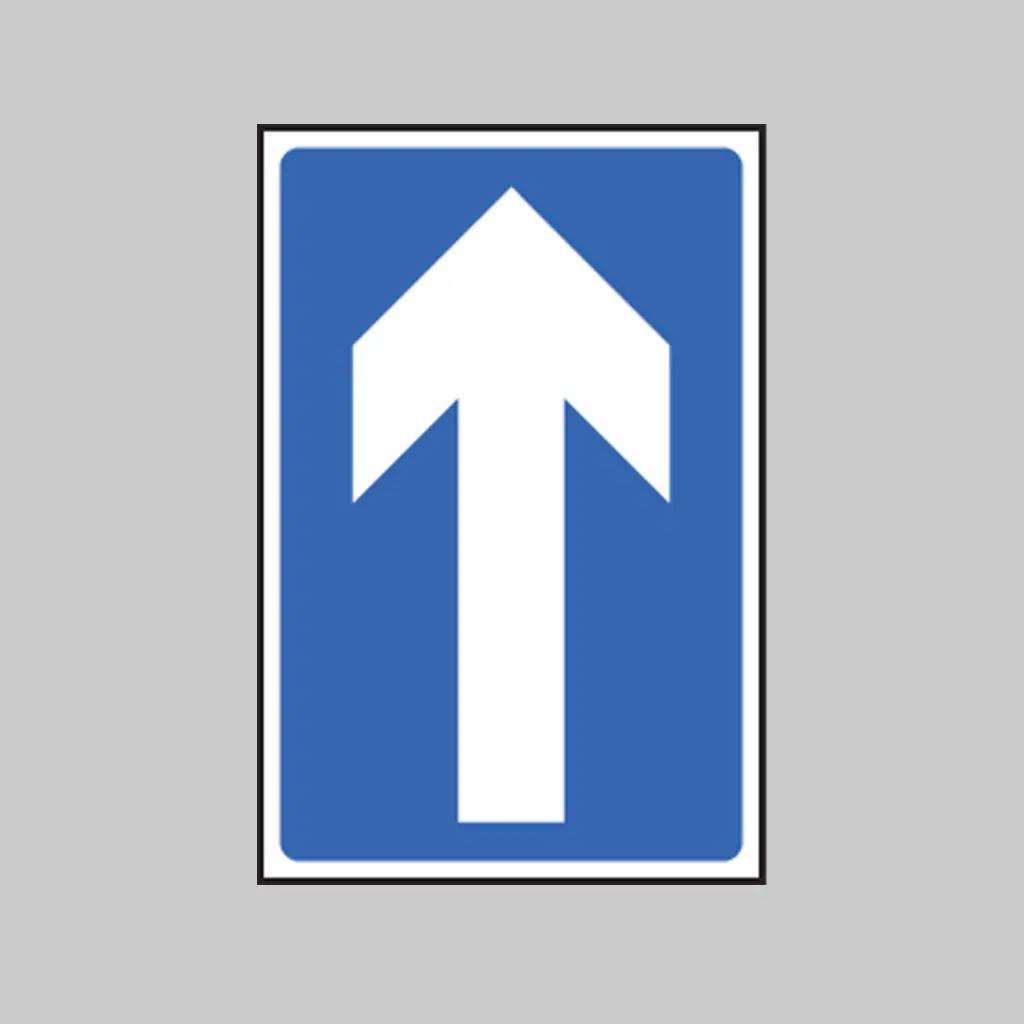 |
Diagram 652 | One-Way Traffic | The One-Way Traffic symbol indicates that vehicles must travel in one direction only along the road ahead. The white arrow shows the permitted direction of travel and helps drivers recognise that opposing traffic should not normally be encountered on that section of road. |
This sign is used at the entrance to a one-way road where a Traffic Regulation Order requires vehicles to proceed in a single direction. It should be positioned so that drivers entering the road can clearly see which direction of travel applies and are not confused about the route to which the restriction relates. Repeater signs may also be used further along the one-way road, particularly after side-road junctions where additional traffic can enter. The Traffic Signs Manual recommends placing repeaters so drivers continue to receive clear confirmation that the one-way restriction remains in force. Using the One-Way Traffic sign helps prevent vehicles from travelling against the permitted flow of traffic and reduces the risk of head-on conflicts. It also supports clearer junction operation and helps drivers understand how they should position and proceed along roads subject to one-way traffic restrictions. |
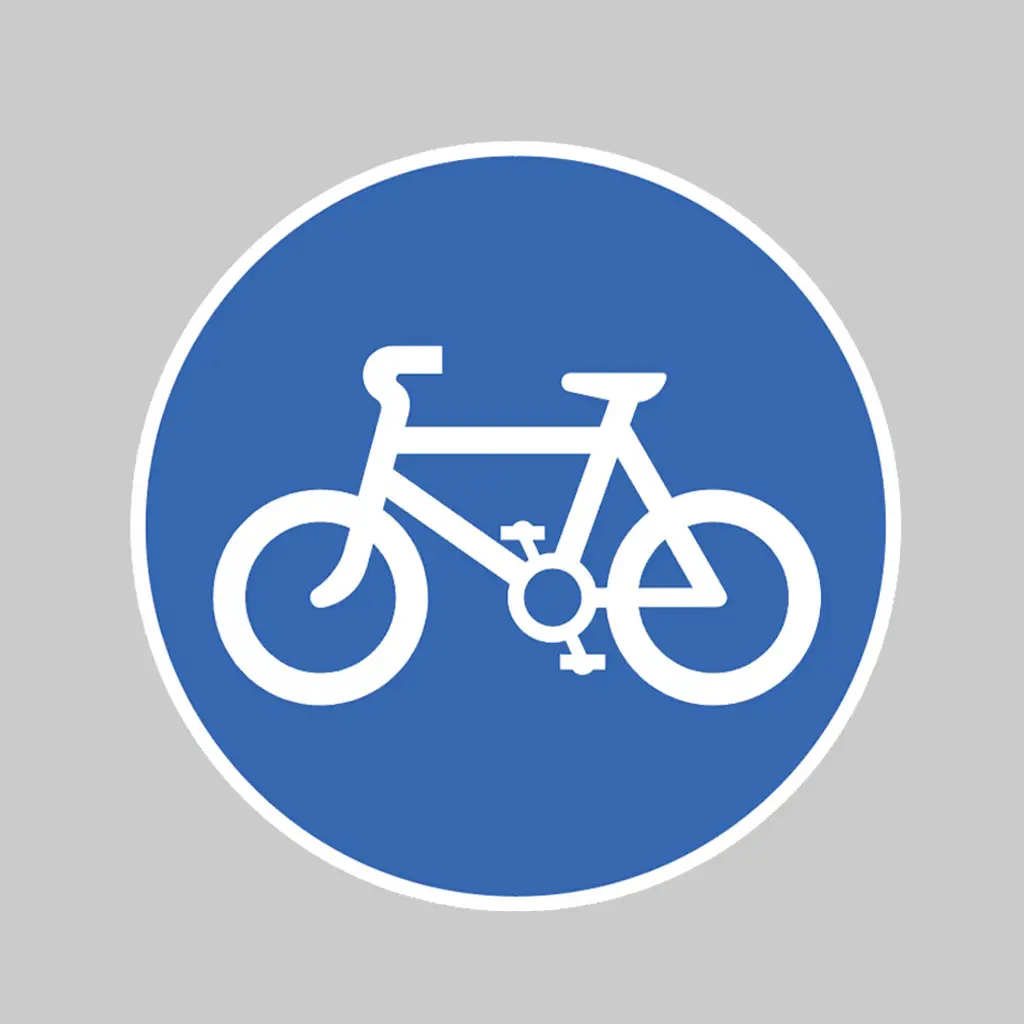 |
Diagram 955 | Route for Pedal Cycles Only | The Route for Pedal Cycles Only symbol indicates that the route is reserved for pedal cycles and is not intended for use by other vehicular traffic. It is a mandatory regulatory sign and helps cyclists identify a dedicated cycle track or route provided specifically for their use. |
This sign is commonly used at the start of an off-road cycle track or other route designated for cycles only. The Traffic Signs Manual states that it should be provided at the beginning of the cycle track and where the track crosses roads used by other traffic. Diagram 955 may also be repeated along the route to reassure cyclists that the cycle-only restriction continues. Where the route is not intended for pedestrians, the Traffic Signs Manual advises that a convenient footway or footpath should be available nearby. Using the Route for Pedal Cycles Only sign provides a clear and standardised way of identifying dedicated cycling infrastructure. It helps separate cyclists from other vehicular traffic, makes the permitted use of the route clear and supports safer, more predictable movement along designated cycle tracks. |
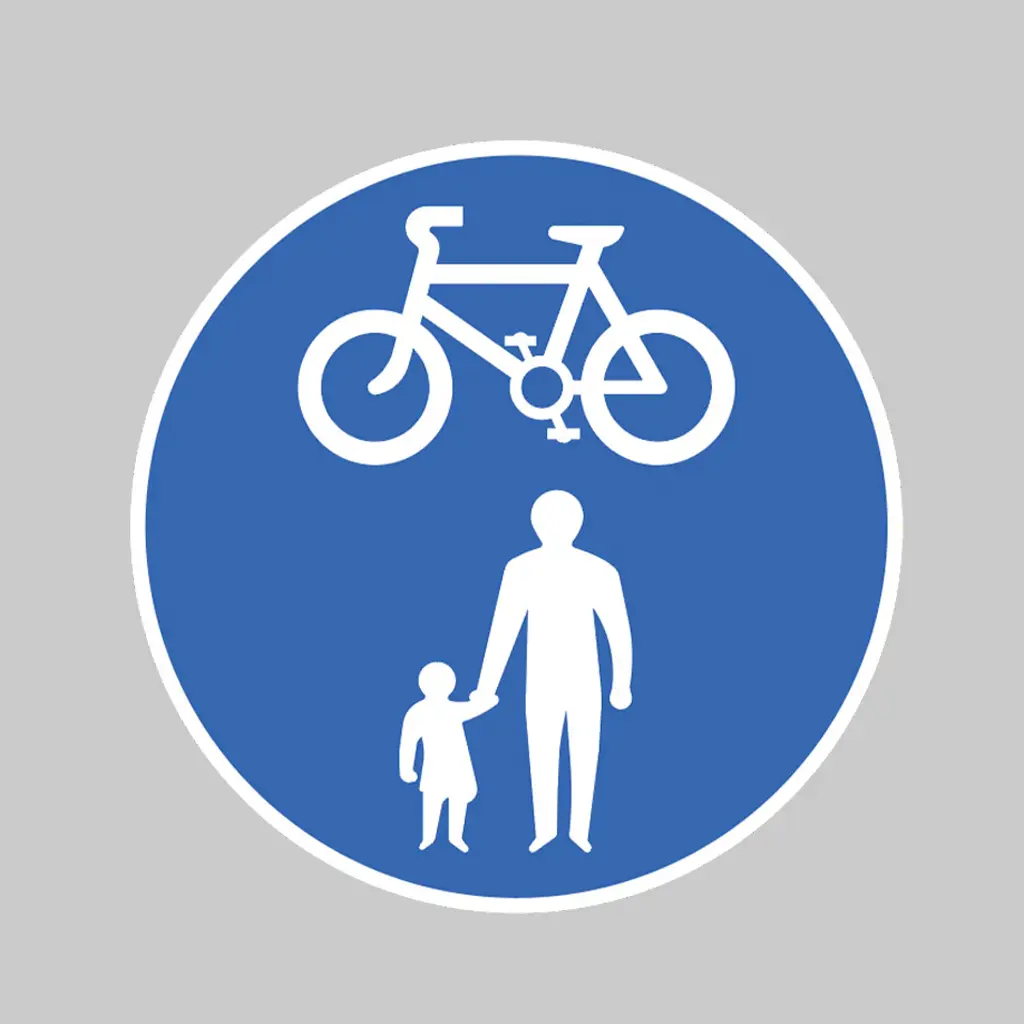 |
Diagram 956 | Route for Pedal Cycles and Pedestrians Only | The Route for Pedal Cycles and Pedestrians Only symbol indicates that the route is reserved for use by cyclists and pedestrians. It is a mandatory regulatory sign and shows that both groups may legally use the same unsegregated path or track, while other vehicular traffic is prohibited. |
This sign is commonly used where an existing footway or footpath has been converted into a shared route for pedestrians and pedal cycles. It should be positioned at the beginning of the shared section so users understand that cyclists and pedestrians will be using the same space. Repeater signs may also be placed along the route to remind pedestrians that cycles may be ridden there and to reassure cyclists that cycling is permitted. The cycle road marking to Diagram 1057 may also be used along the route to reinforce the shared-use arrangement. Using the Route for Pedal Cycles and Pedestrians Only sign provides a clear and standardised way of identifying shared-use paths. It helps all users understand who is permitted to use the route, encourages greater awareness between cyclists and pedestrians and supports safer movement along dedicated walking and cycling infrastructure. |
| Symbol | Code | Name | Meaning | Typical use |
|---|---|---|---|---|
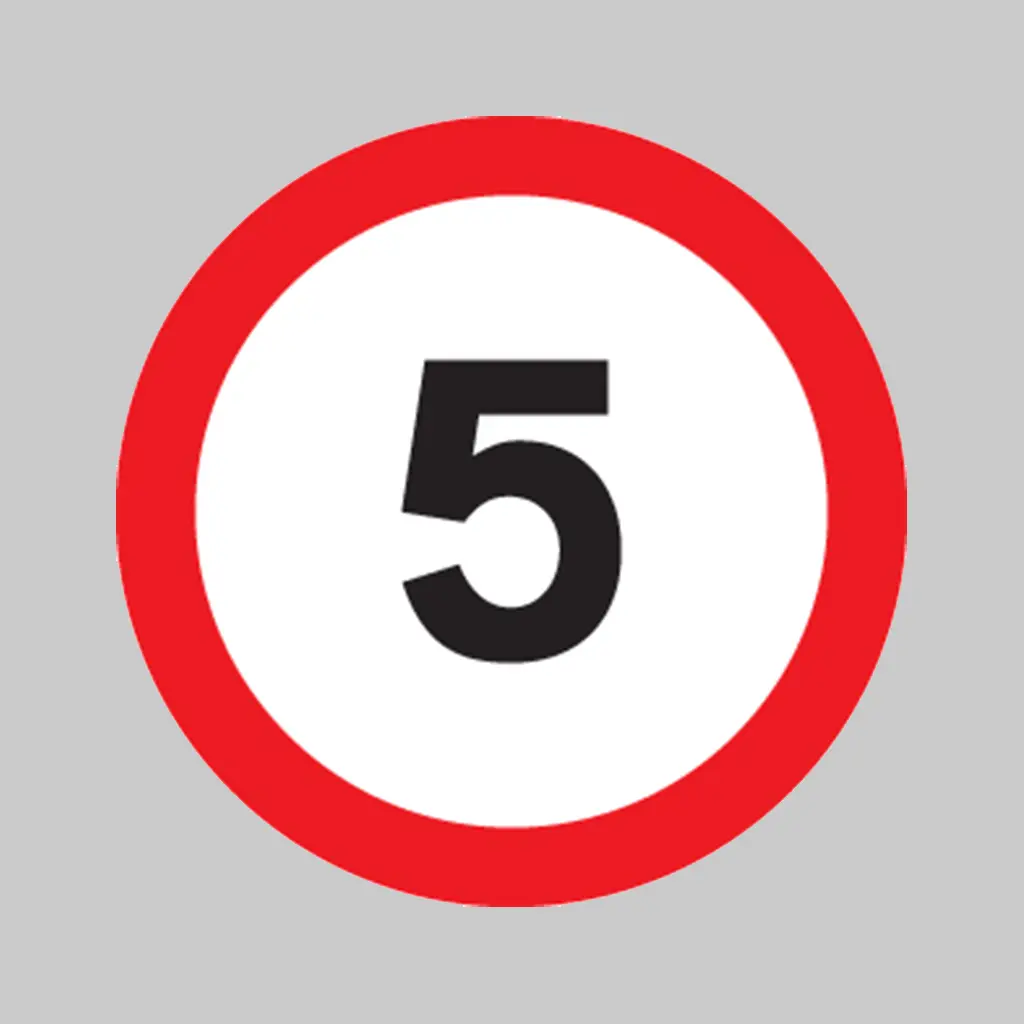 |
Diagram 670 | 5 mph Maximum Speed Limit | The 5 mph Maximum Speed Limit symbol indicates that vehicles must not exceed a maximum speed of 5 miles per hour where that speed restriction applies. The number displayed within the red circle provides a clear instruction to drivers that vehicle speeds must be kept extremely low, particularly where vehicles operate close to pedestrians or within confined areas. |
A 5 mph speed limit sign is most commonly used on private roads, industrial premises, construction sites, warehouses, car parks, loading areas, residential developments and other controlled environments where very slow vehicle movement is required. It can be positioned at site entrances and repeated where necessary to remind drivers of the maximum permitted or site-imposed speed. Using a 5 mph Maximum Speed Limit sign provides a clear visual instruction to reduce vehicle speeds in areas with significant pedestrian activity, restricted visibility or limited manoeuvring space. Lower speeds can give drivers more time to react to people, vehicles and obstacles, supporting safer movement around busy or confined premises. |
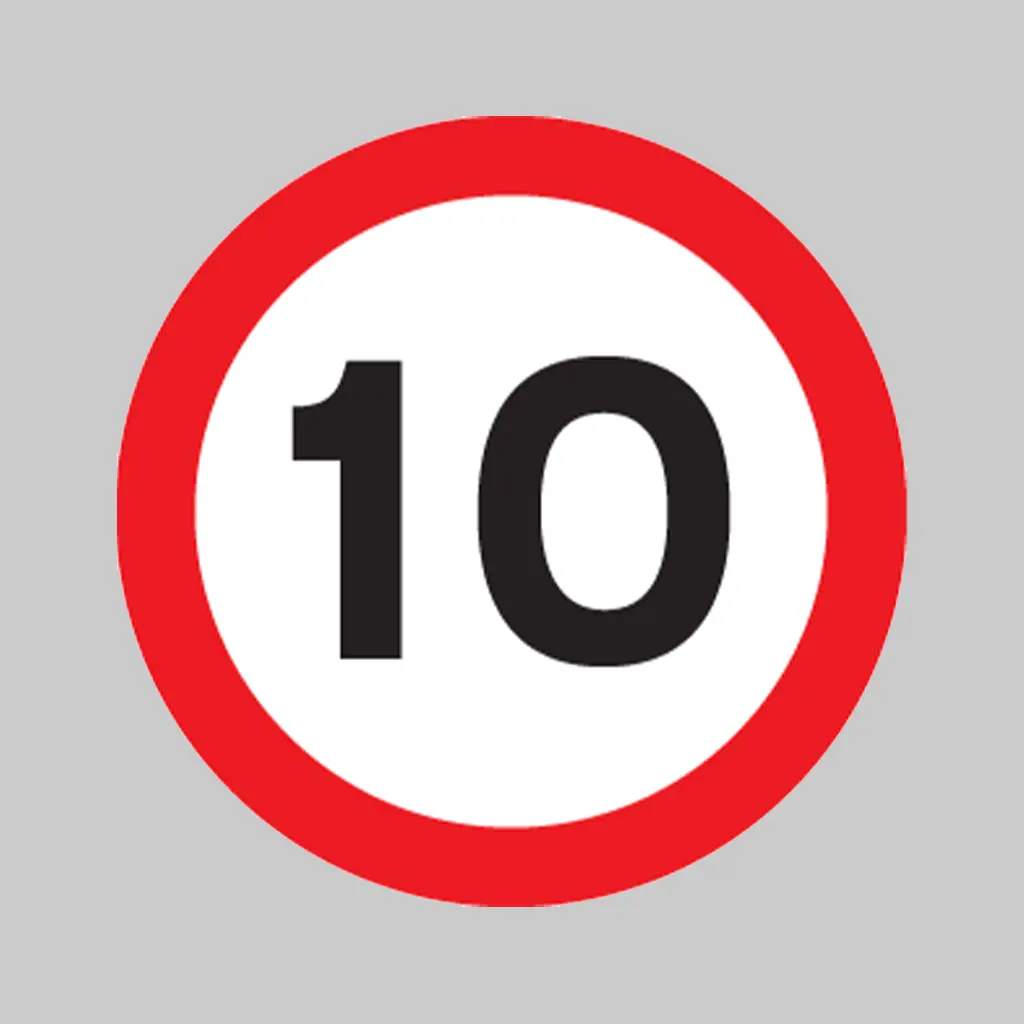 |
Diagram 670 | 10 mph Maximum Speed Limit | The 10 mph Maximum Speed Limit symbol indicates that vehicles must not exceed a maximum speed of 10 miles per hour where that speed restriction applies. The number displayed within the red circle represents the maximum permitted speed, although drivers should travel more slowly where road, traffic or site conditions make this necessary. |
A 10 mph speed limit may be used in very low-speed environments such as private roads, industrial premises, access routes, car parks, construction sites or other areas where vehicles operate close to pedestrians, buildings or restricted spaces. Where Diagram 670 is used on a public road, the speed restriction must be supported by the appropriate legal traffic regulation and correctly signed. Using the 10 mph Maximum Speed Limit sign provides a clear visual instruction that vehicle speeds must be kept particularly low. It can help reduce the risk and severity of collisions in confined or pedestrian-heavy areas and supports safer vehicle movement where visibility, manoeuvring space or interaction with other road users is limited. |
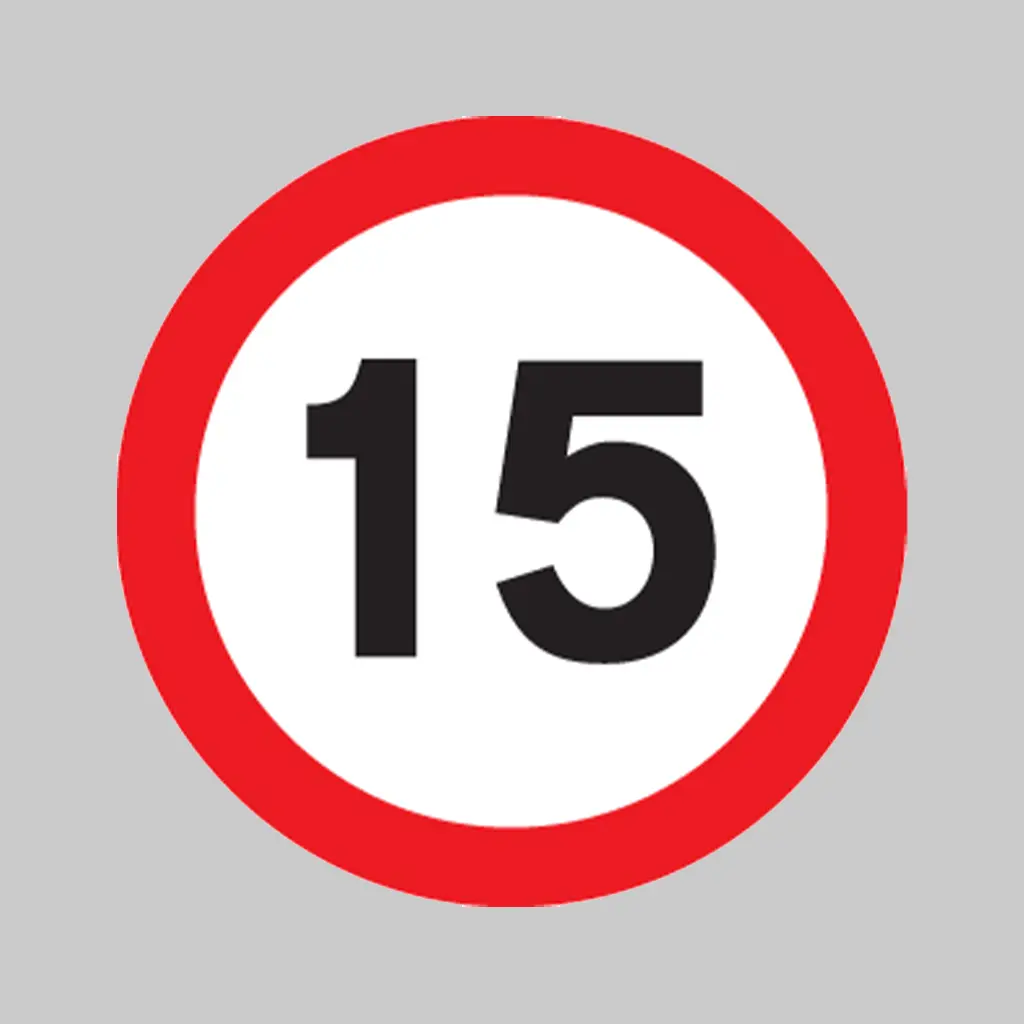 |
Diagram 670 | 15 mph Maximum Speed Limit | The 15 mph Maximum Speed Limit symbol indicates that vehicles must not exceed a maximum speed of 15 miles per hour where that speed restriction has been lawfully imposed. The number displayed within the red circle shows the maximum permitted speed, although drivers should always travel more slowly where road, traffic or site conditions require it. |
A 15 mph sign may be encountered on access roads, construction routes, private estates, industrial premises and other low-speed environments where vehicle movement needs to be carefully controlled. Where Diagram 670 is used on a public road, the displayed speed limit must be supported by the appropriate legal traffic restriction and installed in accordance with the relevant traffic-sign requirements. Using a 15 mph Maximum Speed Limit sign provides a clear visual indication that very low vehicle speeds are required. It can help reduce vehicle speeds around pedestrians, site traffic, restricted-access areas and locations with limited visibility or manoeuvring space, supporting safer interaction between vehicles and other road users. |
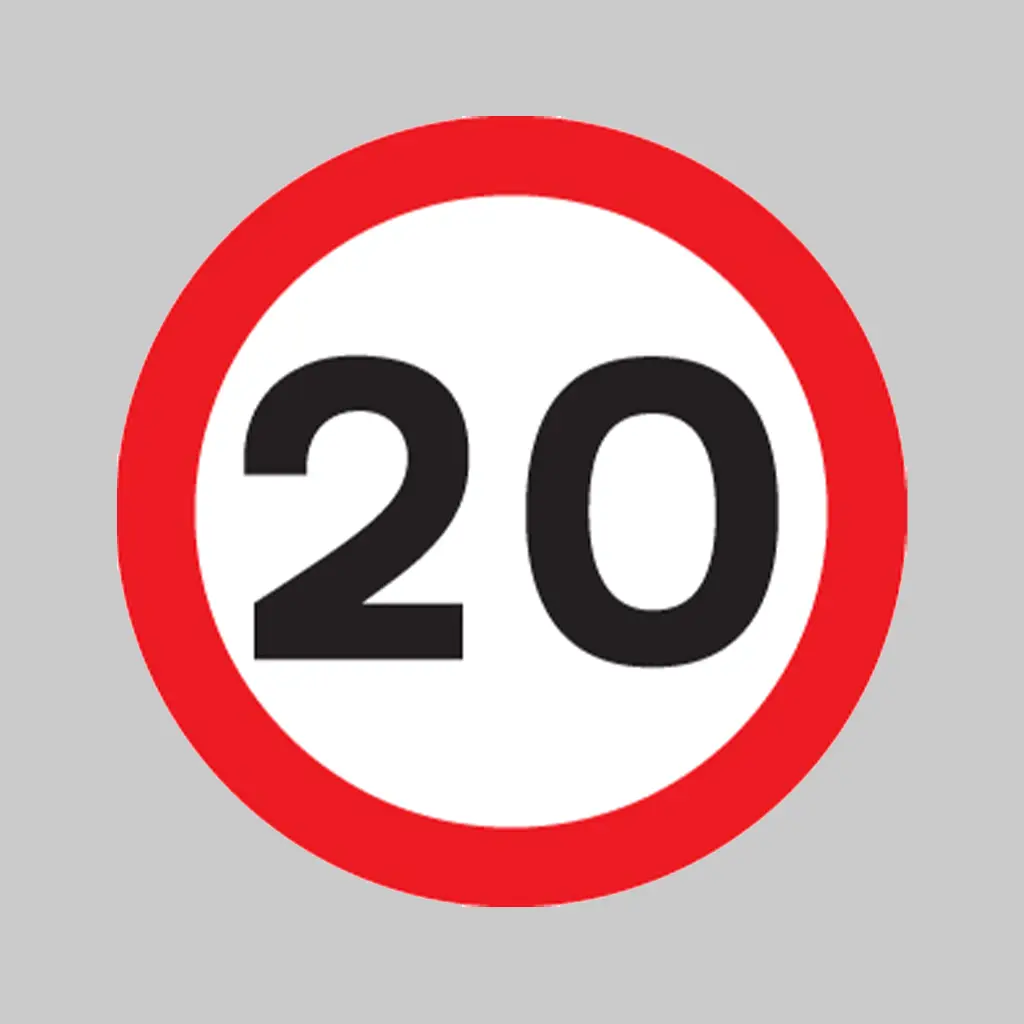 |
Diagram 670 | 20 mph Maximum Speed Limit | The 20 mph Maximum Speed Limit symbol indicates that vehicles must not exceed a maximum speed of 20 miles per hour from the point where the restriction begins. It is a regulatory sign, and the number shown within the red circle represents the legal maximum speed permitted, although drivers should travel more slowly where road, traffic or weather conditions make this necessary. |
This sign is commonly used at the start of a 20 mph speed limit, including on residential roads, town and city streets, school areas and other locations where lower vehicle speeds are considered appropriate. Standard 20 mph limits use Diagram 670 terminal signs and may also use smaller Diagram 670 repeater signs to remind drivers that the restriction remains in force. Using the 20 mph Maximum Speed Limit sign provides a clear and standardised way of showing where a lower legal speed limit applies. It helps drivers recognise changes in the prevailing limit and supports lower vehicle speeds in areas where pedestrians, cyclists and other road users may be more exposed to traffic. |
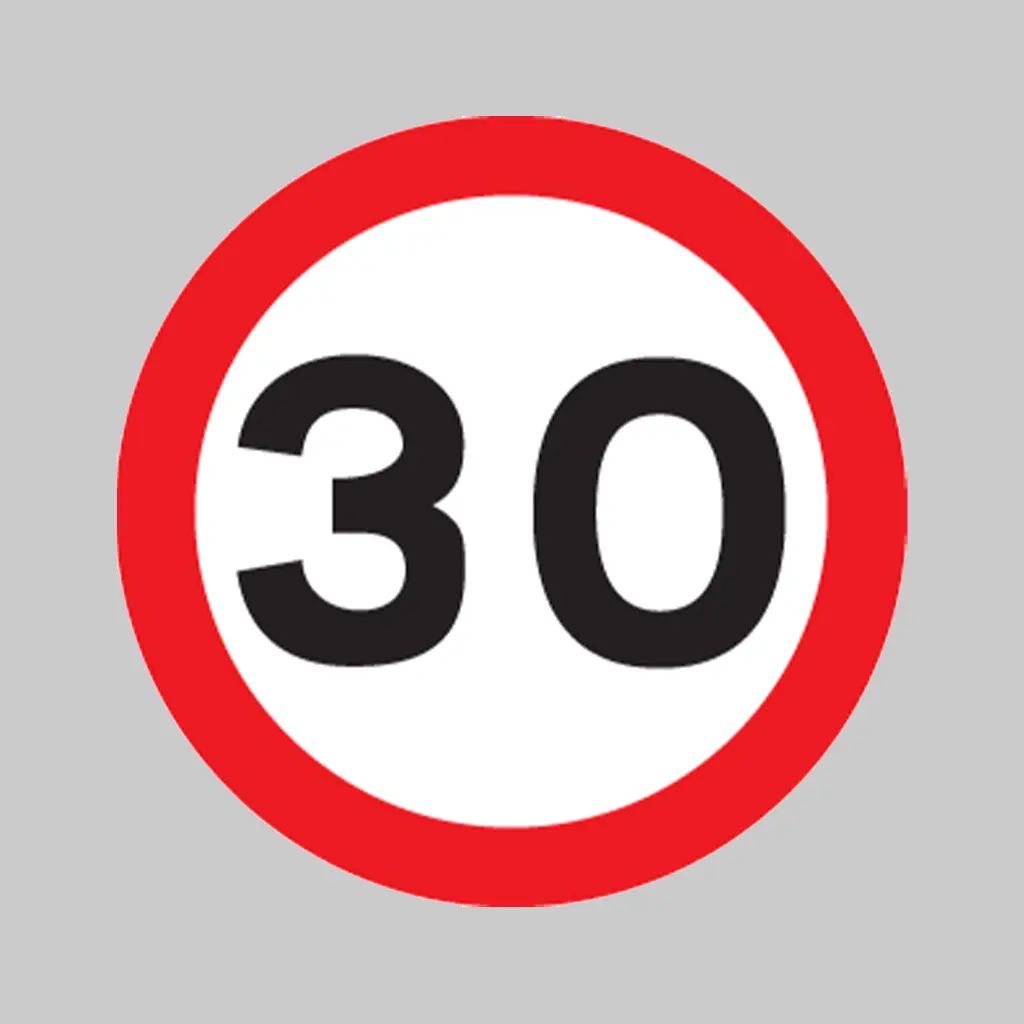 |
Diagram 670 | 30 mph Maximum Speed Limit | The 30 mph Maximum Speed Limit symbol indicates that vehicles must not exceed a maximum speed of 30 miles per hour from the point where the restriction begins. It is a regulatory sign, and the number shown inside the red circle represents the legal maximum speed permitted, although drivers may need to travel more slowly where road, traffic or weather conditions require it. |
This sign is commonly used at the start of a 30 mph speed limit, including on roads entering built-up areas or where the speed limit changes from a higher value. Terminal signs should be positioned so that drivers can clearly identify the point at which the new limit takes effect. Diagram 670 may also appear as smaller repeater signs where permitted, although 30 mph repeater signs are generally used only on roads without street lighting. Clear speed-limit signing helps drivers recognise changes in the legal maximum speed and supports consistent, safer vehicle speeds through residential, urban and other lower-speed areas. |
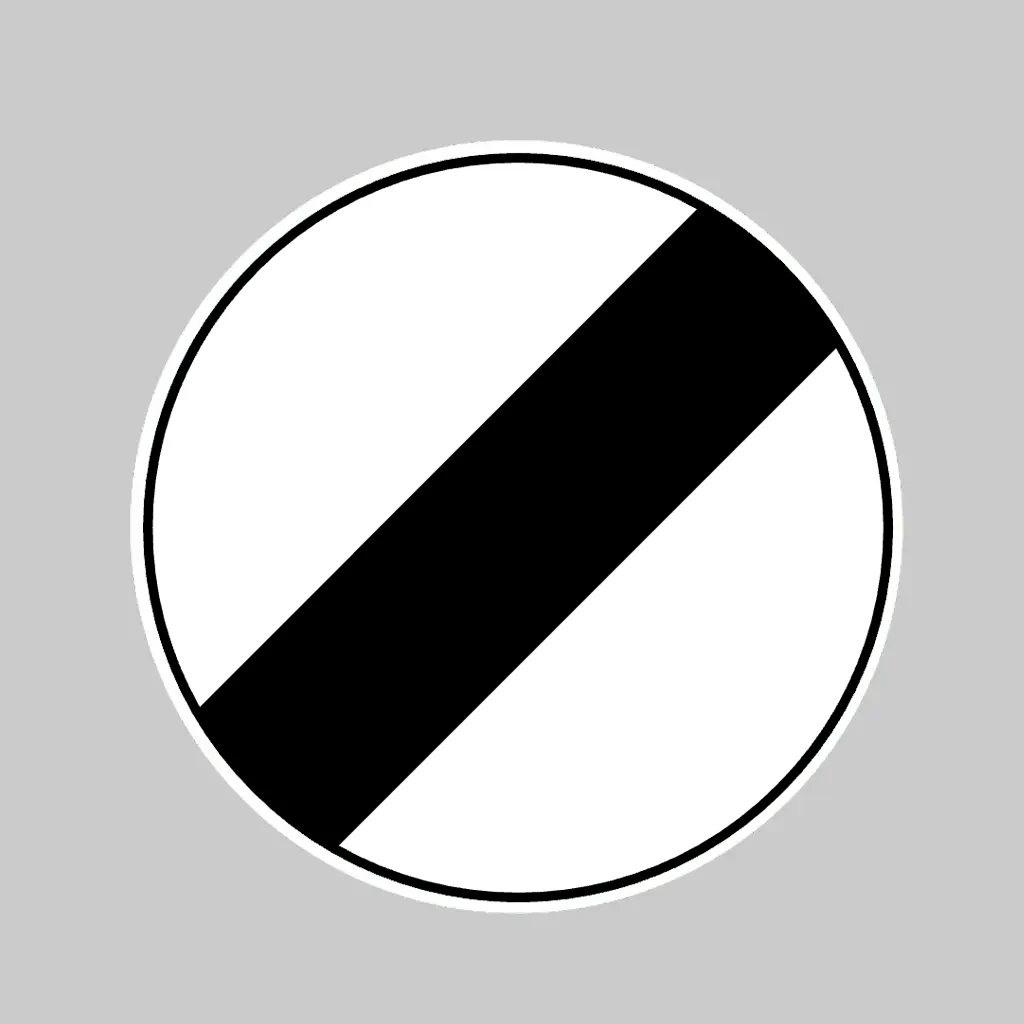 |
Diagram 671 | National Speed Limits Apply | The National Speed Limits Apply symbol indicates that the national speed limit now applies to the road ahead. It is used where a previously signed speed restriction ends, and drivers must then follow the national limit appropriate to the type of road and the class of vehicle they are driving. |
This sign is commonly positioned at the point where a lower local speed limit ends and the national speed limit begins. The Traffic Signs Manual states that Diagram 671 should be placed as near as practicable to the point where the national speed limit takes effect, helping drivers clearly recognise the change in restriction. Using the National Speed Limits Apply sign provides a clear and standardised way of showing that a specific local speed limit has ended. It helps prevent uncertainty about the prevailing limit and reminds drivers that the legal maximum may differ depending on whether they are travelling on a single carriageway, dual carriageway or motorway and on the type of vehicle being driven. |
| Symbol | Code | Name | Meaning | Typical use |
|---|---|---|---|---|
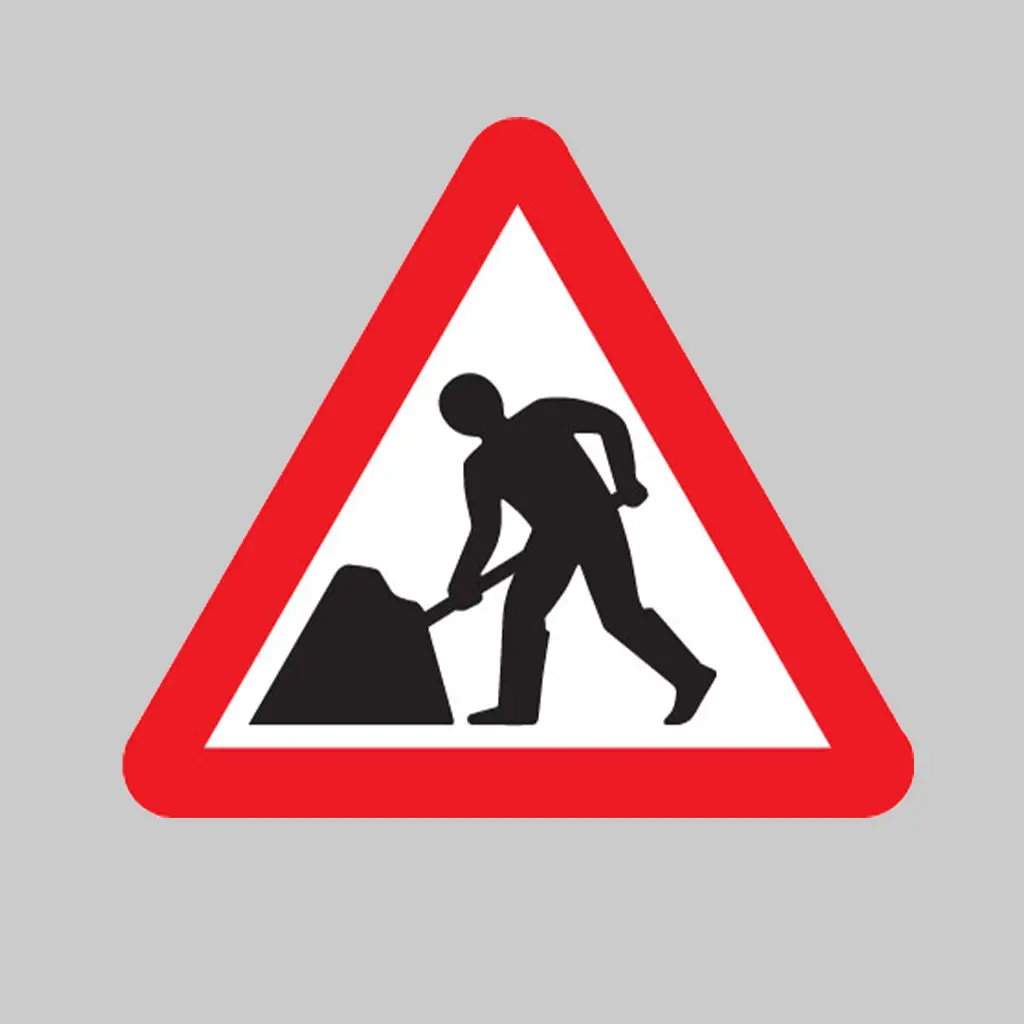 |
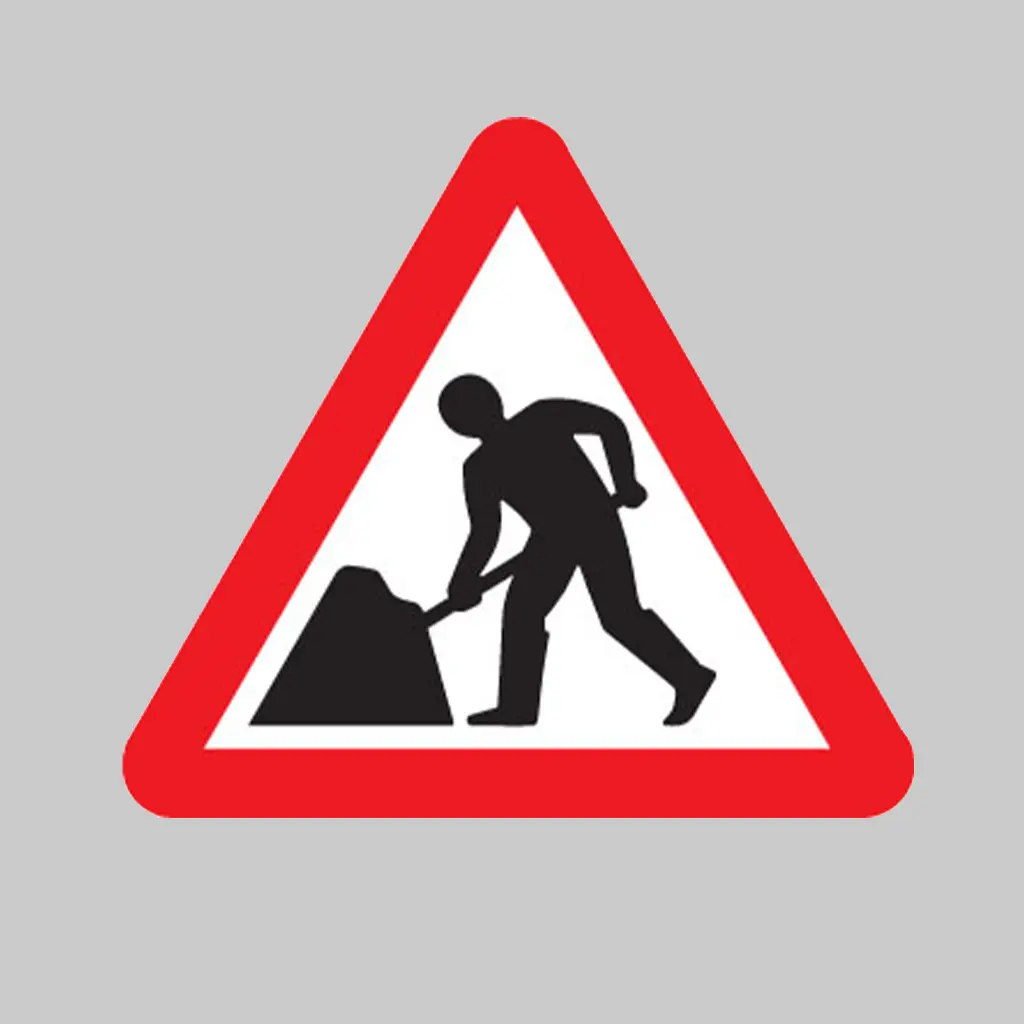
Diagram 7001 | Road Works / Temporary Obstruction Ahead | The Road Works / Temporary Obstruction Ahead symbol warns drivers that road works, maintenance activity or another temporary obstruction is present on or near the carriageway ahead. It is intended to encourage motorists to reduce speed, increase observation and be prepared for changes such as narrowed lanes, temporary signals, workers in the road or altered traffic routes. |
This sign should be used on approaches to road works as an advance warning to drivers. Department for Transport guidance states that road works sites should normally display Diagram 7001 on each approach as the first sign seen by drivers, with distance information added where appropriate. It can be used for anything from major construction schemes to relatively minor maintenance operations. Diagram 7001 may also be combined with supplementary plates giving information about the distance to the works, the length of the affected section or the particular activity taking place, such as Grass cutting, Line painting or Mobile road works. Using the sign provides clear advance warning of temporary hazards and helps drivers adjust their speed and position before entering the works area. |
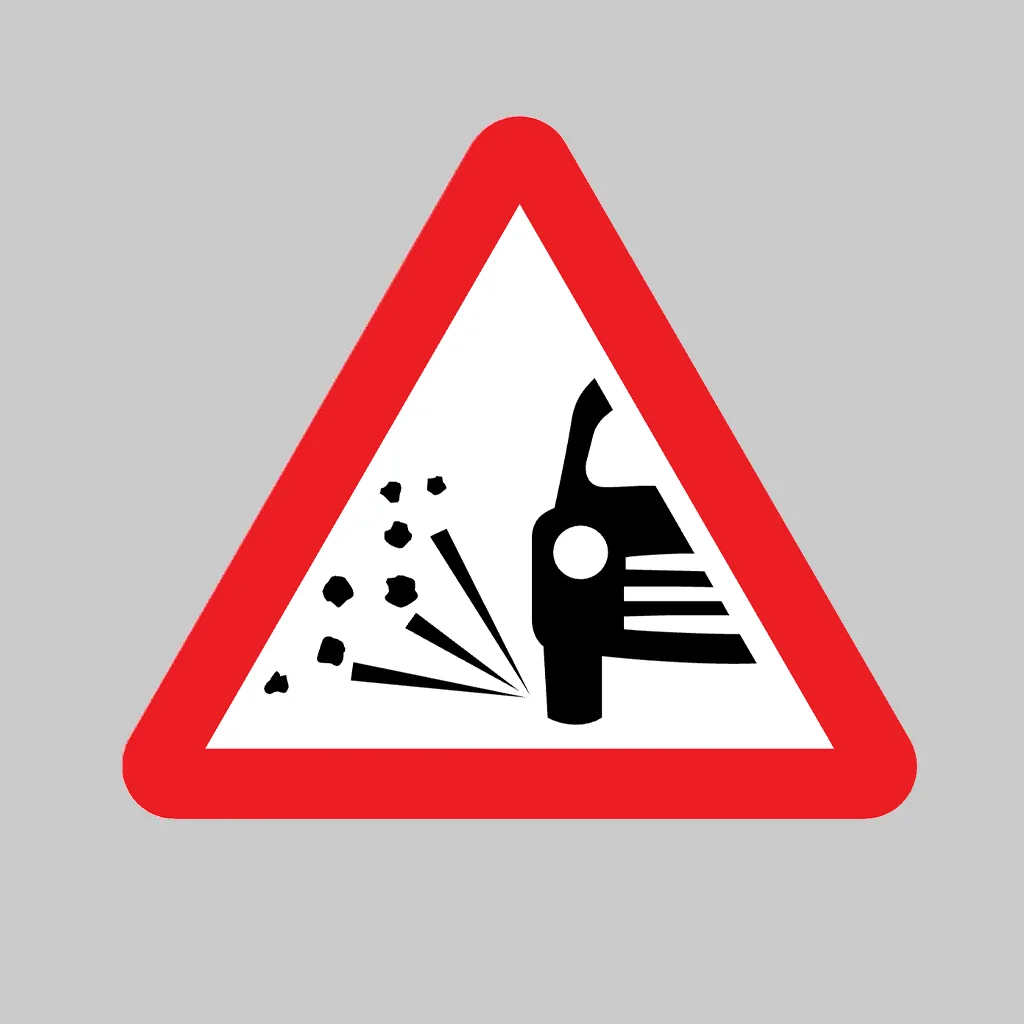 |
Diagram 7009 | Loose Chippings on Road Ahead | The Loose Chippings on Road Ahead symbol warns drivers that loose stones or chippings may be present on the carriageway ahead. These can reduce tyre grip and increase the risk of skidding, while passing vehicles may also throw loose material into the path of other road users. |
This sign is mainly used during and after surface-dressing operations, where fresh stone chippings have been spread across the road surface. It should remain in position for as long as the loose material continues to present a hazard to traffic. Diagram 7009 is commonly accompanied during works by an advisory maximum-speed plate, helping drivers reduce speed while the chippings are being embedded into the road surface. Clear advance warning encourages smoother braking, greater following distances and lower speeds, helping reduce skidding and damage caused by flying stones. |
Understanding Road Traffic Symbols and their Reflectivity
Road traffic symbols are designed to remain clear and recognisable in a wide range of conditions, including at night and during poor weather. Alongside standardised shapes, colours and pictograms, many UK road traffic signs use retroreflective sheeting to return light from vehicle headlights back towards the driver, improving visibility after dark. Reflective performance is commonly classified under BS EN 12899-1, the standard covering fixed vertical road traffic signs and their components. Depending on the application, sign faces may use materials meeting classes such as RA1 or RA2, while higher-performance microprismatic sheeting may be specified to meet classes such as R3B-UK. The appropriate level of reflectivity can depend on factors including road type, traffic speed, sign position, surrounding lighting and viewing angle. Maintaining suitable retroreflective performance is therefore an important part of effective road signage, as faded, damaged or poorly performing sign faces can make warnings, restrictions and directions harder for drivers to identify in sufficient time.
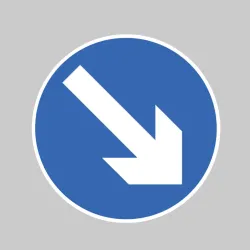
Keep Right - Class R2 - Permanent Safety Signs
Used to direct traffic to remain on the right-hand side of a road, lane, or around a fixed obstruction. It provides clear, permanent guidance to drivers, helping to prevent collisions and maintain orderly traffic flow, particularly around medians, traffic islands, roadworks, or other permanent obstacles. The channelling feature enhances visibility and ensures vehicles follow the intended path, red..
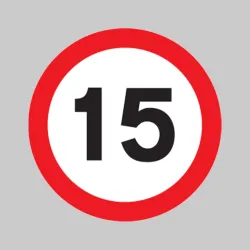
15mph - Class R2 - Permanent Safety Signs
Traffic sign design to Chapter 8, DfT and TSRGD guidelinesClass R2 is a high intensity prismatic material designed to retain a high reflectivity level for a minimum of 12 years and are CE-marked for use as permanent traffic signs as required by lawClass R2 traffic signs are manufactured from a 3mm aluminium composite making them lightweight and eliminating scrappage values, reducing the potential ..
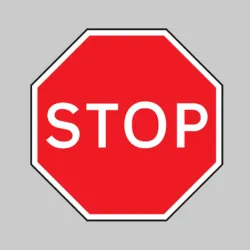
Stop - Class R2 - Permanent Safety Signs
Used to request vehicles to come to a complete stop at a specific location, ensuring safe interaction with other traffic, pedestrians, or hazards. It provides permanent, clear guidance for drivers to halt before proceeding, reducing the risk of collisions at junctions, intersections, or controlled access points. The channelling feature enhances visibility and directs vehicles to the correct stoppi..
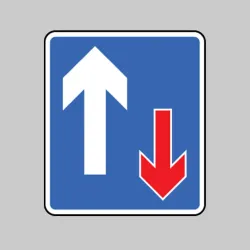
Vehicle Priority - Class R2 - Permanent Safety Signs
Traffic sign design to Chapter 8, DfT and TSRGD guidelinesClass R2 is a high intensity prismatic material designed to retain a high reflectivity level for a minimum of 12 years and are CE-marked for use as permanent traffic signs as required by lawClass R2 traffic signs are manufactured from a 3mm aluminium composite making them lightweight and eliminating scrappage values, reducing the potential ..
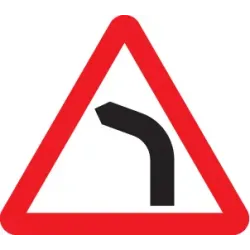
Bend Ahead - Left Safety Signs
Warn drivers of an upcoming left-hand bend in the road, giving them time to reduce speed and adjust their driving accordingly. This advance warning helps prevent loss of control, skidding, or accidents, especially in areas where visibility may be reduced due to curves, vegetation, or weather conditions. The sign plays a crucial role in maintaining smooth and safe traffic flow, particularly on rura..