
Mandatory Safety Sign FAQs
Written by the Technical Team at Caledonia Signs
Last reviewed: July 2026
Welcome to the Caledonia Signs Mandatory Signs Knowledge Centre
Mandatory safety signs are an essential part of workplace safety communication, providing clear instructions about actions that must be followed to reduce risk and protect employees, contractors, and visitors. From requiring the use of personal protective equipment (PPE) to directing people to follow specific safety procedures, these signs help ensure important safety requirements are understood and followed in a wide range of working environments.
Choosing and using the correct mandatory safety signs can raise many questions, including what the signs mean, where they should be displayed, which regulations apply, and what types of instructions they communicate. Understanding the purpose of these signs, their colours, symbols, and applications helps businesses create safer workplaces and ensure that safety messages are communicated clearly and consistently.
This page answers some of the most frequently asked questions about mandatory safety signs, including UK regulations, BS EN ISO 7010 standards, mandatory PPE symbols, sign placement, legal responsibilities, and the different types of instructions these signs provide. Whether you manage a factory, warehouse, construction site, office, laboratory, or commercial facility, this guide provides practical information to help you select and use the right mandatory signage.
Effective mandatory safety signage works alongside risk assessments, employee training, safe working procedures, and other control measures to reduce workplace hazards. By displaying clear, compliant mandatory signs in the correct locations, businesses can improve safety awareness, reinforce essential instructions, and create a safer environment for everyone on site.
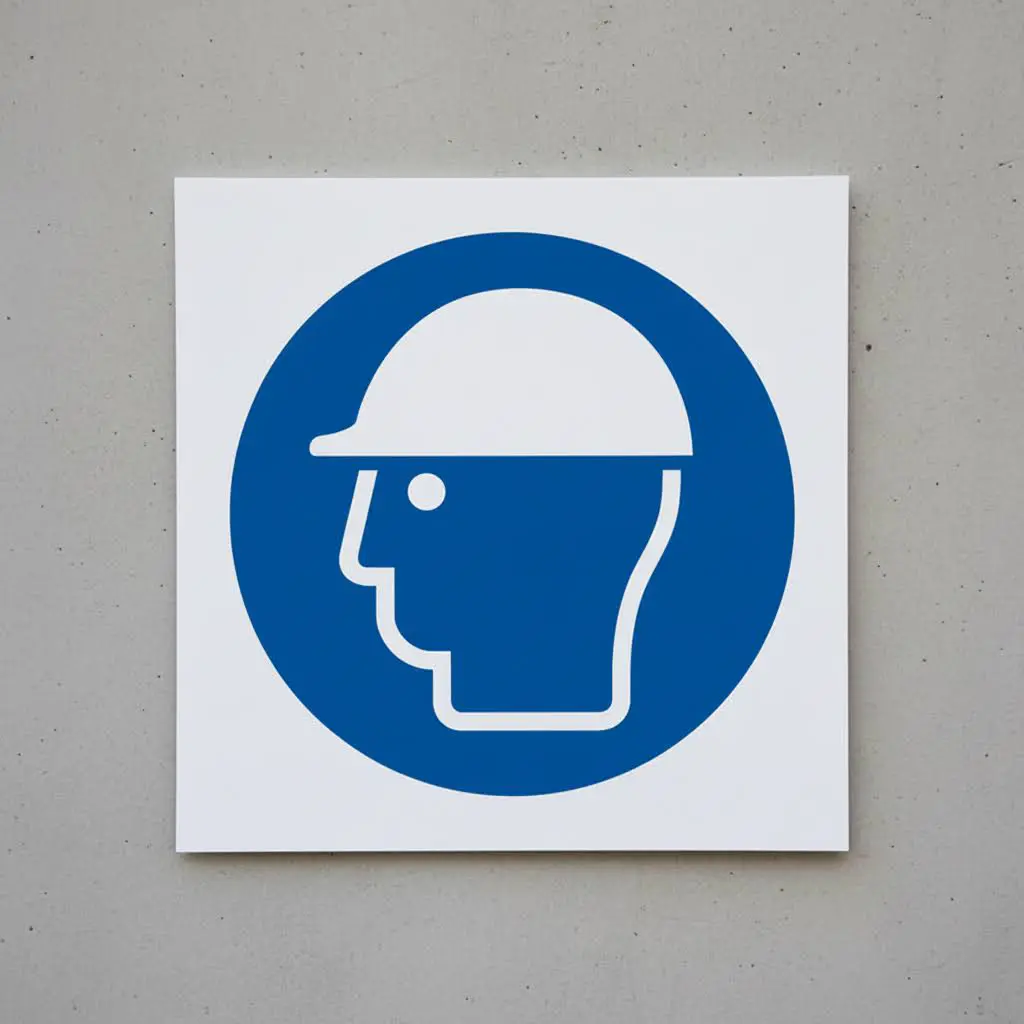
What regulations apply to mandatory safety signs in the UK?
In the UK, mandatory safety signs are covered primarily by the Health and Safety (Safety Signs and Signals) Regulations 1996. These regulations require employers to provide suitable safety signs where risks cannot be avoided or adequately controlled through other measures. Where a specific safety instruction must be followed, a mandatory sign can be used to communicate the required action clearly to employees, contractors, and visitors.
Mandatory safety signs should follow recognised design standards, including BS EN ISO 7010, which provides internationally recognised safety symbols and pictograms. These signs typically feature a blue circular background with a white symbol, making them easy to identify as compulsory instructions. Examples include signs requiring the use of safety helmets, eye protection, hearing protection, safety footwear, or other personal protective equipment (PPE).
Employers must determine where mandatory safety signs are needed through suitable workplace risk assessments and should ensure signs are positioned where they can be seen before people enter an area or begin a task. The signs should be clear, legible, and maintained in good condition so that safety instructions remain effective over time.
While mandatory safety signs are an important part of workplace safety communication, they should be used alongside other control measures such as training, safe working procedures, and appropriate PPE. Correctly selected and installed mandatory signs help businesses meet their responsibilities under UK health and safety legislation and promote safer working practices across workplaces.
What does a mandatory safety sign mean?
A mandatory safety sign means that a specific action, behaviour, or safety precaution must be followed in a particular area or situation. These signs are used to provide clear instructions that help control workplace risks and ensure employees, contractors, and visitors follow essential safety procedures. Unlike warning signs, which highlight a potential hazard, mandatory signs tell people what they are required to do to stay safe.
Mandatory safety signs are easily identified by their blue circular background with a white symbol or pictogram. The blue colour indicates that the instruction is compulsory, while the symbol shows the required action. These signs follow recognised safety sign principles, including BS EN ISO 7010, to ensure they are quickly understood and consistent across different workplaces and industries.
Common examples of mandatory safety signs include Wear Safety Helmet, Wear Eye Protection, Wear Safety Footwear, Wear Hearing Protection, Wear High Visibility Clothing, Use Hand Protection, and Keep to Designated Walkways. They are commonly displayed in factories, warehouses, construction sites, workshops, laboratories, and areas where specific safety controls are required.
Mandatory safety signs are an important part of workplace health and safety communication in the UK. By clearly showing what actions must be taken, they help reinforce safe working practices, support risk control measures, and reduce the likelihood of accidents. Signs should be positioned where they are clearly visible before people enter a relevant area and should be regularly checked to ensure they remain effective.
Where should mandatory safety signs be displayed?
Mandatory safety signs should be displayed in locations where employees, contractors, and visitors need to be reminded of a specific action that must be followed to reduce risk. Signs should be positioned where people can see them before entering a hazardous area, starting a task, or reaching a point where the safety instruction applies. Correct placement ensures that individuals have enough time to understand and follow the required safety measure.
Common locations for mandatory safety signs include entrances to workplaces, production areas, warehouses, construction sites, workshops, machinery zones, and areas where personal protective equipment (PPE) is required. For example, signs such as “Wear Safety Helmet”, “Wear Eye Protection”, or “Wear Hearing Protection” should be placed at access points where the relevant PPE must be worn before entering the area.
Mandatory signs should be installed at eye level and in positions where they are clearly visible, well lit, and not blocked by equipment, stored materials, doors, or other workplace items. In larger sites, additional signs may be needed along access routes or near specific hazards to ensure instructions remain visible and are not missed during normal working activities.
The location and number of mandatory safety signs should be determined through a suitable risk assessment and reviewed whenever workplace conditions change. Signs that follow recognised standards such as BS EN ISO 7010 and are correctly positioned help reinforce safe working practices, improve compliance with site rules, and support a safer environment for everyone.
Caledonia Signs Expert Tip: Display Before People Need to Take Action
Mandatory safety signs are most effective when they are seen before the required action is needed. For example, a “Wear Safety Helmet” or “Wear Eye Protection” sign should be positioned at the entrance to a work area, not after someone has already entered the hazard zone. This gives employees, contractors, and visitors time to understand and follow the instruction.
Use BS EN ISO 7010-compliant mandatory signs with the recognised blue circular design, and make sure they are clearly visible, well maintained, and not hidden by equipment, stock, or machinery. Regularly review sign locations as part of workplace risk assessments, especially after changes to layouts, processes, or safety procedures, to ensure instructions remain clear and effective.
What PPE signs are considered mandatory safety signs?
PPE signs that are considered mandatory safety signs are those that instruct people that specific personal protective equipment must be worn in a particular area or when carrying out a certain activity. These signs communicate a compulsory safety action and help ensure that employees, contractors, and visitors use the correct protective equipment to reduce the risk of injury.
Mandatory PPE signs are easily recognised by their blue circular background with a white pictogram, following the principles of BS EN ISO 7010 safety signage. Common examples include Wear Safety Helmet, Wear Eye Protection, Wear Hearing Protection, Wear Safety Footwear, Wear Protective Gloves, Wear High Visibility Clothing, and Wear Respiratory Protection. These signs provide a quick and consistent visual reminder of the PPE requirements for a specific area.
PPE mandatory signs are commonly used in workplaces such as factories, warehouses, construction sites, workshops, laboratories, and areas where machinery, vehicles, chemicals, noise, dust, or other hazards are present. They are typically displayed at entrances to areas where PPE is required, near equipment, or at points where a particular task begins.
In the UK, employers must assess workplace risks and provide appropriate controls, including PPE where necessary. Mandatory PPE signs form part of effective safety communication by reinforcing site rules and reminding people of the precautions they must take. When correctly selected, positioned, and maintained, these signs help improve compliance with PPE requirements and support a safer working environment.
What symbol is used on mandatory safety signs?
The symbol used on mandatory safety signs is a white pictogram on a blue circular background. The blue circle indicates that the instruction is compulsory, while the white symbol shows the specific action that must be carried out. This standardised design allows people to quickly recognise that a safety instruction must be followed, even in unfamiliar workplaces or where multiple languages are spoken.
Mandatory safety sign symbols follow the principles of BS EN ISO 7010, which provides internationally recognised safety pictograms for workplace and public safety communication. The symbols are designed to be simple, clear, and easy to understand, helping reduce confusion and ensuring safety messages are communicated consistently.
Common mandatory sign symbols include a person wearing a safety helmet, eye protection, ear protection, safety footwear, or protective gloves. Other examples include symbols requiring the use of respiratory protection, high-visibility clothing, hand washing, or designated pedestrian routes. Each pictogram represents an action that must be completed to help control a workplace risk.
Using the correct mandatory safety sign symbols helps reinforce safe working practices and ensures important instructions are noticed before people enter a specific area or carry out a task. Signs should be clearly displayed, kept visible, and maintained in good condition to remain effective as part of a wider workplace health and safety system.
What types of instructions do mandatory safety signs communicate?
Mandatory safety signs communicate instructions that must be followed to help protect people from workplace hazards and ensure safe working practices. Unlike warning signs, which alert people to a potential danger, mandatory signs tell employees, contractors, and visitors what action they are required to take in a particular area or during a specific activity.
The most common mandatory instructions relate to the use of personal protective equipment (PPE). These include requirements such as wear safety helmets, wear eye protection, wear hearing protection, wear safety footwear, wear protective gloves, wear high-visibility clothing, and use respiratory protection. These signs are commonly displayed in factories, warehouses, construction sites, workshops, and other environments where PPE is necessary to reduce risk.
Mandatory safety signs can also communicate other required behaviours, such as use designated pedestrian routes, wash hands, keep fire doors closed, follow safety procedures, or use specific access routes. They are often placed at entrances, near machinery, or at points where a particular safety action must be taken before entering an area or starting a task.
Mandatory signs are recognised by their blue circular background with a white pictogram, following the principles of BS EN ISO 7010 safety signage. When correctly selected, positioned, and maintained, these signs provide clear visual instructions, reinforce workplace rules, and help support a safer environment for employees, contractors, and visitors.
Looking for Safety Signs?
Caledonia Signs is one of the UK's leading trade-only manufacturers of safety signage, supplying an extensive network of distributors throughout the UK and overseas. If you're an end user looking to purchase safety signs, we'd still be delighted to help. Simply contact us with details of your requirements and we'll be happy to recommend a suitable distributor in your area. Interested in becoming a distributor? Contact our team to discuss opening a trade account and gaining access to our full product range, trade pricing and online ordering portal.
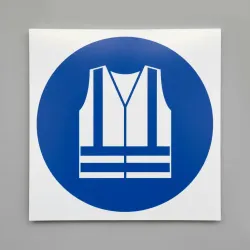
High Visibility Clothing Symbol Safety Signs
Using a High Visibility Clothing Symbol sign offers several important benefits in workplaces where visibility is critical for safety. This symbol provides a clear, universally recognised reminder that high-visibility clothing is required in the area, helping to ensure workers and visitors wear the appropriate protective gear to stay visible. One key benefit is that the symbol enhances safety b..

Eye Protection Symbol Safety Signs
Serving as a universal visual reminder that protective eyewear is required in a specific area. Its clear and simple icon helps communicate safety requirements quickly, even across language barriers, making it an effective tool to promote eye safety. Typically used in workplaces such as construction sites, manufacturing plants, laboratories, chemical processing areas, and woodworking shops, wher..

Ear Protection Symbol Safety Signs
An Ear Protection Symbol sign is essential in environments where exposure to loud noise levels poses a risk to hearing health. This universally recognised symbol quickly communicates the requirement to wear ear protection, helping to safeguard workers and visitors from noise-induced hearing damage. These signs are commonly used in places such as manufacturing plants, construction sites, airport..
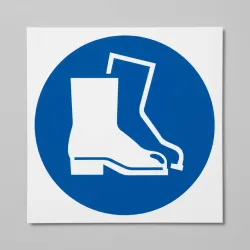
Safety Footwear Symbol Safety Signs
A visual sign used to indicate that protective footwear must be worn in a specific area. The symbol typically depicts a boot or shoe with reinforced toe caps or a safety helmet on a foot, often enclosed in a blue circle to catch attention and clearly communicate the safety requirement without words. This symbol is commonly used on signs at entrances to construction sites, factories, warehouse..

Hand Protection Symbol Safety Signs
A visual safety sign that indicates the mandatory use of protective gloves or handwear in a specific area. The symbol typically shows a stylised hand wearing a glove, often inside a blue circle, which is a common design for mandatory safety signs. This symbol is used in workplaces like laboratories, construction sites, factories, chemical plants, medical facilities, and any area where hands a..

Respirator Symbol Safety Signs
A safety icon used to indicate that respiratory protection must be worn in a specific area. Typically, the symbol features a stylised face wearing a respirator mask, often shown inside a blue circle, which is the standard shape and colour for mandatory safety signs. This symbol is commonly found in workplaces such as chemical plants, laboratories, construction sites, painting areas, or any en..

Masks Symbol Safety Signs
A visual safety icon used to indicate that wearing a protective mask or face covering is mandatory in a specific area. The symbol usually depicts a simple outline of a face wearing a mask, often enclosed within a blue circle, aligning with the standard design for mandatory safety signs. This symbol is commonly used in workplaces such as healthcare facilities, laboratories, manufacturing plant..

Wash Hands Symbol Safety Signs
A Wash Hands Symbol sign is used to remind everyone to maintain good hand hygiene by washing their hands regularly. This simple but vital practice helps reduce the spread of germs, bacteria, and viruses, protecting both individual health and the wider community from illnesses. These signs are commonly placed in restrooms, kitchens, food preparation areas, medical facilities, laboratories, chi..

! - Mandatory - Exclamation Symbol Safety Signs
Used to indicate that there is a specific safety instruction or action that must be followed to ensure safety in a particular area or while performing a certain task. This symbol acts as a clear reminder that compliance with the associated rule or precaution is not optional but required. It often accompanies mandatory safety measures such as wearing personal protective equipment (PPE), following s..