
Designated Smoking Area Signs FAQs
Written by the Technical Team at Caledonia Signs
Last reviewed: July 2026
Welcome to the Caledonia Signs Designated Smoking Area Signs Knowledge Centre
The Designated Smoking Area Signs Knowledge Centre provides clear answers to common questions about smoking area signage, workplace smoking policies, and the role of signs in managing designated smoking locations. Clear and effective signage helps employees, visitors, and contractors understand where smoking is permitted while supporting smoke-free areas throughout workplaces and public environments.
Understanding designated smoking area signs can raise many questions, including whether they are required by UK law, where smoking areas should be located, what information signs should include, and how they should be displayed. Organisations need to consider safety, visibility, and effective communication when creating and managing designated smoking areas.
This Knowledge Centre answers frequently asked questions about designated smoking area signs, including UK regulations, no smoking requirements, smoking shelters, sign placement, workplace responsibilities, and best practices for maintaining clear smoking area information. Whether you manage an office, factory, warehouse, construction site, hospitality venue, or commercial building, this guide provides practical information to help you make informed decisions about smoking signage.
Effective smoking area signage forms part of a wider approach to workplace management and safety. By clearly identifying permitted smoking locations, maintaining visible signs, and supporting smoke-free policies, organisations can help reduce confusion, improve site organisation, and create a safer and more comfortable environment for everyone.
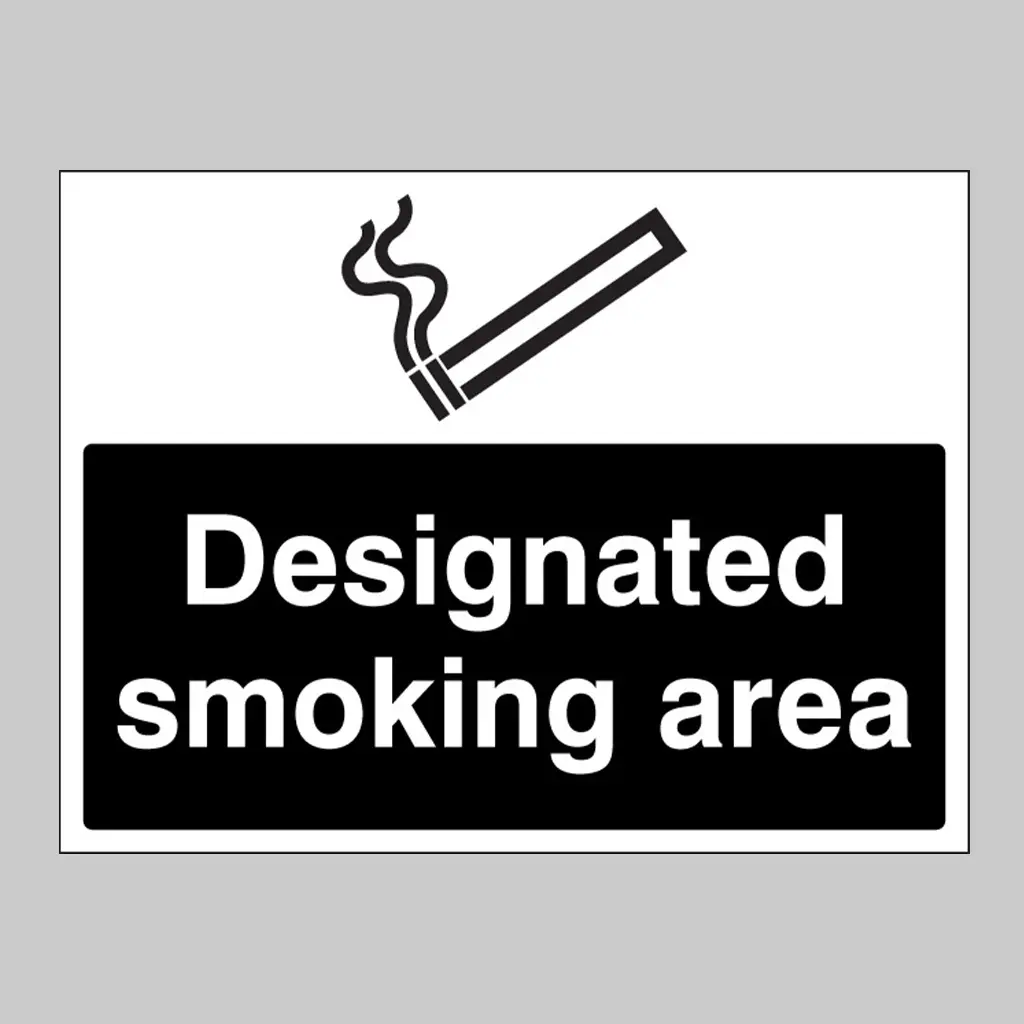
What are designated smoking area signs?
Designated smoking area signs are safety signs used to clearly identify areas where smoking is permitted within a workplace, commercial premises, or public location. They provide clear guidance to employees, visitors, and contractors by showing where smoking is allowed and helping to separate smoking areas from smoke-free zones.
These signs are commonly used in workplaces, factories, warehouses, hospitality venues, construction sites, transport facilities, and other commercial environments where organisations choose to provide a specific smoking area. They help prevent confusion by directing smokers to approved locations and reinforcing workplace smoking policies.
Designated smoking area signs typically include clear wording such as “Designated Smoking Area” along with recognised smoking symbols or pictograms. Signs should be easy to see, positioned in appropriate locations, and maintained so that the information remains clear and effective.
While UK law does not require employers to provide smoking areas, organisations that choose to provide them should clearly identify these locations and ensure they support wider health and safety arrangements. Effective smoking area signage works alongside No Smoking signs, workplace policies, and risk management procedures to help maintain a safer and more organised environment.
Where should designated smoking areas be located?
Designated smoking areas should be located in carefully chosen areas that allow smoking to take place away from people who do not smoke, building entrances, and other sensitive locations. The aim is to reduce exposure to second-hand smoke while providing a clearly controlled area for those who choose to smoke.
Smoking areas are commonly positioned outside buildings, away from entrances, exits, windows, air conditioning intakes, and busy pedestrian routes. They should not obstruct access routes, emergency exits, fire escape routes, or areas where people need to gather. The location should also take into account nearby workplaces, visitors, contractors, and members of the public.
Employers should consider factors such as ventilation, wind direction, fire risks, cleanliness, and the safe disposal of cigarette waste when selecting a designated smoking area. The area should be clearly marked with suitable signage so that users understand where smoking is permitted and where smoke-free boundaries apply.
The exact location of a designated smoking area will depend on the layout of the premises and the risks identified through workplace assessments. By choosing an appropriate location and clearly identifying the area, organisations can help maintain a safer, cleaner, and more comfortable environment for everyone on site.
What information should a smoking area sign include?
A smoking area sign should include clear information that identifies where smoking is permitted and helps people understand the boundaries of the designated area. The main purpose of the sign is to provide simple, visible guidance to employees, visitors, and contractors so that smoking takes place only in the approved location.
Typically, a designated smoking area sign should include wording such as “Designated Smoking Area” along with a recognised smoking symbol or pictogram. The message should be clear, easy to read, and visible from an appropriate distance so users can quickly identify the location.
Depending on the workplace or site requirements, additional information may be included, such as “Please Dispose of Cigarette Waste Responsibly”, reminders to keep the area clean, or instructions relating to workplace smoking policies. Organisations may also choose to include information about vaping, if separate rules apply on the premises.
Smoking area signs should be positioned clearly at the entrance or boundary of the designated area and maintained so they remain visible and effective. While the exact design may vary, good signage should support workplace policies, reduce confusion, and help maintain a safer and more organised environment.
Caledonia Signs Expert Tip: Easy to See
The most effective designated smoking area signs are placed at the entrance or boundary of the smoking area, where employees, visitors, and contractors can clearly identify where smoking is permitted before entering the space. Avoid placing signs where they are hidden by doors, vehicles, equipment, or other obstructions.
Make sure signs remain clear, visible, and well maintained by regularly checking for fading, damage, dirt, or wear. A damaged or unclear sign may no longer communicate the smoking area effectively and could lead to confusion about where smoking is allowed.
For the best results, use designated smoking area signs alongside workplace smoking policies, suitable cigarette waste disposal facilities, and clear No Smoking signs in prohibited areas. Good signage helps organisations manage smoking arrangements, reduce misunderstandings, and maintain a cleaner and more organised workplace environment.
Do smoking area signs need to comply with UK regulations?
Designated smoking area signs should follow relevant UK workplace safety and smoke-free requirements to ensure they provide clear and effective information. While there is no specific legal requirement for businesses to install designated smoking area signs, any signage used should be suitable, clearly understood, and appropriate for the environment where it is displayed.
UK legislation, including the Health Act 2006 and the Smoke-free (Premises and Enforcement) Regulations 2006, focuses on preventing smoking in enclosed and substantially enclosed workplaces and public places. These regulations require appropriate No Smoking signs in relevant smoke-free areas, but they do not prescribe a specific legal format for designated smoking area signs.
Where a designated smoking area is provided, clear signage helps organisations manage smoking arrangements and communicate expectations to employees, visitors, and contractors. Signs should be easy to identify, positioned in a suitable location, and maintained so that the information remains visible and effective.
Although designated smoking area signs are not subject to a specific mandatory UK standard, using recognised safety sign principles can help ensure consistency and clarity. Good-quality signage supports workplace policies, reduces confusion, and forms part of a wider approach to managing health, safety, and environmental considerations.
Are no smoking signs required in workplaces?
Yes, no smoking signs are required in many workplaces and smoke-free premises across the UK. Under the Health Act 2006 and the Smoke-free (Premises and Enforcement) Regulations 2006, employers and those responsible for certain premises must display appropriate no smoking signs to indicate that smoking is prohibited in smoke-free areas.
No smoking signs are required in enclosed and substantially enclosed workplaces, public buildings, and vehicles covered by smoke-free legislation. The purpose of these signs is to clearly communicate the smoking restrictions to employees, visitors, customers, and contractors, helping to prevent accidental breaches of the law.
A compliant no smoking sign should be clearly visible, easy to understand, and displayed at entrances and other suitable locations where people need to be made aware of the smoking restrictions. The sign should include the recognised no smoking symbol and provide a clear indication that smoking is not permitted.
Regular checks should be carried out to ensure no smoking signs remain visible, legible, and in good condition. Effective signage, combined with workplace smoking policies and appropriate management procedures, helps organisations maintain smoke-free environments and support the health and safety of everyone on site.
Do smoking shelters need signage?
Yes, smoking shelters should have clear signage to identify their purpose and help people understand where smoking is permitted. While UK law does not require every smoking shelter to display a specific designated smoking area sign, suitable signage is considered good practice and helps organisations manage smoking arrangements effectively.
A clearly marked smoking shelter helps prevent confusion by directing smokers to the correct location and reinforcing that smoking is not permitted in surrounding smoke-free areas. Signs should be positioned where they are easy to see, such as at the entrance to the shelter or nearby boundary areas, so employees, visitors, and contractors can quickly identify the designated smoking location.
Smoking shelters must still comply with UK smoke-free legislation. The Health Act 2006 and the Smoke-free (Premises and Enforcement) Regulations 2006 set requirements for enclosed and substantially enclosed workplaces and public spaces. A smoking shelter must be designed carefully to ensure it does not become a smoke-free area under these rules, and clear signage can help communicate the intended use of the space.
Using designated smoking area signs alongside good housekeeping measures, cigarette waste disposal facilities, and workplace smoking policies helps create a controlled and organised area. Regular checks should ensure signage remains visible, clean, and effective in supporting workplace safety and compliance.
Looking for Safety Signs?
Caledonia Signs is one of the UK's leading trade-only manufacturers of safety signage, supplying an extensive network of distributors throughout the UK and overseas. If you're an end user looking to purchase safety signs, we'd still be delighted to help. Simply contact us with details of your requirements and we'll be happy to recommend a suitable distributor in your area. Interested in becoming a distributor? Contact our team to discuss opening a trade account and gaining access to our full product range, trade pricing and online ordering portal.
There are no products to list in this category.