
Safety Poster FAQs
Written by the Technical Team at Caledonia Signs
Last reviewed: July 2026
Welcome to the Caledonia Signs Safety Poster Knowledge Centre
Workplace safety posters are an effective way to communicate important health and safety information, reinforce safe working practices, and promote a positive safety culture. Whether displayed in offices, factories, warehouses, construction sites, schools, or healthcare facilities, safety posters provide clear guidance on topics such as fire safety, first aid, manual handling, PPE, COSHH, emergency procedures, and general workplace safety. They help keep essential information visible and encourage employees to think about safety as part of their everyday work.
Many employers have questions about workplace safety posters, including which posters are legally required, where they should be displayed, how often they should be updated, and how they differ from safety signs. Choosing the right posters and placing them in the most effective locations can improve communication, reinforce employee training, and help ensure important safety messages are always easy to access.
This page answers some of the most frequently asked questions about workplace safety posters, including UK legal requirements, the official Health and Safety Law Poster, poster placement, maintenance, factory and warehouse applications, and best practices for using safety posters as part of an effective health and safety programme. Whether you manage a small office or a large industrial site, this guide will help you choose the right posters for your workplace.
Safety posters should be used alongside risk assessments, employee training, safe systems of work, and appropriate safety signage to create a comprehensive approach to workplace safety. By keeping posters up to date, displaying them in prominent locations, and selecting topics that reflect your workplace hazards, you can improve safety awareness, support legal compliance, and help create a safer working environment for everyone.
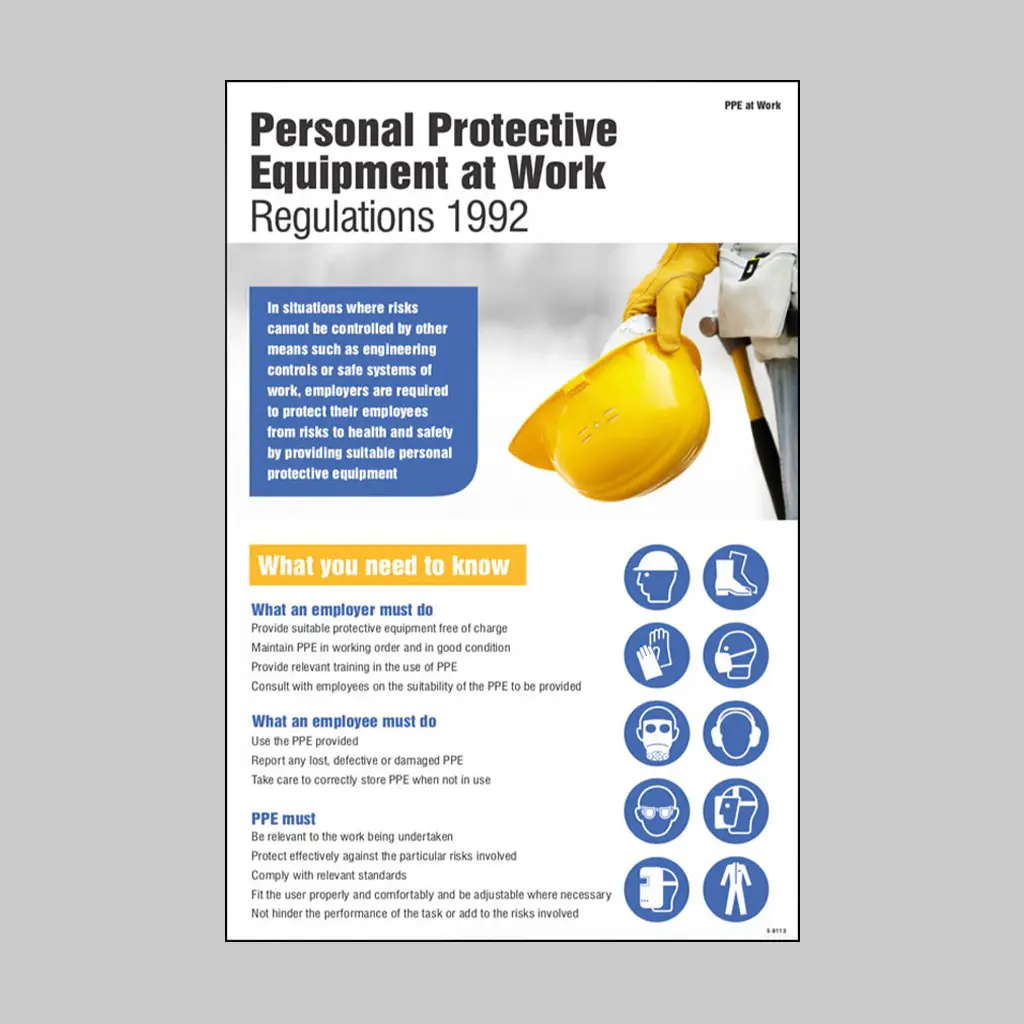
What are workplace safety posters?
Workplace safety posters are informative displays designed to communicate important health and safety information to employees, contractors, and visitors. Unlike safety signs, which provide immediate warnings or instructions about specific hazards, safety posters offer more detailed guidance, reminders, and educational information to promote safe working practices and raise awareness of workplace risks.
Safety posters cover a wide range of topics, including fire safety, first aid, manual handling, personal protective equipment (PPE), COSHH, electrical safety, forklift safety, working at height, emergency procedures, and workplace wellbeing. They are commonly displayed in offices, factories, warehouses, construction sites, schools, hospitals, workshops, and other workplaces where they reinforce safe behaviours and support employee training.
In the UK, one of the most well-known workplace posters is the Health and Safety Law Poster, which provides employees with key information about their rights and responsibilities under health and safety legislation. Depending on the nature of the business, employers may also display additional safety posters to communicate site-specific procedures, emergency contacts, or industry best practices.
Workplace safety posters form part of a wider health and safety management system. When displayed in prominent locations and kept up to date, they help reinforce training, encourage compliance with workplace procedures, and remind people of the actions needed to work safely. Combined with risk assessments, employee training, and appropriate safety signage, safety posters contribute to creating a safer and more informed working environment.
Why are safety posters important in the workplace?
Safety posters are important in the workplace because they provide clear, accessible reminders about safe working practices, helping to reinforce health and safety awareness every day. By displaying important information in prominent locations, safety posters encourage employees, contractors, and visitors to follow safe procedures, recognise potential hazards, and reduce the risk of accidents and injuries.
Unlike safety signs, which communicate immediate warnings or mandatory instructions, safety posters provide more detailed information on topics such as fire safety, first aid, manual handling, COSHH, personal protective equipment (PPE), electrical safety, and emergency procedures. They are valuable training aids that help reinforce key messages long after formal health and safety training has taken place.
Safety posters also support employers in promoting a positive safety culture throughout the workplace. Displaying relevant posters in staff rooms, workshops, warehouses, offices, factories, and other high-traffic areas keeps important health and safety information visible and encourages employees to make safe decisions as part of their everyday work.
While safety posters alone cannot prevent accidents, they are an effective way to communicate best practices and remind people of their responsibilities. Used alongside risk assessments, employee training, safe systems of work, and appropriate safety signage, workplace safety posters help create a safer, more informed, and more compliant working environment.
Where should workplace safety posters be displayed?
Workplace safety posters should be displayed in prominent locations where they are easy to see, read, and understand. The best locations are areas where employees, contractors, and visitors regularly pass or gather, ensuring important health and safety information is visible and readily accessible. Posters should be positioned at eye level where possible and kept free from obstructions.
Common locations for safety posters include staff rooms, canteens, reception areas, noticeboards, workshops, factories, warehouses, construction site welfare facilities, offices, changing rooms, and training rooms. Topic-specific posters should also be displayed close to the areas where they are most relevant. For example, manual handling posters should be placed near lifting operations, PPE posters at entrances to mandatory PPE zones, COSHH posters near chemical storage or usage areas, and fire safety posters adjacent to fire equipment or evacuation information.
Legally required posters, such as the Health and Safety Law Poster, should be displayed in a location where all employees can easily read them, such as a staff noticeboard or communal area. If employees work across multiple locations or shifts, employers should ensure everyone has access to the required health and safety information.
Safety posters should be inspected regularly to ensure they remain clean, legible, securely fixed, and up to date. Replacing faded, damaged, or outdated posters and reviewing their location whenever workplace layouts or procedures change helps keep important safety information visible and effective. Well-positioned safety posters reinforce training, improve awareness, and contribute to a safer workplace.
Caledonia Signs Expert Tip: Display the Right Poster in the Right Place
Safety posters are most effective when they are displayed where the information is relevant to the task or hazard. Rather than placing all posters on a single noticeboard, position topic-specific posters close to where the activity takes place—for example, manual handling posters in loading areas, PPE posters at the entrance to mandatory PPE zones, COSHH posters near chemical storage areas, and fire action posters beside fire alarm call points and escape routes.
Keep posters clean, up to date, and easy to read, replacing any that become faded, damaged, or outdated. Rotating seasonal or campaign posters can also help keep safety messages fresh and encourage employees to pay attention. When combined with regular training, toolbox talks, and clear safety signage, well-placed safety posters reinforce safe working practices and help build a strong workplace safety culture.
How often should safety posters be updated or replaced?
Safety posters should be reviewed regularly and updated or replaced whenever the information they contain is no longer accurate, relevant, or easy to read. While there is no fixed legal timescale for replacing workplace safety posters, employers should inspect them as part of routine workplace health and safety checks to ensure they remain effective and continue to communicate current guidance.
Posters should be replaced immediately if they become faded, damaged, dirty, or illegible, as worn or outdated displays can reduce their impact and make important safety information difficult to understand. Posters should also be updated whenever there are changes to workplace procedures, emergency arrangements, legislation, equipment, or identified hazards.
Certain posters, such as the Health and Safety Law Poster, should always display the current version issued by the relevant authority. If contact details, company information, or emergency procedures change, any customised posters should also be updated to reflect the latest information. Keeping posters current helps ensure employees always have access to accurate safety guidance.
Regularly reviewing safety posters alongside risk assessments, employee training, and workplace inspections helps maintain a strong safety culture. Well-maintained, relevant posters reinforce key health and safety messages, support legal compliance, and contribute to a safer working environment for everyone.
Are safety posters suitable for factories and warehouses?
Yes, safety posters are highly suitable for factories and warehouses, where they help reinforce safe working practices and keep important health and safety information visible to employees, contractors, and visitors. These environments often involve hazards such as moving vehicles, machinery, manual handling, working at height, hazardous substances, and workplace traffic, making regular safety reminders an important part of accident prevention.
Factories and warehouses commonly display posters covering topics such as manual handling, forklift safety, personal protective equipment (PPE), fire safety, COSHH, electrical safety, workplace housekeeping, emergency procedures, and accident reporting. Positioning posters close to the relevant work areas helps reinforce safe behaviours at the point where they are most needed.
While safety posters provide valuable information and reminders, they should not replace mandatory safety signs or warning signs. Safety signs communicate immediate hazards and legal safety requirements, whereas posters offer more detailed guidance, best practice advice, and training support. Using both together creates a more comprehensive approach to workplace safety communication.
To maximise their effectiveness, safety posters should be displayed in prominent, high-traffic locations such as staff rooms, warehouse entrances, production areas, loading bays, workshops, and noticeboards. Keeping posters clean, up to date, and relevant to current workplace activities helps improve safety awareness, supports employee training, and contributes to a stronger safety culture across the organisation.
Where is the best place to display safety posters?
The best place to display safety posters is where they will be seen by the people who need the information most. High-visibility locations such as staff entrances, canteens, break rooms, noticeboards, reception areas, workshops, warehouses, factory floors, and construction site welfare facilities help ensure important health and safety messages are noticed as part of employees' daily routines.
For maximum effectiveness, position topic-specific posters close to the activities they relate to. For example, display manual handling posters near lifting and loading areas, PPE posters at the entrance to designated PPE zones, COSHH posters near chemical storage or mixing areas, and fire action posters beside fire alarm call points, fire extinguishers, or evacuation routes. Placing posters at the point of use helps reinforce safe behaviour when it matters most.
Safety posters should be mounted at a comfortable reading height, in well-lit areas, and positioned so they are not hidden behind doors, machinery, shelving, or other obstacles. In larger workplaces, displaying the same poster in multiple locations can help ensure employees across different departments or shifts receive the same important safety information.
Regularly review the location and condition of workplace safety posters to ensure they remain relevant, visible, and up to date. Well-positioned posters support training, reinforce safe working practices, and help create a workplace where health and safety information is always accessible.
Looking for Safety Signs?
Caledonia Signs is one of the UK's leading trade-only manufacturers of safety signage, supplying an extensive network of distributors throughout the UK and overseas. If you're an end user looking to purchase safety signs, we'd still be delighted to help. Simply contact us with details of your requirements and we'll be happy to recommend a suitable distributor in your area. Interested in becoming a distributor? Contact our team to discuss opening a trade account and gaining access to our full product range, trade pricing and online ordering portal.
There are no products to list in this category.