
Photoluminescent (Glow in the Dark) Signs FAQs
Written by the Technical Team at Caledonia Signs
Last reviewed: July 2026
Welcome to the Caledonia Signs Photoluminescent (Glow in the Dark) Signs Knowledge Centre
Photoluminescent safety signs, also known as glow-in-the-dark safety signs, play an important role in improving visibility and safety during emergencies, particularly when normal lighting fails. These signs absorb light from natural or artificial sources and release it as a visible glow in dark or low-light conditions, helping people identify fire exits, escape routes, emergency equipment, and important safety information when it is needed most.
Choosing the right photoluminescent safety signs can raise a number of questions, from understanding how they work and how long they glow to knowing where they should be installed and which regulations apply in the UK. Factors such as sign performance, materials, placement, maintenance, and compliance with recognised standards all contribute to ensuring that safety signage remains effective in an emergency situation.
This page answers some of the most frequently asked questions about photoluminescent safety signs, including UK legal requirements, BS EN ISO 7010 safety symbols, fire safety considerations, outdoor use, charging and glow duration, and the differences between photoluminescent and reflective signage. Whether you are responsible for a workplace, commercial building, public facility, or industrial site, understanding these key points can help you make informed decisions about your safety signage requirements.
From standard emergency exit signs to high-performance solutions such as UltraBright photoluminescent safety signs, selecting the right product can improve emergency wayfinding and support a safer environment for employees, visitors, and building occupants. Explore the questions and answers below to learn more about choosing, installing, and maintaining effective photoluminescent safety signage in the UK.
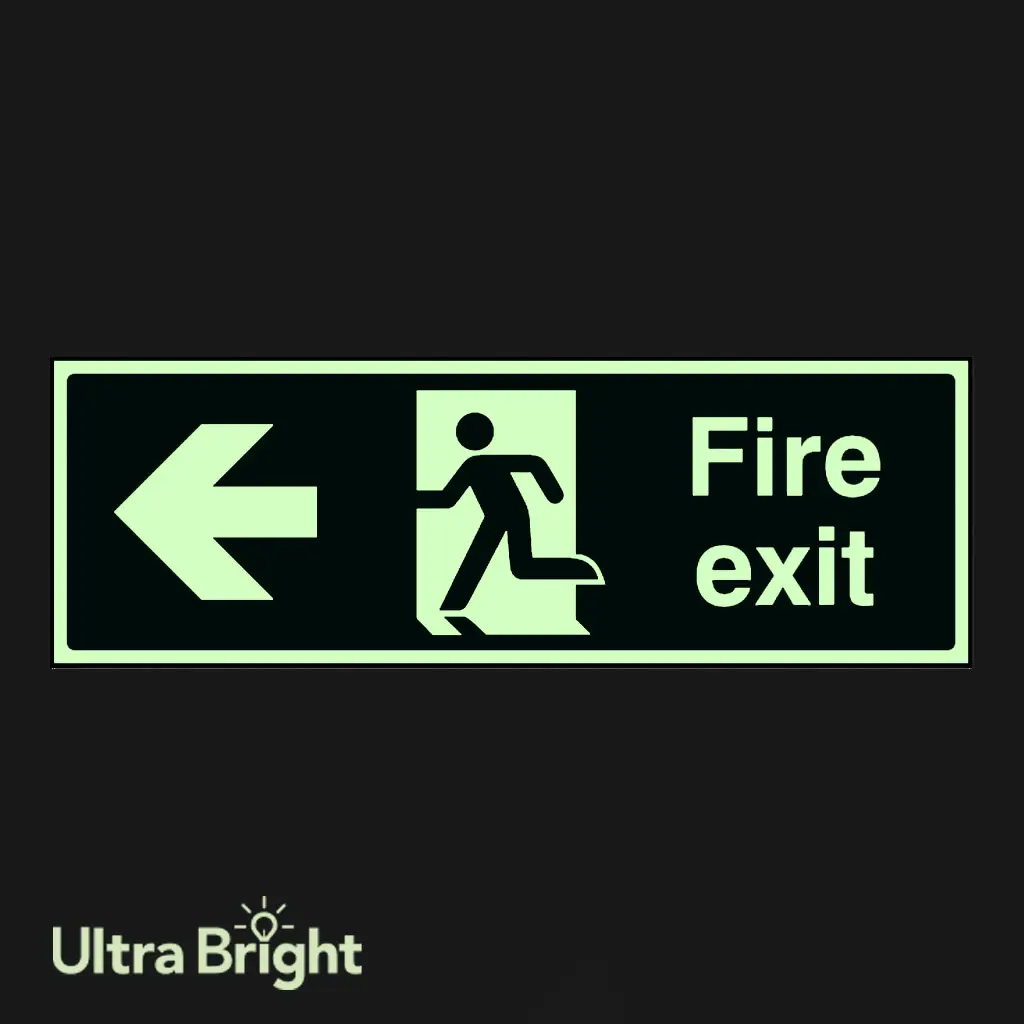
What are photoluminescent safety signs?
Photoluminescent safety signs are glow-in-the-dark signs that absorb and store light from natural or artificial sources before emitting it in darkness or low-light conditions. They are designed to remain visible during power failures, smoke-filled environments, or emergency evacuations, helping people locate escape routes, fire safety equipment, and other important safety information when conventional lighting is unavailable.
Unlike electrically illuminated signs, photoluminescent safety signs require no batteries, wiring, or external power supply. They automatically "charge" when exposed to ambient light and release the stored energy as a visible glow when the surrounding area becomes dark. This makes them a reliable, energy-efficient, and low-maintenance solution for enhancing safety in a wide range of buildings and workplaces.
Photoluminescent safety signs are commonly used to identify fire exits, escape routes, stairways, fire extinguishers, emergency assembly points, and other critical safety features. They are widely installed in offices, schools, hospitals, warehouses, factories, hotels, residential buildings, transport hubs, and public buildings where maintaining visibility during an emergency is essential.
In the UK, photoluminescent safety signs should comply with recognised standards, including BS EN ISO 7010 for safety symbols where applicable. When correctly installed as part of a building's fire safety strategy, these signs help improve emergency wayfinding, support safe evacuation procedures, and contribute to a safer environment for employees, residents, and visitors.
What UK regulations apply to photoluminescent safety signs?
In the UK, photoluminescent safety signs are covered by several regulations and recognised standards that ensure safety information remains visible and effective during emergencies. The primary legislation is the Health and Safety (Safety Signs and Signals) Regulations 1996, which require employers to provide appropriate safety signs wherever risks cannot be adequately controlled by other means. Photoluminescent signs are commonly used to improve the visibility of emergency escape routes, fire safety equipment, and evacuation information in low-light conditions.
Photoluminescent safety signs should also comply with BS EN ISO 7010, which specifies standardised safety symbols, colours, and graphical designs for workplace and public safety signage. Using ISO 7010 pictograms helps ensure signs are easily recognised regardless of language, making them particularly effective in workplaces and public buildings with diverse occupants.
For fire safety applications, the Regulatory Reform (Fire Safety) Order 2005 places a legal duty on responsible persons to provide suitable fire precautions, including clear escape route signage where necessary. In many buildings, photoluminescent signs are used to support emergency evacuation by remaining visible during power failures or in smoke-reduced visibility. Guidance documents such as BS 5499 also provide recommendations on the design and use of escape route and photoluminescent safety signage.
While UK legislation does not require all safety signs to be photoluminescent, they are widely recognised as an effective way to enhance emergency wayfinding and improve occupant safety. Choosing high-quality photoluminescent signs that comply with recognised UK standards can help businesses and building owners support legal compliance, strengthen fire safety measures, and provide clear guidance during an emergency.
How long do photoluminescent safety signs glow after the lights go out?
The length of time a photoluminescent safety sign glows after the lights go out depends on the quality of the material, how long it has been exposed to light, and the level of ambient lighting used to charge it. High-quality photoluminescent materials can remain visible for up to 10–12 hours after being fully charged, although their brightness gradually decreases over time. The brightest glow occurs immediately after the surrounding lights are switched off.
Photoluminescent signs work by absorbing light energy from natural daylight or artificial lighting and storing it within a special phosphorescent material. Once the environment becomes dark, the stored energy is released as a visible glow without the need for electricity, batteries, or wiring. To perform effectively, the signs should receive sufficient exposure to normal lighting during everyday use.
UltraBright photoluminescent safety signs are manufactured using high-performance glow materials that provide excellent luminance and extended afterglow, making them an ideal choice for emergency escape routes, fire exits, stairways, and other critical safety locations. When properly installed and adequately charged, Ultra Bright signs offer enhanced visibility during power failures and low-light conditions, helping occupants identify escape routes and safety equipment more easily.
Although the glow gradually fades over time, quality photoluminescent safety signs remain visible long enough to support a safe evacuation. Choosing UltraBright photoluminescent signs that comply with recognised UK and international standards, and installing them correctly as part of your building's fire safety strategy, helps ensure reliable performance when it is needed most.
Caledonia Signs Top Tip: Light to Charge
For photoluminescent (glow-in-the-dark) safety signs to perform effectively during an emergency, they must be installed where they can receive sufficient light exposure during normal conditions. Avoid placing signs in permanently shaded areas or behind objects that block light, as this can reduce their ability to charge and glow when needed.
For the best performance, choose high-quality photoluminescent signs, such as Ultra Bright safety signs. Regularly check that signs are clean, unobstructed, and in good condition to ensure they remain effective when lighting fails. A well-positioned and properly maintained photoluminescent sign can provide crucial guidance during a power cut or emergency evacuation.
Can photoluminescent safety signs be used outdoors?
Yes, photoluminescent safety signs can be used outdoors, provided they are manufactured from suitable materials and designed to withstand external environmental conditions. Outdoor applications require signs that can resist factors such as rain, UV exposure, temperature changes, and general weathering. Choosing a high-quality product with appropriate durability ensures the sign continues to perform effectively over time.
Outdoor photoluminescent signs are commonly used in areas such as external fire escape routes, building entrances, emergency exits, assembly points, car parks, industrial sites, and construction areas. They provide an additional level of visibility during power failures or low-light conditions, helping employees, visitors, and emergency responders identify important safety locations.
For outdoor use, it is important that the sign is positioned where it can receive enough daylight or artificial light to charge effectively. Areas that are permanently shaded or poorly illuminated may reduce the sign’s ability to provide a strong glow when required. Regular inspection and cleaning will also help maintain performance by preventing dirt, dust, or weather-related damage from affecting visibility.
When selecting outdoor photoluminescent safety signs, look for durable, weather-resistant products such as Ultra Bright photoluminescent signs, which are designed to provide reliable visibility in demanding environments. Choosing the correct material, installation location, and specification helps ensure the sign remains effective as part of a wider emergency safety and evacuation strategy.
Are photoluminescent safety signs required by UK law?
Photoluminescent safety signs are not specifically required by UK law in every situation, but they can be an important part of an effective workplace and fire safety strategy. UK legislation requires employers and building owners to provide suitable safety signage where risks cannot be adequately controlled by other measures. The choice of sign type, including whether it should be photoluminescent, depends on the individual circumstances of the workplace and the findings of a suitable risk assessment.
The Health and Safety (Safety Signs and Signals) Regulations 1996 require safety signs to be provided where necessary to highlight hazards, provide instructions, or indicate emergency routes and equipment. In buildings where lighting may fail during an emergency, photoluminescent signs can help maintain visibility of escape routes, fire exits, and safety equipment without relying on electricity or backup power systems.
For fire safety applications, the Regulatory Reform (Fire Safety) Order 2005 requires responsible persons to ensure that emergency routes and exits are clearly indicated where necessary. Photoluminescent signage can support these requirements by providing guidance in low-light conditions, particularly in areas such as stairwells, corridors, underground spaces, and large commercial buildings.
Although there is no general legal requirement for all safety signs to be photoluminescent, using high-quality products such as UltraBright photoluminescent safety signs can enhance emergency visibility and support safer evacuation procedures. When correctly specified, installed, and maintained, photoluminescent signs provide a reliable, low-maintenance solution that helps businesses and building owners improve safety and meet their responsibilities under UK regulations.
What are the differences between photoluminescent and reflective safety signs?
The main difference between photoluminescent safety signs and reflective safety signs is how they produce visibility in low-light conditions. Photoluminescent signs absorb and store energy from natural or artificial light, then release it as a visible glow when the surrounding area becomes dark. Reflective safety signs, on the other hand, use a reflective surface that bounces light back towards the source, such as vehicle headlights or a torch beam, making the sign visible when illuminated.
Photoluminescent safety signs are particularly effective in areas where lighting may fail during an emergency, such as fire escape routes, stairwells, corridors, and emergency exits. Because they do not require electricity, batteries, or an external light source once charged, they provide continuous guidance during power cuts and low-light situations. UltraBright photoluminescent safety signs offer high-performance glow properties, helping improve visibility when emergency lighting is unavailable.
Reflective safety signs are commonly used in outdoor environments, roadways, car parks, and areas where signs are expected to be viewed using artificial light sources. They are useful where vehicle lights, security lighting, or handheld torches are likely to illuminate the sign. However, their effectiveness depends on a light source being directed towards the reflective surface.
When choosing between photoluminescent and reflective safety signs, consider the location, lighting conditions, and purpose of the signage. Photoluminescent signs are generally the preferred choice for emergency escape routes and indoor evacuation guidance, while reflective signs are often better suited for outdoor visibility applications. In some situations, both technologies can be used together to provide enhanced safety communication in different conditions.
Looking for Safety Signs?
Caledonia Signs is one of the UK's leading trade-only manufacturers of safety signage, supplying an extensive network of distributors throughout the UK and overseas. If you're an end user looking to purchase safety signs, we'd still be delighted to help. Simply contact us with details of your requirements and we'll be happy to recommend a suitable distributor in your area. Interested in becoming a distributor? Contact our team to discuss opening a trade account and gaining access to our full product range, trade pricing and online ordering portal.
There are no products to list in this category.