
ISO 7010 Marine & Water Emergency Symbols: Meanings and Uses
Written by the Technical Team at Caledonia Signs
Last reviewed: September 2026
What Are Marine & Water Emergency Safety Signs and Why Are They Important?
Marine and water emergency symbols provide clear visual guidance for identifying life-saving equipment, emergency facilities, evacuation arrangements, distress equipment and mandatory actions used during marine emergencies. This directory brings together relevant ISO 7010 symbols from several categories where their primary purpose relates to emergency response, abandonment, rescue, survival or major water-related emergencies. These symbols may be used to identify equipment such as lifeboats, liferafts, lifebuoys and lifejackets, communicate required actions during emergency launch or evacuation procedures, and warn of major water-related emergencies such as tsunamis and flooding.
Many of the symbols in this directory are based on the internationally recognised ISO 7010 system of graphical safety signs. Their standardised colours, shapes and pictograms help safety information to be recognised quickly, even where written instructions may not be immediately understood. This is particularly important on ships, offshore installations, harbours, marinas, swimming facilities, waterfront locations and other environments where people may need to identify emergency equipment, follow safety procedures or respond rapidly to changing conditions.
This directory provides a comprehensive guide to marine and water emergency symbols, including their meanings, typical uses and the type of safety information they communicate. Whether you are looking to identify a shipboard emergency symbol, understand a mandatory marine instruction or recognise a water-related warning sign, this guide brings together relevant ISO 7010 symbols to help improve emergency preparedness, support safer evacuation and rescue procedures, and make life-saving equipment, emergency procedures and major water-related hazards easier to identify.

| Symbol | Code | Name | Meaning | Typical use |
|---|---|---|---|---|
 | E031 | Shipboard General Alarm | The Shipboard General Alarm symbol identifies the location of a general alarm button on board a ship. Its purpose is to help crew members quickly recognise where the ship’s general alarm can be activated during an emergency, supporting a rapid response when an incident requires immediate attention from those on board. |
The E031 symbol should be displayed at or close to manual general alarm buttons positioned around a vessel, including accommodation areas, decks and other locations where crew members may need to raise the alarm. Clear identification is particularly important because the alarm control itself may not be immediately obvious to someone unfamiliar with the ship. Using the E031 symbol helps ensure crew can locate the general alarm control quickly during situations such as fire, flooding, collision, grounding or other serious onboard emergencies. Rapid activation of the alarm allows people on board to be alerted and can trigger established emergency, evacuation or muster procedures without unnecessary delay. Because ISO notes that comprehension-test data for E031 are not available, supplementary text should be used to improve understanding unless the symbol’s meaning is already established through manuals, instructions or training. This makes clear labelling and crew familiarisation especially important when E031 is used as part of a vessel’s emergency-signage system. |
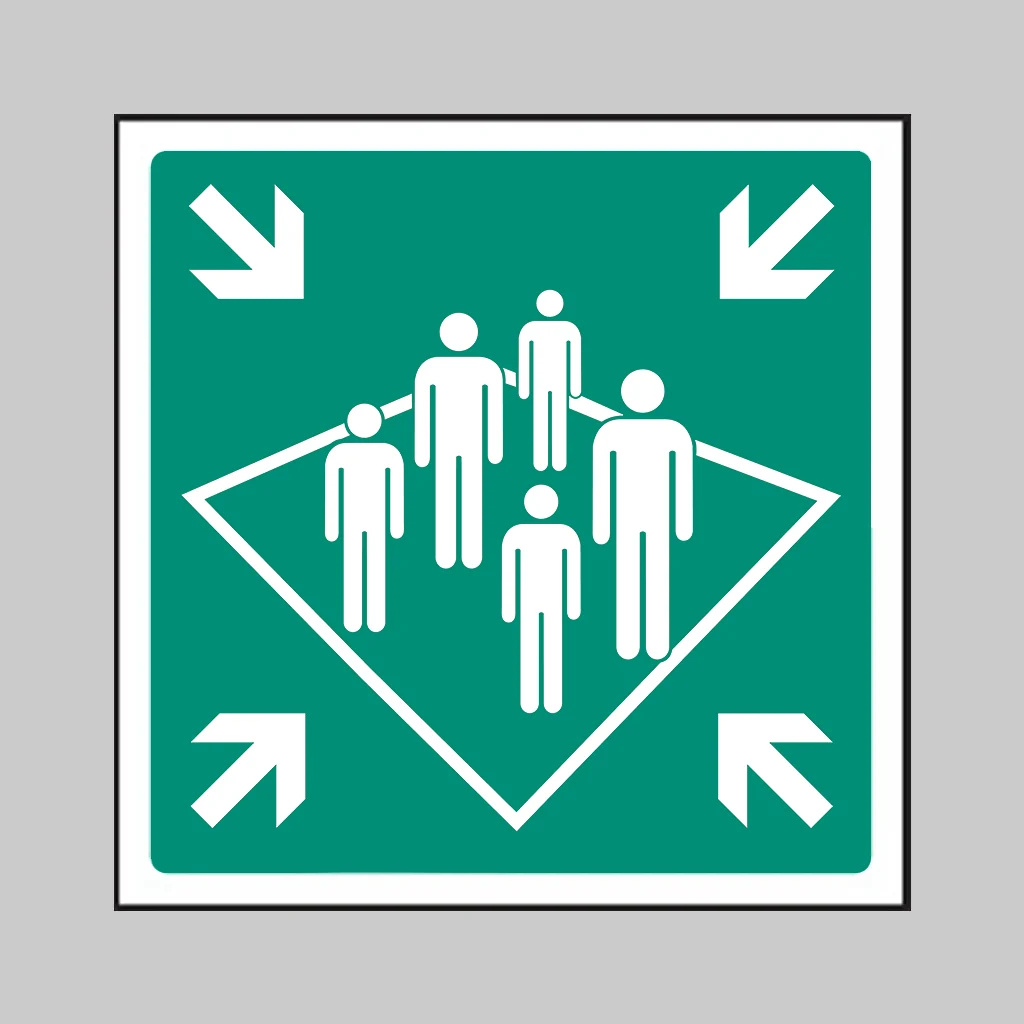 | E032 | Shipboard Assembly Station | The Shipboard Assembly Station symbol identifies the location of a designated assembly or muster station on board a ship. Its purpose is to show passengers and crew where they should gather during an emergency so that people can be accounted for, receive further instructions and prepare for evacuation or other emergency procedures. |
The E032 symbol should be displayed at designated shipboard assembly stations and, where necessary, along routes leading towards them. It is commonly used on passenger vessels, commercial ships and other maritime environments where emergency procedures require people to gather at predetermined locations. Clear identification helps reduce confusion and makes it easier for occupants to find the correct muster area when an alarm is raised. Using the E032 symbol supports organised emergency response by directing crew and passengers to locations where instructions can be given, attendance can be checked and preparations can be made for evacuation or boarding survival craft if required. This is especially important on larger vessels, where unfamiliar passengers may not know the layout of the ship or the location of their assigned assembly station. ISO notes that comprehension-test data for E032 are not available, so supplementary text should be used to improve understanding unless the meaning of the symbol is already established through manuals, instructions or training. This makes clear placement, supporting signage and effective emergency familiarisation particularly important when E032 forms part of a vessel’s safety-sign system. |
 | E035 | Liferaft Knife | The Liferaft Knife symbol identifies the location of a knife intended for use with a liferaft during an emergency. It helps crew members and occupants quickly locate the cutting tool needed to release, separate or manage a liferaft and its associated lines when rapid action may be necessary during abandonment or survival procedures. |
The E035 symbol should be displayed at or close to the designated liferaft knife, particularly on vessels where liferafts form part of the ship’s emergency and life-saving equipment. Clear identification helps ensure the knife can be found quickly even by people who may be unfamiliar with the vessel or operating under stressful emergency conditions. Using the E035 symbol supports safe liferaft deployment and emergency response by making the cutting equipment easier to locate when ropes, painter lines or other connections need to be released. In an abandonment situation, delays in finding the correct tool could hinder the safe use of the liferaft or make it more difficult to separate the craft from the vessel when required. The symbol is especially useful where several items of emergency equipment are grouped together, as it allows the liferaft knife to be distinguished from other tools or fittings at a glance. It should be positioned so that it remains visible and unobstructed, with the knife maintained in its designated location and incorporated into the vessel’s wider emergency equipment inspection and familiarisation procedures. |
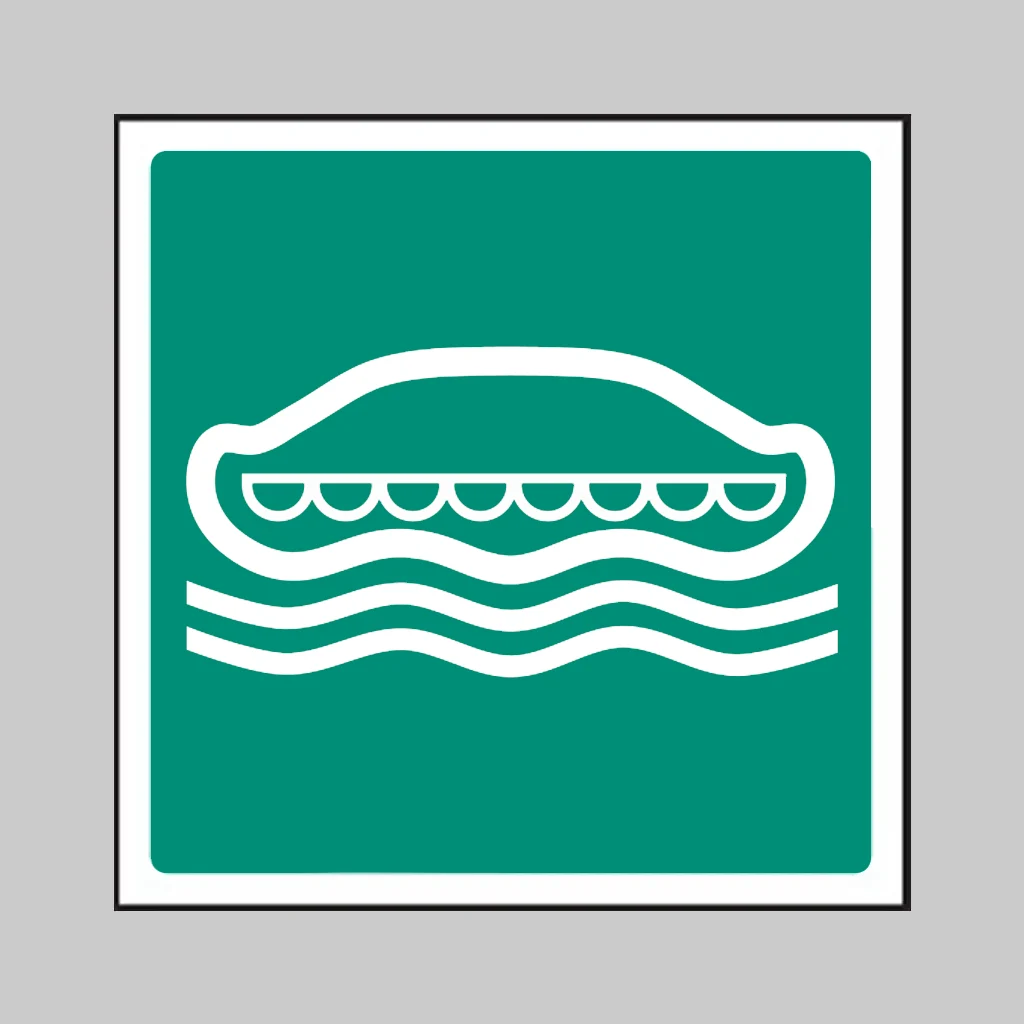 | E036 | Lifeboat | The Lifeboat symbol identifies the location of a lifeboat or the area associated with lifeboat embarkation and emergency abandonment procedures. It helps passengers and crew recognise where this type of survival craft is positioned so that it can be located quickly if the vessel must be evacuated. |
The E036 symbol should be displayed at or close to lifeboat stations, embarkation areas and other locations where lifeboats are installed or accessed. It is particularly relevant on passenger ships, commercial vessels, offshore installations and other marine environments where lifeboats form part of the emergency life-saving arrangements. Using the E036 symbol helps support an organised evacuation by making lifeboat locations easier to identify during an emergency. This is especially important where passengers may be unfamiliar with the vessel, visibility may be reduced or several different types of life-saving equipment are positioned close together. The symbol should remain clearly visible, unobstructed and positioned so that people approaching the lifeboat station can recognise it quickly. It should form part of the vessel’s wider emergency-signage system and be supported by suitable muster, evacuation and crew familiarisation procedures so that occupants understand how and when the lifeboat is intended to be used. |
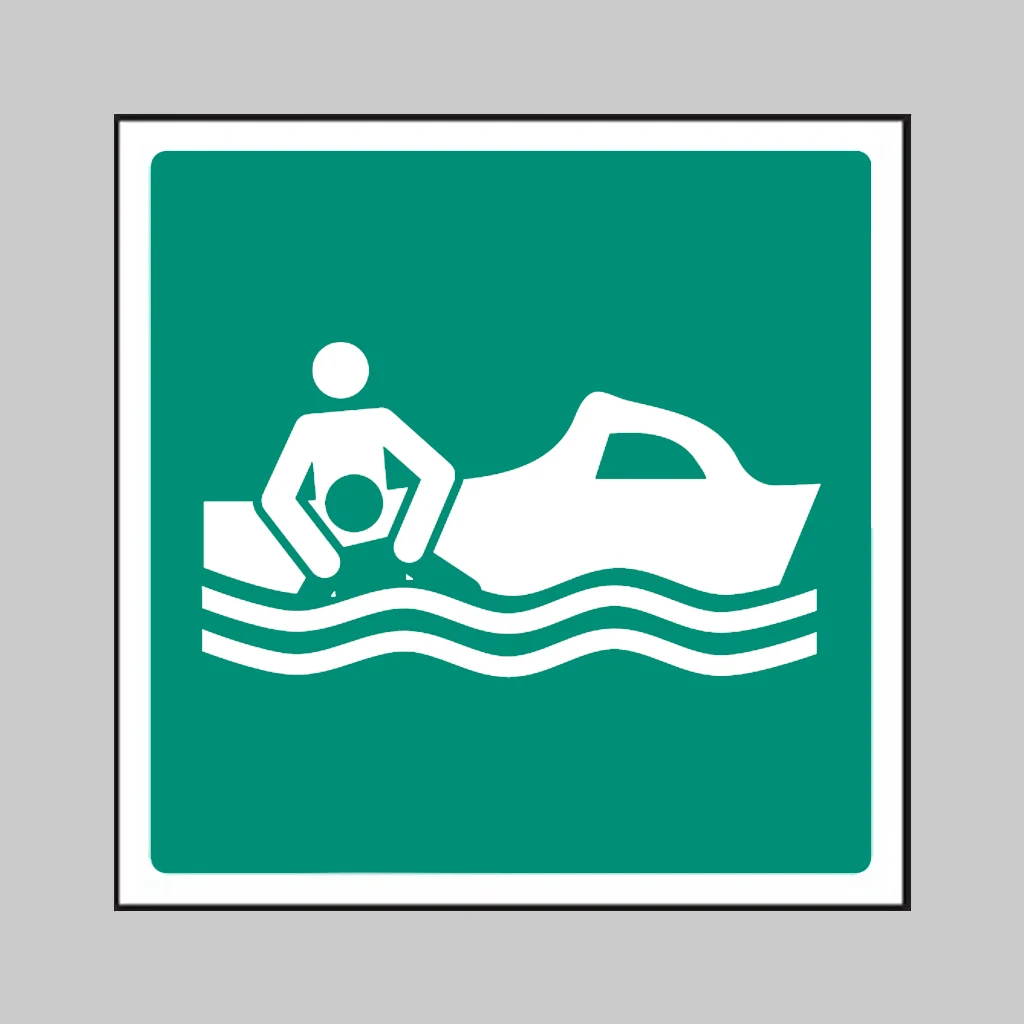 | E037 | Rescue Boat | The Rescue Boat symbol identifies the location of a rescue boat used for emergency recovery and assistance at sea. It helps crew members quickly recognise where the rescue craft is positioned so it can be accessed and launched when a person needs to be recovered from the water or when other urgent rescue operations are required. |
The E037 symbol should be displayed at or close to the rescue boat station, launching position or access point on vessels equipped with a dedicated rescue craft. It is particularly relevant on passenger ships, commercial vessels, offshore installations and other marine environments where rapid recovery from the water may be necessary. Using the E037 symbol helps reduce delay during man-overboard incidents and other emergencies by making the rescue boat location immediately identifiable. Clear marking is especially important on larger vessels where several types of survival craft and emergency equipment may be positioned in different areas. The symbol should remain clearly visible and unobstructed and should form part of the vessel’s wider emergency-signage and lifesaving-equipment system. Its use should be supported by crew training, regular drills and maintenance procedures so that the rescue boat can be located, prepared and launched quickly when required. |
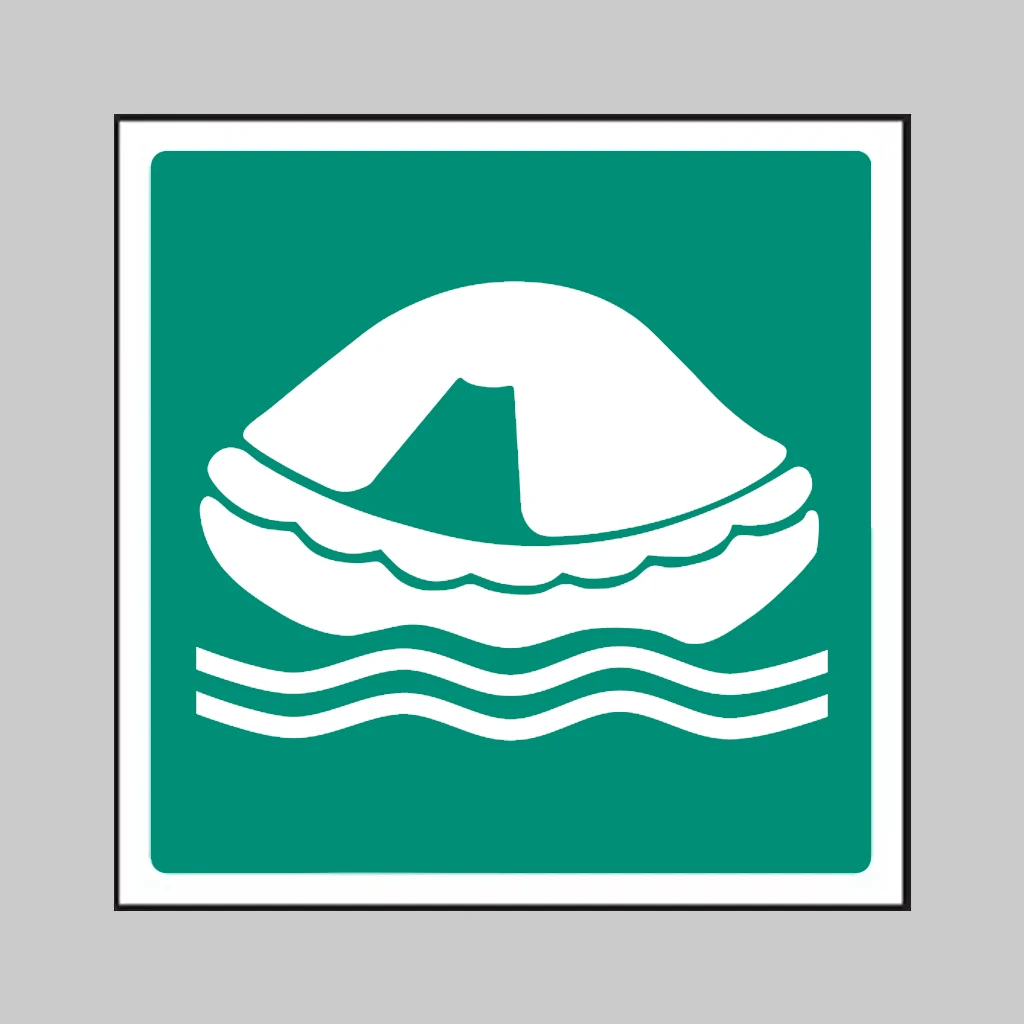 | E038 | Liferaft | The Liferaft symbol identifies the location of a liferaft provided for emergency abandonment and survival at sea. It helps passengers and crew quickly recognise where inflatable or other designated liferafts are positioned so they can be located and deployed if evacuation from the vessel becomes necessary. |
The E038 symbol should be displayed at or close to liferaft storage positions, launching areas or access points on vessels equipped with liferafts. It is particularly relevant on passenger ships, commercial vessels, offshore installations and other marine environments where liferafts form part of the emergency life-saving arrangements. Using the E038 symbol helps reduce confusion and delay during an emergency by clearly distinguishing liferafts from lifeboats, rescue boats and other survival equipment. This can be especially important on larger vessels where several types of life-saving appliances are installed in different locations. The symbol should remain clearly visible, unobstructed and positioned so that people approaching the liferaft station can identify it quickly. It should form part of the vessel’s wider emergency-signage system and be supported by appropriate evacuation procedures, equipment maintenance and crew familiarisation so that the liferaft can be accessed and deployed effectively when required. |
 | E039 | Davit-Launched Liferaft | The Davit-Launched Liferaft symbol identifies the location of a liferaft that is designed to be launched using a davit system. It helps passengers and crew distinguish this type of survival craft from manually launched or throw-overboard liferafts and indicates where the associated launching equipment is located during an emergency abandonment procedure. |
The E039 symbol should be displayed at or close to davit-launched liferaft stations, embarkation points and associated launching equipment on vessels fitted with this type of survival craft. It is especially relevant on passenger ships, commercial vessels and offshore installations where liferafts are deployed using dedicated davits rather than being launched manually. Using the E039 symbol helps reduce confusion during an emergency by clearly identifying the correct liferaft and launch method. This is particularly important where several types of survival craft are installed on the same vessel, as passengers and crew need to recognise the appropriate equipment quickly and follow the correct abandonment procedure. The symbol should remain clearly visible and unobstructed and should form part of the vessel’s wider emergency-signage system. Its use should be supported by crew training, drills, maintenance and clear embarkation procedures so that the davit-launched liferaft can be prepared, boarded and deployed safely when required. |
| E040 | Lifebuoy | The Lifebuoy symbol identifies the location of a lifebuoy provided for emergency rescue from the water. It helps people quickly locate flotation equipment that can be thrown to a person who has fallen overboard or is otherwise in difficulty in the water, providing immediate buoyancy while further rescue action is organised. |
The E040 symbol should be displayed at or close to lifebuoys positioned on ships, docks, piers, quays, marinas and other waterside locations where there is a risk of someone falling into the water. Clear identification helps ensure the equipment can be found and used quickly during an emergency. Using the E040 symbol supports rapid response to person-overboard and water-rescue incidents by making the location of the lifebuoy immediately recognisable. This is particularly important in busy or unfamiliar environments where rescue equipment might otherwise be overlooked or confused with other emergency equipment. The symbol should remain clearly visible, unobstructed and positioned so that the lifebuoy can be accessed without delay. It should form part of the wider water-safety and emergency-signage system, with the equipment regularly inspected and maintained so that it is ready for immediate use when required. |
 | E041 | Lifebuoy with Line | The Lifebuoy with Line symbol identifies the location of a lifebuoy fitted with a rescue line. It helps people quickly recognise flotation equipment that can be thrown to someone in the water while retaining a line that can be used to help control, guide or recover the casualty towards a place of safety. |
The E041 symbol should be displayed at or close to lifebuoys equipped with rescue lines on ships, docks, piers, quays, marinas and other waterside locations where there is a risk of someone falling into the water. Clear identification is important so that the correct type of rescue equipment can be located quickly during an emergency. Using the E041 symbol supports a more controlled water-rescue response because the attached line allows the rescuer to maintain contact with the lifebuoy after it has been thrown. This can help prevent the equipment drifting away and may assist in bringing the casualty closer to a vessel, quay, bank or other safe access point. The symbol should remain clearly visible, unobstructed and positioned so that the lifebuoy and line can be accessed without delay. The equipment should be regularly inspected to ensure the buoy and rescue line remain in good condition, correctly stored and ready for immediate use as part of the wider marine or waterside emergency-safety arrangements. |
 | E042 | Lifebuoy with Light | The Lifebuoy with Light symbol identifies the location of a lifebuoy fitted with an attached or associated light. It is used to help people quickly locate rescue equipment intended for person-overboard situations, particularly where visibility is poor or the incident occurs at night, allowing the lifebuoy and casualty area to remain easier to see during rescue efforts. |
The E042 symbol should be displayed at or close to lifebuoys equipped with lights on ships, offshore installations, docks, piers, quays and other marine locations where people may fall into the water. It is especially useful in areas that operate during hours of darkness or where reduced visibility could make rescue equipment difficult to locate quickly. Using the E042 symbol helps distinguish this type of lifebuoy from standard lifebuoys and other water-rescue equipment. The light can improve visibility after the lifebuoy has been deployed, helping rescuers identify the approximate position of the casualty and maintain visual contact with the rescue equipment during a person-overboard response. The symbol should remain clearly visible and unobstructed, with the lifebuoy and light positioned so they can be accessed without delay. The equipment should be routinely inspected to confirm that the buoy, light and any associated fittings are serviceable and ready for immediate use as part of the vessel’s or site’s wider emergency and water-safety arrangements. |
 | E043 | Lifebuoy with Line and Light | The Lifebuoy with Line and Light symbol identifies the location of a lifebuoy equipped with both a rescue line and a light. It is intended for person-overboard and water-rescue situations where the equipment needs to provide immediate buoyancy while also remaining visible and connected to the rescuer or recovery point. |
The E043 symbol should be displayed at or close to lifebuoys fitted with both a rescue line and light on ships, offshore installations, docks, piers, quays and other waterside locations. It is especially appropriate where rescue operations may take place at night, in poor visibility or in areas where maintaining control of the deployed lifebuoy is important. Using the E043 symbol helps distinguish this combined rescue arrangement from standard lifebuoys, lifebuoys with only a line, or those fitted only with a light. The line can help maintain contact with the equipment and assist recovery, while the light improves visibility of the lifebuoy and casualty area after deployment. The symbol should remain clearly visible and unobstructed, with the lifebuoy, line and light positioned for rapid access. The complete assembly should be routinely inspected to ensure the flotation device, rescue line, light and associated fittings remain serviceable and ready for immediate use as part of the vessel’s or site’s wider marine and water-emergency arrangements. |
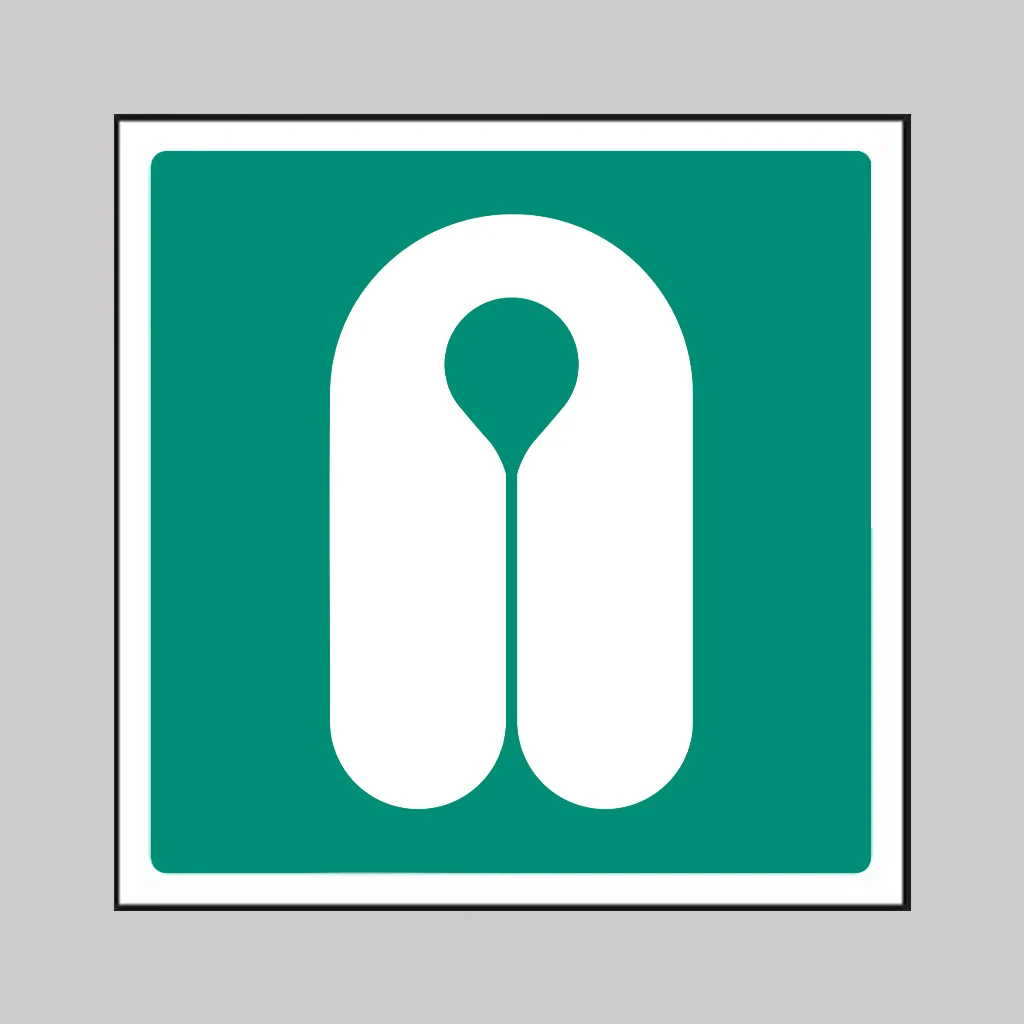 | E044 | Lifejacket | The Lifejacket symbol identifies the location of lifejackets provided for emergency use. It helps passengers and crew quickly recognise where personal flotation equipment is stored so that lifejackets can be located and put on without unnecessary delay during an emergency, evacuation or abandonment procedure. |
The E044 symbol should be displayed at or close to lifejacket storage locations on ships, ferries, offshore installations and other marine environments where personal flotation devices form part of the emergency life-saving arrangements. It may also be used near muster stations, cabins, embarkation areas or other locations where lifejackets are issued or stored. Using the E044 symbol helps people identify the correct flotation equipment quickly, particularly where passengers may be unfamiliar with the vessel or where several different types of emergency equipment are located nearby. Clear marking supports faster preparation for evacuation and helps reduce confusion during incidents involving flooding, fire, collision or abandonment. The symbol should remain clearly visible and unobstructed, with the lifejackets stored so they can be accessed easily when required. The equipment should be regularly inspected and maintained, and its location should form part of the vessel’s wider emergency-signage, muster and passenger-familiarisation arrangements. |
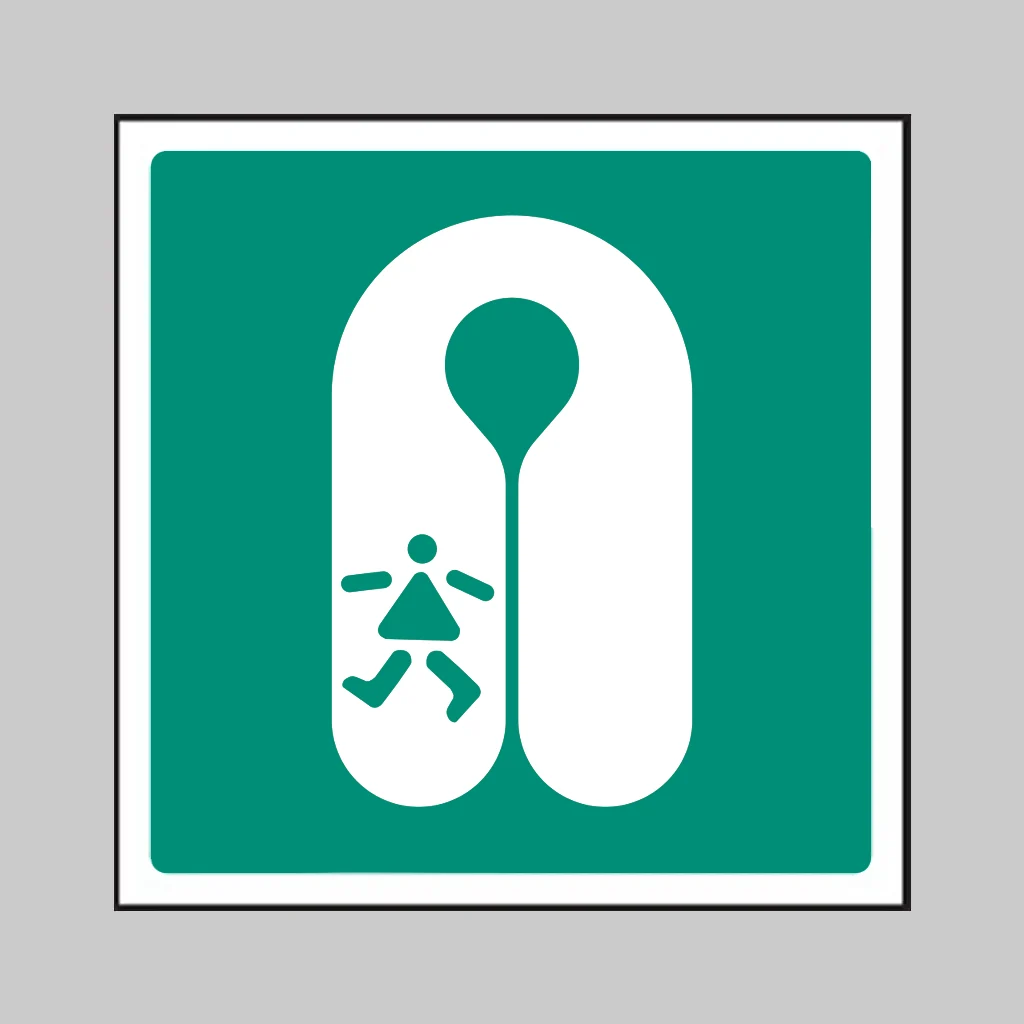 | E045 | Child’s Lifejacket | The Child’s Lifejacket symbol identifies the location of lifejackets specifically intended for children. It helps passengers, crew and carers quickly distinguish child-sized flotation equipment from adult lifejackets so that suitable protective equipment can be located and fitted without unnecessary delay during an emergency or evacuation. |
The E045 symbol should be displayed at or close to storage locations where child lifejackets are kept on ships, ferries, passenger vessels, offshore installations and other marine environments. It may also be used near family accommodation areas, muster stations, embarkation points or other locations where children may need to be issued with correctly sized flotation equipment. Using the E045 symbol helps reduce the risk of children being given unsuitable adult lifejackets during an emergency. Correct sizing is important because lifejackets are designed to provide appropriate buoyancy and support for the intended wearer, and equipment that is too large may not perform as intended. The symbol should remain clearly visible and unobstructed, with child lifejackets stored separately or clearly differentiated from other flotation equipment where appropriate. The equipment should be routinely inspected and maintained, and its location should be included within the vessel’s wider emergency, muster and passenger-familiarisation arrangements. |
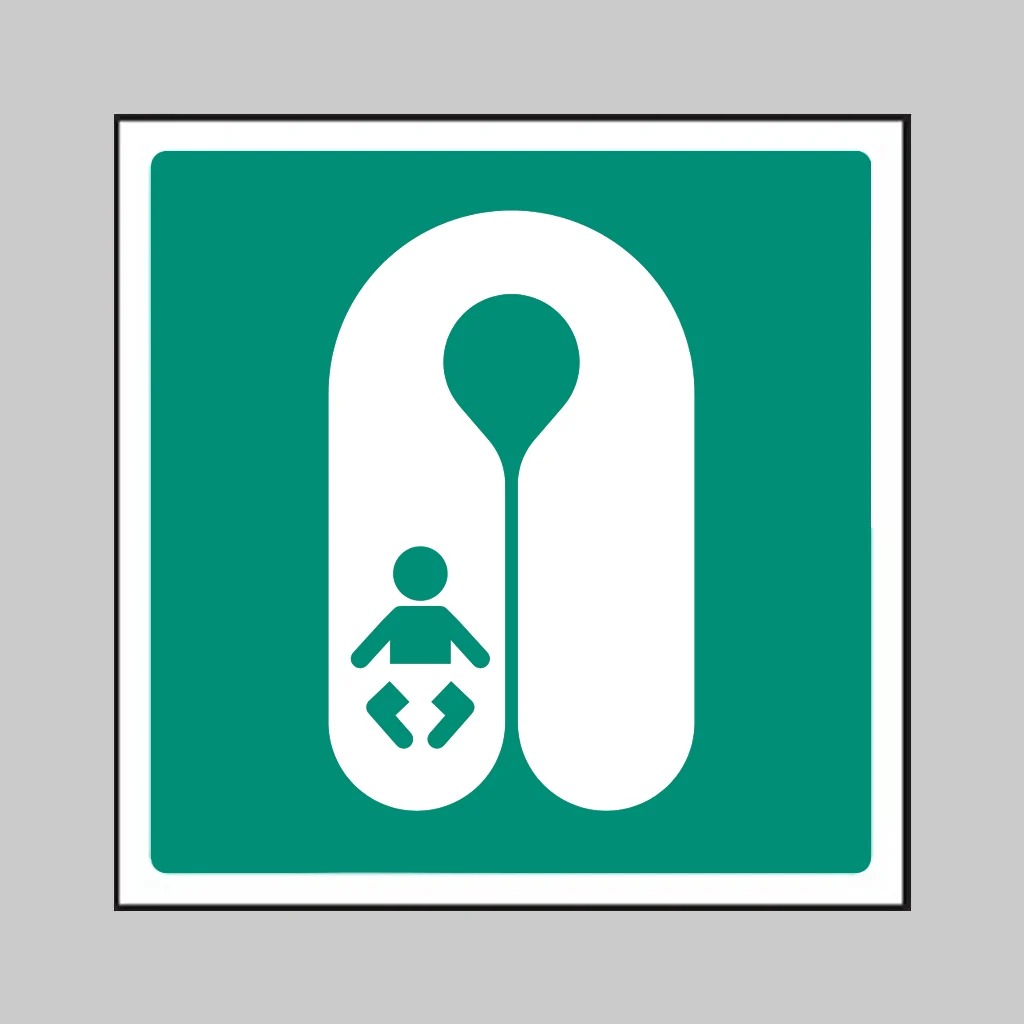 | E046 | Infant’s Lifejacket | The Infant’s Lifejacket symbol identifies the location of lifejackets specifically intended for infants. It helps passengers, crew and carers quickly distinguish infant-sized flotation equipment from child and adult lifejackets so that suitable life-saving equipment can be located and fitted without unnecessary delay during an emergency or evacuation. |
The E046 symbol should be displayed at or close to storage locations where infant lifejackets are kept on ships, ferries, passenger vessels and other marine environments. It may also be used near family accommodation areas, muster stations or embarkation points where infants may need to be issued with appropriately sized flotation equipment. Using the E046 symbol helps reduce the risk of an infant being given an unsuitable larger lifejacket during an emergency. Correct sizing and design are particularly important for infants because flotation equipment must provide appropriate buoyancy and support for a much smaller wearer and should be suitable for the intended conditions of use. The symbol should remain clearly visible and unobstructed, with infant lifejackets stored so they can be accessed quickly when required. The equipment should be regularly inspected and maintained, and its location should form part of the vessel’s wider muster, evacuation and passenger-familiarisation arrangements. |
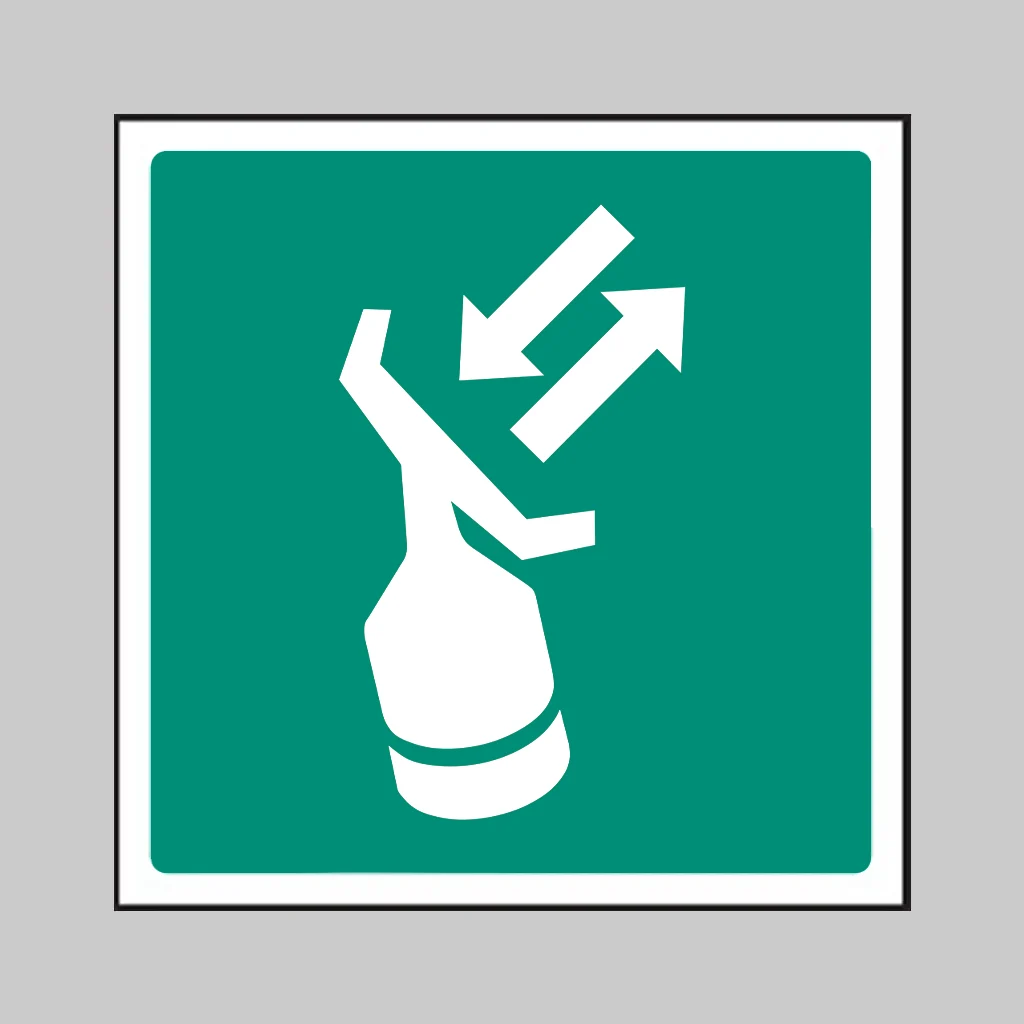 | E047 | Search and Rescue Transponder | The Search and Rescue Transponder symbol identifies the location of a Search and Rescue Transponder (SART), an emergency locating device used to help rescuers detect and locate survival craft or people in distress at sea. It provides a clear visual reference so crew members can quickly find the equipment when preparing lifeboats, liferafts or other survival arrangements during an emergency. |
The E047 symbol should be displayed at or close to the storage position of a SART on ships, ferries, offshore installations and other vessels carrying this type of emergency equipment. It may also be used near lifeboat or liferaft stations where the device is intended to be taken during abandonment. Using the E047 symbol helps ensure the transponder can be located rapidly when a vessel is being evacuated or when search-and-rescue assistance is required. Once activated, the equipment is designed to help nearby search vessels or aircraft identify the position of the survival craft, improving the chances of a faster rescue response. The symbol should remain clearly visible and unobstructed, with the SART stored in its designated position and maintained in serviceable condition. Its location and use should form part of the vessel’s wider emergency procedures, equipment inspections and crew familiarisation so that the device can be deployed correctly when needed. |
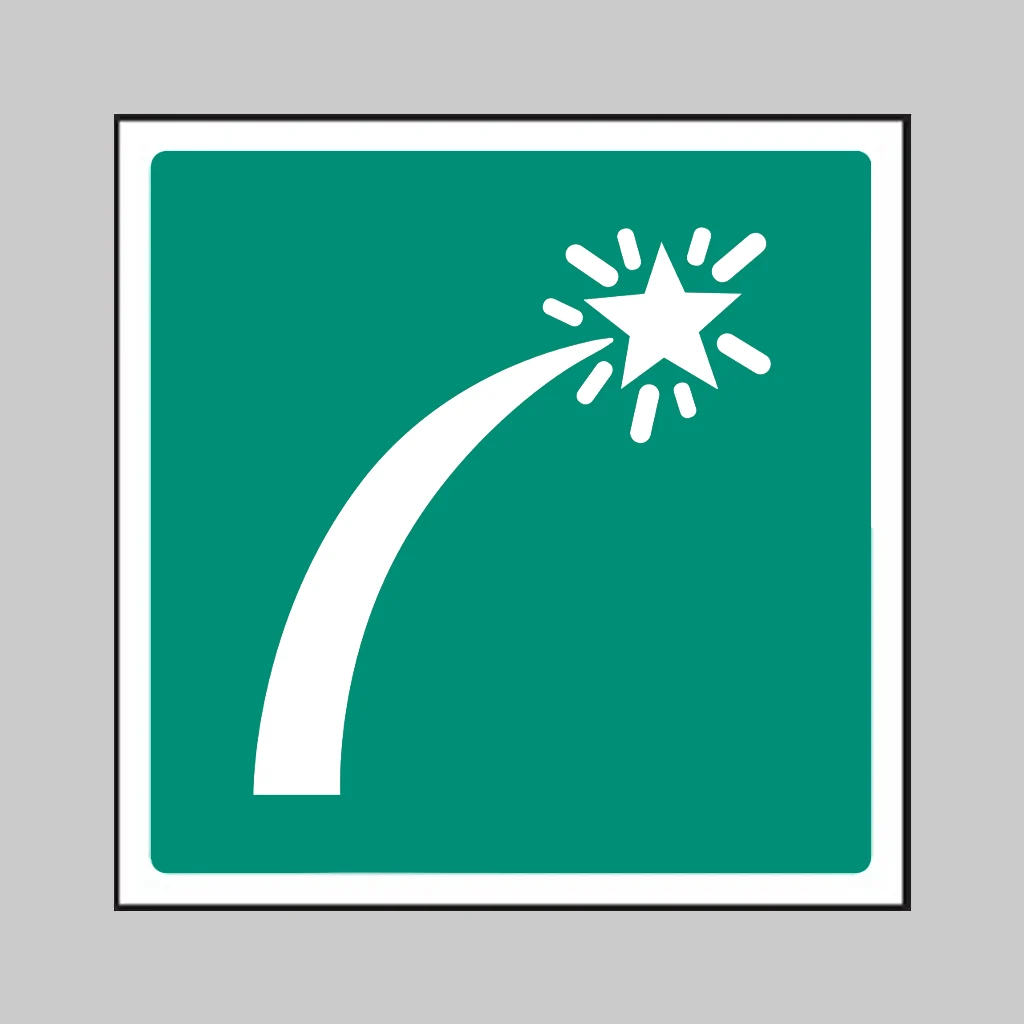 | E048 | Survival Craft Distress Signals | The Survival Craft Distress Signals symbol identifies the location of distress signalling equipment intended for use with lifeboats, liferafts or other survival craft. It helps passengers and crew quickly locate emergency signalling devices that can be used to attract the attention of search-and-rescue services and indicate the position of people in distress at sea. |
The E048 symbol should be displayed at or close to the storage location of survival craft distress signals on ships, ferries, offshore installations and other vessels carrying this type of emergency equipment. It may also be used within lifeboats, liferafts or near embarkation stations where signalling equipment is stored for use following abandonment. Using the E048 symbol helps ensure distress signals can be found rapidly when communication or visual identification of a survival craft is critical. Such equipment may be used to draw attention to the location of survivors and support search-and-rescue operations, particularly where normal vessel communication systems are unavailable or the survival craft has become separated from the ship. The symbol should remain clearly visible and unobstructed, with the distress signalling equipment stored securely and maintained in accordance with the vessel’s emergency procedures and applicable requirements. Crew members should be familiar with the location and correct use of the equipment so that it can be deployed safely and effectively when required. |
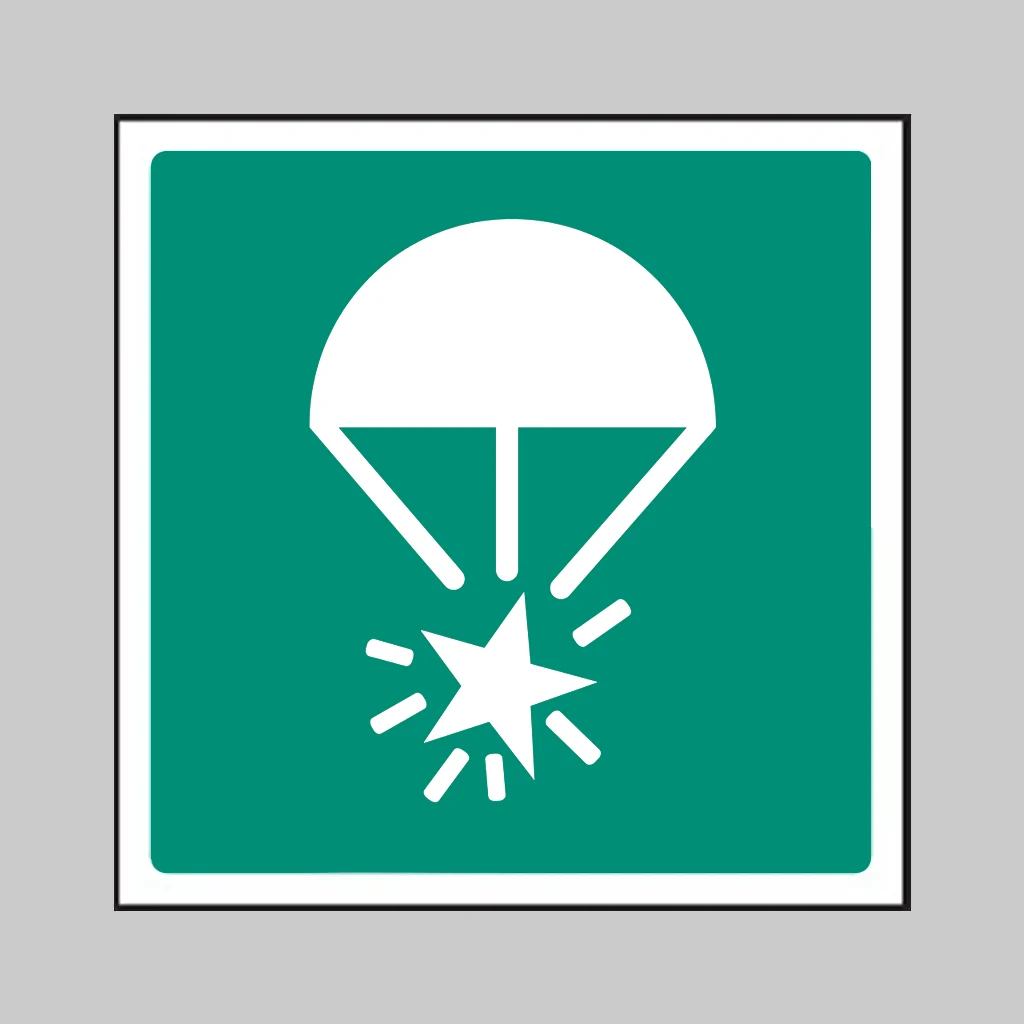 | E049 | Rocket Parachute Flare | The Rocket Parachute Flare symbol identifies the location of rocket parachute flares provided for emergency distress signalling. These pyrotechnic devices are designed to produce a highly visible signal at altitude, helping attract the attention of nearby vessels, aircraft and search-and-rescue services when people are in distress at sea. |
The E049 symbol should be displayed at or close to the storage location of rocket parachute flares on ships, ferries, offshore installations and other vessels carrying this type of emergency signalling equipment. It may also be used within lifeboats, liferafts or near survival-craft stations where the flares are stored for use following abandonment. Using the E049 symbol helps ensure rocket parachute flares can be located quickly when rapid visual signalling is required. Their elevated and bright signal can be particularly valuable over long distances or where other methods of communication are unavailable, making them an important part of emergency distress and search-and-rescue procedures. The symbol should remain clearly visible and unobstructed, with the flares stored securely and maintained in accordance with the manufacturer’s instructions, the vessel’s emergency procedures and applicable maritime requirements. Crew members should be familiar with their location and safe method of use, as pyrotechnic distress signals must be handled and deployed correctly to avoid injury or accidental ignition. |
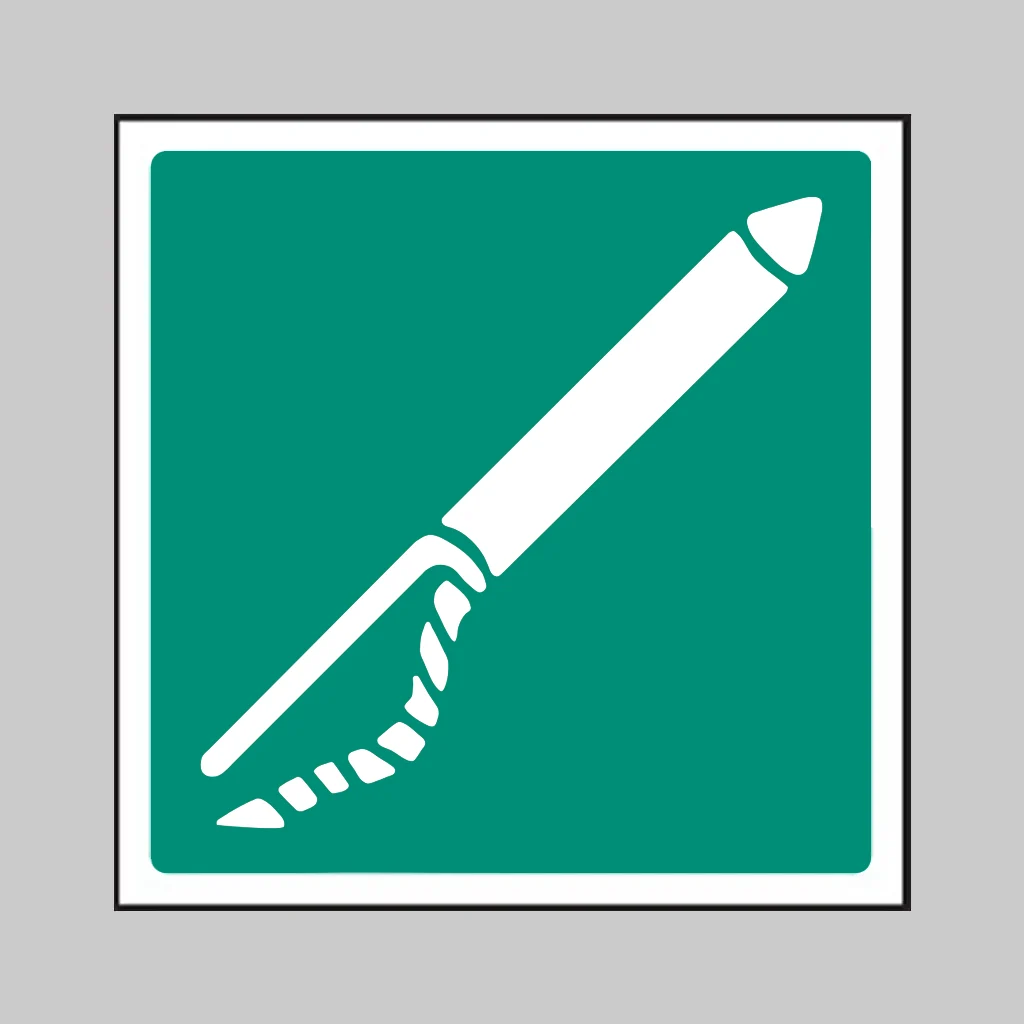 | E050 | Line-Throwing Appliance | The Line-Throwing Appliance symbol identifies the location of equipment designed to project a line over a distance during an emergency or rescue operation. Line-throwing appliances can be used to establish a connection between vessels, survival craft, rescue teams or people in distress, allowing heavier ropes, rescue lines or other equipment to be transferred where direct access is not possible. |
The E050 symbol should be displayed at or close to the storage location of line-throwing appliances on ships, ferries, offshore installations and other marine environments where this type of emergency equipment is provided. It may also be used near rescue stations, embarkation areas or other locations where the appliance needs to be accessed quickly during an incident. Using the E050 symbol helps ensure the equipment can be identified and located rapidly when a line needs to be established across water or between separated positions. This can support rescue, towing, evacuation or emergency-transfer procedures, particularly where people or vessels cannot be approached safely or immediately. The symbol should remain clearly visible and unobstructed, with the line-throwing appliance stored securely and maintained in accordance with the manufacturer’s instructions, the vessel’s emergency procedures and applicable maritime requirements. Crew members should be familiar with its location and correct use so that it can be deployed safely and effectively when required. |
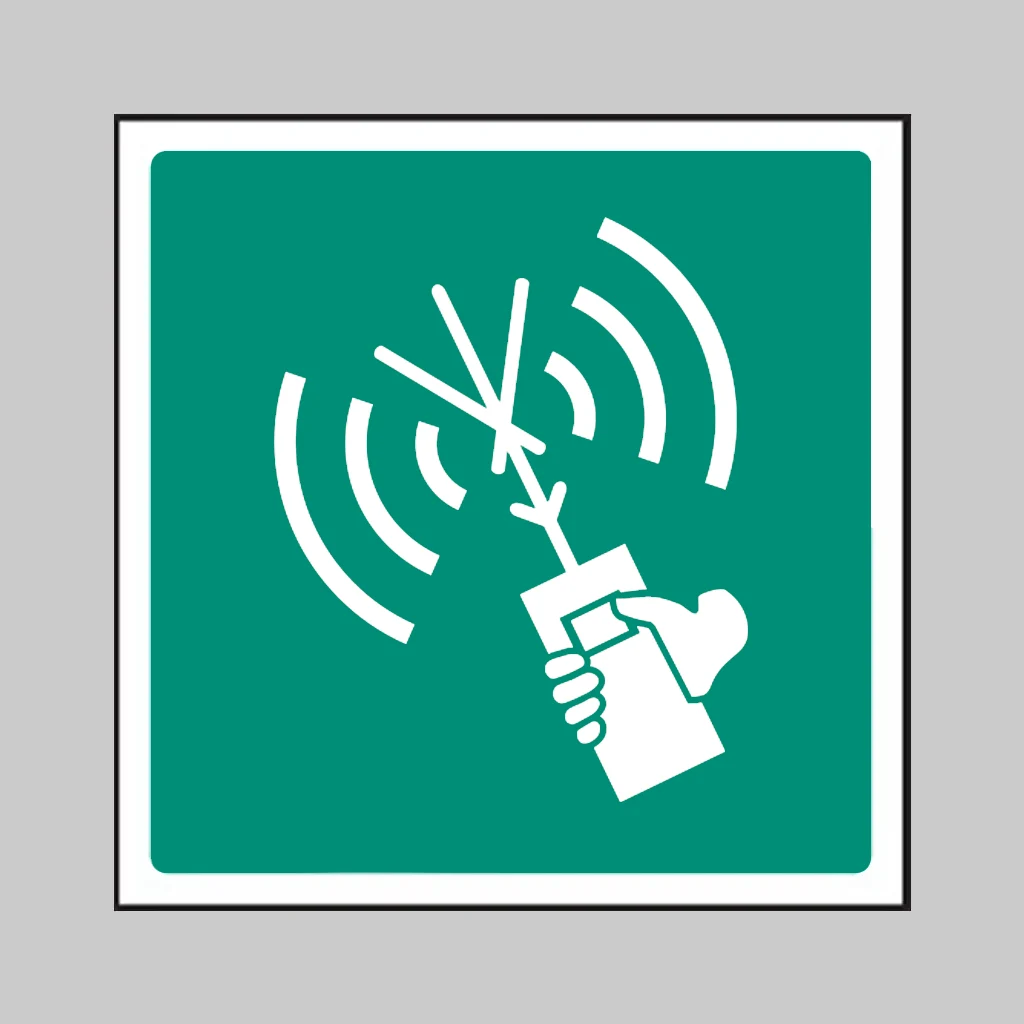 | E051 | Two-Way VHF Radiotelephone Apparatus | The Two-Way VHF Radiotelephone Apparatus symbol identifies the location of portable VHF radio equipment intended for emergency communication. This equipment can be used to maintain communication between survival craft, rescue teams or other vessels during an emergency, helping coordinate evacuation, search-and-rescue activity and communication between people at sea. |
The E051 symbol should be displayed at or close to the storage location of two-way VHF radiotelephone equipment on ships, ferries, offshore installations and other vessels where this type of emergency communication equipment is provided. It may also be used near lifeboat, liferaft or muster stations where portable radios are stored for use during abandonment or rescue procedures. Using the E051 symbol helps ensure the radio equipment can be identified and located quickly when normal onboard communication systems are unavailable or when people have transferred to survival craft. Reliable two-way communication can help crews report their position, receive instructions and coordinate with nearby vessels or search-and-rescue services. The symbol should remain clearly visible and unobstructed, with the radiotelephone equipment stored securely and maintained in a serviceable condition. Crew members should be familiar with its location, operation and emergency use so that communication can be established promptly and effectively when required. |
 | E052 | Emergency Position Indicating Radio Beacon (EPIRB) | The Emergency Position Indicating Radio Beacon (EPIRB) symbol identifies the location of an emergency radio beacon used to transmit a distress alert and help search-and-rescue services determine the position of a vessel or survival craft. When activated, an EPIRB can provide a vital means of signalling that assistance is required, particularly when other communication systems are unavailable or the vessel has been abandoned. |
The E052 symbol should be displayed at or close to the storage or mounting location of an EPIRB on ships, ferries, offshore installations and other vessels equipped with this type of emergency locating equipment. It may also be used near survival-craft or emergency-equipment stations where a portable beacon is intended to be taken during evacuation. Using the E052 symbol helps ensure the EPIRB can be identified and located quickly during a serious marine emergency. Rapid activation can assist search-and-rescue organisations in detecting the distress signal and establishing the approximate position of the vessel or survivors, helping reduce delays in locating people in difficulty at sea. The symbol should remain clearly visible and unobstructed, with the EPIRB stored or mounted in its designated position and maintained in a serviceable condition. Crew members should be familiar with its location and correct activation procedures, and the equipment should be inspected and tested in accordance with the manufacturer’s instructions, vessel procedures and applicable maritime requirements. |
 | E053 | Embarkation Ladder | The Embarkation Ladder symbol identifies the location of a ladder provided for boarding or leaving survival craft during an emergency. It helps passengers and crew quickly recognise where an embarkation ladder is positioned so that access to lifeboats, liferafts or other survival craft can be carried out in a controlled and organised manner. |
The E053 symbol should be displayed at or close to embarkation ladders on ships, ferries, offshore installations and other vessels where this type of emergency access equipment is provided. It may also be used near survival-craft stations or evacuation points where people may need to descend from the vessel to a lifeboat, liferaft or rescue craft. Using the E053 symbol helps reduce confusion during abandonment or evacuation procedures by clearly identifying the ladder intended for emergency embarkation. This is especially important on larger vessels where several ladders, access routes or items of emergency equipment may be located close together. The symbol should remain clearly visible and unobstructed, with the embarkation ladder maintained in a serviceable condition and ready for immediate use. Its location and use should form part of the vessel’s wider emergency, evacuation and crew-familiarisation procedures so that passengers and crew can reach survival craft safely when required. |
 | E054 | Marine Evacuation Slide | The Marine Evacuation Slide symbol identifies the location of a slide provided for emergency evacuation from a vessel. It helps passengers and crew quickly recognise where a marine evacuation slide is positioned so that people can move from the vessel towards liferafts, survival craft or another designated place of safety during an abandonment procedure. |
The E054 symbol should be displayed at or close to marine evacuation slide stations on passenger ships, ferries and other vessels equipped with this type of evacuation system. It may also be used near muster or embarkation areas where people are directed before using the slide during an emergency. Using the E054 symbol helps reduce confusion and delay during evacuation by clearly identifying the equipment intended for rapid descent from the vessel. This is particularly important on large passenger vessels where several evacuation routes and different types of life-saving equipment may be available. The symbol should remain clearly visible and unobstructed, with the evacuation slide maintained in a serviceable condition and incorporated into the vessel’s emergency procedures, drills and passenger-familiarisation arrangements. Clear identification helps ensure the system can be located and used efficiently when rapid evacuation is required. |
 | E055 | Marine Evacuation Chute | The Marine Evacuation Chute symbol identifies the location of a chute designed to help people evacuate rapidly from a vessel during an emergency. It allows passengers and crew to recognise where this type of marine evacuation system is positioned so they can move from the vessel towards liferafts, survival craft or another designated place of safety during abandonment. |
The E055 symbol should be displayed at or close to marine evacuation chute stations on passenger ships, ferries and other vessels fitted with this type of emergency evacuation equipment. It may also be used near muster, embarkation or evacuation areas where people are directed before entering the chute. Using the E055 symbol helps reduce confusion and delay by clearly identifying the correct evacuation equipment during a serious incident. This is particularly important on larger vessels where several escape routes and different types of life-saving systems may be available and passengers may be unfamiliar with the vessel’s layout. The symbol should remain clearly visible and unobstructed, with the marine evacuation chute maintained in a serviceable condition and incorporated into the vessel’s emergency procedures, drills and passenger-familiarisation arrangements. Clear identification helps ensure the system can be located and used efficiently when rapid evacuation is required. |
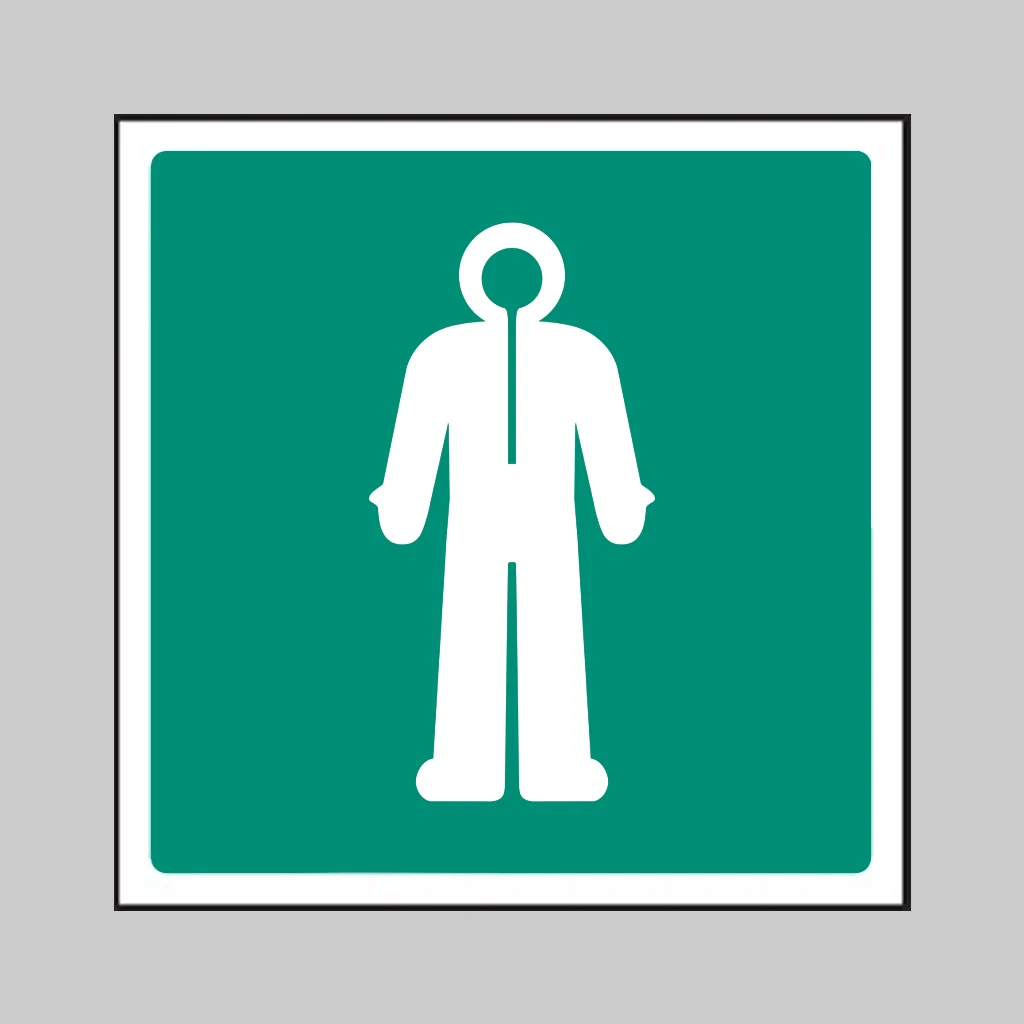 | E056 | Survival Clothing | The Survival Clothing symbol identifies the location of protective clothing intended to help people survive in cold, wet or exposed marine conditions. It is used to show where specialist survival garments are stored so that passengers and crew can quickly locate additional protection against heat loss, exposure and harsh weather during an emergency or abandonment situation. |
The E056 symbol should be displayed at or close to storage locations for survival clothing on ships, ferries, offshore installations and other marine environments where this type of protective equipment is provided. It may also be used near muster stations, survival-craft areas or emergency equipment stores where the clothing is intended to be issued before evacuation. Using the E056 symbol helps people identify the correct protective garments quickly, particularly in situations where prolonged exposure to cold water, wind, rain or low temperatures could increase the risk of hypothermia. Clear identification is especially important where several types of emergency clothing or life-saving equipment are stored together. The symbol should remain clearly visible and unobstructed, with the survival clothing stored in a dry, accessible and serviceable condition. The equipment should be regularly inspected and incorporated into the vessel’s wider emergency, evacuation and crew-familiarisation procedures so that it can be issued and used effectively when required. |
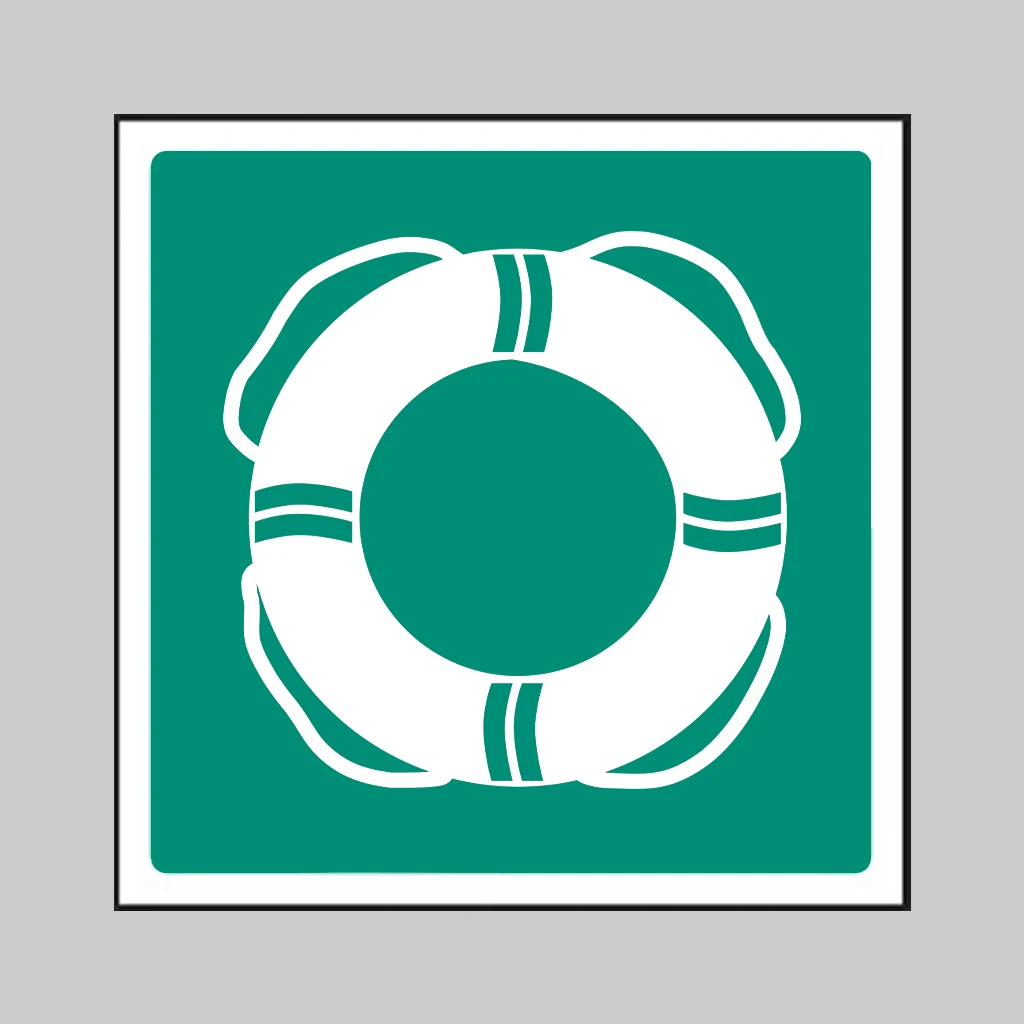 | E061 | Water Life-Saving Equipment | The Water Life-Saving Equipment symbol identifies the location of equipment provided for rescuing or assisting people in difficulty in the water. It is used as a general water-rescue symbol where life-saving equipment is available, helping people quickly recognise that suitable emergency equipment can be found at that location. |
The E061 symbol should be displayed at or close to water life-saving equipment on ships, docks, harbours, marinas, piers, swimming facilities, reservoirs and other locations where there is a risk of someone falling or entering the water unexpectedly. It can be particularly useful where several different types of rescue equipment are grouped together or where a general indication of water-rescue provision is required. Using the E061 symbol helps reduce delays during a water emergency by making rescue equipment easier to identify, especially for people who may be unfamiliar with the site. Clear marking can support a faster response to incidents involving drowning risk, person-overboard situations or other emergencies where immediate access to life-saving equipment may be critical. The symbol should remain clearly visible and unobstructed, with the associated rescue equipment positioned so that it can be accessed quickly when required. Equipment should be regularly inspected and maintained, and the sign should form part of the wider marine, waterside or aquatic emergency-safety arrangements for the location. |
 | E062 | Tsunami Evacuation Area | The Tsunami Evacuation Area symbol identifies a designated location intended to provide a safer place for people evacuating from a tsunami hazard. It helps people recognise where they should move during a tsunami warning or coastal emergency, supporting rapid evacuation away from areas that may be affected by flooding, powerful waves or coastal inundation. |
The E062 symbol should be displayed at designated tsunami evacuation areas and at appropriate points along evacuation routes leading towards them. It is particularly relevant in coastal communities, harbours, ports, beaches, resorts and other locations where people may be exposed to tsunami hazards and need clear guidance towards safer ground or recognised evacuation areas. Using the E062 symbol helps reduce confusion during an emergency by providing a consistent visual indication of where people should gather or move to reach greater safety. This can be especially important for visitors or members of the public who may be unfamiliar with local evacuation arrangements and need to identify the appropriate destination quickly after a tsunami warning is issued. The symbol should remain clearly visible and positioned where it can be recognised from evacuation routes and surrounding areas. It should form part of a wider tsunami preparedness system that may include directional signage, evacuation maps, public information and emergency procedures, helping communities move efficiently towards designated safe areas when required. |
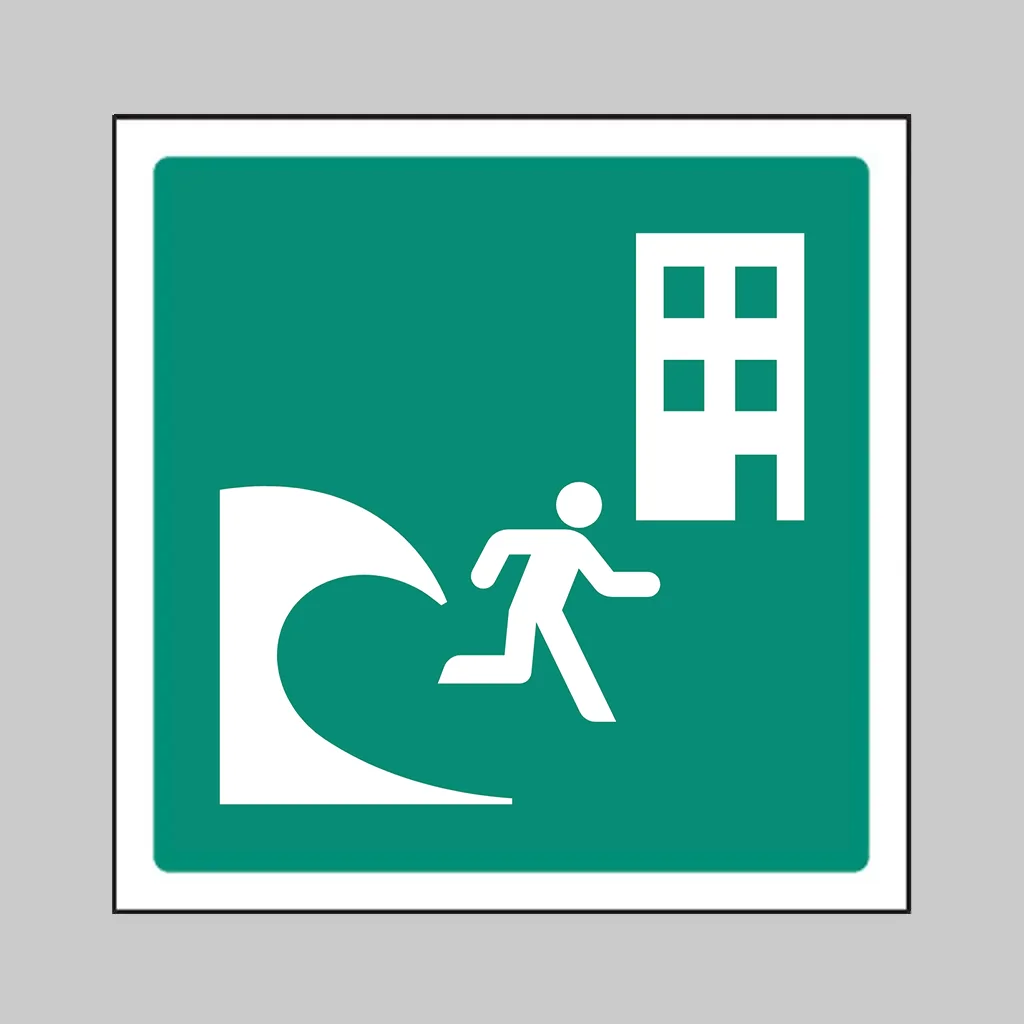 | E063 | Tsunami Evacuation Building | The Tsunami Evacuation Building symbol identifies a building designated as a place of refuge during a tsunami emergency. It helps people recognise a structure intended for vertical evacuation when moving inland or reaching higher ground may not be possible in time, providing a clearly marked location where people can seek greater safety from tsunami inundation. |
The E063 symbol should be displayed on or near buildings that have been formally designated for tsunami evacuation. It is particularly relevant in coastal communities, ports, harbours, resorts and densely developed shoreline areas where evacuation routes to natural high ground may be limited or where people may need to move quickly into a suitable structure. Using the E063 symbol helps residents, workers and visitors identify an appropriate evacuation destination during a tsunami warning. This can reduce uncertainty in fast-moving emergencies, especially for people who are unfamiliar with the local area or who may not know which buildings have been assessed and designated for emergency refuge. The symbol should remain clearly visible and should form part of a wider tsunami evacuation system that may include route signs, maps, public information and emergency procedures. The building itself should only be identified in this way where it has been designated by the relevant authority or emergency-planning organisation for tsunami evacuation use. |
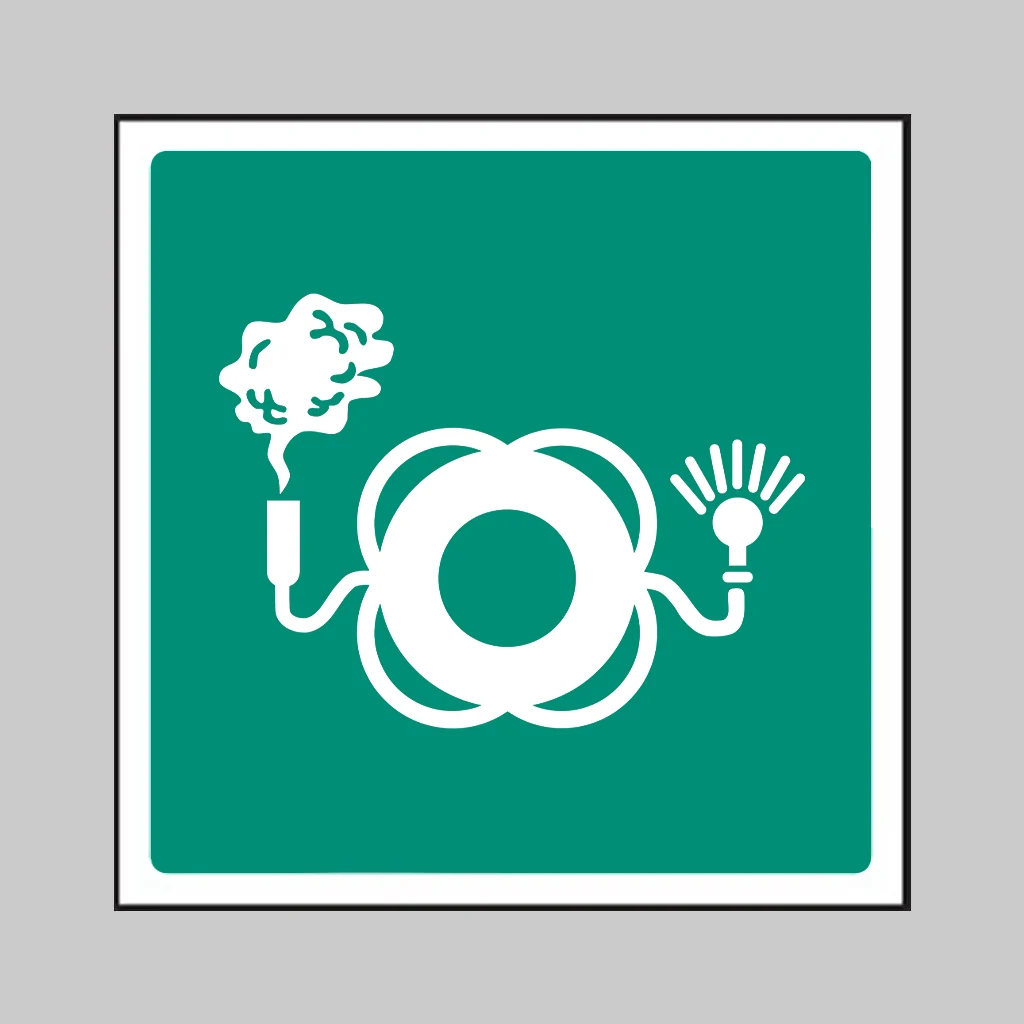 | E068 | Lifebuoy with Light and Smoke | The Lifebuoy with Light and Smoke symbol identifies the location of a lifebuoy equipped with both a light and a smoke signal. It is intended for person-overboard and water-rescue situations where the equipment needs to provide immediate flotation while also producing visible signals that can help rescuers locate the casualty and deployed lifebuoy, particularly in poor visibility or over greater distances. |
The E068 symbol should be displayed at or close to lifebuoys fitted with light and smoke signalling equipment on ships, offshore installations and other marine locations where this type of lifesaving arrangement is provided. It is especially relevant where a person-overboard response may need to be carried out at night, in reduced visibility or in open-water conditions where locating the casualty quickly can be difficult. Using the E068 symbol helps distinguish this equipment from standard lifebuoys and from lifebuoys fitted only with a line or light. The combined light and smoke signals can make the deployed buoy easier to identify from the vessel and by rescue teams, helping mark the approximate position of a person in the water and support a faster emergency response. The symbol should remain clearly visible and unobstructed, with the lifebuoy, light and smoke signalling equipment maintained in a serviceable condition and ready for immediate use. ISO notes that comprehension-test data for E068 are not available, so supplementary text should be used to improve understanding unless the symbol’s meaning is already established through manuals, instructions or training. |
 | E069 | Person Overboard Call Point | The Person Overboard Call Point symbol identifies the location of a call point or alarm control used to report that a person has fallen overboard. It helps crew members and other users quickly recognise where to raise a person-overboard alarm so that the vessel’s emergency response and recovery procedures can begin without unnecessary delay. |
The E069 symbol should be displayed at or close to designated person-overboard call points on ships, ferries, offshore installations and other marine environments where a dedicated alarm or reporting control is provided. It is particularly useful on decks and other areas where there is a risk of someone falling into the water and immediate notification of the incident is essential. Using the E069 symbol helps ensure that a person-overboard incident can be reported rapidly, allowing the bridge, crew or emergency response team to begin the appropriate rescue procedures. Fast activation can support actions such as marking the casualty’s position, alerting nearby personnel, deploying rescue equipment and preparing rescue boats or other recovery arrangements. The symbol should remain clearly visible, unobstructed and positioned so that the call point can be accessed quickly in an emergency. Its use should form part of the vessel’s wider person-overboard procedures, crew training and emergency drills so that users understand when and how the alarm control should be activated. |
 | E075 | Lifeguard | The Lifeguard symbol indicates the location of a lifeguard or lifeguard station. It is intended to help swimmers, visitors and other water users quickly identify where trained assistance can be found if an emergency occurs. |
This symbol is particularly suitable for swimming pools, beaches, water parks, lakes and other supervised aquatic environments. It can be displayed at lifeguard chairs, observation points, patrol stations or other clearly designated positions where lifeguards are normally stationed. Being able to locate a lifeguard quickly can be especially important during incidents involving drowning, injury or a person experiencing difficulty in the water. The E075 symbol provides a clear visual reference that helps people identify where immediate assistance or further emergency support may be available. Using the E075 Lifeguard symbol provides a standardised way of identifying lifeguard locations within aquatic and recreational environments. It can improve emergency wayfinding, support water-safety arrangements and help visitors recognise where trained supervision and assistance can be found. |
| Symbol | Code | Name | Meaning | Typical use |
|---|---|---|---|---|
 | M037 | Close and Secure Hatches in Launch Sequence | The Close and Secure Hatches in Launch Sequence symbol means that the hatches on a survival or rescue craft must be closed and properly secured as part of the launch procedure. The instruction helps protect occupants from hazards such as flooding, smoke, fire, hazardous atmospheres and loss of breathable air from self-contained air systems. |
This symbol is primarily used in marine environments, including ships, offshore installations and other vessels equipped with lifeboats, fully enclosed rescue boats or rigid liferafts. It should be positioned where crew members can clearly see the instruction while preparing the craft for launching. Correctly closing and securing hatches is an important stage of the launch sequence because an unsecured opening can compromise the protection provided by the craft. The M037 symbol gives crew members a clear visual reminder to complete this action at the appropriate point before the craft enters the water or leaves the vessel. Using the M037 symbol supports consistent emergency launch procedures and helps crews follow the required sequence under pressure. It can reduce the risk of water ingress, exposure to hazardous conditions and loss of the protected atmosphere within the craft, while making an important marine safety instruction easier to recognise quickly. |
 | M038 | Start Engine in Launch Sequence | The Start Engine in Launch Sequence symbol means that the engine of a lifeboat or rescue boat must be started at the appropriate stage of the launching procedure. Its purpose is to ensure that propulsion is available when needed without the engine being started too early in the sequence. |
This symbol is mainly used on ships, offshore installations and other marine environments where lifeboats or rescue boats form part of the emergency evacuation arrangements. It should be positioned where crew members can see the instruction while preparing the craft for launch. The M038 symbol is useful because the timing of engine start-up can affect the safe and orderly deployment of the survival craft. Starting too late could leave the boat without propulsion when required, while starting too early could interfere with the correct launch procedure. Using the M038 symbol helps reinforce a standardised sequence of actions during lifeboat or rescue-boat launching. It supports crew training, reduces the chance of procedural errors and provides a clear visual reminder of when the engine should be started during an emergency launch. |
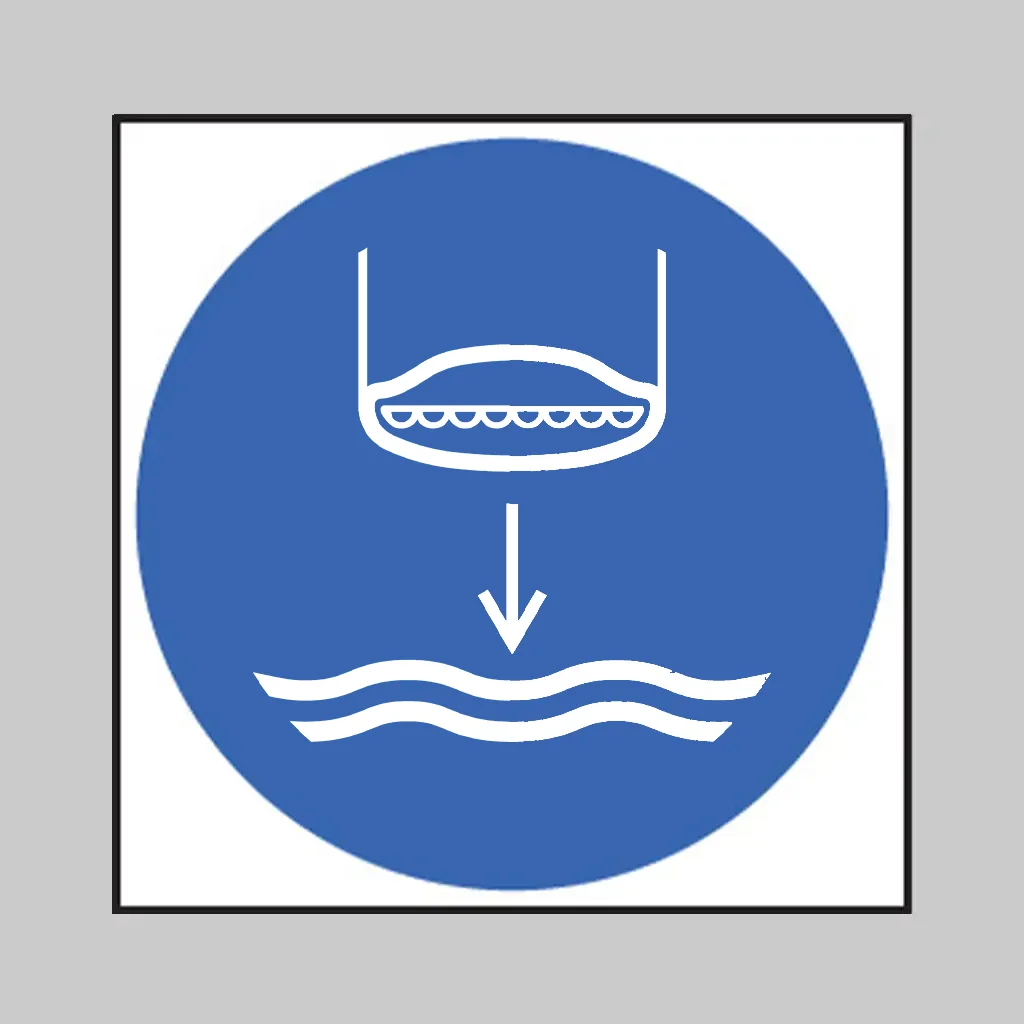 | M039 | Lower Lifeboat to the Water in Launch Sequence | The Lower Lifeboat to the Water in Launch Sequence symbol means that the lifeboat must be lowered to the water at the correct stage of the launching procedure. It forms part of the sequence of mandatory actions used to guide the safe deployment of lifesaving equipment during an emergency. |
This symbol is primarily used at lifeboat launching stations on ships, offshore installations and other marine environments where lifeboats form part of the emergency evacuation arrangements. It should be positioned where crew members can see it clearly while carrying out the launch procedure. The M039 symbol is useful because lowering the lifeboat at the wrong time can disrupt the launch sequence and create additional risk for those involved. By providing a clear visual instruction, it helps trained personnel follow the correct order of actions and recognise when the craft should be lowered into the water. Using the M039 symbol supports consistent lifeboat launching procedures and helps reduce the likelihood of mistakes during a high-pressure emergency. It also works effectively as part of a sequence of ISO 7010 marine mandatory signs covering other launch actions, such as starting the engine, releasing falls and securing hatches. |
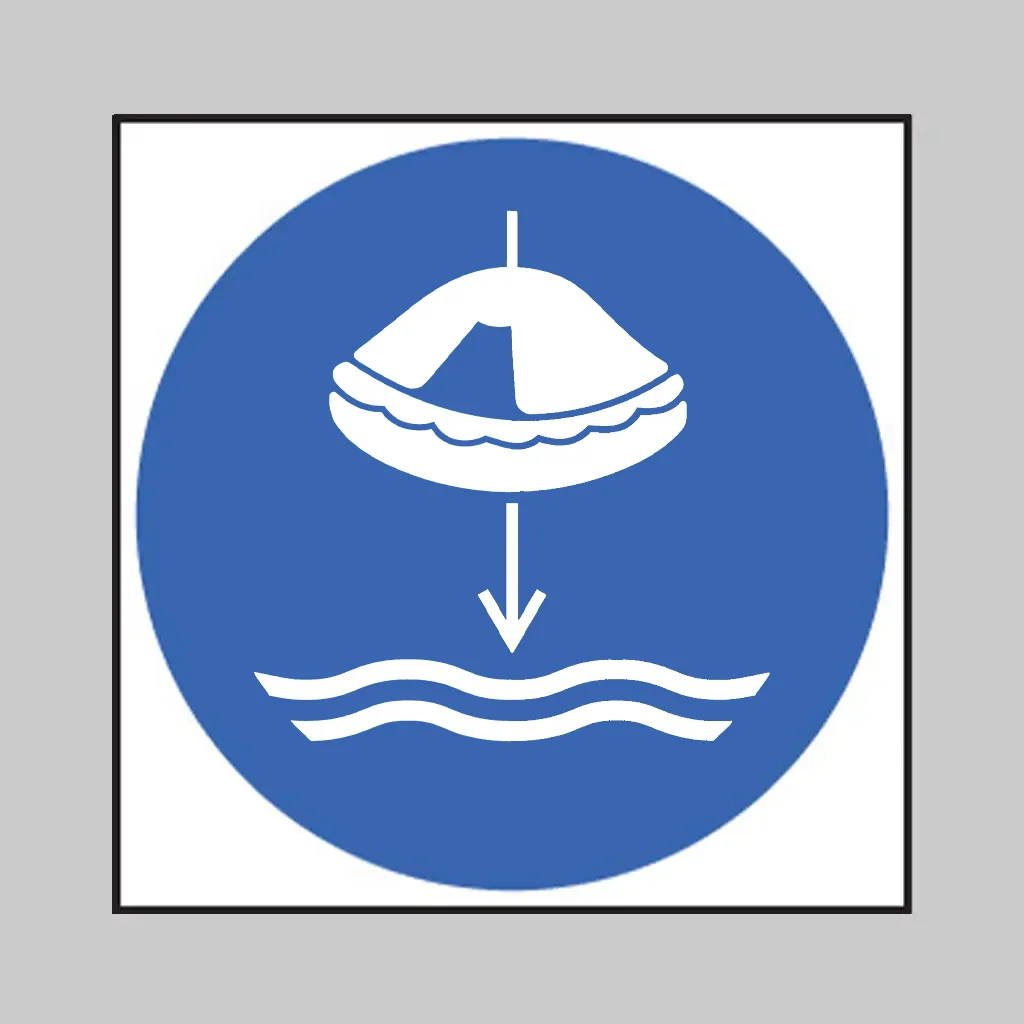 | M040 | Lower Liferaft to the Water in Launch Sequence | The Lower Liferaft to the Water in Launch Sequence symbol means that the liferaft must be lowered to the water at the appropriate stage of the emergency launching procedure. It forms part of a sequence of mandatory actions designed to help crew deploy lifesaving equipment safely and in the correct order. |
This symbol is intended mainly for ships, offshore installations and other marine environments where liferafts are launched using dedicated lowering equipment. It should be displayed at or near the relevant launching station where crew members can clearly see the instruction while preparing the liferaft for deployment. Following the correct launch sequence is important because lowering the liferaft too early or too late can interfere with other essential preparation steps. The M040 symbol provides trained personnel with a clear visual prompt, helping them recognise when the raft should be lowered towards the water during an emergency launch. Using the M040 symbol alongside other ISO 7010 launch-sequence signs creates a consistent set of instructions for deploying survival craft. It can help reduce procedural errors, support crew training and make the required actions easier to follow when rapid and coordinated evacuation is necessary. |
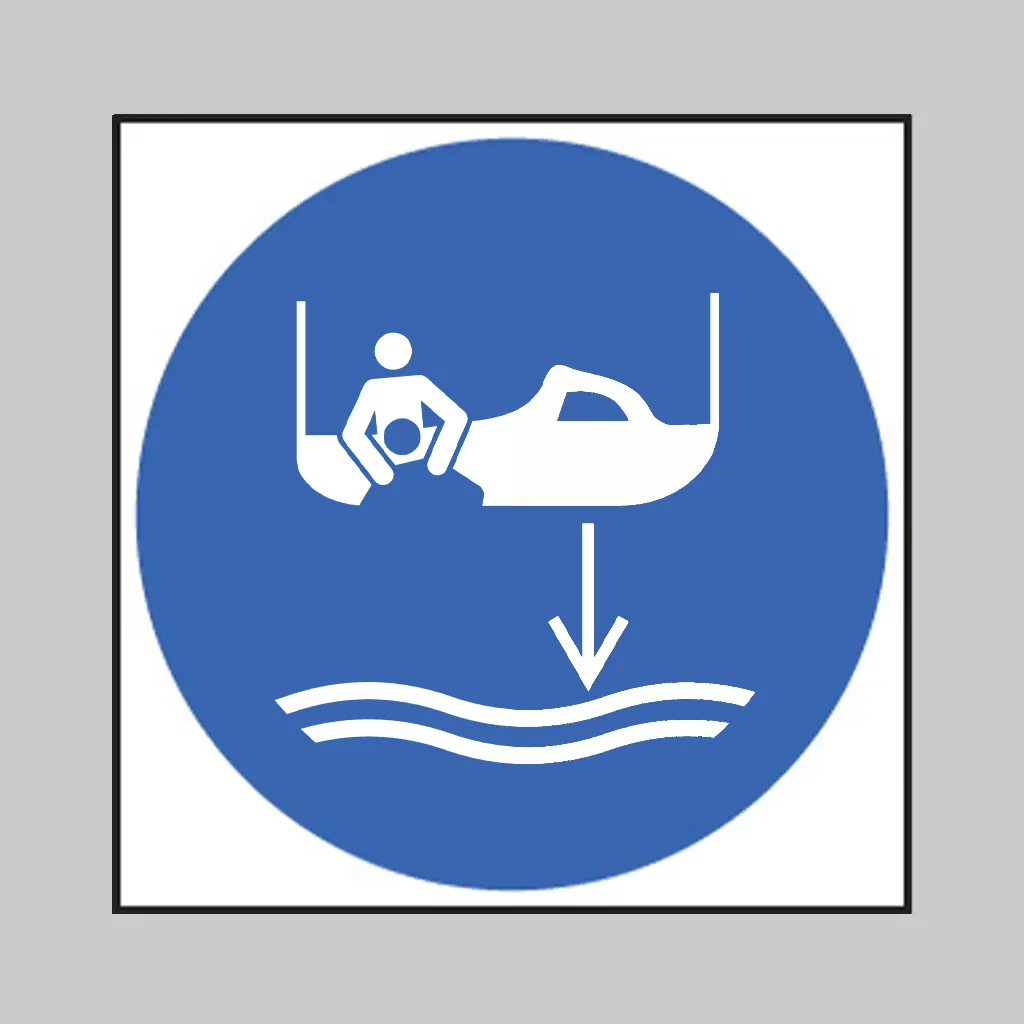 | M041 | Lower Rescue Boat to the Water in Launch Sequence | The Lower Rescue Boat to the Water in Launch Sequence symbol means that the rescue boat must be lowered into the water at the correct stage of the launching procedure. It forms part of the mandatory sequence of actions intended to ensure that rescue craft are deployed safely and in the correct order during an emergency. |
This symbol is primarily used at rescue boat stations on ships, offshore installations and other marine facilities where dedicated rescue boats are provided. It should be positioned where crew members involved in launching the craft can clearly see the instruction while carrying out the deployment procedure. Correct timing is important because lowering the rescue boat too early or too late can disrupt the launch process and affect the readiness of the craft. The M041 symbol gives trained personnel a clear visual reminder that the boat should be lowered only at the appropriate stage of the established launch sequence. Using the M041 symbol helps standardise rescue boat launching procedures and supports faster, more organised action during an emergency. When used alongside the other ISO 7010 launch-sequence symbols, it can reduce procedural mistakes and make the required sequence easier for crew members to recognise and follow. |
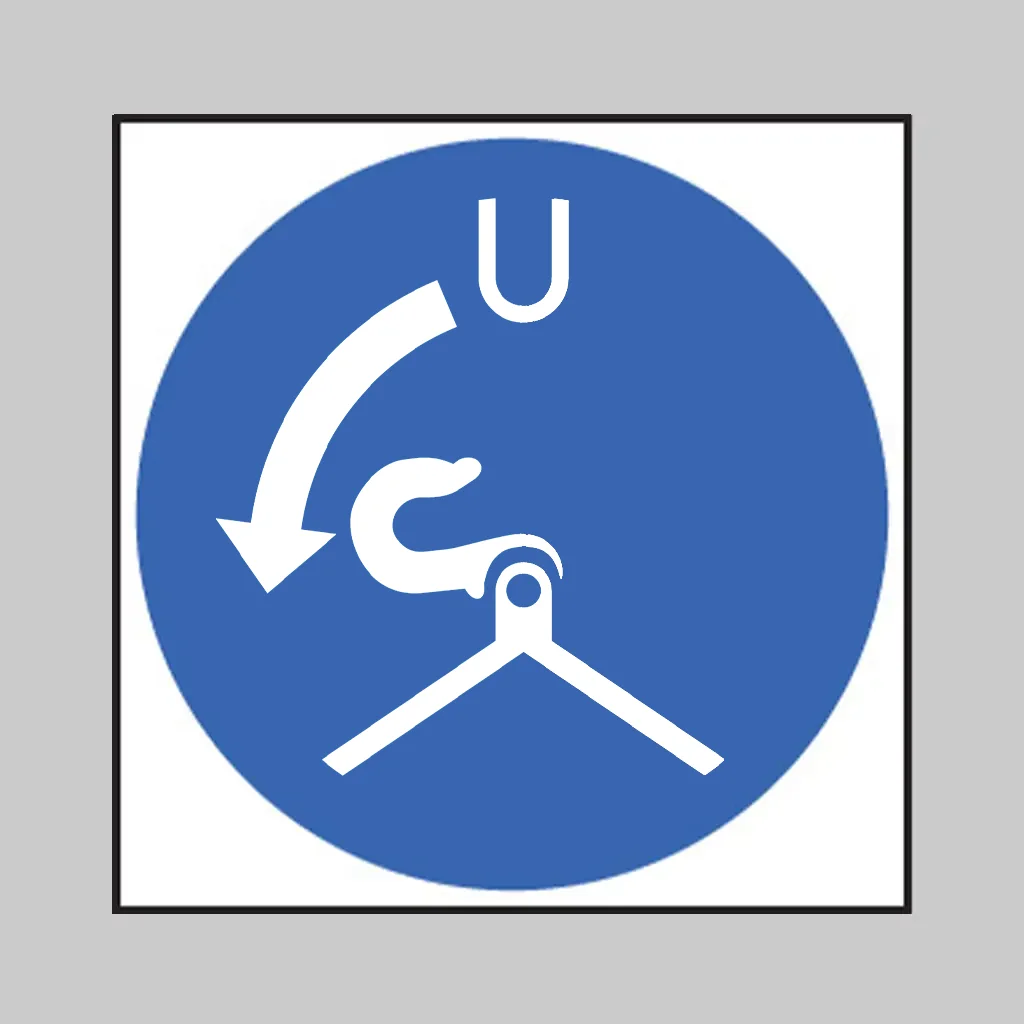 | M042 | Release Falls in Launch Sequence | The Release Falls in Launch Sequence symbol means that the falls supporting the survival or rescue craft must be released at the correct stage of the launching procedure. It is used as part of the recognised sequence of mandatory actions required to deploy lifesaving equipment safely from a vessel. |
This symbol is primarily found at lifeboat and rescue-boat launching stations on ships, offshore installations and other marine environments. It should be positioned where crew members involved in the launch can clearly see the instruction while operating the lowering and release equipment. Releasing the falls at the correct moment is essential because doing so too early or too late can interfere with the safe deployment of the craft. The M042 symbol gives trained personnel a clear visual reminder of this important step and helps them follow the established launch procedure in the correct order. Using the M042 symbol alongside the other ISO 7010 launch-sequence signs creates a consistent set of visual instructions for emergency deployment. It can help reduce procedural errors, support crew training and make critical actions easier to recognise and follow during a high-pressure evacuation or rescue situation. |
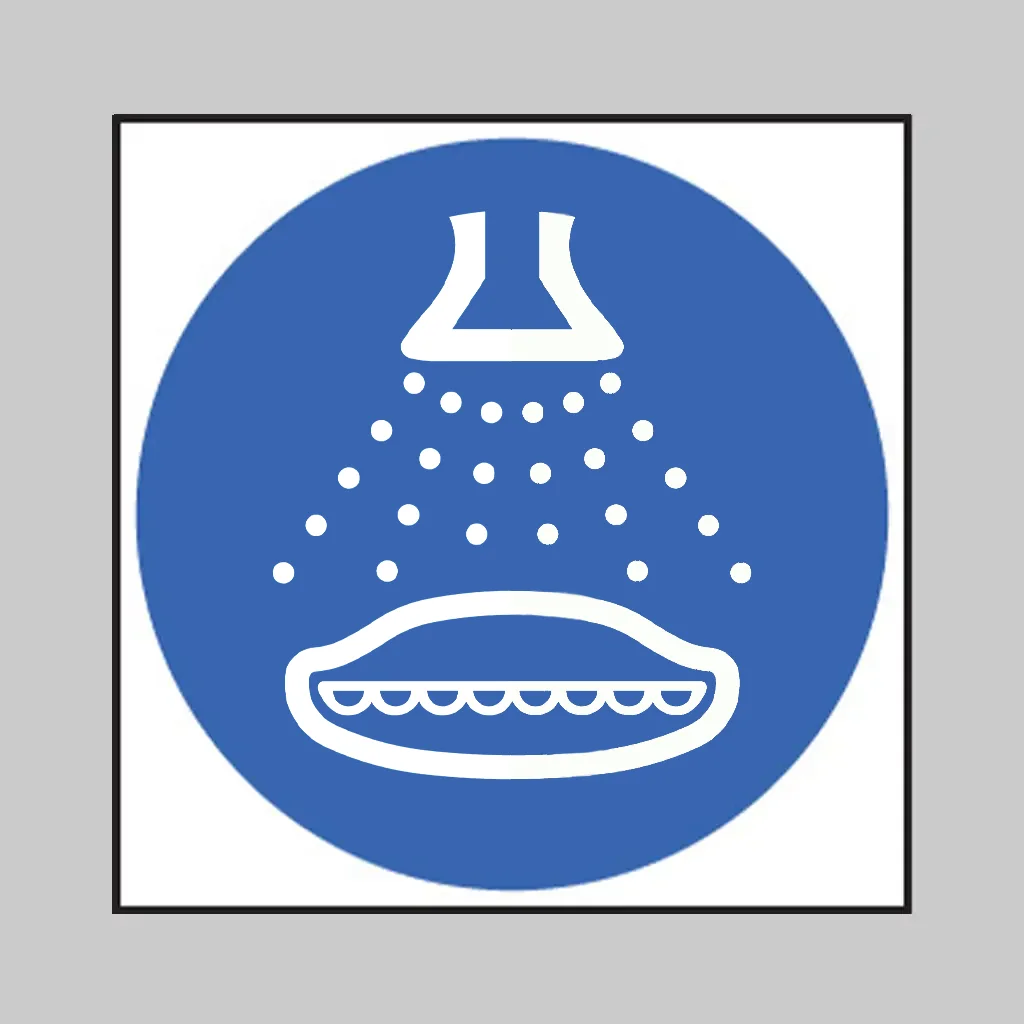 | M043 | Start Water Spray in Launch Sequence | The Start Water Spray in Launch Sequence symbol means that the lifeboat’s water spray system must be started at the correct point during launching. The system is intended to provide external protection to the craft where fire, heat or hazardous substances on or near the water could threaten the lifeboat and its occupants. |
This symbol is used mainly on ships, offshore installations and other marine environments where lifeboats are fitted with water spray protection systems. It should be displayed at the relevant control point or launch station so crew members can identify the action clearly while following the emergency launch procedure. The M043 symbol is particularly important when the lifeboat may need to pass through burning fuel, intense heat or contaminated water during evacuation. Activating the spray system at the correct time helps protect the external surfaces of the craft and supports safer movement away from the vessel. Using the M043 symbol as part of the wider launch-sequence signage helps crew carry out emergency procedures in the correct order. It reinforces training, reduces the chance of a critical step being missed and provides a consistent visual instruction during a high-pressure marine evacuation. |
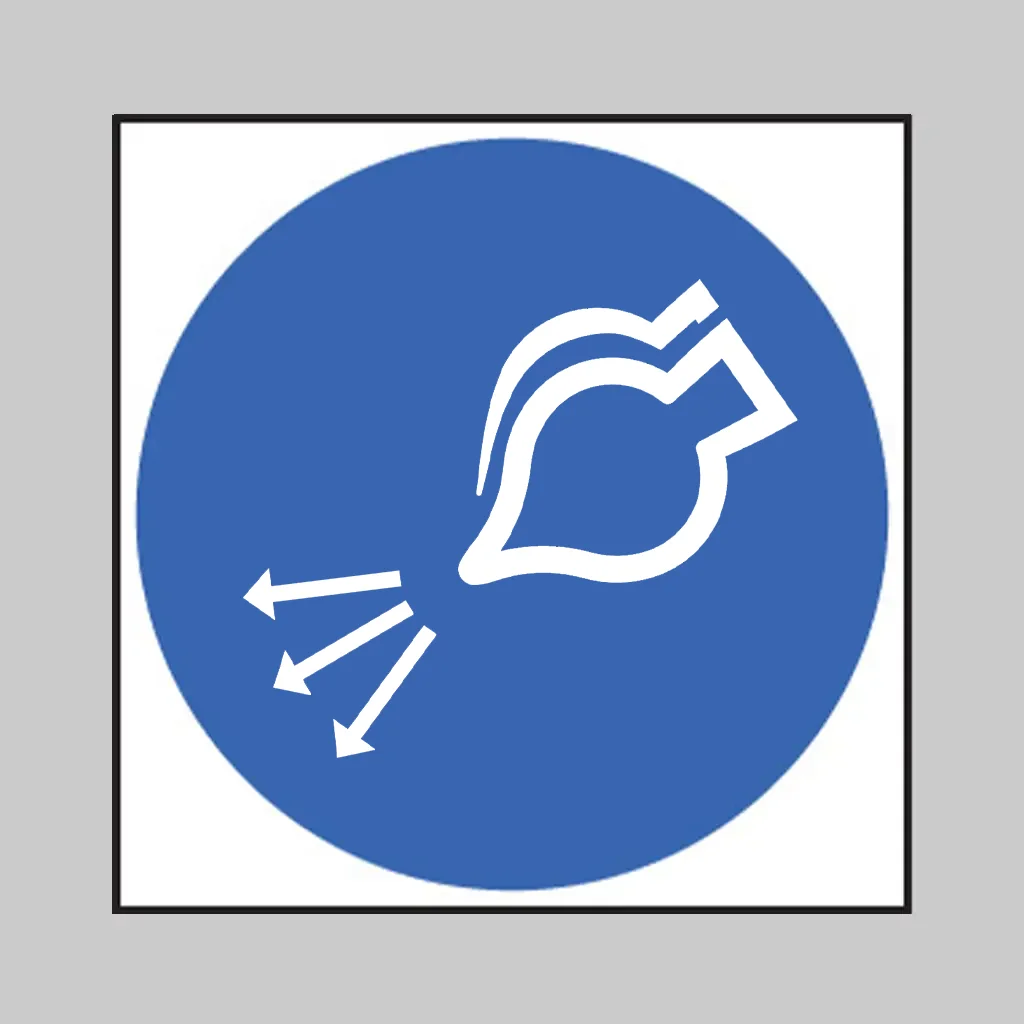 | M044 | Start Air Supply in Launch Sequence | The Start Air Supply in Launch Sequence symbol means that the air supply system for the survival craft must be activated at the appropriate point during the launching procedure. It is used where a protected supply of breathable air forms part of the craft’s safety system and needs to be started before or during deployment. |
This symbol is mainly used on ships, offshore installations and other marine environments equipped with lifeboats or similar survival craft that incorporate an independent air supply system. It should be positioned near the relevant control or launch station so crew members can identify the instruction as part of the launch sequence. The M044 symbol is particularly important where the survival craft may need to operate in smoke, fire or another contaminated atmosphere. Starting the air supply at the correct time helps maintain safer conditions inside the craft and supports the protection of occupants while they move away from the vessel. Using the M044 symbol alongside the other ISO 7010 launch-sequence signs helps create a clear, standardised set of emergency instructions. It supports crew training, reduces the risk of a critical step being overlooked and makes the required sequence easier to follow during a high-pressure marine evacuation. |
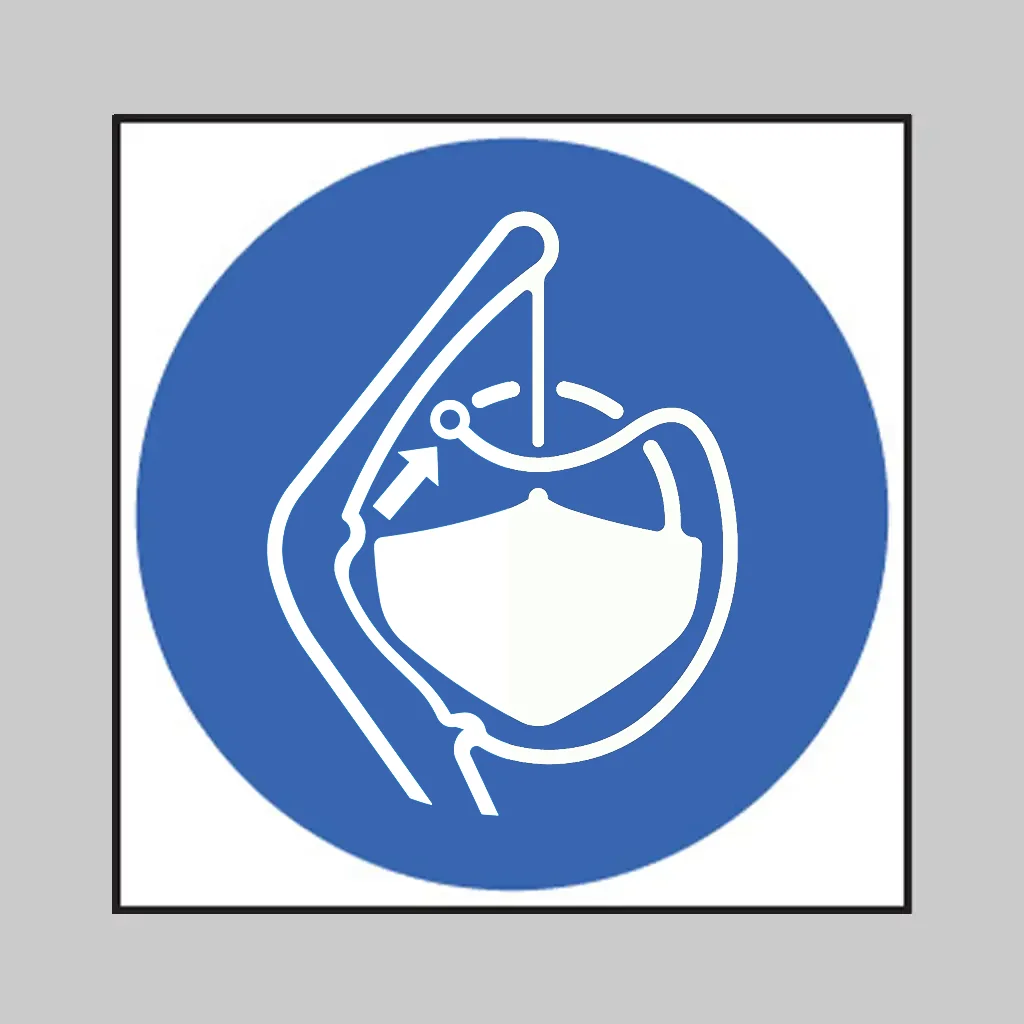 | M045 | Release Lifeboat Gripes in Launch Sequence | The Release Lifeboat Gripes in Launch Sequence symbol means that the securing arrangements holding a lifeboat in its stowed position must be released at the appropriate stage of the launching procedure. It forms part of the mandatory sequence of actions required to prepare and deploy a lifeboat safely during an emergency. |
This symbol is intended for lifeboat launching stations on ships, offshore installations and other marine environments where lifeboats are secured by gripes while not in use. It should be displayed where crew members can clearly see the instruction while preparing the craft for launch. The M045 symbol is particularly important because releasing the gripes at the wrong time could interfere with the safe preparation or deployment of the lifeboat. A clear visual instruction helps trained crew recognise when the securing devices should be released as part of the established launch procedure. Using the M045 symbol alongside other ISO 7010 launch-sequence signs helps create a consistent and easy-to-follow series of emergency instructions. It can reduce procedural errors, reinforce crew training and support a more controlled and organised lifeboat launch when rapid evacuation is required. |
| Symbol | Code | Name | Meaning | Typical use |
|---|---|---|---|---|
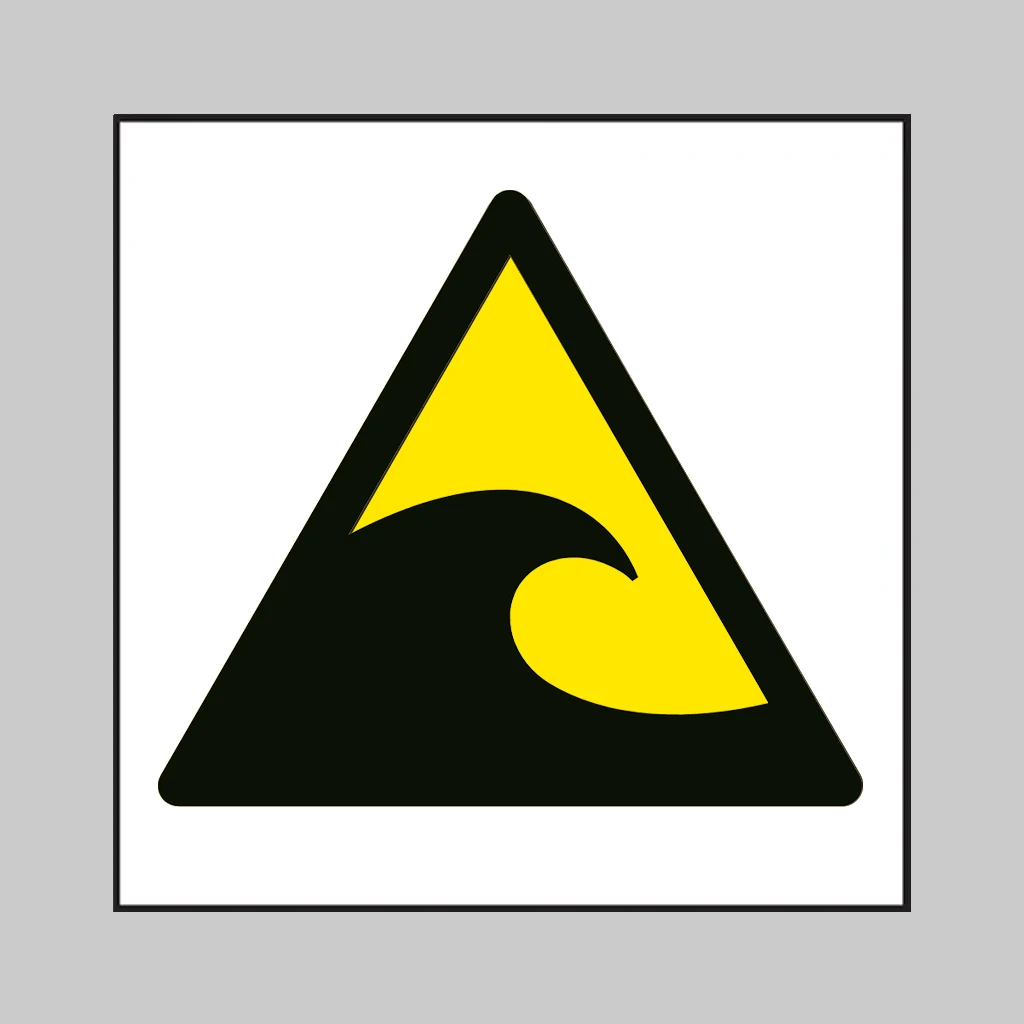 | W056 | Tsunami Hazard Zone | The Tsunami Hazard Zone symbol warns that the surrounding area may be affected by a tsunami. It is intended to alert people that powerful waves, rapidly rising water and strong currents could create a serious danger to life and that evacuation may be necessary. |
This symbol is particularly suitable for beaches, harbours, coastal roads, low-lying communities and other locations identified as being within a tsunami hazard zone. It should be positioned at access points or along routes where residents, workers and visitors need to be made aware that they are entering an area exposed to tsunami risk. The W056 symbol is especially important because a tsunami may arrive after an earthquake or warning with limited time available for people to react. Clear signage helps users recognise the hazard zone and encourages them to follow evacuation routes towards designated tsunami evacuation areas, buildings or other places of safety. Using the W056 Tsunami Hazard Zone symbol provides a standardised way of communicating tsunami risk across coastal environments. It can support public awareness, emergency planning and evacuation procedures while helping people recognise when they should leave vulnerable low-lying areas and move towards a safer location. |
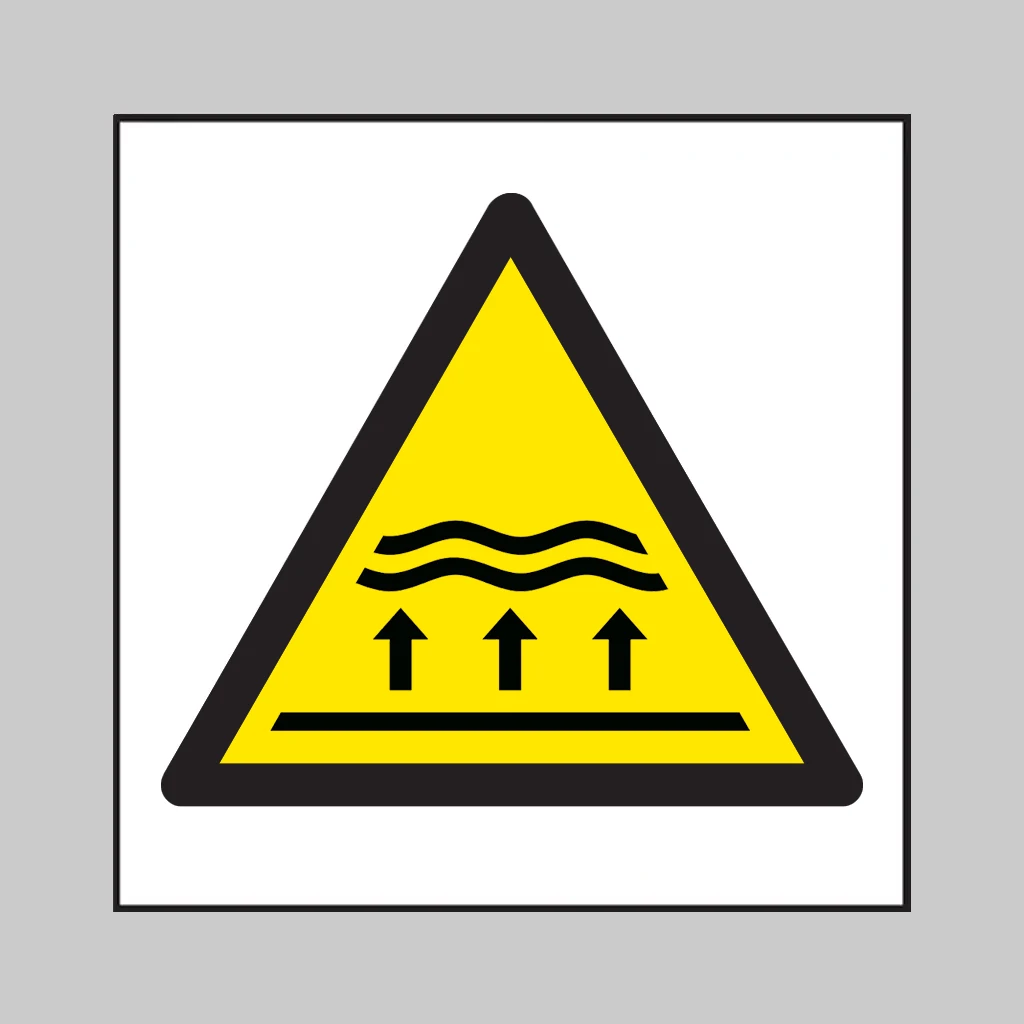 | W077 | Flood Zone | The Flood Zone symbol warns that the surrounding area is at risk of flooding. It is intended to alert people that water levels may rise and create dangerous conditions, including deep or fast-moving water, restricted access and loss of safe escape routes. |
This symbol is suitable for riverside areas, floodplains, low-lying land, reservoirs, coastal access points, roads and other locations known to be vulnerable to flooding. It should be positioned before people enter the affected area so they are aware of the risk and can respond to local warnings or restrictions. The W077 symbol is especially useful because flood conditions can develop quickly following heavy rainfall, storms, overflowing rivers or drainage failure. Clear warning signage helps residents, workers and visitors recognise that an area may become unsafe even when flooding is not immediately visible. Using the W077 Flood Zone symbol provides a standardised way of identifying locations exposed to flood risk. It can improve public awareness, support emergency planning and help reinforce the need to leave the area promptly when flooding begins or evacuation instructions are issued. |
Note: Some recently registered ISO 7010 symbols do not yet have supporting ISO 9186-1 comprehension-test data. Where specified by ISO, supplementary text should be used unless the symbol's meaning has been established through manuals, instructions or training.
Understanding ISO 7010 Marine & Water Emergency Symbol Codes
ISO 7010 does not place all marine and water emergency symbols within a single letter series. This directory brings together relevant symbols from several categories where their primary purpose relates to marine emergency response, evacuation, abandonment, rescue, survival or major water-related emergencies.
M-series symbols communicate mandatory actions that must be followed during procedures such as launching survival craft.
E-series symbols identify emergency facilities, life-saving equipment, evacuation locations and rescue provisions.
W-series symbols warn of serious hazards such as tsunami and flood zones where emergency action or evacuation may be required.
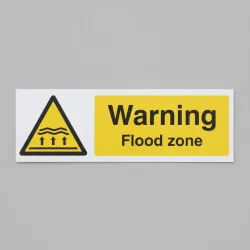
Warning - Flood Zone Safety Signs
A Warning - Flooding Zone sign is used to alert people to areas that are prone to flooding, especially during heavy rain or rising water levels. The sign warns pedestrians, drivers, and workers about the potential risk of water accumulation, slippery surfaces, or sudden flooding, helping them take appropriate precautions to avoid accidents or damage. These signs are typically installed in low-l..