
GHS / GB CLP Hazard Symbols: Meanings and Uses
Written by the Technical Team at Caledonia Signs
Last reviewed: September 2026
What Are GHS / GB CLP Hazard Symbols and Why Are They Important?
GHS hazard symbols provide a standardised way of communicating the dangers associated with hazardous chemicals and substances. Rather than identifying general workplace hazards, these pictograms are used to show the specific types of physical, health and environmental hazards that a chemical may present, such as flammability, toxicity, corrosivity, serious health effects or hazards to the aquatic environment. Their clear graphical format helps workers, users and emergency responders recognise important chemical risks quickly and understand that additional precautions may be required before a substance is handled, stored or used.
The Globally Harmonised System of Classification and Labelling of Chemicals (GHS) establishes internationally recognised criteria for classifying chemical hazards and communicating them through standardised label elements. GHS hazard pictograms typically consist of a black graphical symbol on a white background within a red diamond-shaped border. They are commonly found on chemical containers, packaging and workplace labels, alongside other hazard information such as signal words, hazard statements and precautionary statements. Related information about the hazards and safe handling of a substance is also provided within its Safety Data Sheet (SDS).
GHS pictograms may be encountered across laboratories, factories, warehouses, workshops, healthcare environments, cleaning operations, chemical-processing facilities and other workplaces where hazardous substances are manufactured, supplied, stored or used. Different symbols identify different hazard classes, including explosives, flammable substances, oxidising materials, gases under pressure, corrosive chemicals, acute toxicity, harmful or irritant effects, serious long-term health hazards and environmental hazards. A chemical may display more than one pictogram where it meets the classification criteria for several types of hazard.
This directory provides a practical guide to GHS hazard symbols and their meanings, explaining what each pictogram represents, the types of substances and risks it may identify, and where the symbol is commonly encountered. Whether you are checking the meaning of an unfamiliar chemical hazard symbol, reviewing workplace chemical labels or improving your understanding of hazardous substance classification, this guide helps make GHS pictograms easier to recognise and interpret so that appropriate safety information can be identified before chemicals are handled or used.
| Symbol | Name | Visual Description | Meaning | Typical use |
|---|---|---|---|---|
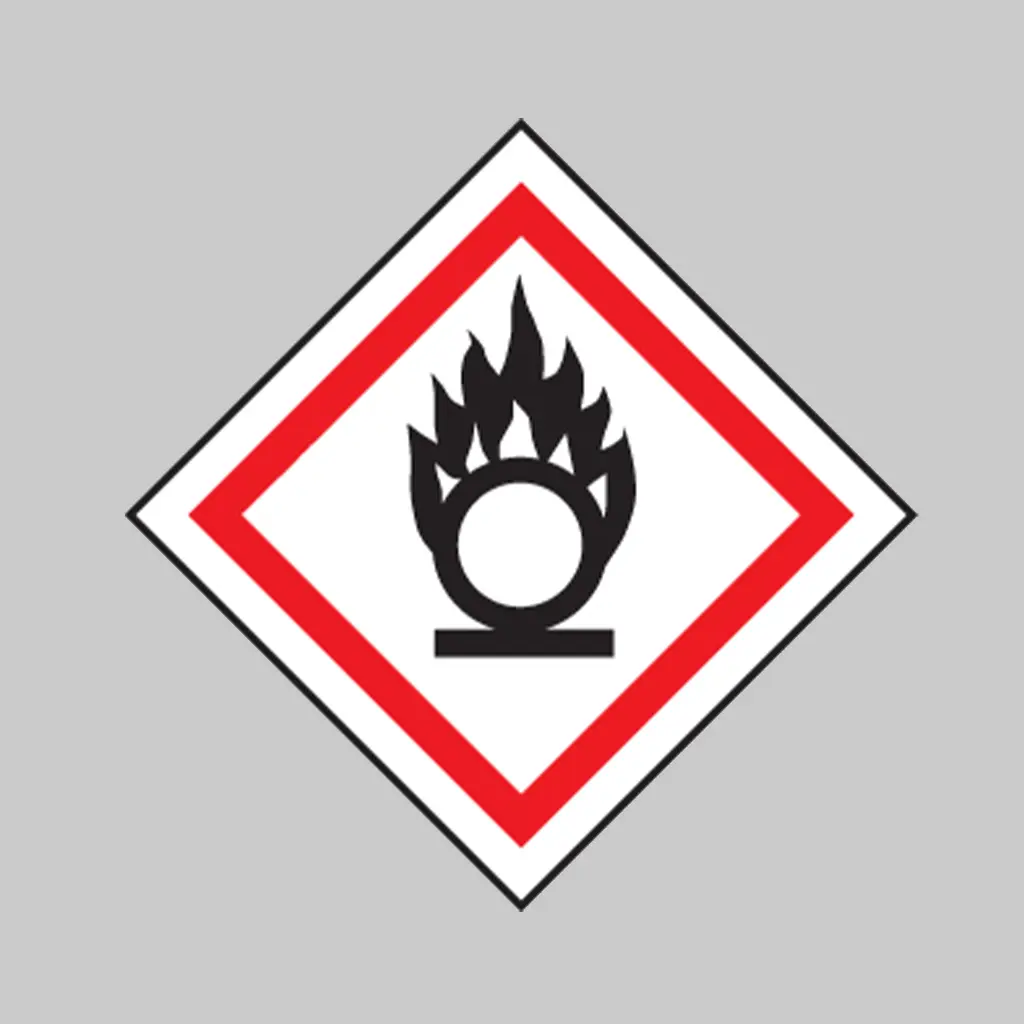 |
GHS - Oxidising symbol | Features a black flame over a black circle, displayed on a white background within a red diamond-shaped border. | The Oxidising symbol indicates that a substance or mixture can cause or intensify a fire by supporting combustion. Oxidising substances are not necessarily flammable themselves, but they can make other materials ignite more easily, burn more intensely or react dangerously with combustible and incompatible substances. The symbol alerts users to the need for careful handling, storage and separation from materials that could increase the risk of fire or hazardous chemical reactions. |
The symbol is used on the labels and packaging of oxidising gases, liquids and solids that meet the relevant GHS classification criteria. It may be displayed on chemical containers, drums, bottles and other forms of packaging to provide a clear warning that the contents present an oxidising hazard. It should form part of the correct chemical hazard labelling alongside any applicable signal word, hazard statements and precautionary statements. GHS Oxidising symbols may be encountered in laboratories, chemical stores, manufacturing facilities, warehouses, healthcare environments and other workplaces where oxidising substances are supplied, stored, transferred or used. They are particularly important in areas where combustible materials or incompatible chemicals may also be present, as suitable separation and storage controls may be required to reduce the risk of fire or dangerous reactions. The symbol should remain clearly visible on the relevant chemical container or packaging throughout storage and use. Where oxidising substances are kept in dedicated cabinets, rooms or controlled storage areas, additional workplace signage may also be used to highlight the presence of an oxidising hazard. Storage, handling and segregation arrangements should follow the product label, Safety Data Sheet (SDS) and the organisation's chemical risk assessment. |
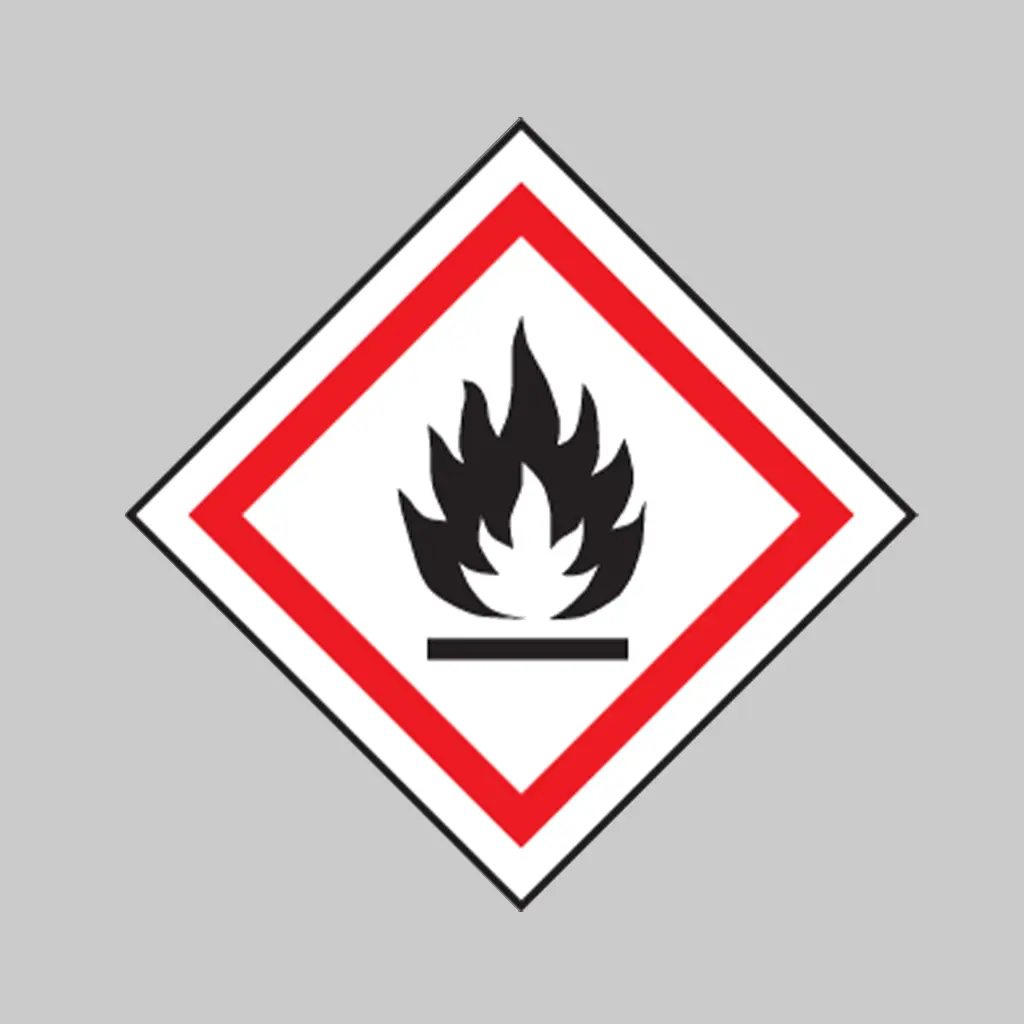 |
GHS - Flammable symbol | Features a black flame on a white background within a red diamond-shaped border. | The Flammable symbol indicates that a substance or mixture presents a fire hazard and may ignite easily under certain conditions. It can apply to flammable gases, aerosols, liquids and solids, as well as certain self-reactive substances, pyrophoric materials, self-heating substances and chemicals that may release flammable gases when in contact with water. The symbol warns users that suitable precautions are required to prevent ignition, fire and potentially dangerous reactions. |
The symbol is used on the labels and packaging of substances and mixtures that meet the relevant GHS flammability classification criteria. It may be found on bottles, drums, containers, cylinders and other chemical packaging in laboratories, factories, warehouses, workshops, healthcare environments and other workplaces where flammable chemicals are supplied, stored, handled or used. It should form part of the appropriate chemical hazard labelling alongside any applicable signal word, hazard statements and precautionary statements. Where flammable substances are stored or used, the symbol helps alert workers and other users to the need to control potential ignition sources such as flames, sparks, hot surfaces and unsuitable electrical equipment. Additional workplace signage may also be used around designated chemical stores, flammable-liquid cabinets or controlled storage areas where significant quantities of flammable substances are present. Storage, handling and segregation should always follow the product label, Safety Data Sheet (SDS) and the organisation's chemical risk assessment. |
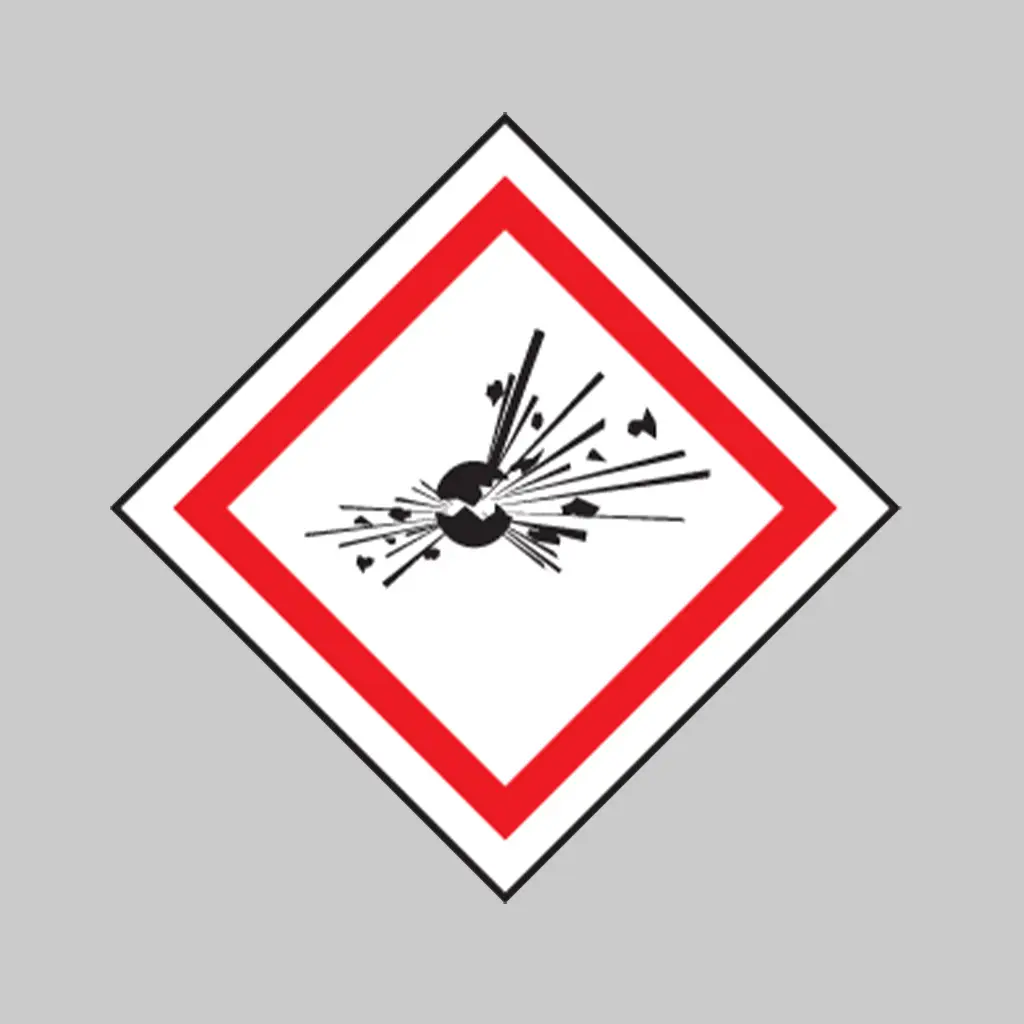 |
GHS - Explosive symbol | Features a black exploding bomb graphic on a white background within a red diamond-shaped border. | The Explosive symbol indicates that a substance or mixture may explode or present a serious explosion hazard under certain conditions. It is used for explosives and may also apply to certain self-reactive substances and organic peroxides where there is a risk of explosive decomposition. The symbol warns users that impact, friction, heat, sparks, flames or other sources of ignition could trigger a violent reaction, making careful handling and storage essential. |
The symbol is used on the labels and packaging of substances and mixtures that meet the relevant GHS explosive hazard classification criteria. It may appear on containers, drums, packages and other forms of chemical packaging to provide a clear warning that the contents could explode if exposed to unsuitable conditions. It should form part of the appropriate chemical hazard labelling alongside any applicable signal word, hazard statements and precautionary statements. GHS Explosive symbols may be encountered in laboratories, manufacturing facilities, chemical stores, industrial sites and other workplaces where explosive or highly reactive materials are supplied, stored, handled or used. They are particularly important in areas where substances may be exposed to heat, shock, friction or ignition sources, as strict controls may be necessary to prevent accidental initiation or dangerous decomposition. The symbol should remain clearly visible on the relevant container or packaging throughout storage and use. Where explosive substances are kept in dedicated stores, controlled areas or specialist facilities, additional workplace signage may also be used to highlight the presence of an explosion hazard. Handling, storage, segregation and emergency arrangements should follow the product label, Safety Data Sheet (SDS) and the organisation's chemical risk assessment. |
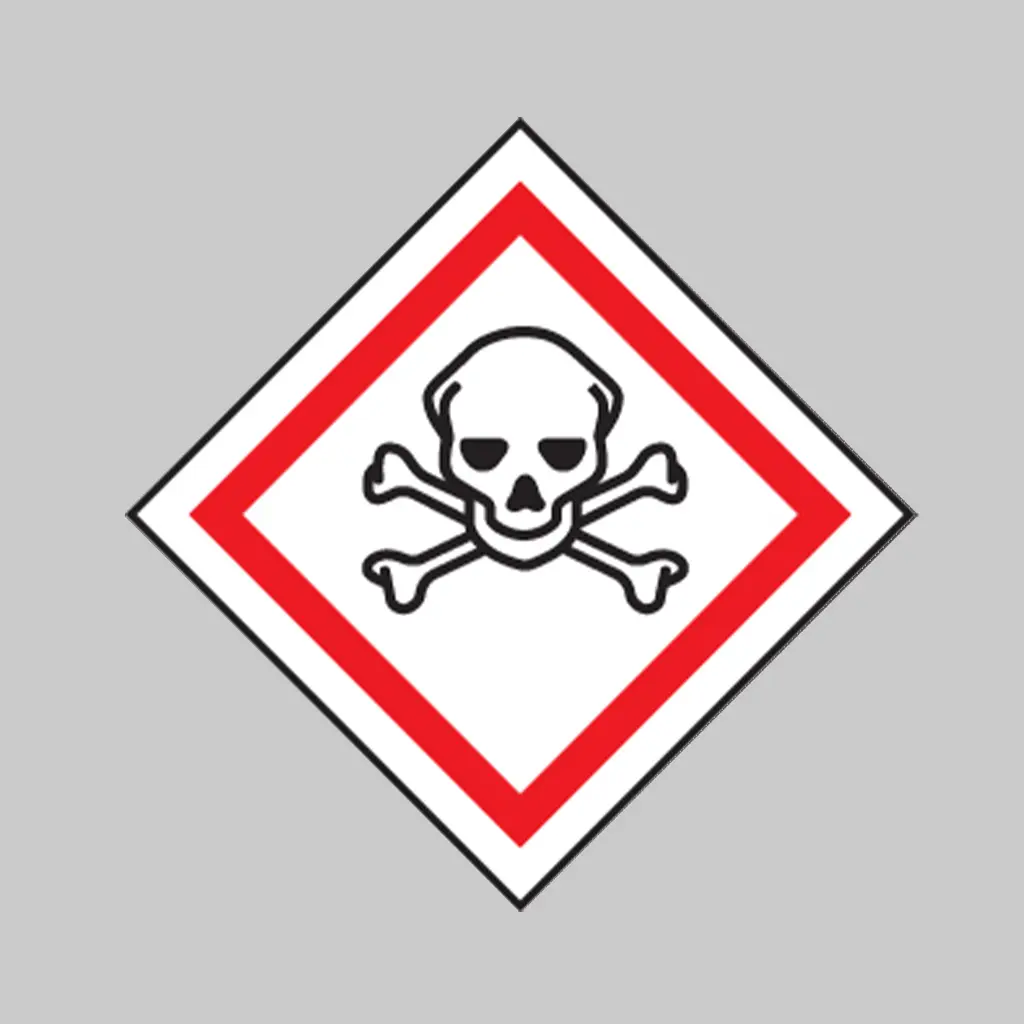 |
Acute Toxicity (Toxic) symbol | Features a black skull and cross bones on a white background within a red diamond-shaped border. | The Acute Toxicity (Toxic) symbol indicates that a substance or mixture can cause serious acute health effects and may be toxic or fatal if swallowed, inhaled or absorbed through the skin. It is used for chemicals classified for acute toxicity and warns that even relatively small amounts may cause severe poisoning, serious illness or death. The symbol highlights the need for strict controls to prevent accidental exposure and for users to follow the specified handling and emergency precautions. |
The symbol is used on the labels and packaging of substances and mixtures that meet the relevant GHS acute toxicity classification criteria. It may appear on bottles, drums, containers and other chemical packaging to warn users that the contents present a serious poisoning hazard. It should form part of the appropriate chemical hazard labelling alongside any applicable signal word, hazard statements and precautionary statements. GHS Acute Toxicity (Toxic) symbols may be encountered in laboratories, chemical stores, manufacturing facilities, agricultural environments, industrial sites and other workplaces where highly toxic chemicals are supplied, stored, handled or used. Particular care may be required in areas where there is a risk of inhalation, ingestion or skin contact, with suitable controls used to minimise exposure and prevent unauthorised access. The symbol should remain clearly visible on the relevant container or packaging throughout storage and use. Where toxic substances are kept in dedicated cupboards, stores or controlled areas, additional workplace signage may also be used to highlight the presence of a serious toxicity hazard. Storage, handling, personal protective measures and emergency procedures should follow the product label, Safety Data Sheet (SDS) and the organisation's chemical risk assessment. |
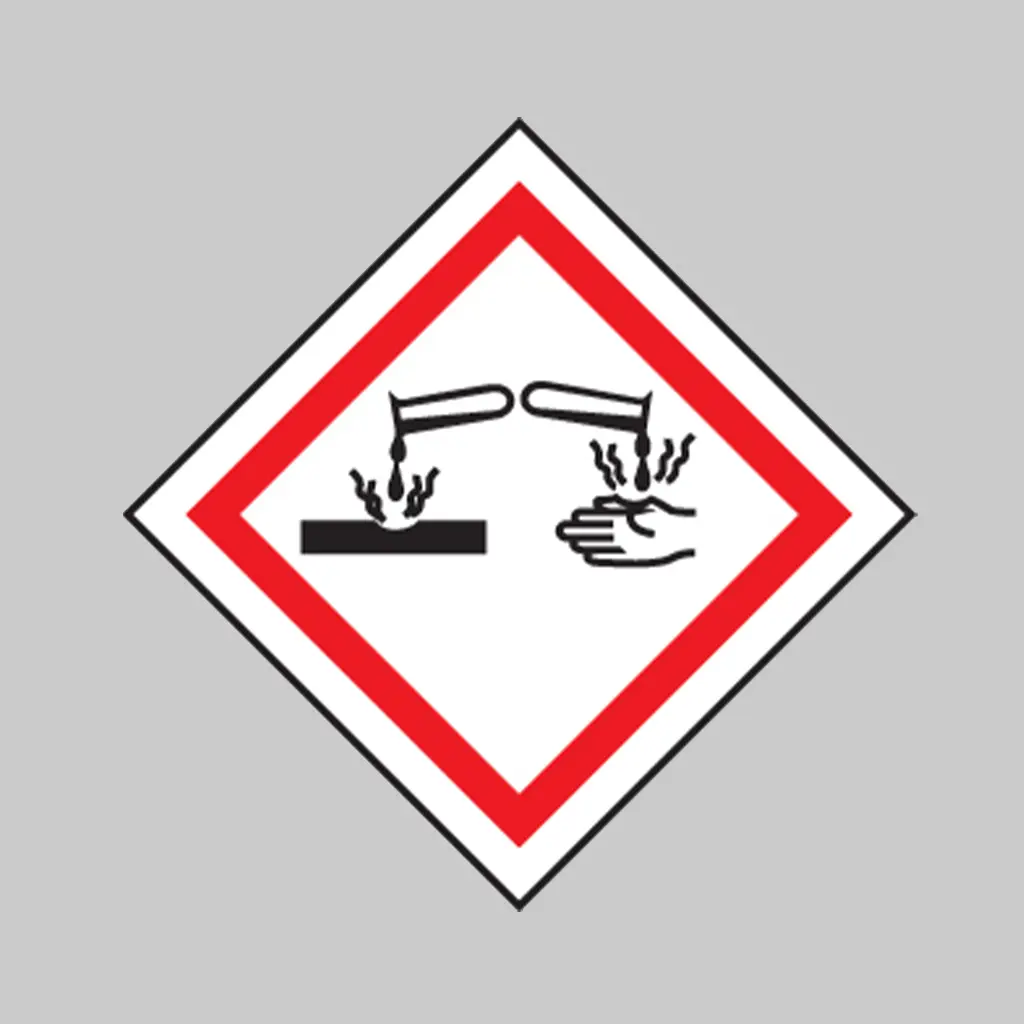 |
GHS - Corrosive symbol | Features two black test tubes dripping corrosive liquid onto a hand and a metal surface, set against a white background within a red diamond-shaped border. | The Corrosive symbol indicates that a substance or mixture can cause severe skin burns, serious eye damage or corrosion of certain metals. It is used for chemicals capable of damaging living tissue on contact and for substances that may attack or degrade metal surfaces. The symbol warns users that direct contact can cause serious injury and that suitable controls are required when handling, transferring or storing corrosive materials. |
The symbol is used on the labels and packaging of substances and mixtures that meet the relevant GHS classification criteria for skin corrosion, serious eye damage or corrosivity to metals. It may appear on bottles, drums, containers and other chemical packaging to clearly identify the corrosive hazard. It should form part of the appropriate chemical hazard labelling alongside any applicable signal word, hazard statements and precautionary statements. GHS Corrosive symbols may be encountered in laboratories, chemical stores, manufacturing facilities, cleaning operations, industrial plants, workshops and other workplaces where strong acids, alkalis or other corrosive substances are supplied, stored, handled or used. Particular care may be required in areas where splashes, leaks or accidental contact could expose workers to serious burns or eye injuries. The symbol should remain clearly visible on the relevant container or packaging throughout storage and use. Where corrosive chemicals are kept in dedicated cupboards, stores or controlled areas, additional workplace signage may also be used to highlight the presence of a corrosive hazard. Storage, handling, segregation, personal protective measures and emergency arrangements should follow the product label, Safety Data Sheet (SDS) and the organisation's chemical risk assessment. |
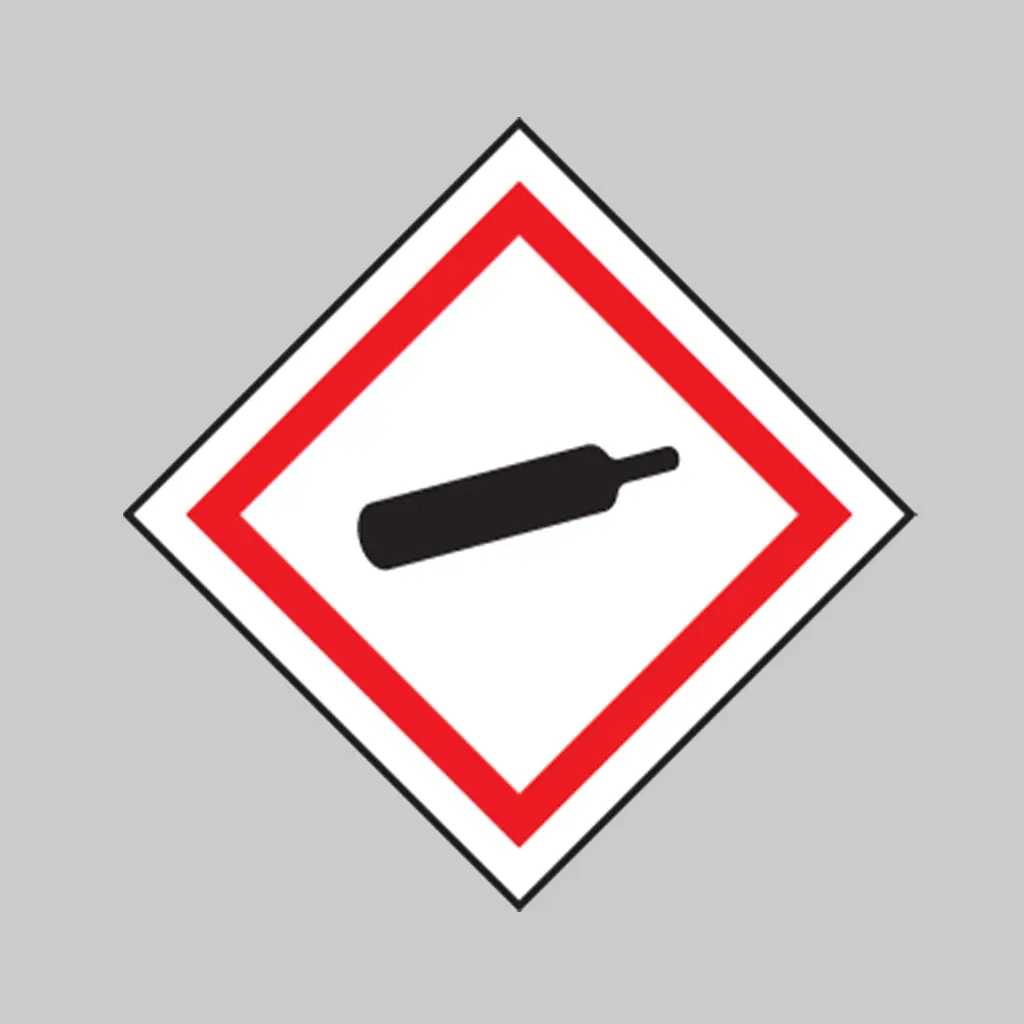 |
GHS - Gas Under Pressure (Compressed Gas) symbol | Features a black gas cylinder icon, set against a white background within a red diamond-shaped border. | The Gas Under Pressure (Compressed Gas) symbol indicates that a container holds gas under pressure and may present hazards if heated, damaged or improperly handled. It can apply to compressed gases, liquefied gases, refrigerated liquefied gases and dissolved gases. Pressurised containers may rupture or explode if exposed to excessive heat, while refrigerated gases can also cause severe cold burns or injury on contact. |
The symbol is used on the labels and packaging of gases that meet the relevant GHS classification criteria for gases under pressure. It may appear on gas cylinders, cartridges, pressure vessels and other containers used to store or transport compressed, liquefied or refrigerated gases. It should form part of the appropriate chemical hazard labelling alongside any applicable signal word, hazard statements and precautionary statements. GHS Gas Under Pressure (Compressed Gas) symbols may be encountered in laboratories, workshops, manufacturing facilities, healthcare environments, welding areas, engineering sites and gas storage locations where pressurised gases are supplied, stored, handled or used. Particular care may be required to protect cylinders and containers from heat, impact, physical damage and unsuitable storage conditions. The symbol should remain clearly visible on the relevant cylinder, container or packaging throughout storage and use. Where significant quantities of pressurised gas are kept in dedicated stores or controlled areas, additional workplace signage may also be used to highlight the presence of gases under pressure. Storage, handling, securing, segregation and emergency arrangements should follow the product label, Safety Data Sheet (SDS) and the organisation's risk assessment. |
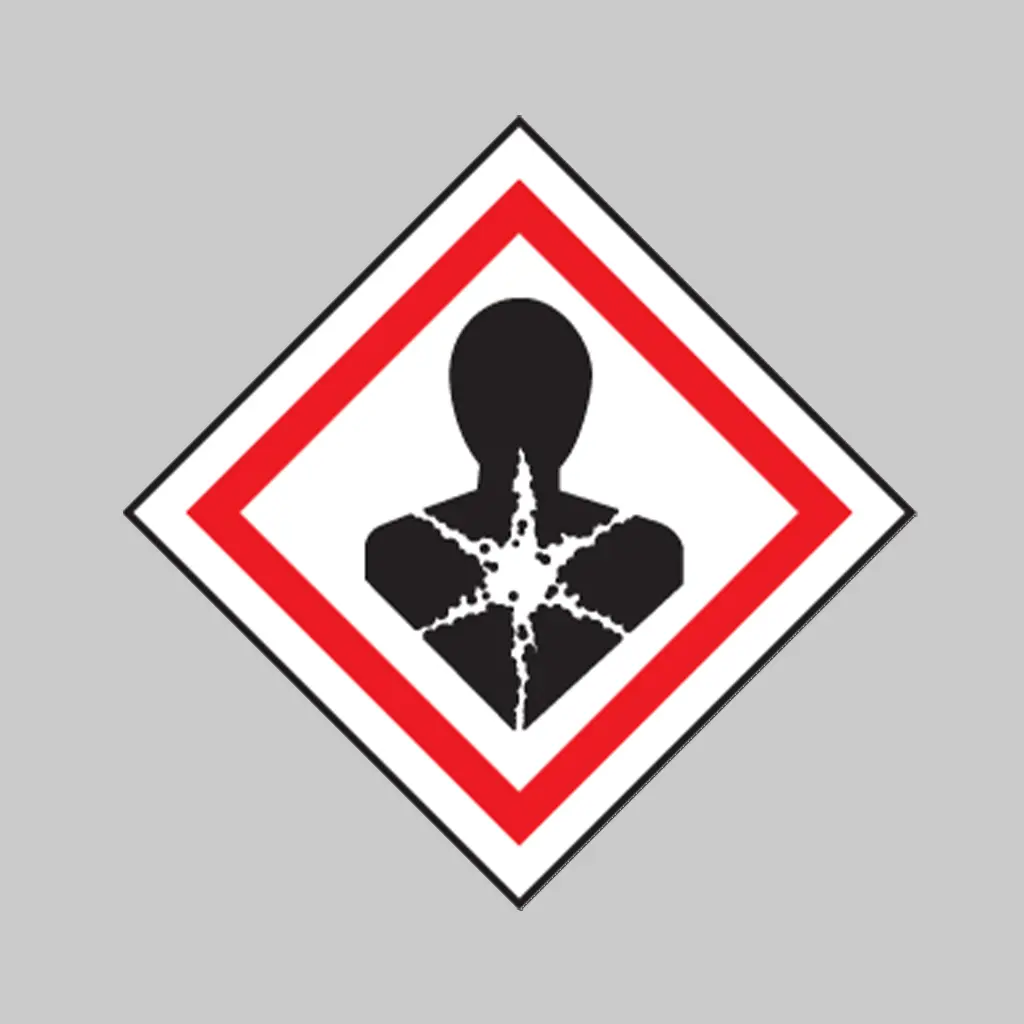 |
GHS - Serious Health Hazard symbol | Features a black silhouette of a person with a starburst shape on the chest which represents serious internal or long-term health effects, set against a white background within a red diamond-shaped border. | The Serious Health Hazard symbol indicates that a substance or mixture may cause serious or long-term effects on human health. It is used for hazards such as carcinogenicity, respiratory sensitisation, reproductive toxicity, specific target organ toxicity, germ cell mutagenicity and aspiration hazards. The symbol warns users that exposure may result in significant health effects that are not always immediate or obvious, making careful handling and suitable exposure controls essential. |
The symbol is used on the labels and packaging of substances and mixtures that meet the relevant GHS classification criteria for serious health hazards. It may appear on bottles, drums, containers and other chemical packaging to alert users to potential chronic or severe health effects. It should form part of the appropriate chemical hazard labelling alongside any applicable signal word, hazard statements and precautionary statements. GHS Serious Health Hazard symbols may be encountered in laboratories, manufacturing facilities, chemical stores, workshops, healthcare environments, industrial plants and other workplaces where hazardous substances are supplied, stored, handled or used. Particular care may be required where workers could be exposed through inhalation, ingestion or skin contact, especially where repeated or prolonged exposure could increase the risk of serious health effects. The symbol should remain clearly visible on the relevant container or packaging throughout storage and use. Where substances presenting serious health hazards are kept in dedicated cupboards, stores or controlled areas, additional workplace signage may also be used to highlight the presence of hazardous chemicals. Storage, handling, exposure controls, personal protective measures and emergency procedures should follow the product label, Safety Data Sheet (SDS) and the organisation's chemical risk assessment. |
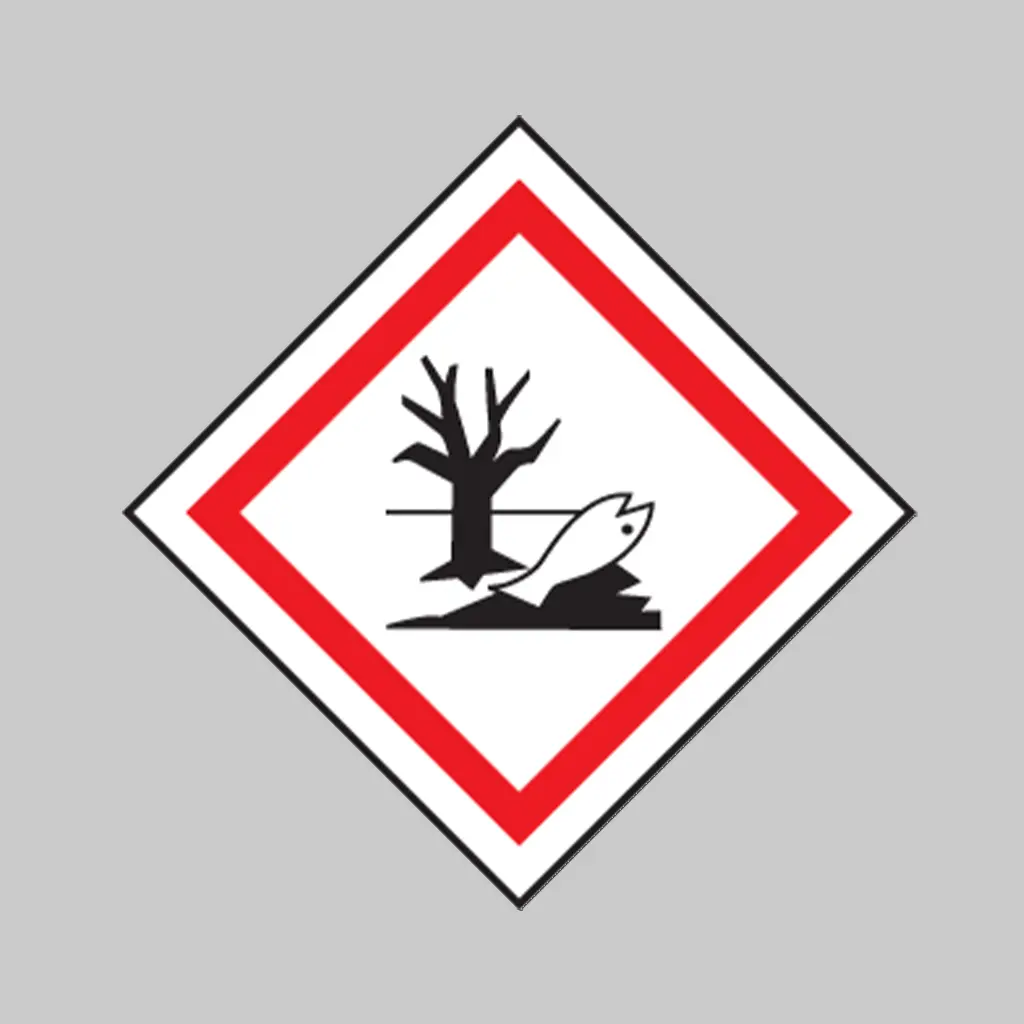 |
GHS - Hazardous to the Environment symbol | Features a black dead tree and fish, representing harm to aquatic life and the wider environment, set against a white background within a red diamond-shaped border. | The Hazardous to the Environment symbol indicates that a substance or mixture may be harmful or toxic to the aquatic environment. It is used for chemicals that can cause acute or long-term damage to aquatic organisms and ecosystems, including fish, aquatic plants and other wildlife. The symbol warns users that releases to drains, watercourses, soil or the wider environment may cause significant environmental harm and that suitable controls are required to prevent accidental discharge. |
The symbol is used on the labels and packaging of substances and mixtures that meet the relevant GHS classification criteria for aquatic environmental hazards. It may appear on bottles, drums, containers and other chemical packaging to alert users that the contents could damage the environment if released. It should form part of the appropriate chemical hazard labelling alongside any applicable signal word, hazard statements and precautionary statements. GHS Hazardous to the Environment symbols may be encountered in laboratories, chemical stores, manufacturing facilities, agricultural environments, workshops, industrial sites and other workplaces where environmentally hazardous substances are supplied, stored, handled or used. Particular care may be required in areas close to drains, watercourses, surface water or sensitive environmental locations where spills or leaks could spread beyond the immediate workplace. The symbol should remain clearly visible on the relevant container or packaging throughout storage and use. Where environmentally hazardous chemicals are kept in dedicated stores or controlled areas, additional workplace signage may also be used to highlight the risk of environmental contamination. Storage, spill prevention, containment, disposal and emergency procedures should follow the product label, Safety Data Sheet (SDS) and the organisation's environmental and chemical risk assessments. |
|
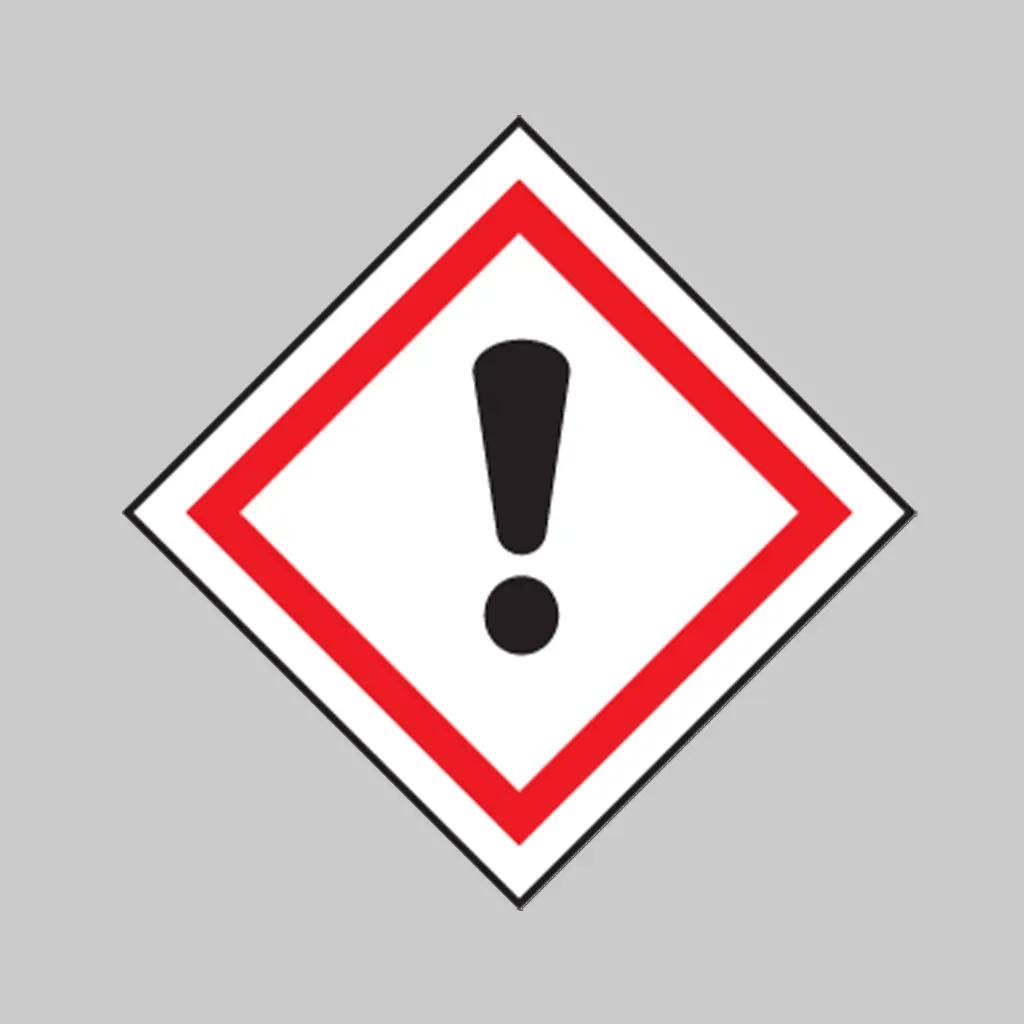
GHS - Health Hazard / Irritant (Exclamation Mark) symbol | Features a black exclamation mark, representing harmful or irritant effects, set against a white background within a red diamond-shaped border. | The Health Hazard / Irritant (Exclamation Mark) symbol indicates that a substance or mixture may cause less severe but still significant harmful effects to health. It can be used for hazards such as skin irritation, eye irritation, skin sensitisation, acute toxicity at lower hazard categories, respiratory tract irritation and narcotic effects such as drowsiness or dizziness. The symbol warns users that exposure may cause discomfort, injury or adverse health effects and that suitable precautions should be taken when handling the substance. |
The symbol is used on the labels and packaging of substances and mixtures that meet the relevant GHS classification criteria for irritant or harmful effects. It may appear on bottles, drums, containers and other chemical packaging to alert users that the contents could cause irritation or other adverse effects through inhalation, ingestion or contact with the skin or eyes. It should form part of the appropriate chemical hazard labelling alongside any applicable signal word, hazard statements and precautionary statements. GHS Health Hazard / Irritant (Exclamation Mark) symbols may be encountered in laboratories, workshops, cleaning operations, manufacturing facilities, healthcare environments, chemical stores and other workplaces where irritating or harmful substances are supplied, stored, handled or used. Particular care may be required where chemicals can generate vapours, dusts, mists or splashes that could affect the eyes, skin or respiratory system. The symbol should remain clearly visible on the relevant container or packaging throughout storage and use. Where irritating or harmful substances are kept in dedicated cupboards, stores or controlled areas, additional workplace signage may also be used to highlight the presence of chemical hazards. Storage, handling, ventilation, personal protective measures and emergency procedures should follow the product label, Safety Data Sheet (SDS) and the organisation's chemical risk assessment. |
Understanding GHS Hazard Symbols and the GB CLP Regulation
In Great Britain, GHS chemical classification and labelling principles are implemented through the GB Classification, Labelling and Packaging (GB CLP) Regulation. GB CLP requires hazardous chemicals placed on the market to be appropriately classified and labelled using the relevant hazard pictograms, signal words, hazard statements and precautionary statements.
Corrosive - GHS Safety Signs
Using GHS Labels for Corrosive Substances is essential for clearly identifying chemicals that can cause severe damage to skin, eyes, metals, and other materials. These labels warn workers, handlers, and emergency responders about the risks of chemical burns, tissue damage, and material corrosion, helping them take the necessary precautions during handling, storage, and transport. One key reason..
Environmentally Hazardous - GHS Safety Signs
Using GHS Labels for Environmentally Hazardous Substances is crucial for identifying chemicals that pose a significant threat to the environment, particularly aquatic life. These labels alert workers, handlers, and emergency responders to the potential dangers that these substances can cause if released into water bodies or ecosystems, helping to prevent environmental contamination. One key rea..
Irritant - GHS Safety Signs
Using GHS Labels for Irritant Substances is important for clearly identifying chemicals that can cause inflammation, redness, or discomfort to the skin, eyes, or respiratory system upon contact or exposure. These labels alert workers and handlers to the potential for mild to moderate irritation, helping them take necessary precautions to avoid harm. One key reason to use GHS irritant labels is ..