
ISO 7010 Emergency Escape Symbols: Meanings and Uses
Written by the Technical Team at Caledonia Signs
Last reviewed: September 2026
What Are Emergency Escape Safety Signs and Why Are They Important?
Clear emergency escape signage is essential for helping people leave a building or hazardous area quickly and safely during an emergency. Emergency escape signs and symbols provide clear visual guidance towards escape routes, emergency exits and other evacuation facilities, allowing occupants to identify the safest direction of travel without relying on lengthy written instructions. These signs are particularly important during fires, power failures and other incidents where rapid evacuation may be required and unfamiliar occupants need to understand where to go immediately.
Emergency escape symbols are standardised through the internationally recognised ISO 7010 system of graphical safety signs and form part of the wider safe condition category identified by the letter E. They typically feature a white pictogram on a green square or rectangular background, creating a consistent appearance that can be recognised quickly across different buildings and environments. ISO 7010 emergency escape signs can be used to identify emergency exits, indicate the direction of escape routes and highlight other facilities associated with evacuation and reaching a place of safety. Their standardised design is particularly valuable in workplaces, factories, warehouses, schools, hotels, shopping centres, transport facilities and public buildings where employees, visitors or members of the public may need to evacuate unfamiliar premises.
This directory brings together ISO 7010 emergency escape symbols and related safe condition signs, explaining the meaning of each graphical symbol, the safety function it communicates and where the corresponding sign may commonly be displayed. Each entry is designed to help you identify individual emergency escape symbols, distinguish between similar evacuation signs and understand how they contribute to a clearly marked escape route. Whether you are checking the meaning of an unfamiliar emergency exit symbol, planning evacuation signage or identifying the correct signs for a particular escape route, this guide provides a practical reference to support clearer wayfinding, effective emergency evacuation and improved safety throughout a building or site.
| Symbol | Code | Name | Meaning | Typical use |
|---|---|---|---|---|
|
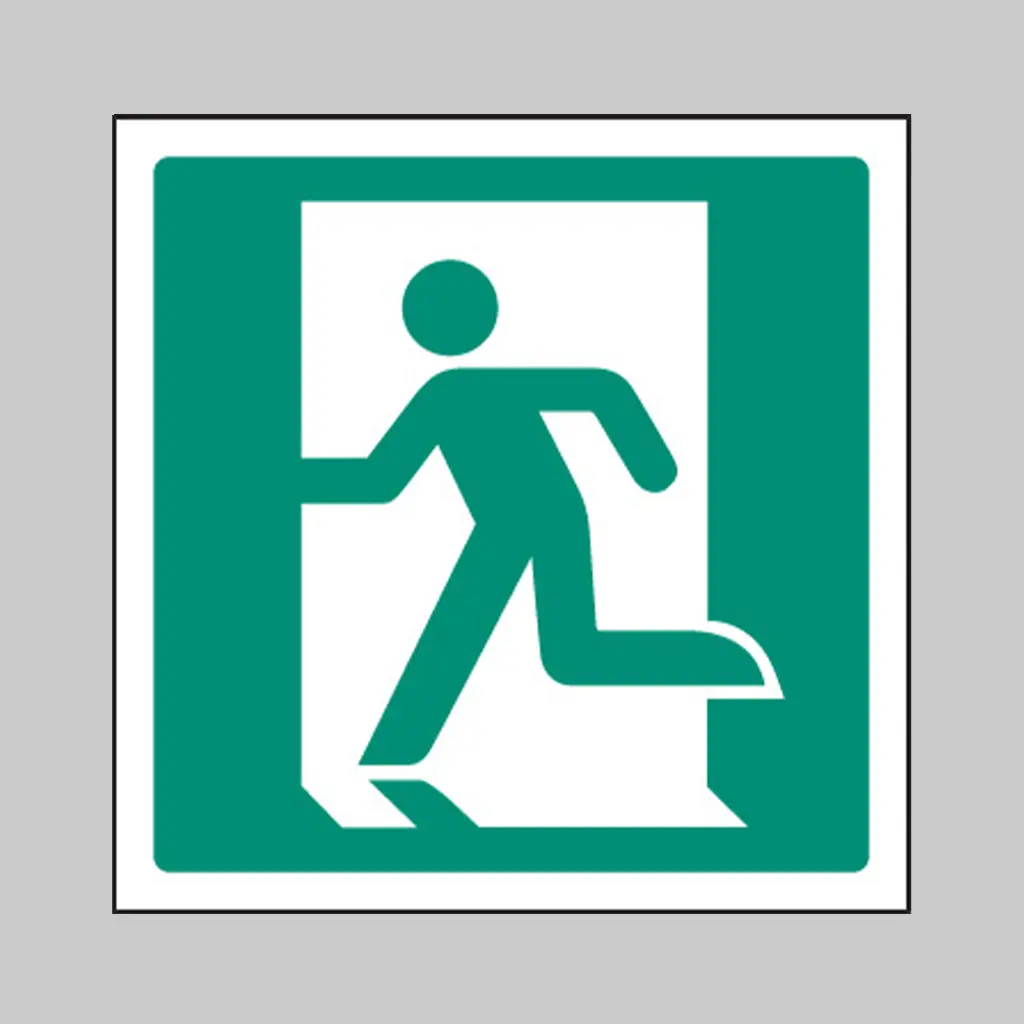
E001 | Emergency Exit (Left Hand) | The Emergency Exit (Left Hand) symbol used to identify an emergency exit or escape route using the left-hand version of the internationally recognised running-person pictogram. It provides a clear visual cue that helps occupants identify the correct escape route during an evacuation. |
It helps occupants quickly recognise designated means of escape during a fire, evacuation or other emergency, reducing reliance on written instructions when people may need to leave a building rapidly. The green and white safe condition design makes the symbol readily distinguishable from warning, prohibition, mandatory and fire equipment signs. E001 may be displayed at emergency exits and at appropriate points along an escape route to help identify the route leading towards a place of safety. Where additional directional guidance is required, the symbol can be used together with an appropriate supplementary directional arrow to indicate the direction people should follow. Clear and consistent use of the E001 symbol can help employees, visitors and members of the public recognise designated escape routes quickly, particularly in unfamiliar, complex or low-visibility environments. Using the E001 symbol helps create a consistent emergency wayfinding system throughout a building or site. When correctly positioned as part of an overall escape route strategy, it can improve evacuation efficiency, reduce confusion and help employees, visitors and members of the public locate the correct emergency exit more quickly. |
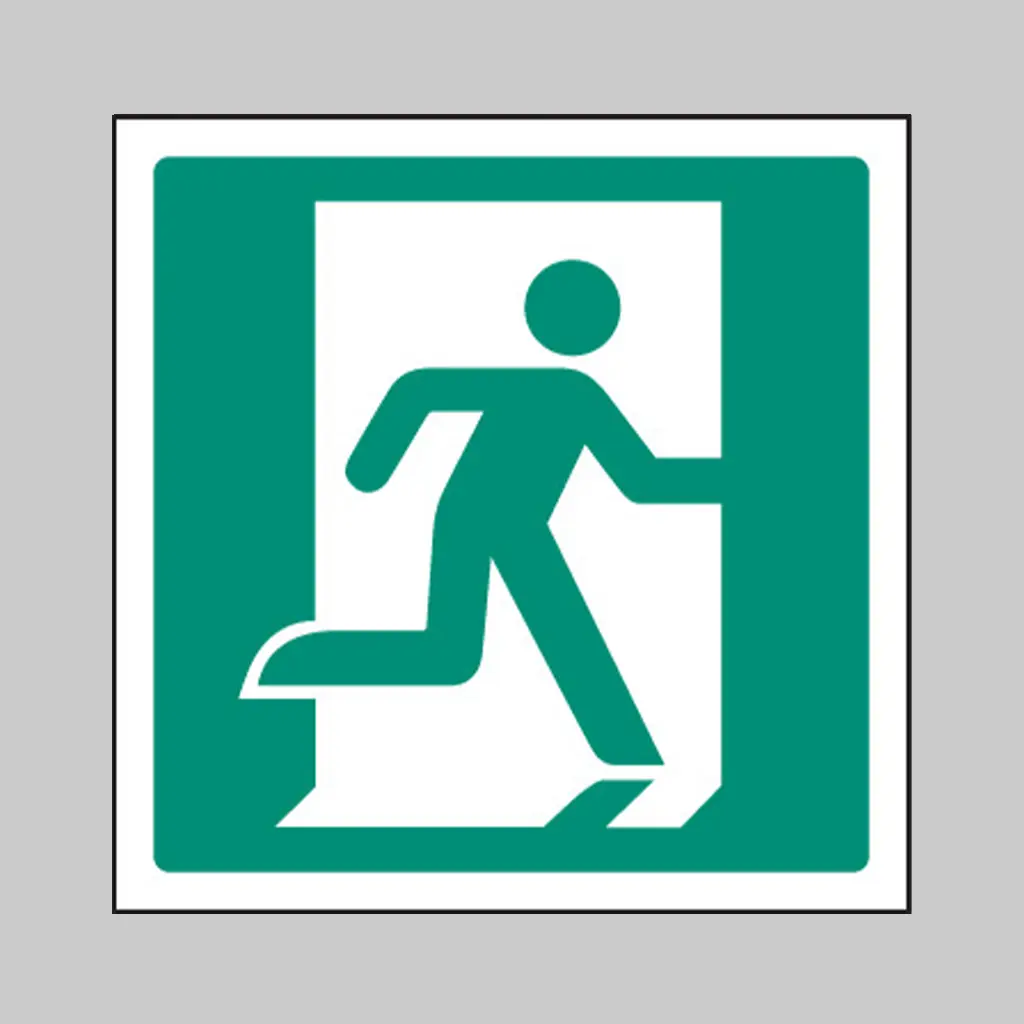 |
E002 | Emergency Exit (Right Hand) | The Emergency Exit (Right Hand) symbol identifies the right-hand version of the standard emergency exit pictogram. Featuring the recognised running person and doorway pictogram, it provides a clear visual instruction that helps occupants identify a route towards safety during an evacuation. |
It is used to mark designated exits and escape-route locations so that occupants can recognise the correct means of escape quickly during an evacuation. The familiar running-person and doorway graphic provides an immediate visual reference, which is especially useful in busy public buildings, workplaces and unfamiliar premises where occupants may have little time to interpret written instructions. The E002 symbol is commonly positioned above or beside emergency exit doors and at suitable points along an established escape route. Where the route requires people to travel in a particular direction, a supplementary directional arrow can be displayed with the symbol to provide the necessary guidance. Maintaining consistent placement and visibility of E002 signs throughout a building helps preserve a clear sequence of escape information from occupied areas through to the final exit or other designated place of safety. Using the E002 symbol supports consistent emergency wayfinding throughout a building and helps make evacuation routes easier to follow. When correctly positioned as part of an overall escape-signage system, it can reduce confusion, guide occupants towards a safe exit and improve the effectiveness of emergency evacuation procedures. |
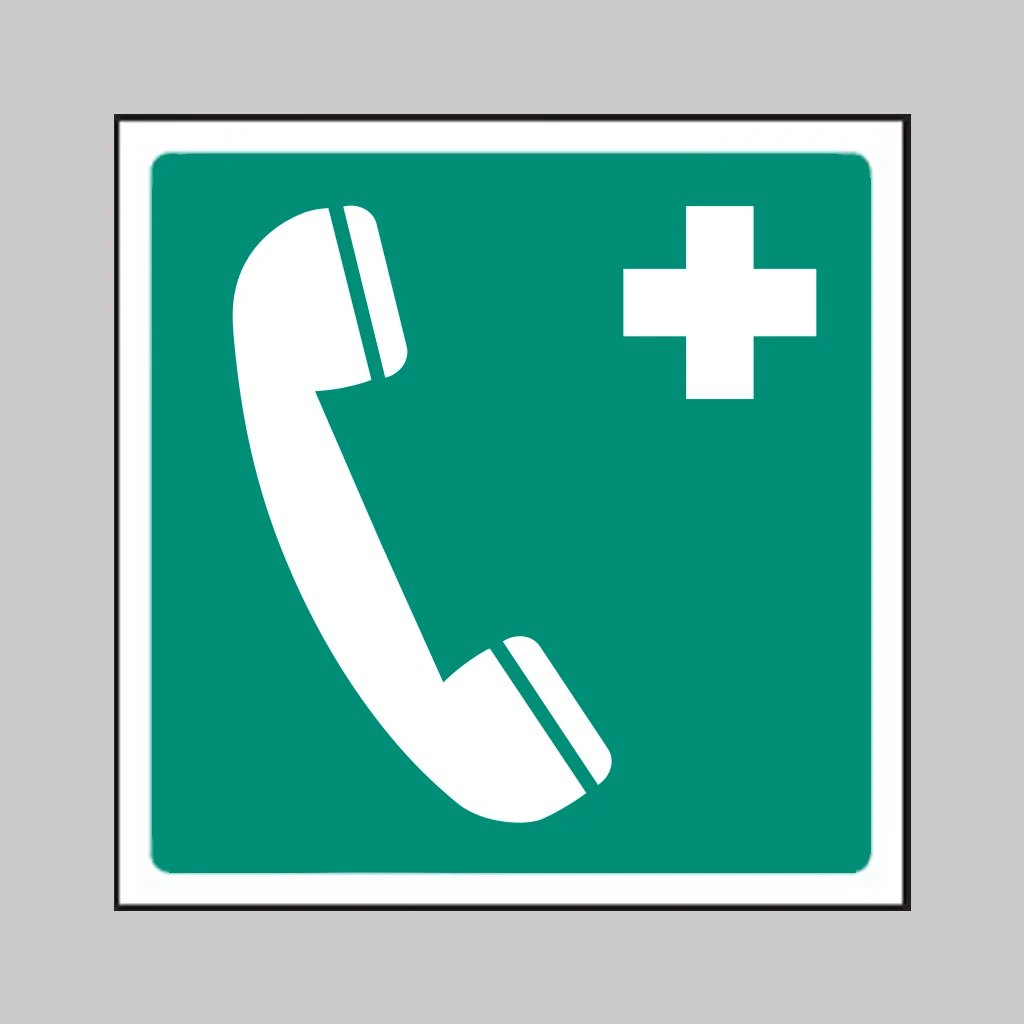 | E004 | Emergency Telephone | The Emergency Telephone symbol is used to show where a telephone provided for emergency use can be found. Its green and white safety design helps people recognise that the telephone is intended for contacting emergency assistance rather than for normal everyday communication. |
Emergency Telephone signs are most useful in places where rapid access to a dedicated means of communication may be important, such as industrial sites, large commercial buildings, transport facilities, remote work areas and other premises with established emergency arrangements. The sign should be displayed at or immediately beside the telephone so its purpose and location are clear. In large or unfamiliar environments, an emergency telephone can easily be overlooked if it resembles ordinary communication equipment. Clearly marking it with the E004 symbol helps employees, visitors and contractors locate the correct telephone quickly and can reduce confusion when urgent assistance is needed. Using the ISO 7010 E004 symbol provides a consistent visual reference for emergency communication facilities and can also be combined with an appropriate directional indicator where the telephone is not directly visible. This supports quicker access to emergency help and makes important safety equipment easier to identify throughout a site. |
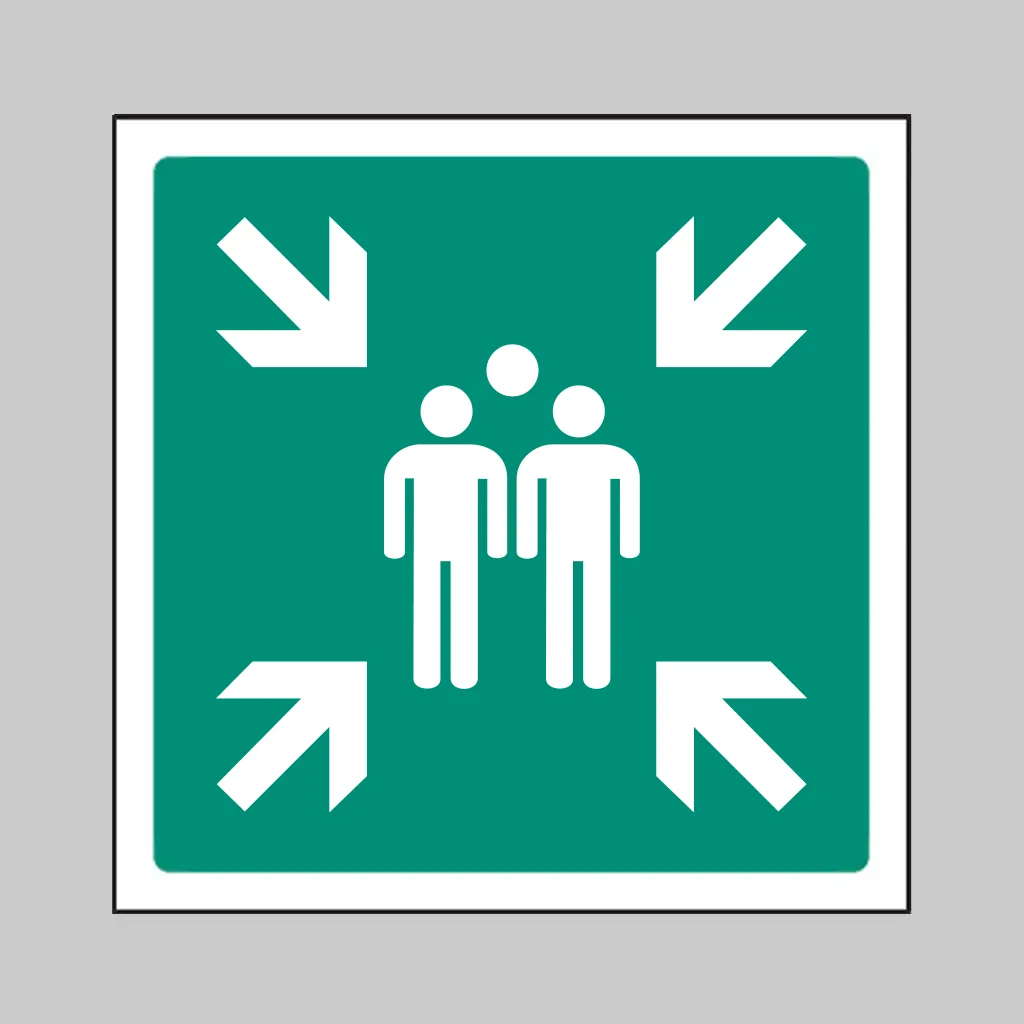 | E007 | Evacuation Assembly Point | The Evacuation Assembly Point symbol identifies the designated location where people should gather after evacuating a building or site. It provides a clear visual reference for the agreed meeting point, helping occupants move to the correct area once they have reached safety. |
This symbol is commonly used in workplaces, factories, warehouses, schools, construction sites, offices and other premises with formal emergency evacuation procedures. The sign should be positioned prominently at the designated assembly area so that it can be seen easily by employees, visitors and contractors. An assembly point is useful because it gives everyone a known place to report after an evacuation. This can help fire marshals, supervisors or emergency coordinators account for occupants, identify anyone who may still be missing and keep evacuated people away from entrances, access routes and areas being used by emergency services. Using the E007 symbol supports clear and organised evacuation procedures across a site. A well-marked assembly point can reduce confusion after people leave the building, improve accountability and help ensure occupants remain together in a recognised place of safety until further instructions are given. |
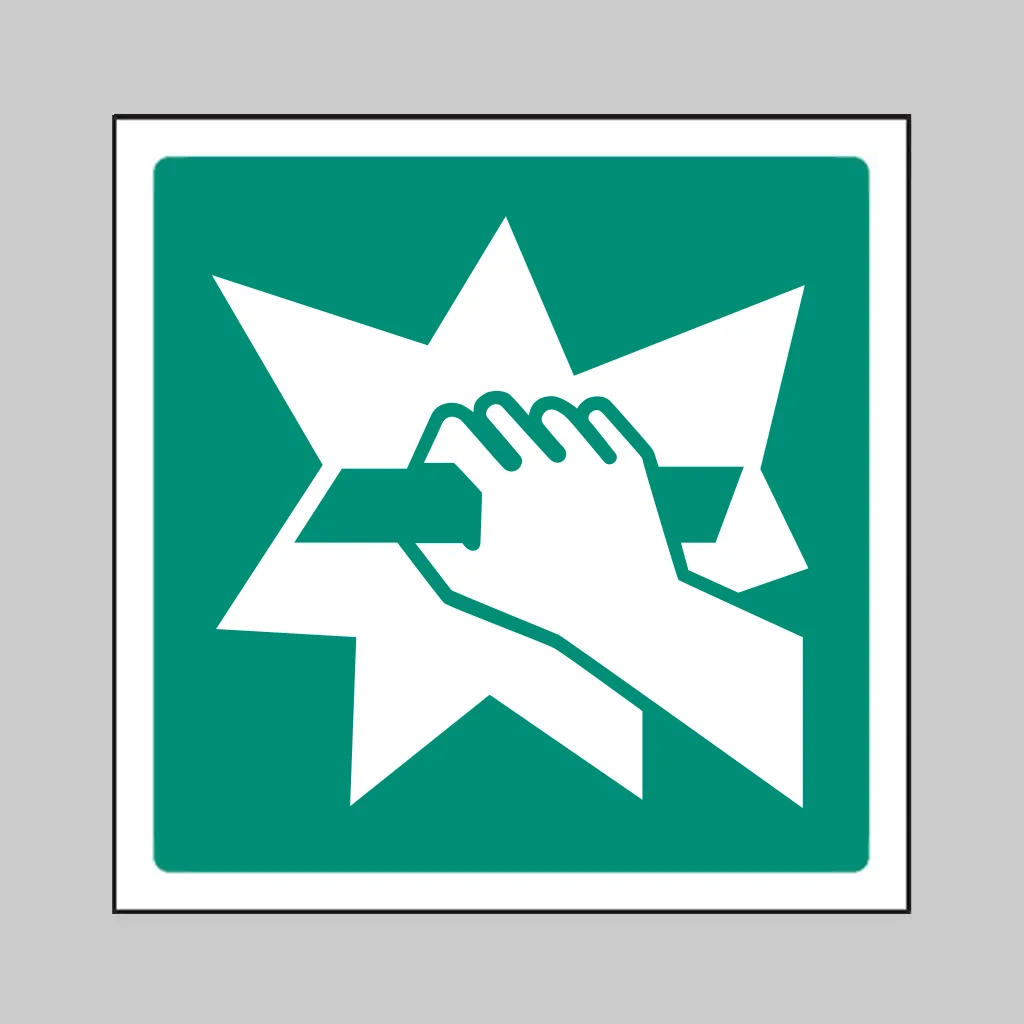 | E008 | Break to Obtain Access | The Break to Obtain Access symbol indicates that a protective cover or panel must be broken in order to reach an emergency device. It is commonly associated with emergency exit controls or release mechanisms that are protected against accidental operation but must remain accessible when an emergency occurs. |
This symbol should be placed directly on or beside the breakable cover so that the required action is obvious before someone attempts to use the device. It is particularly suitable for workplaces, commercial buildings, public premises and other locations where emergency opening equipment is enclosed behind a protective barrier. During an evacuation, occupants may hesitate if they are unsure whether a cover is intended to be broken. The E008 symbol removes this uncertainty by clearly showing that breaking the cover is the correct action, helping people gain access to the emergency control more quickly. Using the E008 symbol supports faster and more confident operation of emergency equipment when time is critical. It also helps distinguish deliberately breakable access covers from ordinary protective panels, improving emergency wayfinding and supporting consistent ISO 7010 safety signage throughout the premises. |
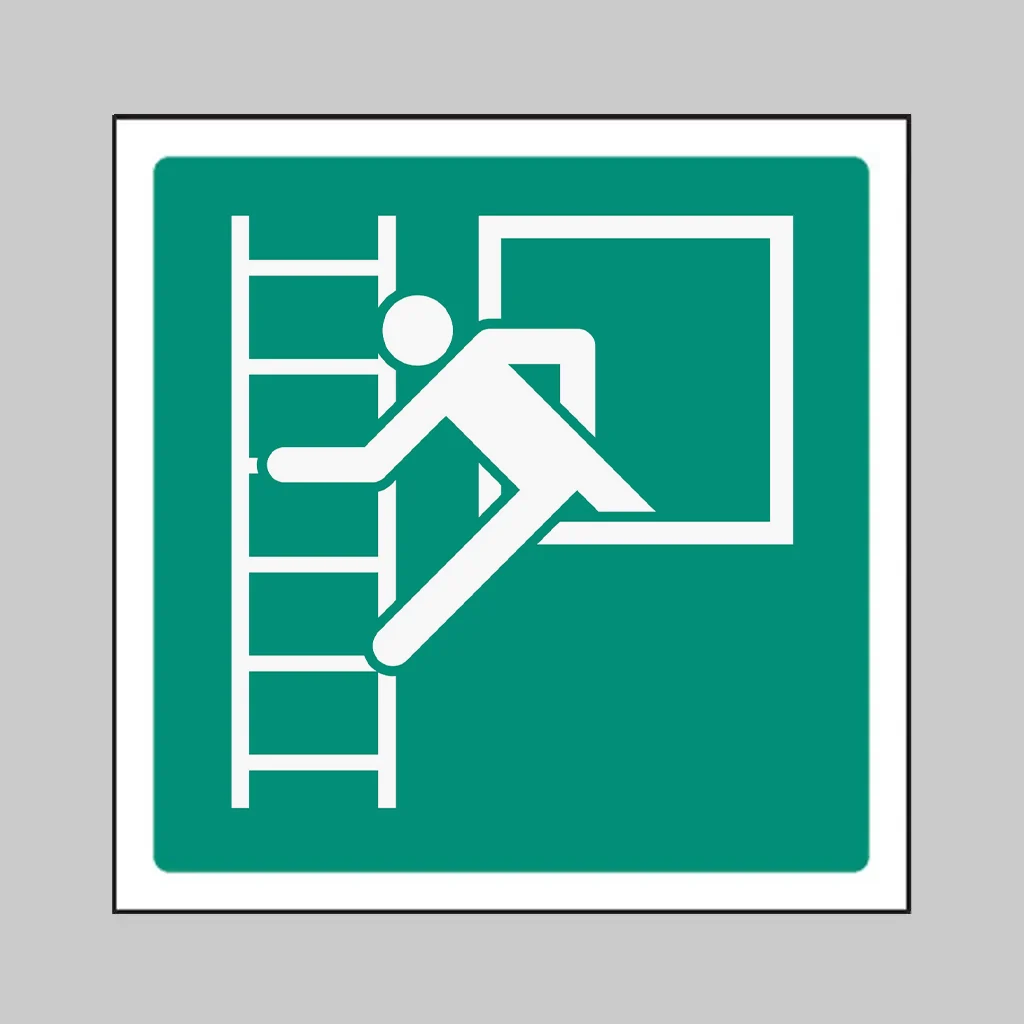 | E016 | Emergency Window with Escape Ladder | The Emergency Window with Escape Ladder symbol identifies the location of an emergency window that provides access to a permanently fixed escape ladder. It helps occupants recognise that the window forms part of an emergency escape route and can be used to reach the ladder when normal exits are unavailable. |
This symbol should be displayed at or immediately beside the designated emergency window, particularly in buildings where a fixed external or internal escape ladder forms part of the evacuation arrangements. It may be used in workplaces, industrial premises, public buildings and other locations where alternative emergency escape routes are provided. The sign is especially useful where the purpose of the window would not otherwise be obvious. By clearly identifying it as an emergency escape point with a fixed ladder, the E016 symbol helps reduce hesitation and makes it easier for occupants to understand how they can continue their evacuation from that location. Using the E016 symbol supports clearer emergency wayfinding and helps ensure that specialised escape facilities are not overlooked during an incident. It provides a standardised ISO 7010 visual reference that can improve awareness of alternative escape routes and help people locate the emergency window more quickly when needed. |
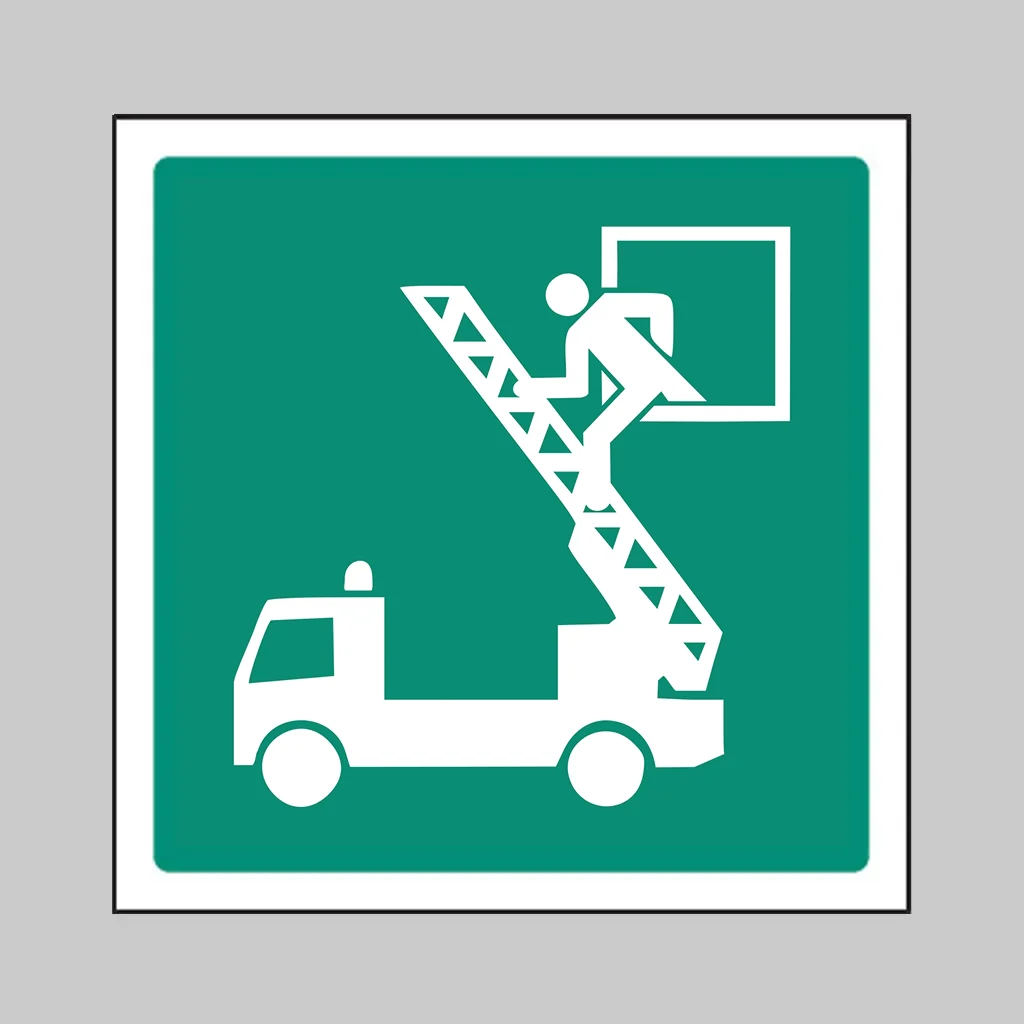 | E017 | Rescue Window | The Rescue Window symbol identifies a window that has been designated as a point where occupants can be rescued by emergency or intervention services, typically using an external ladder. It provides a clear visual indication that the window forms part of the building’s emergency rescue arrangements rather than being an ordinary window. |
Rescue Window signs are most appropriate on buildings where designated windows have been selected to provide emergency access to occupants who may need assistance leaving the premises. They may be used in workplaces, residential buildings, public premises and other multi-storey structures where external rescue by ladder forms part of the emergency planning arrangements. Clear identification is particularly valuable when a building has many similar windows and emergency responders need to recognise the correct rescue point quickly. Positioning the E017 symbol at the designated window helps distinguish it from surrounding openings and makes the intended rescue location easier to identify from inside or outside the building. Using the E017 Rescue Window symbol supports organised emergency response and helps ensure that designated rescue openings remain clearly recognised. It provides a standardised ISO 7010 visual reference for occupants and emergency personnel, helping reduce confusion and supporting faster access to an established rescue point when evacuation by normal routes is not possible. |
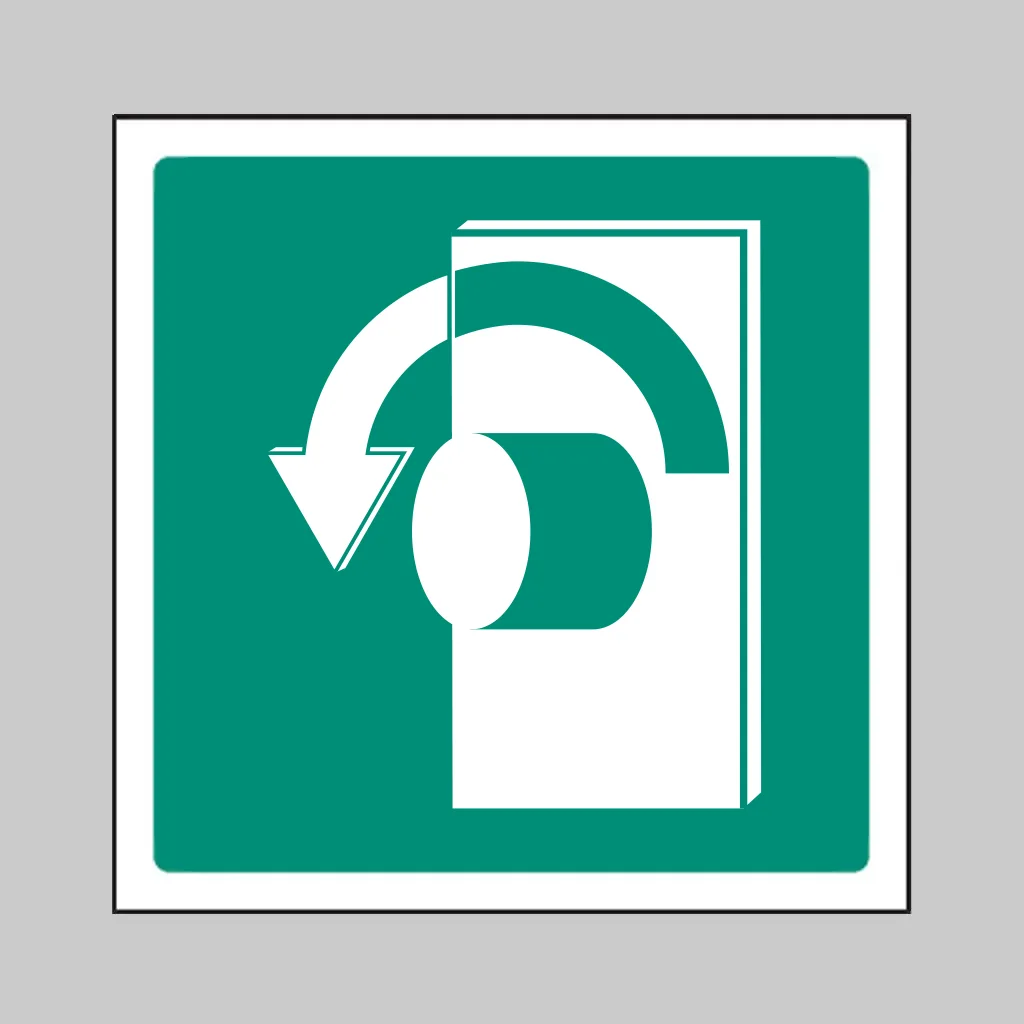 | E018 | Turn Anticlockwise to Open | The Turn Anticlockwise to Open symbol indicates that a door operating mechanism must be turned in an anticlockwise direction in order to open a security door on an escape route. The pictogram shows a doorknob with an anticlockwise arrow, giving occupants a visual instruction on how the emergency opening mechanism should be operated. |
This symbol is intended specifically for escape-route doors fitted with a security locking mechanism and emergency opening device. It should be positioned directly beside or on the relevant door control where the required anticlockwise movement can be clearly seen by anyone attempting to operate it. During an evacuation, an unfamiliar locking mechanism can cause hesitation or prevent someone from opening a door quickly. Displaying the E018 symbol helps remove uncertainty by showing the direction in which the knob or control must be turned, supporting faster movement along the designated escape route. Using the E018 symbol can improve emergency wayfinding by making the operation of specialised escape doors easier to understand. It is particularly useful in buildings where security-controlled doors form part of the evacuation route, helping reduce delays and ensuring occupants know how to release the door when emergency exit is required. |
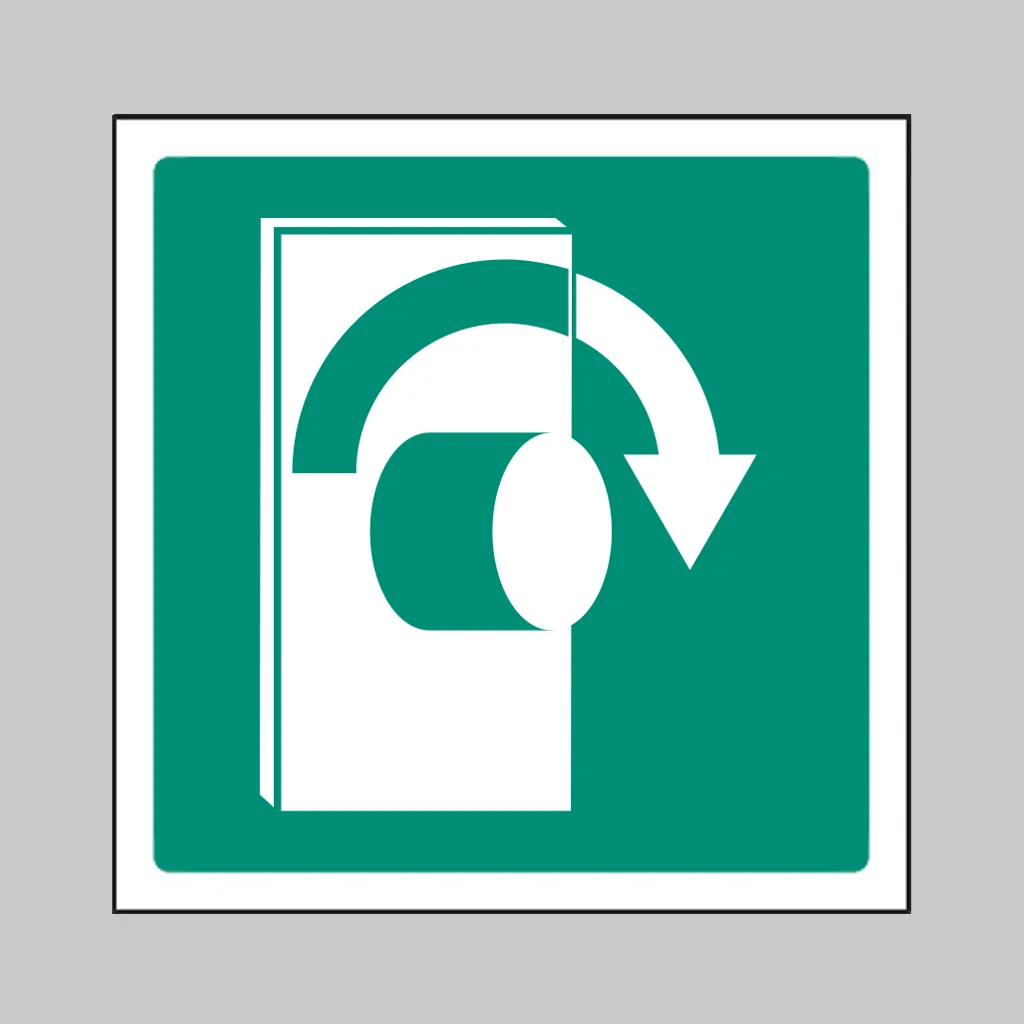 | E019 | Turn Clockwise to Open | The Turn Clockwise to Open symbol indicates that a door operating mechanism must be turned in a clockwise direction to open a security door on an escape route. The pictogram combines a door control with a clockwise arrow so that the required movement can be understood quickly during an emergency. |
This sign is intended for escape-route doors fitted with a security locking mechanism and emergency opening device. It should be installed directly on or beside the relevant control, where the clockwise turning direction is clearly visible to anyone attempting to release the door. Its main benefit is to remove uncertainty when a person encounters an unfamiliar locking system during an evacuation. By showing exactly how the control should be operated, the E019 symbol can help reduce hesitation and support quicker movement through the escape route. Using the E019 symbol is particularly useful in premises where controlled-access or security doors form part of the emergency exit system. Clear identification of the correct opening action helps occupants operate the door more efficiently and supports consistent ISO 7010 emergency escape signage throughout the building. |
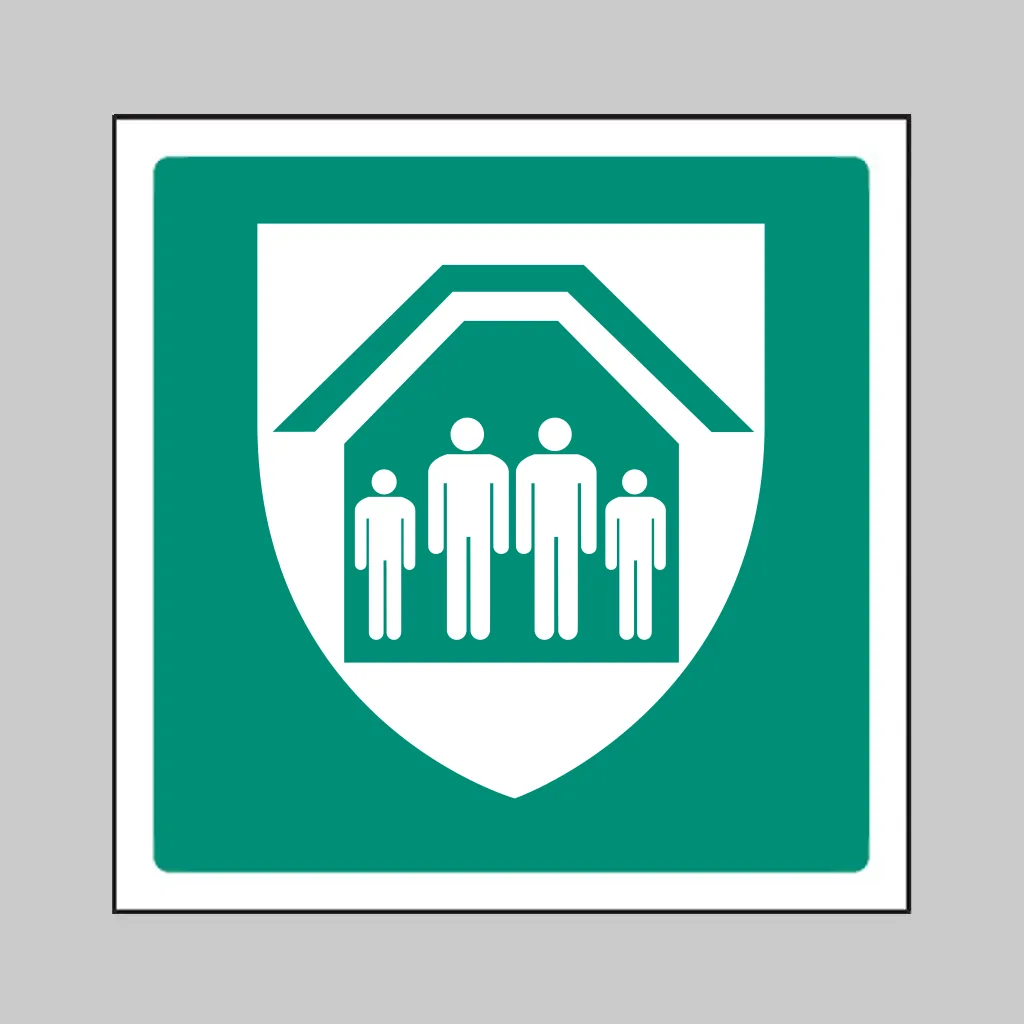 | E021 | Protection Shelter | The Protection Shelter symbol is used to identify the location of a designated protection shelter where people can seek refuge during an emergency. The green and white pictogram provides a recognisable visual reference, helping occupants locate an established place of protection when directed to shelter rather than evacuate the surrounding area. |
Protection Shelter signs may be used at sites, buildings or facilities where a specific sheltered area forms part of the emergency arrangements. The E021 symbol should be positioned prominently at the entrance to the shelter or along the route leading towards it, particularly where the designated location may not otherwise be obvious. Its main value is in helping people find the correct place of refuge quickly when an emergency situation requires occupants to move to a protected area. Clear identification can reduce uncertainty, prevent people from gathering in unsuitable locations and support a more organised response to the relevant hazard. Displaying the E021 symbol creates a consistent way of marking protection shelters and makes these emergency facilities easier for employees, visitors and members of the public to recognise. When incorporated into an appropriate emergency plan and supported by clear directions, it can improve wayfinding and help occupants reach the designated shelter with less delay. |
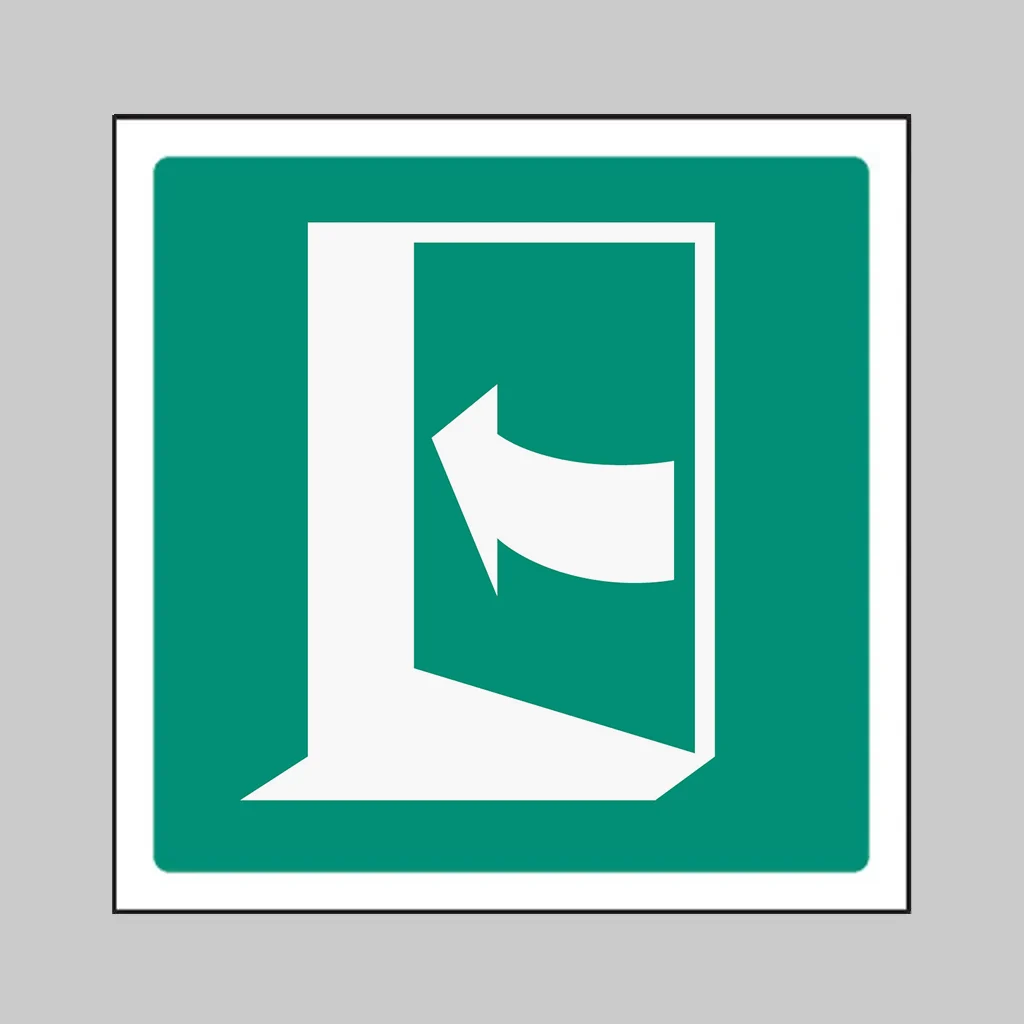 | E022 | Door Opens by Pushing on the Left-Hand Side | The Door Opens by Pushing on the Left-Hand Side symbol shows that a door should be opened by applying pressure to the left-hand side. Its purpose is to make the correct opening action immediately clear, helping users understand how the door operates without having to stop and work out which side needs to be pushed. |
This symbol is especially useful on emergency escape doors, security doors and other doors where the opening method may not be obvious at first glance. It should be positioned on or immediately beside the door so that the required action can be seen before someone attempts to open it. In an emergency, hesitation at a doorway can slow movement and create unnecessary confusion. By showing that the left-hand side must be pushed, the E022 symbol helps occupants operate the door more quickly and supports smoother movement along an escape route. ISO identifies the associated hazard as being unable to open the door. Using the E022 symbol provides a standardised visual instruction that can be understood quickly by employees, visitors and members of the public. It is particularly valuable in unfamiliar buildings or where door hardware is unusual, helping reduce delays and improve the clarity of emergency wayfinding. |
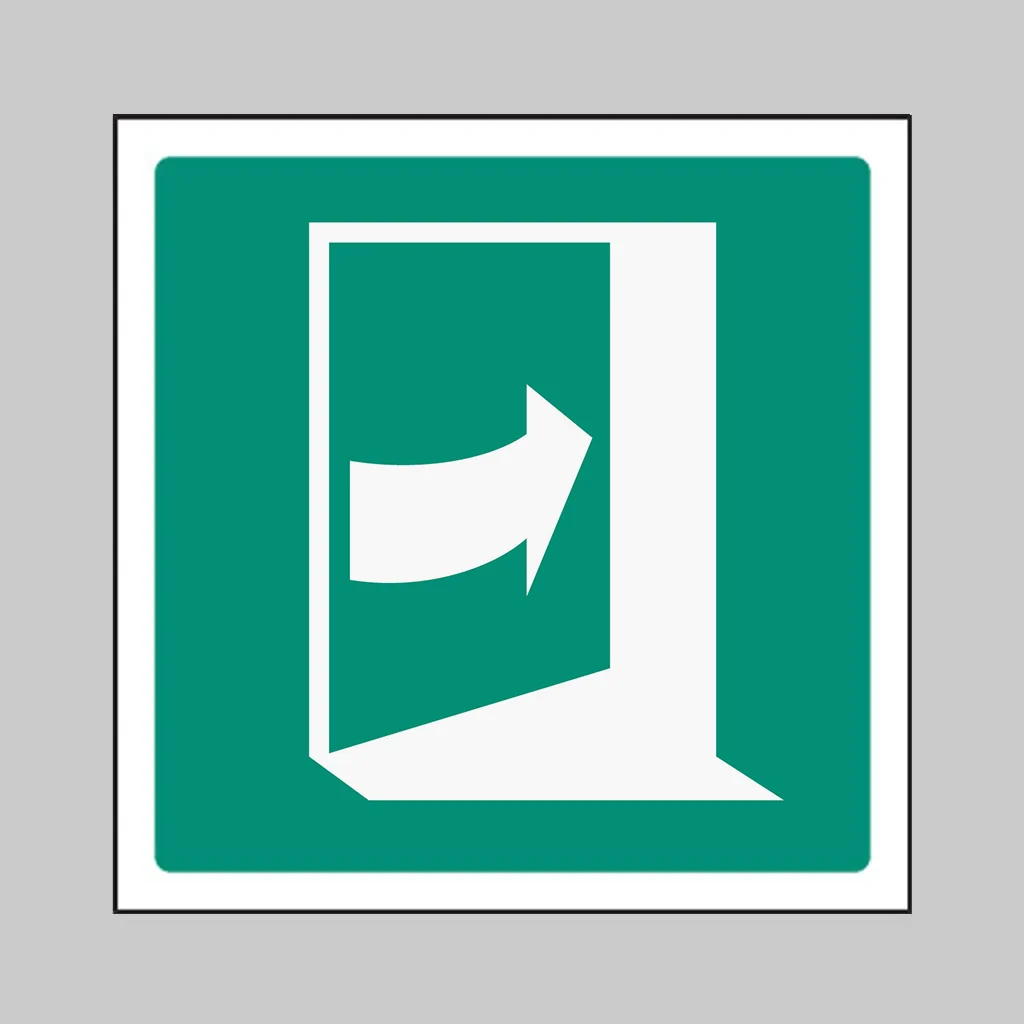 | E023 | Door Opens by Pushing on the Right-Hand Side | The Door Opens by Pushing on the Right-Hand Side symbol indicates that a door should be opened by applying pressure to its right-hand side. The pictogram shows a doorway with the door opening outwards and a curved arrow pointing to the right, helping users understand the correct opening action quickly. |
This symbol is most useful on doors located along escape routes, emergency exits and other safety-critical access points where the opening method may not be immediately obvious. It should be displayed directly on or beside the relevant door so the instruction can be seen before someone attempts to open it. During an emergency evacuation, uncertainty about how a door operates can slow people down. The E023 symbol removes this ambiguity by clearly showing which side should be pushed, helping occupants move through the doorway more efficiently and reducing the risk of delay at an escape point. Using the E023 symbol supports clearer emergency wayfinding and provides a standardised visual instruction for employees, visitors and members of the public. It is particularly valuable in unfamiliar buildings or where door hardware is unusual, helping people operate the door correctly without relying on lengthy written directions. |
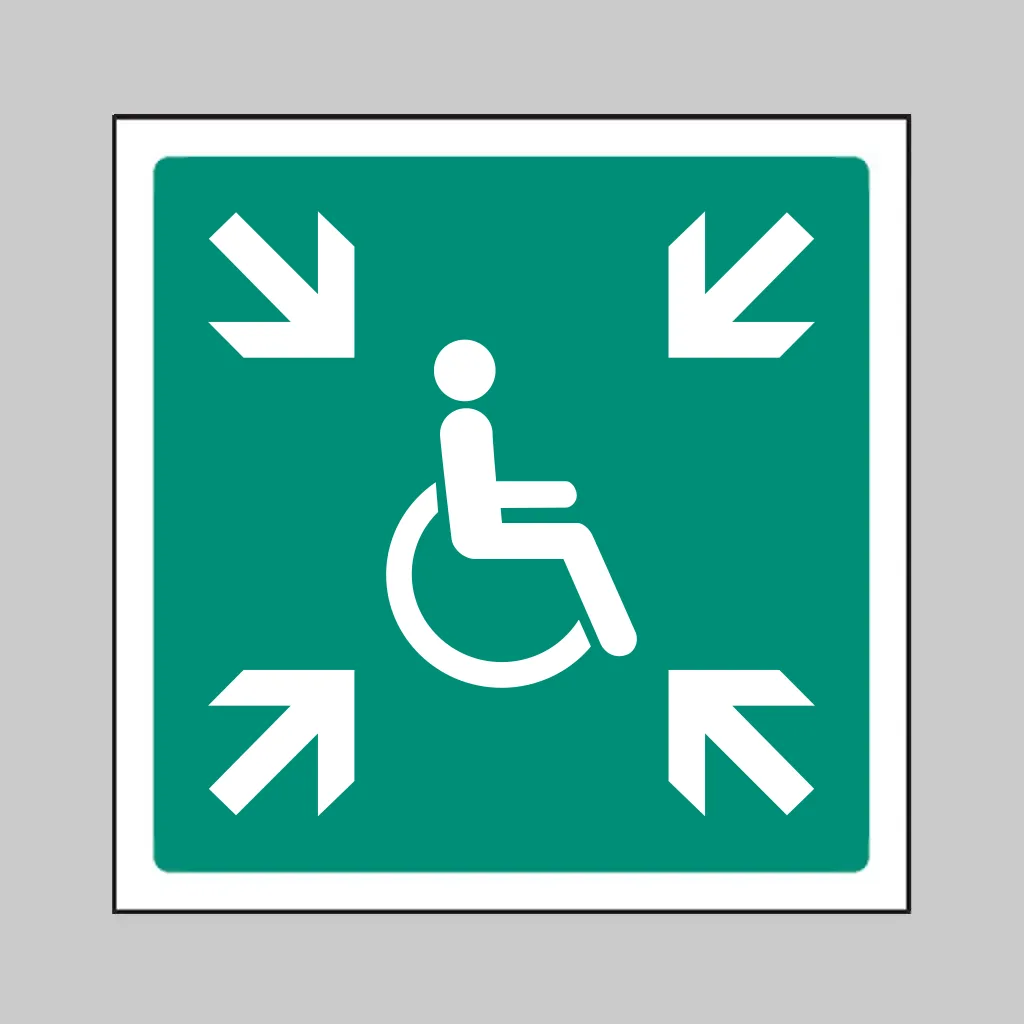 | E024 | Evacuation Temporary Refuge | The Evacuation Temporary Refuge symbol identifies a designated temporary refuge area for people who may be unable to use stairs during an emergency evacuation. It shows where occupants can wait in a safer location until rescue assistance arrives, helping make accessible evacuation arrangements easier to recognise. |
This symbol is particularly relevant in multi-storey buildings, offices, hospitals, public buildings, transport facilities and other premises where people with mobility impairments may need an alternative to using stairs. The sign should be displayed clearly at the refuge location and, where appropriate, along the route leading towards it. A temporary refuge can be especially important when someone cannot continue along the normal evacuation route without assistance. Clearly marking the area helps reduce uncertainty, supports more organised evacuation procedures and gives occupants a recognised place to wait while trained staff or emergency responders provide help. Using the E024 symbol improves the visibility of accessible evacuation provisions and supports inclusive emergency planning. It also provides a consistent ISO 7010 visual reference that can help occupants, fire wardens and emergency personnel identify designated refuge areas more quickly during an incident. |
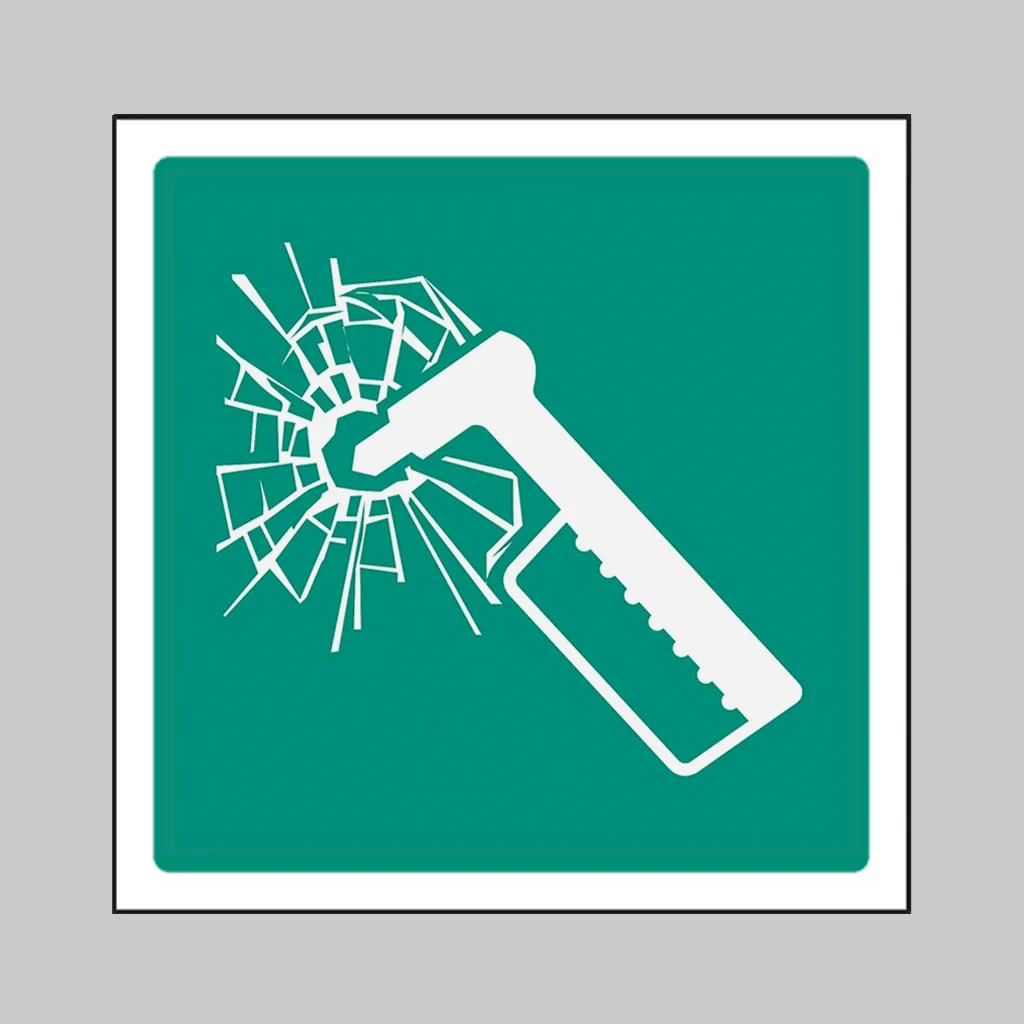 | E025 | Emergency Hammer | The Emergency Hammer symbol is used to identify the location of an emergency hammer provided for use in an emergency. The pictogram depicts a hammer striking and cracking glass, helping people recognise where the tool can be found if a designated window or glazed panel needs to be broken to provide an emergency means of escape. |
Emergency Hammer signs should be positioned directly beside or above the hammer so that the equipment remains easy to locate. They are particularly relevant in passenger transport, enclosed areas and other locations where emergency hammers are provided alongside designated breakable glazing as part of the emergency escape arrangements. When normal exits cannot be used, quickly finding the correct emergency equipment can be extremely important. The E025 symbol gives occupants an immediate visual reference, reducing the need to search for the hammer and helping them understand that specialist equipment is available for gaining emergency access through designated glazing. Clearly marking an emergency hammer also helps prevent it from being overlooked among surrounding fixtures or equipment. Using the standardised E025 symbol supports consistent emergency escape signage, improves awareness of available escape equipment and can help occupants respond more efficiently when an alternative exit route is required. |
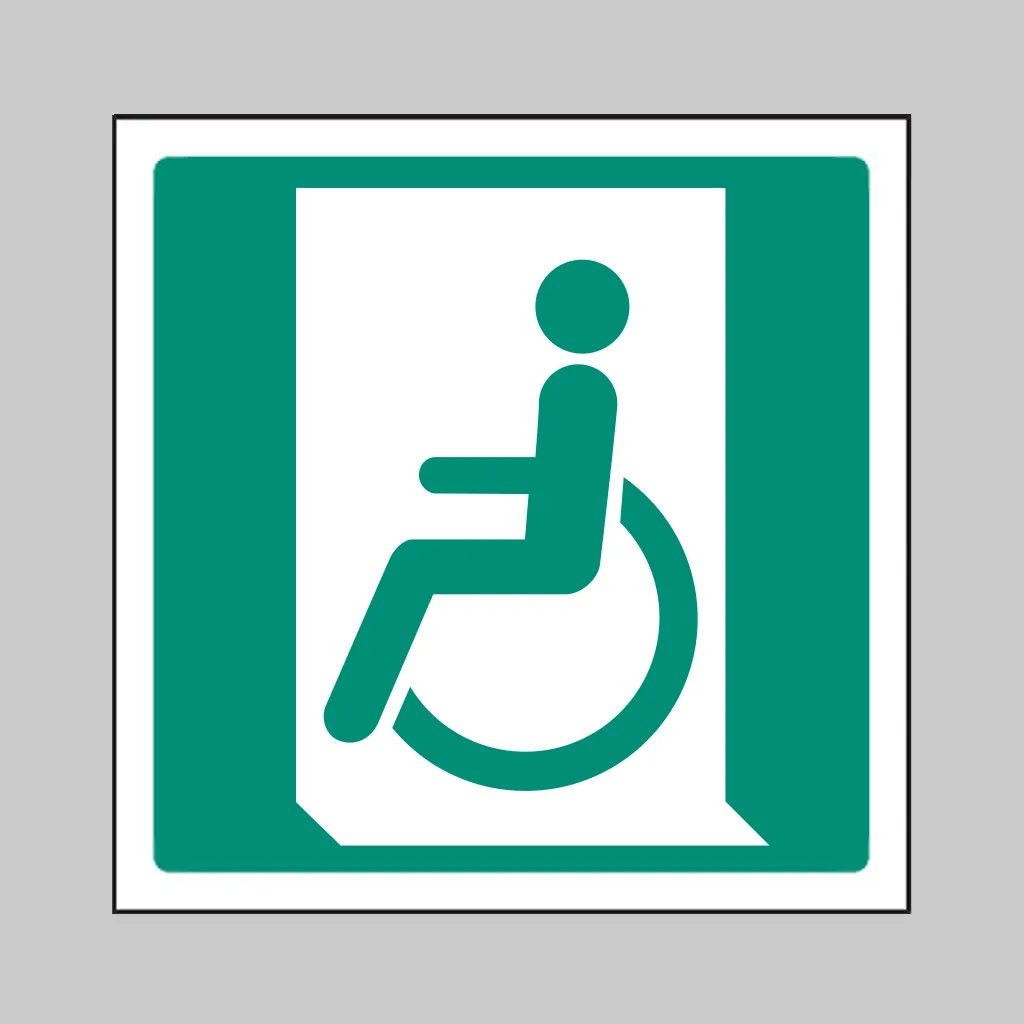 | E026 | Emergency Exit for People Unable to Walk or with Walking Impairment (Left) | The Emergency Exit for People Unable to Walk (Left) symbol identifies an accessible escape route leading towards a place of safety for people who cannot walk or who have limited mobility. The pictogram features a wheelchair user moving through a doorway to the left, helping distinguish the route from a standard emergency exit. |
This symbol should be used where an evacuation route has been specifically designed or designated for wheelchair users and others with walking impairments. It may be found in offices, hospitals, schools, shopping centres, transport facilities, public buildings and other premises where accessible emergency escape arrangements are provided. During an evacuation, people with reduced mobility may not be able to use the same stairs or routes as other occupants. Clearly displaying the E026 symbol helps identify an appropriate accessible route and can reduce uncertainty when occupants, carers or assisting personnel need to move towards a suitable place of safety. Using the E026 symbol supports more inclusive emergency evacuation planning by making accessible escape provisions easier to recognise. ISO specifies that it should be accompanied by the appropriate E001 or E002 emergency exit sign, while supplementary directional arrows can be added where further route guidance is required. |
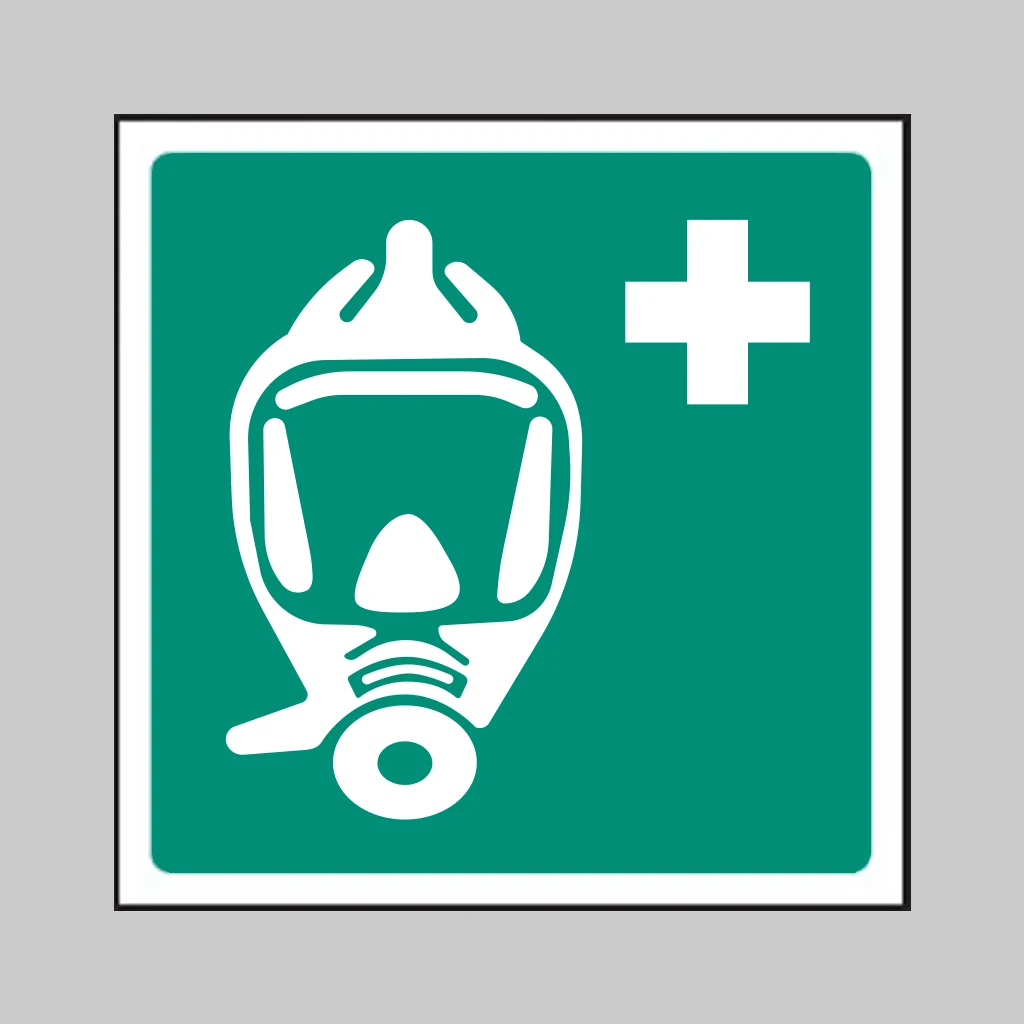 | E029 | Emergency Escape Breathing Device | The Emergency Escape Breathing Device symbol identifies the location of an emergency escape breathing device, commonly known as an EEBD. This equipment provides a temporary supply of breathable air so that a person can escape from an area affected by smoke, harmful gases or an unsafe atmosphere. |
This symbol is particularly relevant in ships, engine rooms, industrial plants, enclosed spaces, processing facilities and other environments where smoke or hazardous gases could make normal breathing difficult during an emergency. It should be displayed at or immediately beside the EEBD storage point so that the equipment can be found quickly. An emergency escape breathing device is intended specifically to assist a person in reaching a place of safety rather than for entering a hazardous area to carry out rescue or firefighting operations. Clear identification is therefore important, helping personnel recognise the correct equipment and avoid confusing it with other respiratory protective devices. Using the E029 symbol improves the visibility of emergency breathing equipment and can reduce valuable time spent searching for it during an incident. It provides a standardised ISO 7010 visual reference that supports emergency preparedness, clearer escape arrangements and faster access to breathing protection when normal evacuation conditions become unsafe. |
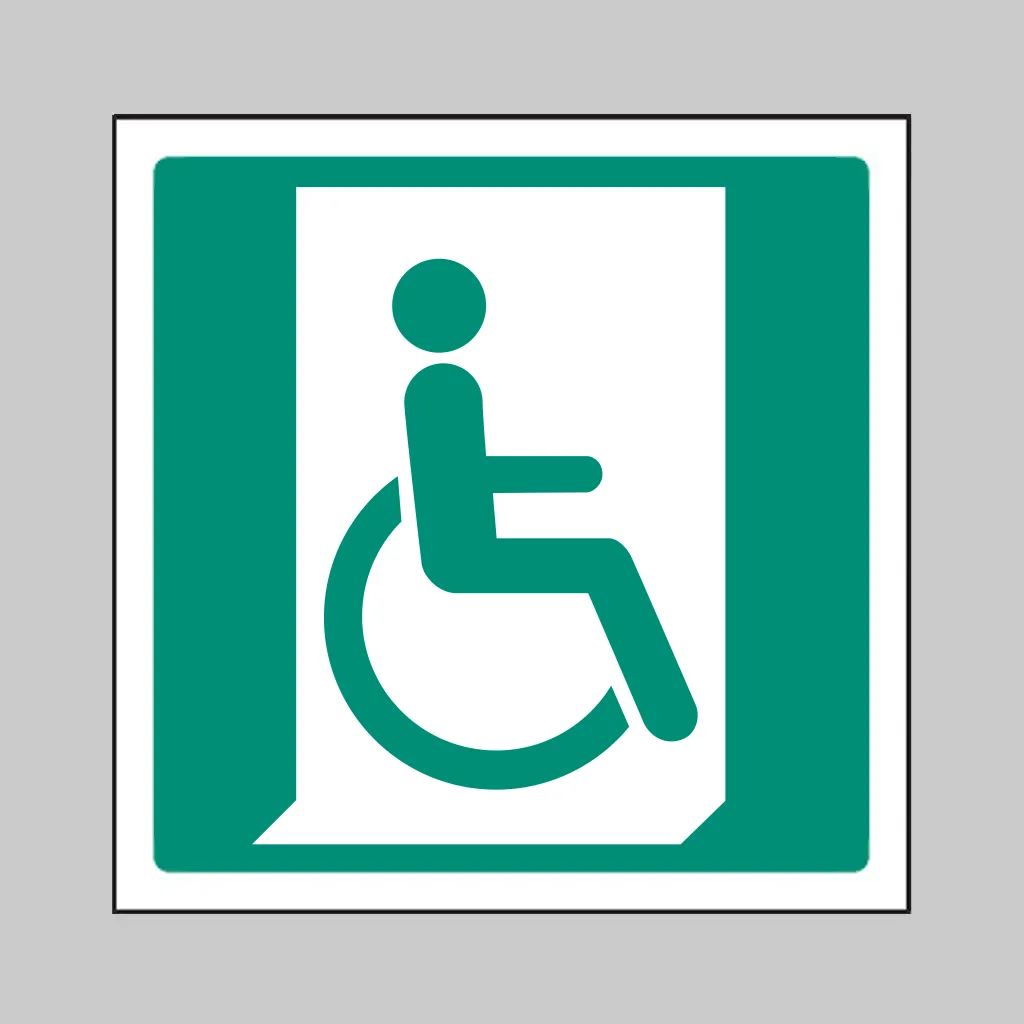 | E030 | Emergency Exit for People Unable to Walk or with Walking Impairment (Right) | The Emergency Exit for People Unable to Walk (Right) symbol identifies an accessible emergency escape route leading to the right for people who are unable to walk or who have a walking impairment. The symbol helps make accessible evacuation routes easier to recognise and distinguish from standard emergency exit routes. |
It should be used in buildings where an alternative or specifically designed escape route is provided for wheelchair users and others with limited mobility. Typical locations include hospitals, offices, shopping centres, schools, transport facilities, public buildings and other premises with accessible evacuation arrangements. The symbol is particularly useful at junctions, corridors and decision points where occupants need clear guidance towards the correct accessible route. By showing the direction of travel to the right, it can help reduce hesitation and support more organised movement towards a suitable place of safety. Using the E030 symbol supports inclusive emergency planning by making accessible escape routes more visible and easier to follow. When combined with suitable directional signage and evacuation procedures, it helps occupants, carers and assisting personnel identify the correct route more quickly during an emergency. |
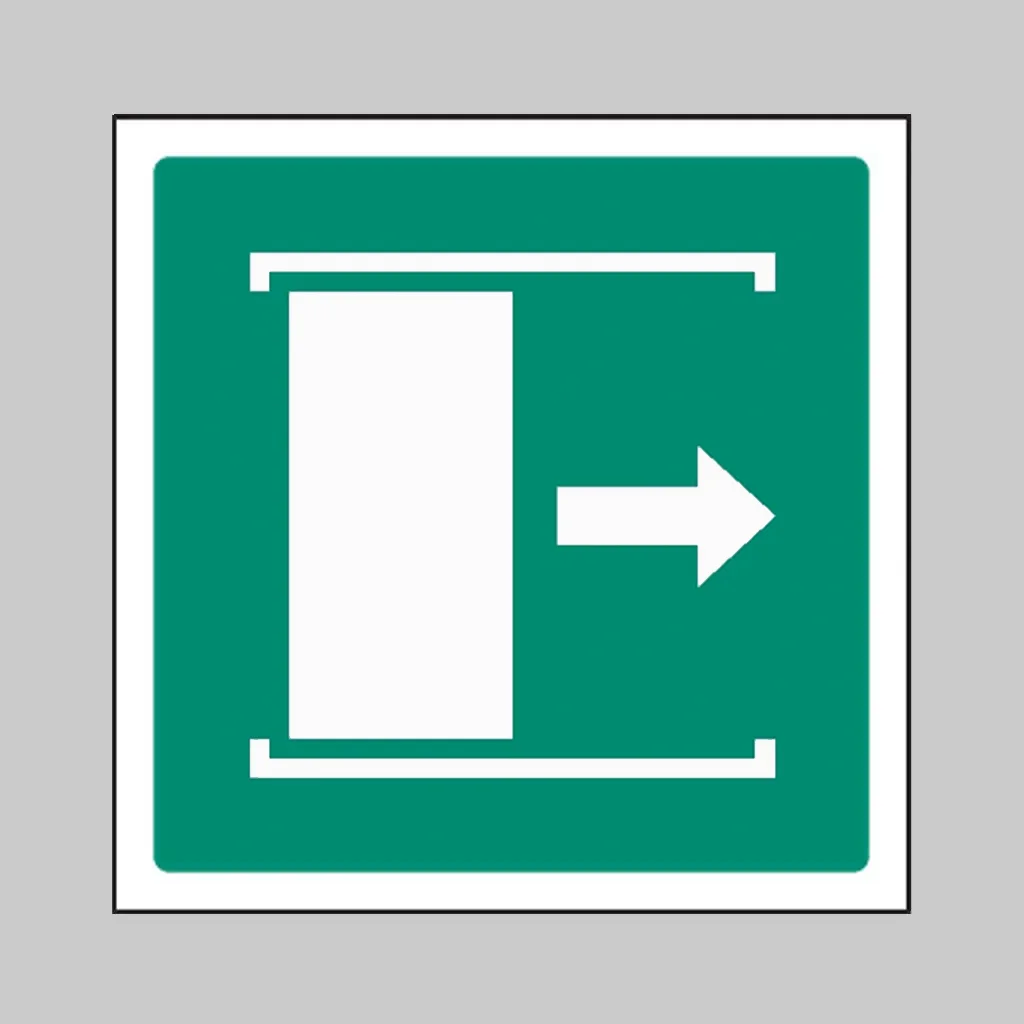 | E033 | Door Slides Right to Open | The Door Slides Right to Open symbol indicates that a sliding door must be moved to the right in order to open it. The pictogram uses a right-pointing arrow to make the direction of movement clear, helping people understand how the door operates without having to test or guess the opening direction. |
This symbol should be positioned on or immediately beside sliding doors where the direction of travel may not be obvious. It is particularly useful on doors forming part of an emergency escape route, as well as in transport facilities, industrial premises, commercial buildings and other locations where sliding doors are used. When occupants are unfamiliar with a building, uncertainty over how a door opens can create unnecessary delays. The E033 symbol provides an immediate visual instruction, allowing users to recognise that the door slides rather than swings and that it must be moved towards the right-hand side. Using the E033 symbol can improve emergency wayfinding and make sliding door operation clearer throughout the premises. It helps reduce confusion at important access and escape points while providing a standardised ISO 7010 safety message that can be understood without relying solely on written instructions. |
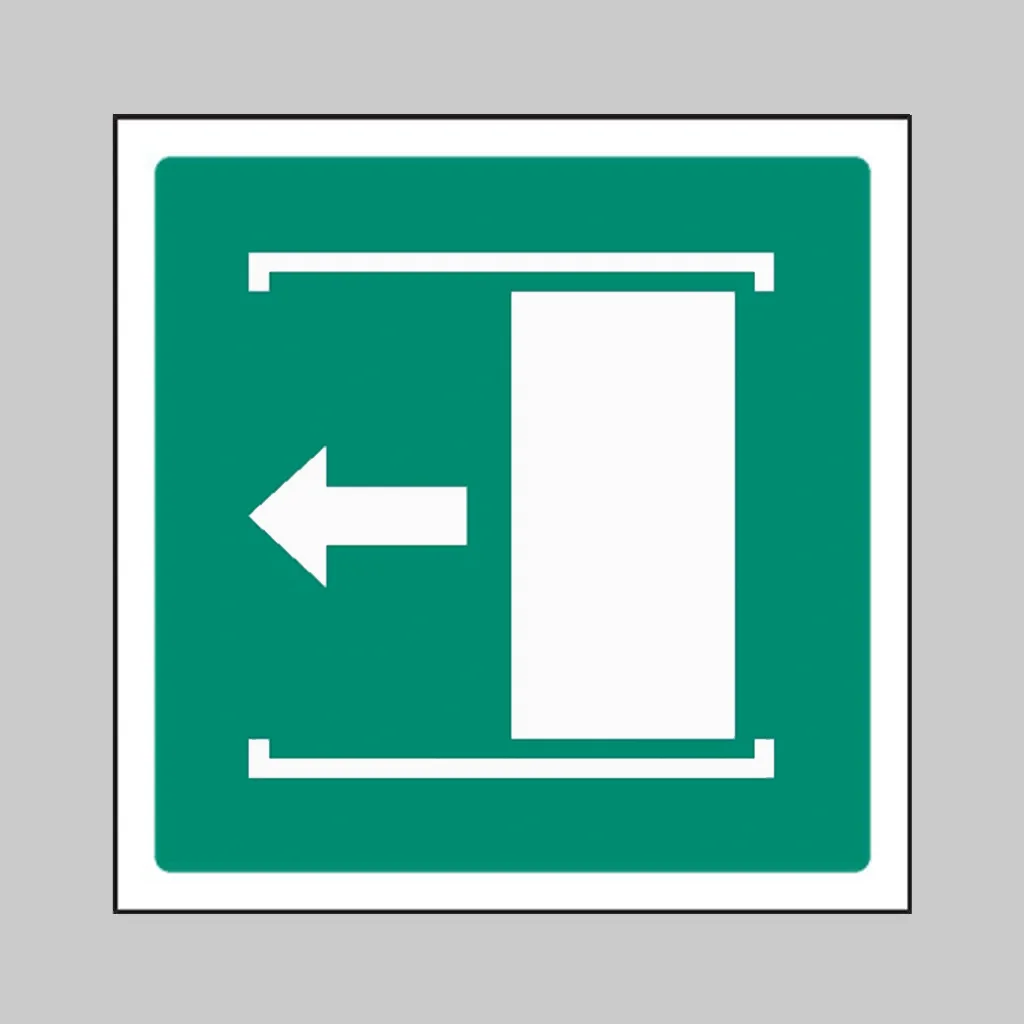 | E034 | Door Slides Left to Open | The Door Slides Left to Open symbol indicates that a sliding door must be moved to the left in order to open it. The pictogram provides a simple directional instruction, helping users recognise both the type of door and the correct movement needed to pass through it. |
This symbol should be displayed on or next to sliding doors where the opening direction may not be immediately obvious. It is especially useful in workplaces, transport facilities, public buildings, industrial premises and other locations where sliding doors form part of normal access or an emergency escape route. Its value becomes greater in unfamiliar or high-pressure situations, where hesitation at a doorway can slow movement. By showing that the door slides towards the left, the E034 symbol helps occupants operate it more quickly and reduces the risk of confusion over whether the door should be pushed, pulled or moved sideways. Using the E034 symbol supports clearer wayfinding and more consistent emergency escape signage throughout a building or site. It gives employees, visitors and members of the public an immediate visual cue that can help them use the door correctly without relying on written instructions alone. |
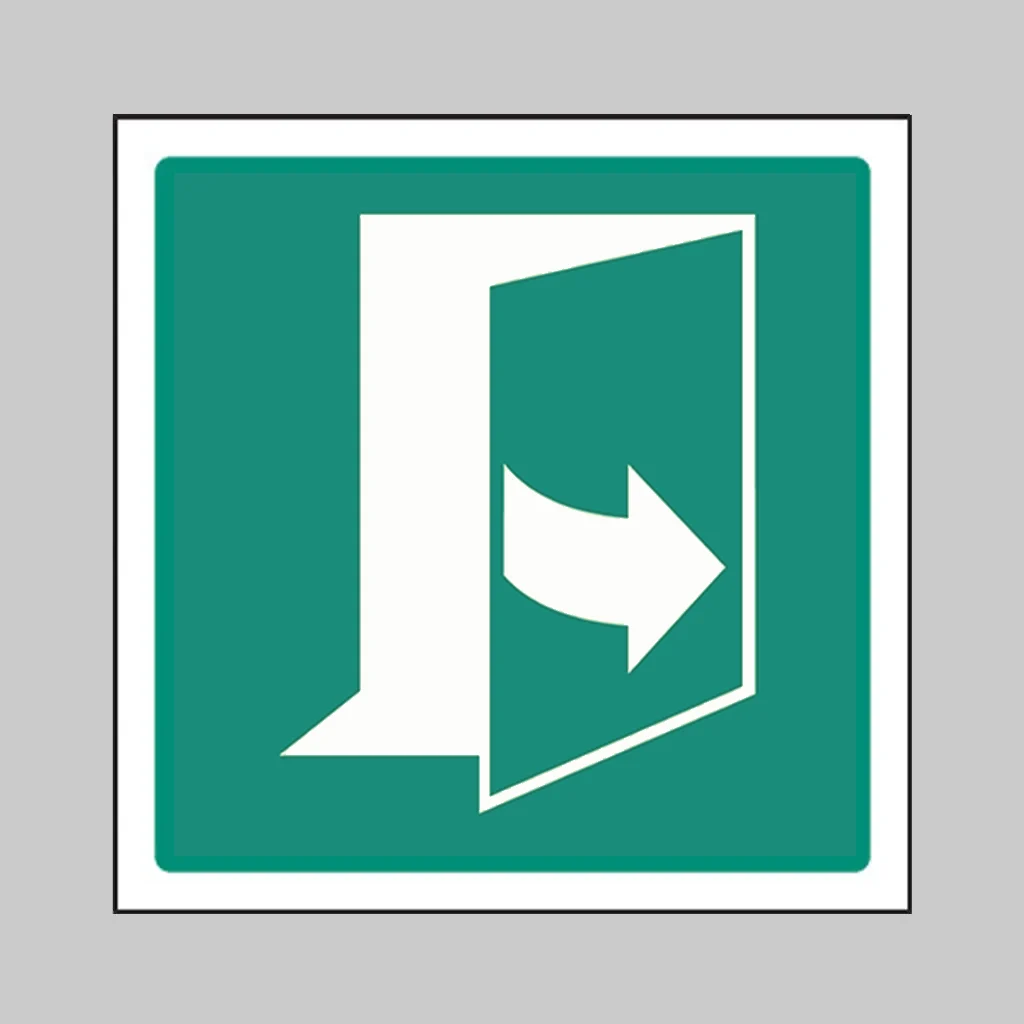 | E057 | Door Opens by Pulling on the Left-Hand Side | The Door Opens by Pulling on the Left-Hand Side symbol indicates that a door should be opened by pulling from its left-hand side. The pictogram gives a clear visual instruction about how the door operates, helping users understand the correct action before they reach the handle or opening mechanism. |
This symbol should be displayed on or immediately beside doors where the pulling action may not be obvious, particularly on emergency escape routes, security-controlled doors and other safety-critical access points. It can be used in workplaces, public buildings, transport facilities, industrial premises and other environments where clear door operation is important. The sign is especially useful in situations where people may otherwise try to push the door or pull from the wrong side. During an evacuation, this kind of uncertainty can slow movement, so the E057 symbol helps occupants recognise the required action more quickly and move through the doorway with less hesitation. Using the E057 symbol supports clearer emergency wayfinding and more consistent ISO 7010 safety signage throughout a building or site. By showing exactly how the door should be opened, it helps reduce confusion, improves usability for unfamiliar occupants and supports more efficient movement along designated escape routes. |
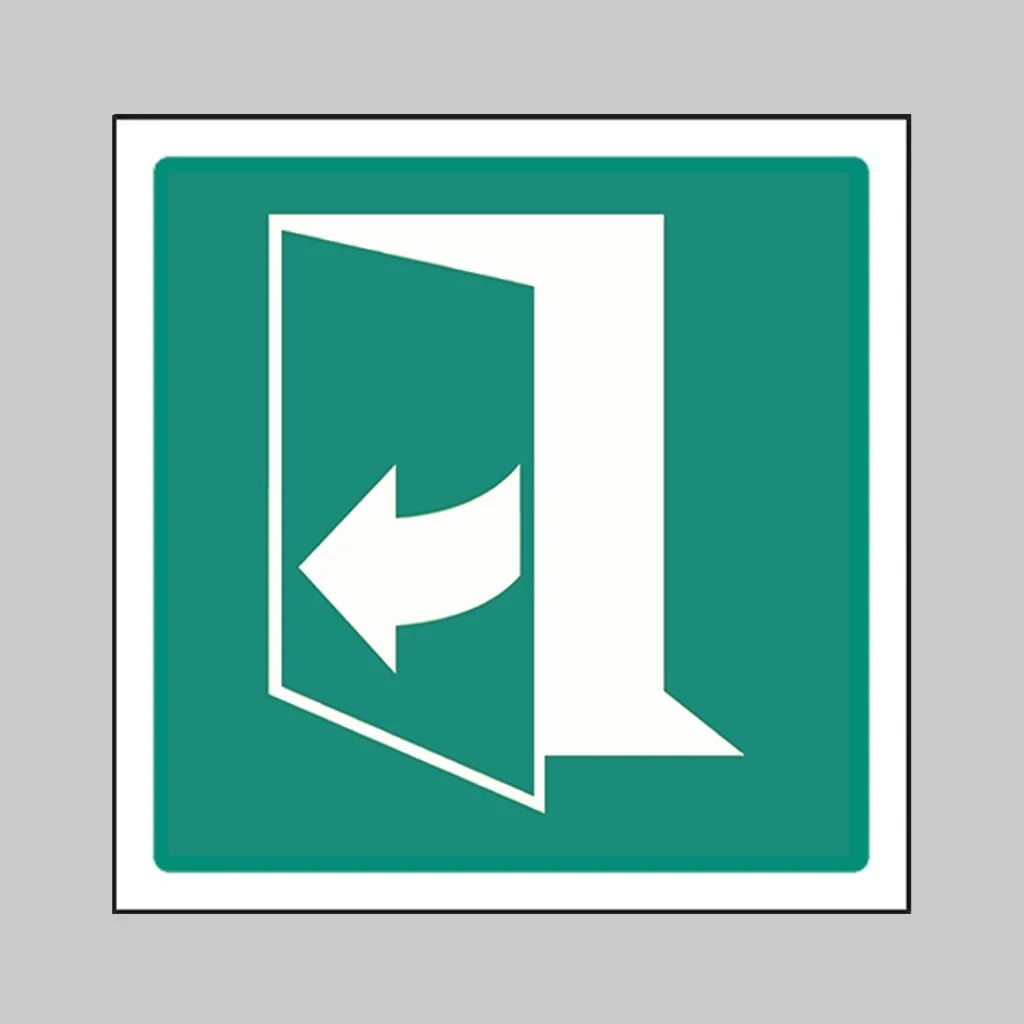 | E058 | Door Opens by Pulling on the Right-Hand Side | The Door Opens by Pulling on the Right-Hand Side symbol indicates that a door should be opened by pulling from its right-hand side. The symbol provides a simple visual instruction that helps users understand the correct opening action before they attempt to pass through the doorway. |
This sign should be positioned on or directly beside doors where the opening method could otherwise cause confusion. It is particularly useful on escape-route doors, security doors, access-controlled areas and other locations where people need to identify quickly that the door must be pulled from the right. In an emergency, uncertainty about whether a door should be pushed or pulled can delay movement. The E058 symbol helps remove that uncertainty by showing the required action clearly, supporting faster and more confident use of the doorway by employees, visitors and other building occupants. Using the E058 symbol improves consistency across emergency escape and safe-condition signage. It helps make door operation easier to understand, reduces hesitation at key access points and supports smoother movement through designated escape routes without relying on lengthy written instructions. |
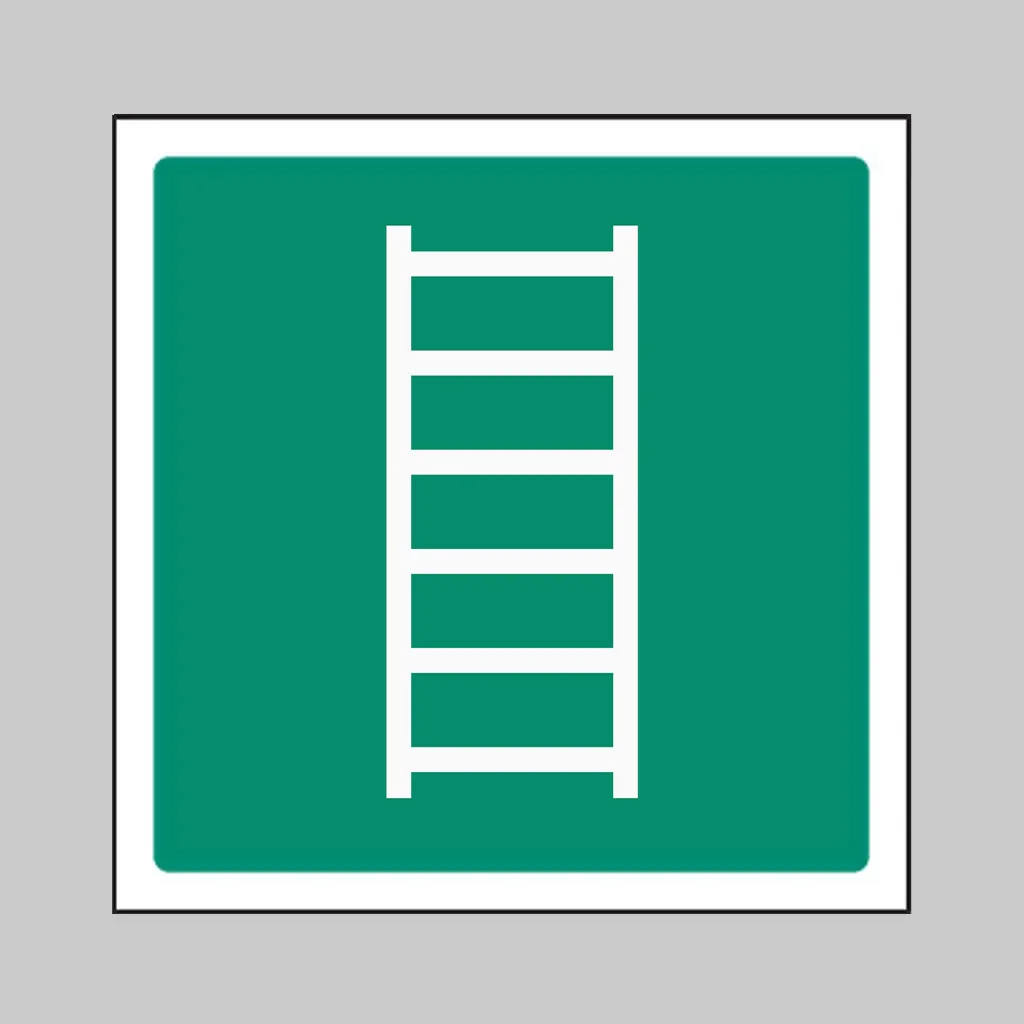 | E059 | Escape Ladder | The Escape Ladder symbol is used to identify the location of a permanently fixed escape ladder. It provides a clear visual reference so that occupants can recognise where the ladder is positioned and understand that it forms part of the emergency escape arrangements. |
This symbol should be displayed at or close to fixed escape ladders installed in workplaces, industrial premises, plant areas, multi-level buildings and other locations where a ladder provides an alternative means of escape. It is particularly important where the ladder may not be immediately visible from normal access routes. In an emergency, people may need to locate an alternative escape route quickly if conventional exits cannot be used. The E059 symbol helps reduce uncertainty by drawing attention to the fixed ladder and making its purpose easier to understand, especially for people who are unfamiliar with the site. Using the E059 symbol improves the visibility of emergency escape equipment and supports consistent ISO 7010 wayfinding throughout the premises. Clear identification can help occupants locate the ladder more efficiently, reduce delays during evacuation and strengthen overall emergency preparedness. |
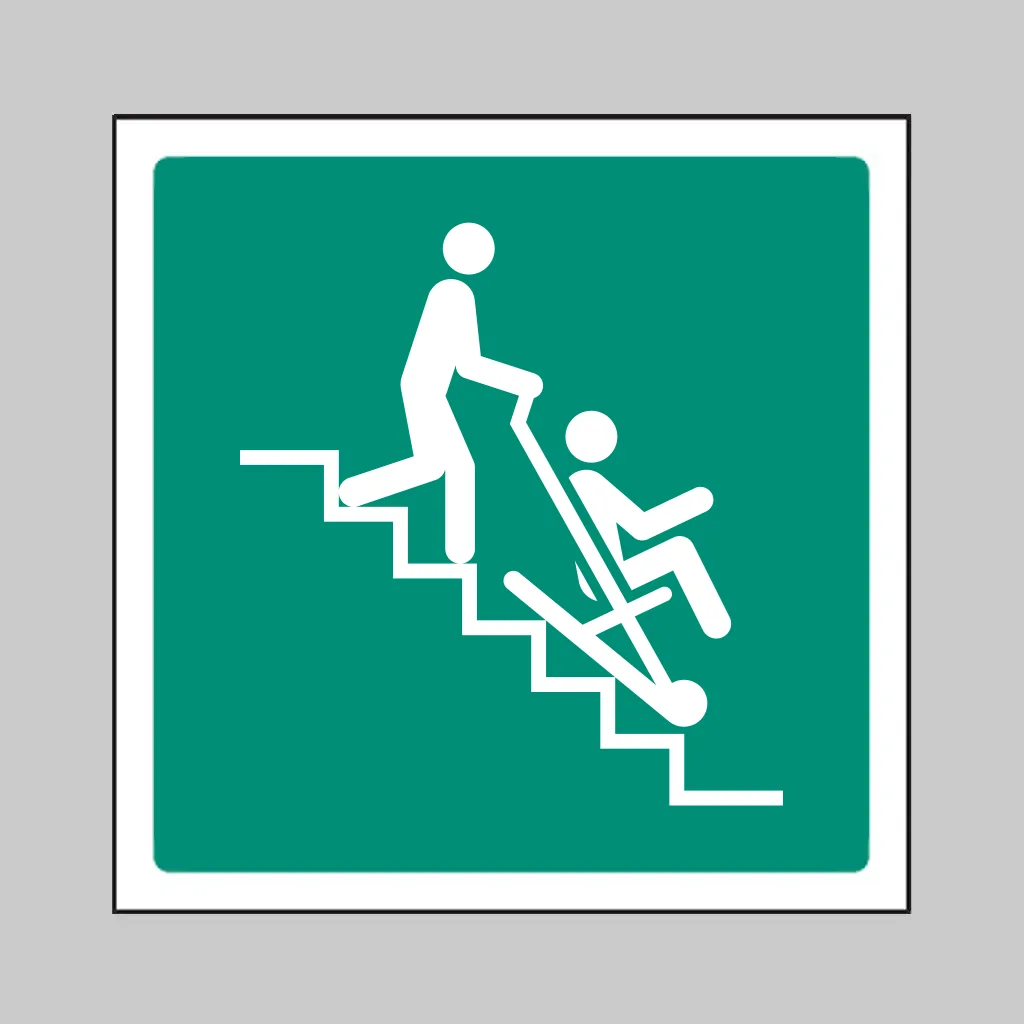 | E060 | Evacuation Chair | The Evacuation Chair symbol identifies the location of an evacuation chair provided to assist people who may be unable to use stairs independently during an emergency. The pictogram shows a seated person being assisted down a staircase, helping occupants and trained personnel recognise where this specialist evacuation equipment is stored. |
Evacuation Chair signs are particularly suitable for multi-storey offices, hospitals, hotels, universities, public buildings and other premises where accessible evacuation arrangements are required. The symbol should be positioned directly above or beside the chair, its cabinet or storage point so that the equipment can be found quickly when needed. The sign is especially valuable near protected stairways, upper floors and designated refuge areas where someone with limited mobility may wait for assistance. Clearly identifying the evacuation chair helps fire wardens, trained staff and other responders locate the equipment without unnecessary searching during an evacuation. Using the E060 symbol supports inclusive emergency planning by making specialist evacuation equipment easier to identify throughout a building. Clear signage can reduce delays, improve awareness of available evacuation provisions and help ensure that an evacuation chair can be accessed promptly when normal stair evacuation is not possible. |
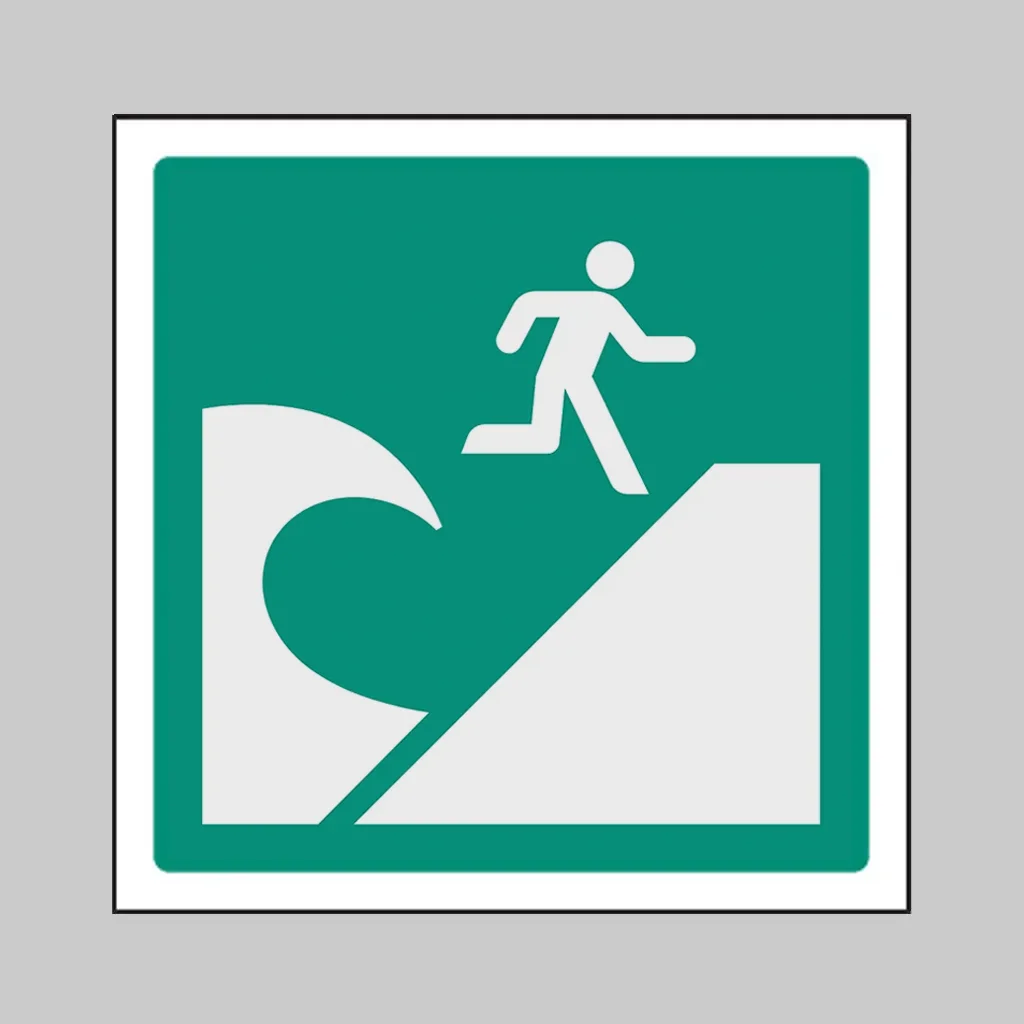 | E062 | Tsunami Evacuation Area | The Tsunami Evacuation Area symbol identifies a designated safe or elevated area where people should move in the event of a tsunami. It is intended to guide people away from vulnerable coastal or low-lying areas towards a safer location that has been selected for emergency evacuation. |
This symbol is most relevant in coastal communities, beaches, harbours, resorts, ports and other locations exposed to tsunami risk. It should be displayed at designated evacuation areas and, where appropriate, incorporated into wayfinding signage that directs people towards higher ground or another recognised place of safety. Following an earthquake or tsunami warning, people may have only a limited amount of time to move away from the danger zone. The E062 symbol provides a clear visual reference that helps residents, visitors and tourists identify where they should evacuate, even when they are unfamiliar with the local area. Using the E062 symbol supports organised tsunami preparedness and makes designated evacuation areas easier to recognise. Consistent signage can reduce uncertainty, improve emergency wayfinding and help direct people away from exposed coastal locations towards safer ground when a tsunami threat is present. |
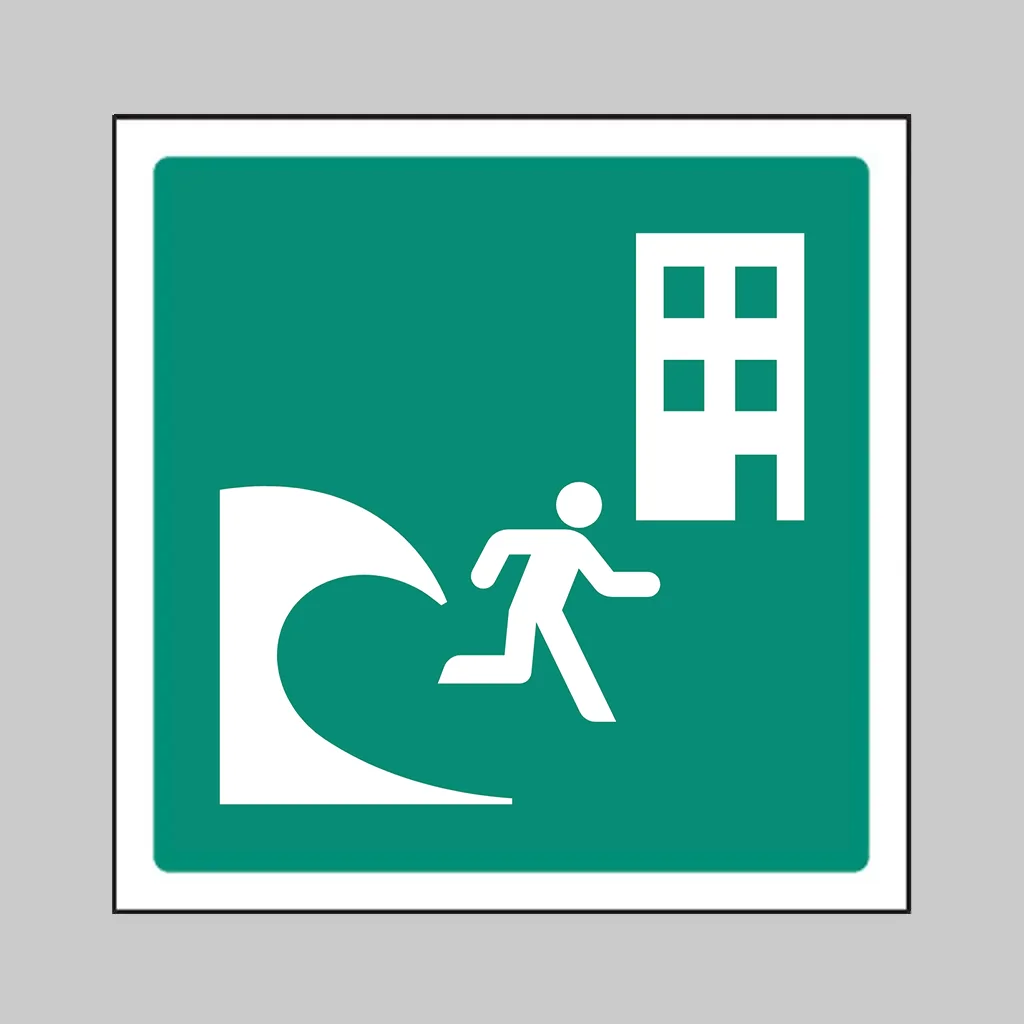 | E063 | Tsunami Evacuation Building | The Tsunami Evacuation Building symbol identifies a building that has been designated as a place of safety during a tsunami emergency. The pictogram shows a person moving towards a building away from a tsunami wave, helping people recognise where they should seek refuge when evacuation to a safer structure is required. |
This symbol is most relevant in coastal towns, ports, resorts, harbours and other areas exposed to tsunami risk. It should be displayed prominently on designated evacuation buildings and may also be incorporated into directional signage guiding people from vulnerable coastal or low-lying areas towards the approved refuge location. A tsunami evacuation building can be particularly important where there is insufficient time to travel inland or reach higher natural ground. Clearly marking the building helps residents, workers and visitors identify a recognised place of safety more quickly following an earthquake or when a tsunami warning has been issued. Using the E063 symbol supports organised tsunami evacuation planning and provides a consistent visual reference during a high-pressure emergency. Clear identification can reduce uncertainty, improve wayfinding and help direct people away from the coastal hazard zone towards a building specifically designated for tsunami evacuation. |
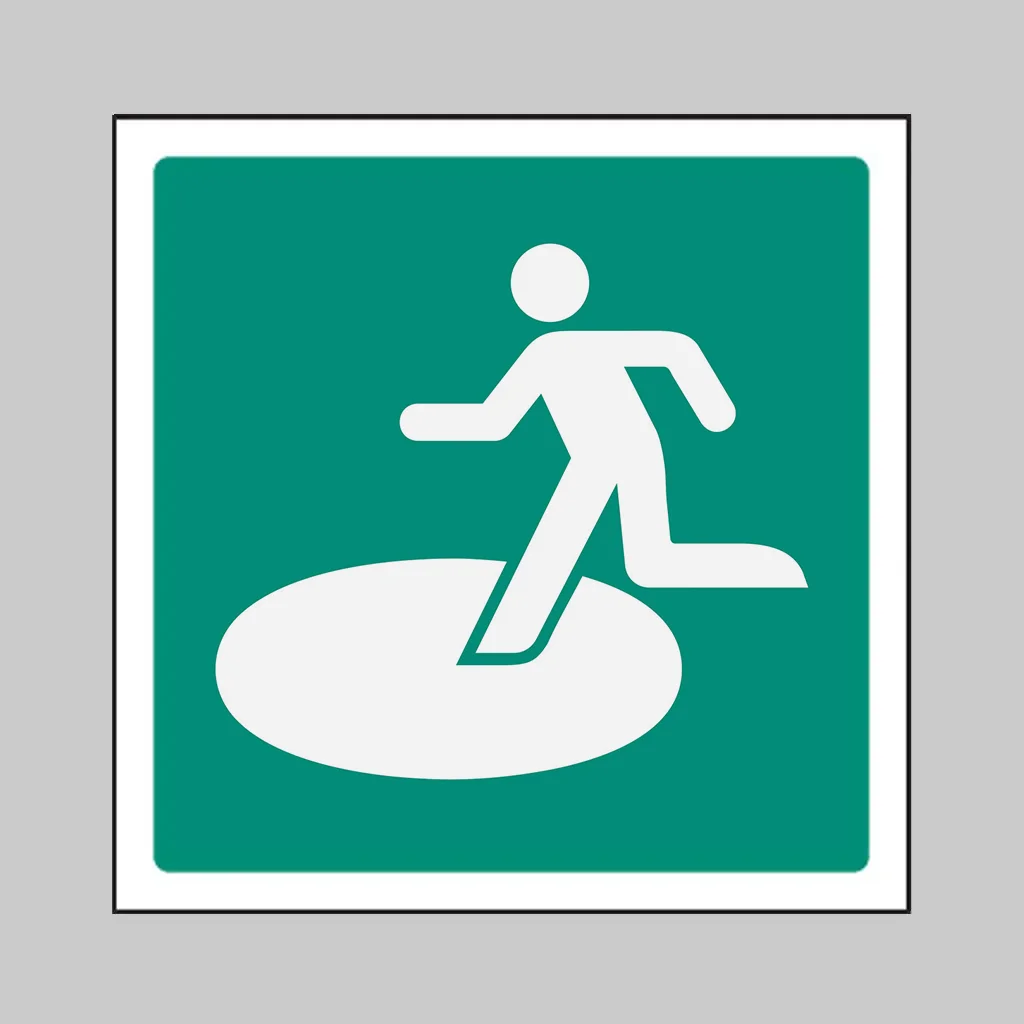 | E065 | Natural Disaster Outdoor Refuge Area | The Natural Disaster Outdoor Refuge Area symbol identifies a designated outdoor location where people can gather or take refuge during a natural disaster. It provides a clear visual reference to an area that has been selected as a safer place for occupants or members of the public to move towards when emergency instructions require outdoor refuge. |
This symbol may be used in communities, workplaces, public spaces, schools, industrial sites and other locations where outdoor refuge areas form part of natural disaster preparedness plans. It should be displayed prominently at the designated refuge area and may also be incorporated into directional signage guiding people towards the location. Natural disasters such as earthquakes, floods, landslides, volcanic events or other major emergencies can create situations where people need to move away from buildings or hazardous areas. Clearly identifying an outdoor refuge point helps reduce uncertainty and provides residents, employees and visitors with a recognised destination during an emergency. Using the E065 symbol supports organised emergency planning by making designated outdoor refuge areas easier to find and recognise. Consistent signage can improve wayfinding, reduce confusion and help people reach an appropriate refuge location more efficiently when a natural disaster occurs. |
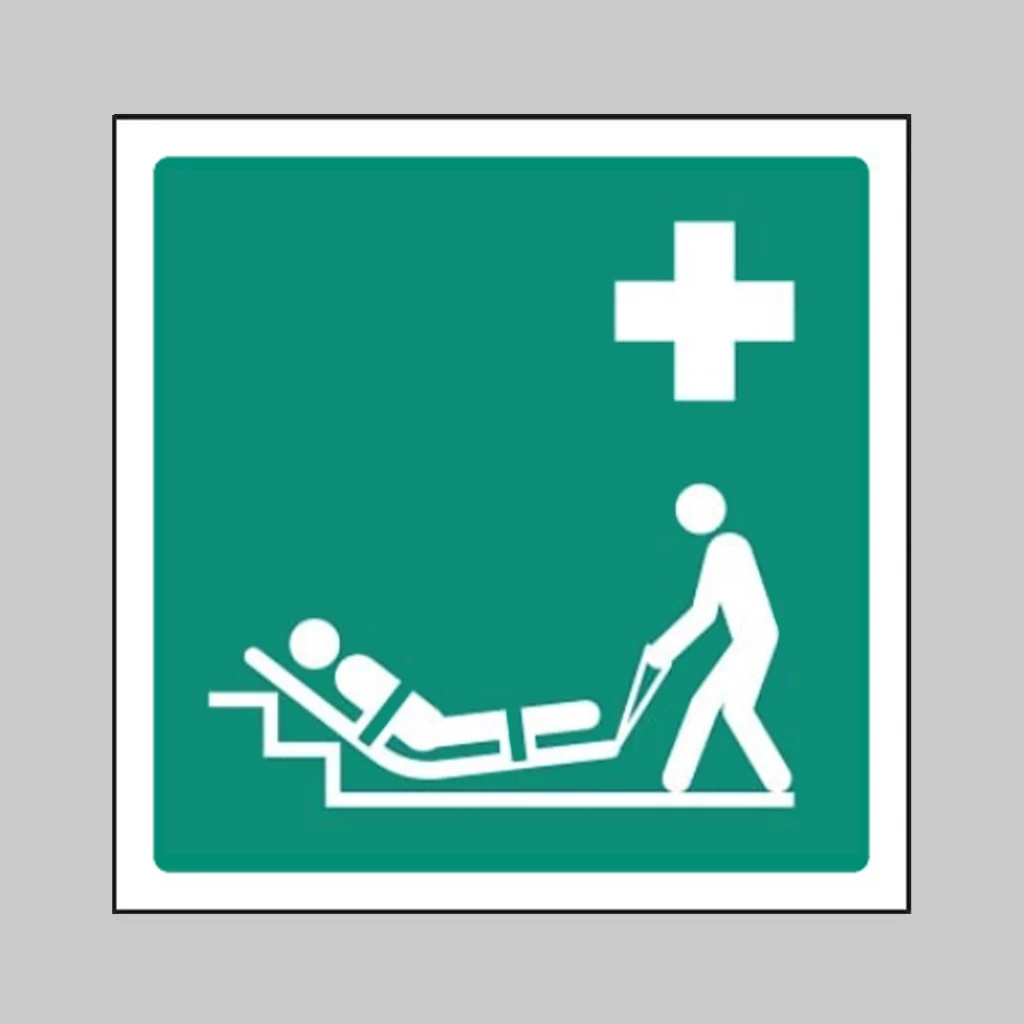 | E067 | Evacuation Mattress | The Evacuation Mattress symbol identifies the location of an evacuation mattress provided to assist with moving a person to safety during an emergency. It helps staff and responders quickly recognise where this specialist evacuation equipment is stored, particularly when someone cannot use stairs or evacuate independently. |
Evacuation Mattress signs are especially appropriate in hospitals, care homes, residential facilities, hotels and other multi-storey premises where assisted evacuation arrangements are required. The symbol should be positioned directly above or beside the mattress, its storage cabinet or designated equipment point so it can be found without delay. An evacuation mattress may be used to help move a person along corridors, through escape routes or down stairways where conventional evacuation would be difficult. Clearly identifying its location can save valuable time and helps trained staff locate the correct equipment before beginning an assisted evacuation. Using the E067 symbol supports inclusive emergency planning by making specialist evacuation equipment easier to identify throughout a building. It improves awareness of available evacuation resources, reduces searching during an emergency and provides a consistent ISO 7010 visual reference for staff, carers and emergency personnel. |
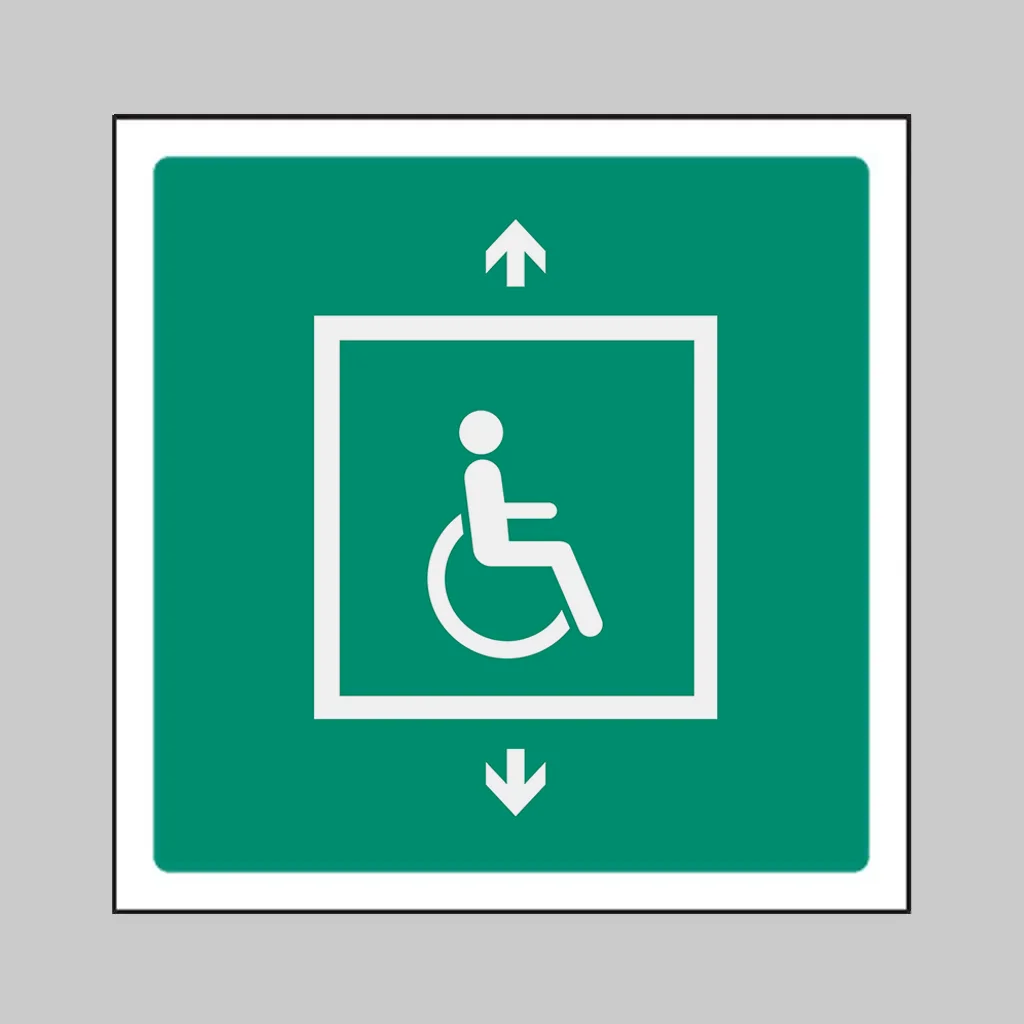 | E070 | Evacuation Lift for People Unable to use Stairs | The Evacuation Lift for People Unable to use Stairs symbol identifies the location of a lift specifically intended for use during an evacuation by people who cannot use stairs. The pictogram shows a wheelchair user within a lift, helping distinguish the designated evacuation lift from an ordinary passenger lift. |
This symbol should be used in buildings where an evacuation lift forms part of the accessible emergency escape strategy, such as hospitals, offices, hotels, public buildings, transport facilities and other multi-storey premises. It should be positioned prominently at the lift entrance and wherever people need to identify the correct evacuation lift quickly. For wheelchair users and others with mobility impairments, stairs may not provide a practical means of escape during an emergency. Clearly displaying the E070 symbol helps occupants, carers, fire wardens and assisting personnel recognise which lift has been designated for evacuation purposes and reduces the risk of someone attempting to use an unsuitable lift. Using the E070 symbol supports inclusive evacuation planning and makes accessible escape facilities easier to identify throughout a building. It provides a standardised visual reference that can reduce confusion, improve emergency wayfinding and help people who are unable to use stairs reach an appropriate evacuation facility more efficiently. |
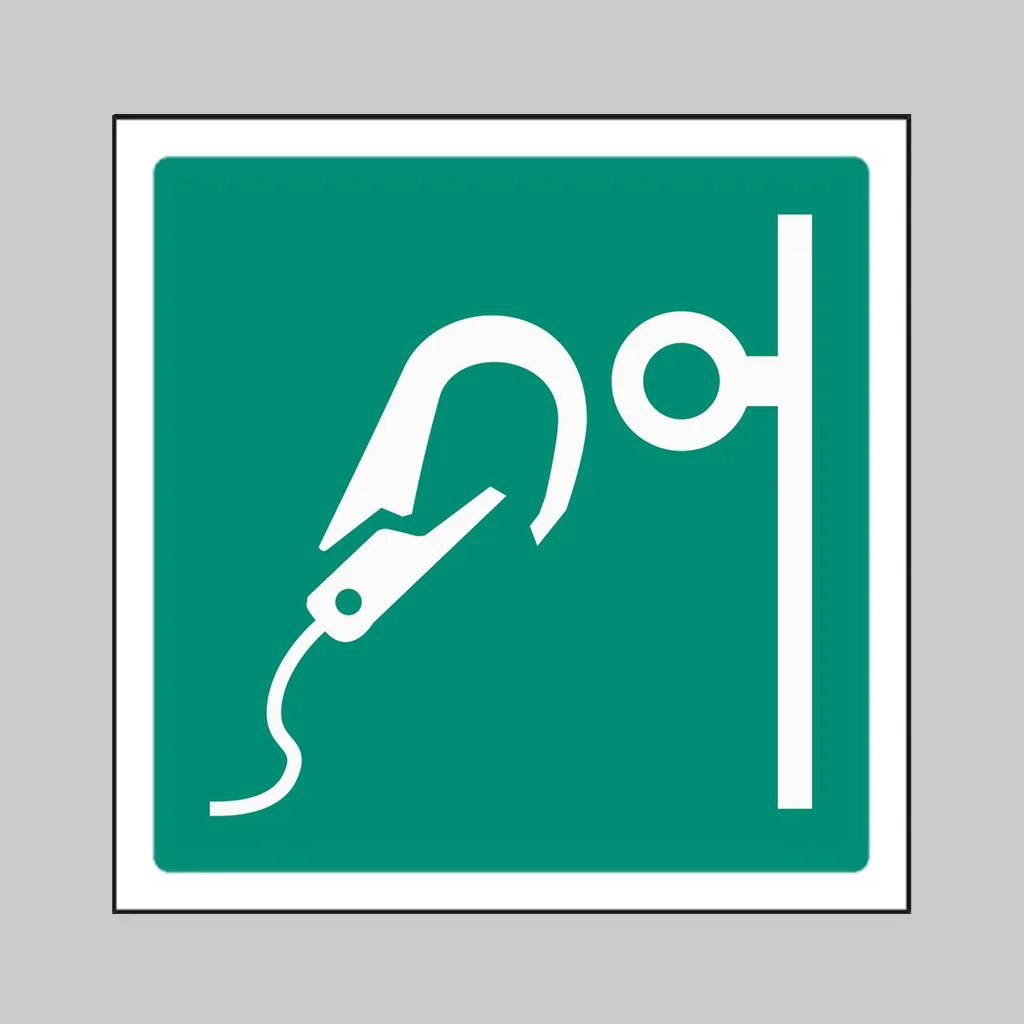 | E072 | Safe Anchorage Point | The Safe Anchorage Point symbol identifies the location of a designated anchorage point intended for use with equipment such as a descent device, rescue system or personal fall protection system. The symbol helps users recognise where suitable anchorage has been provided when safety equipment needs to be securely attached. |
This symbol is particularly relevant where a designated anchorage point forms part of an emergency descent, rescue or evacuation system. This sign may be used in workplaces involving work at height, roof access, industrial structures, towers, maintenance areas and other locations where fall protection or emergency rescue systems rely on fixed anchorage points. It should be positioned at or immediately beside the relevant anchorage location so that it can be identified without confusion. Finding the correct anchorage point quickly can be particularly important during rescue operations, emergency descent or work where fall protection equipment is required. The E072 symbol helps distinguish a designated safety anchorage from ordinary structural fittings, attachment points or surrounding equipment that may not be intended for that purpose. Using the E072 symbol supports clearer identification of fall protection and rescue infrastructure throughout a site. It can reduce uncertainty, improve awareness of designated anchorage locations and help trained personnel connect their equipment to the appropriate point more efficiently. As this is a relatively new ISO 7010 symbol, a supplementary text sign should be used to increase comprehension unless its meaning is established through manuals, instructions or training. |
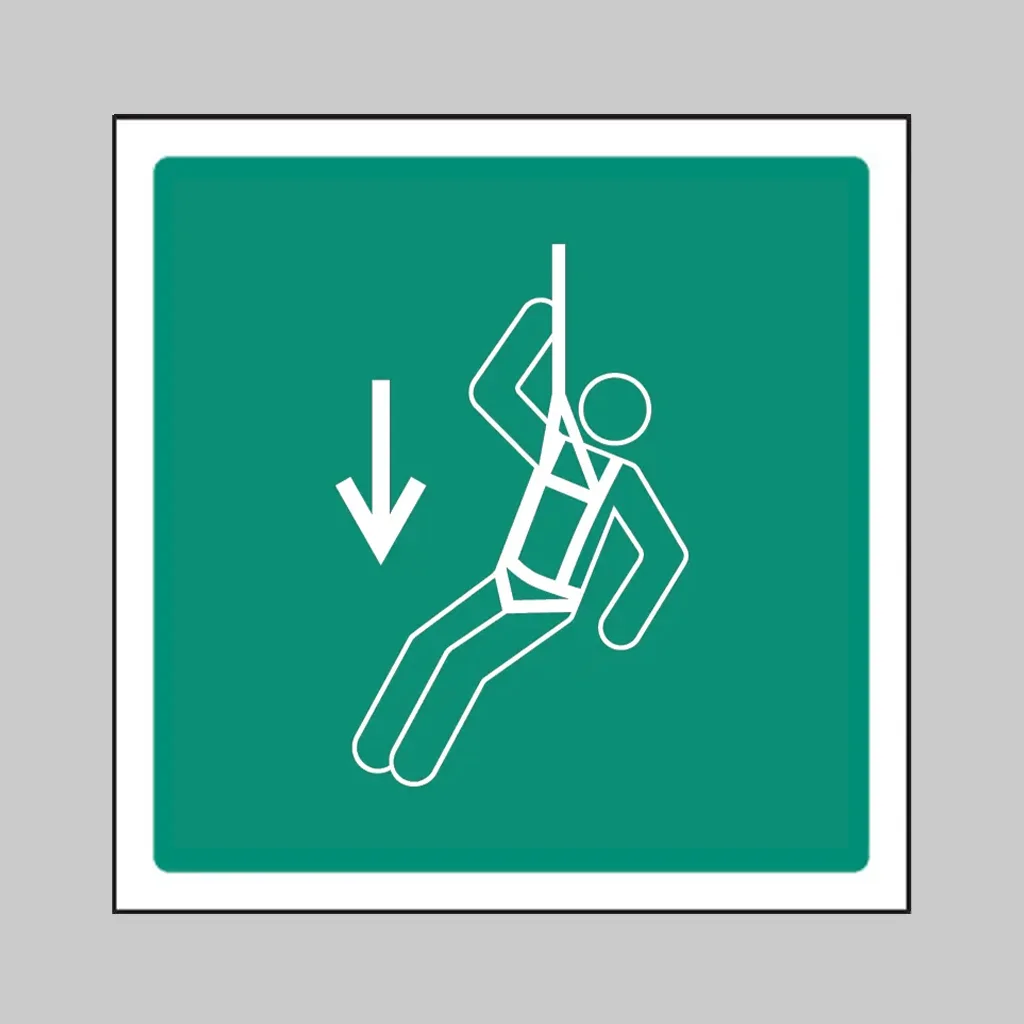 | E073 | Emergency Descent Device | The Emergency Descent Device symbol identifies the location of equipment designed to provide a controlled descent during an emergency. The pictogram shows a person wearing a harness and descending on a line, helping users recognise where specialist escape or rescue equipment is available when evacuation from height is required. |
This symbol is particularly relevant in locations where conventional escape routes may not always be practical, such as industrial structures, towers, elevated work areas, high-level plant and other workplaces where emergency descent equipment forms part of the rescue or evacuation plan. It should be positioned directly at or close to the stored descent device so that trained users can locate it without delay. Emergency descent devices can provide a controlled means of leaving an elevated structure when normal access routes are unavailable or unsafe. Clear identification is therefore important, as it helps distinguish the equipment from ordinary fall-protection, rope-access or maintenance equipment and supports quicker action during an emergency. Using the E073 symbol improves the visibility of specialist evacuation equipment and provides a consistent ISO 7010 visual reference throughout a site. It can reduce time spent searching for the correct device, improve emergency preparedness and help trained personnel identify the equipment needed for a controlled descent to a safer location. As this is a relatively new ISO 7010 symbol, a supplementary text sign should be used to increase comprehension unless its meaning is established through manuals, instructions or training. |
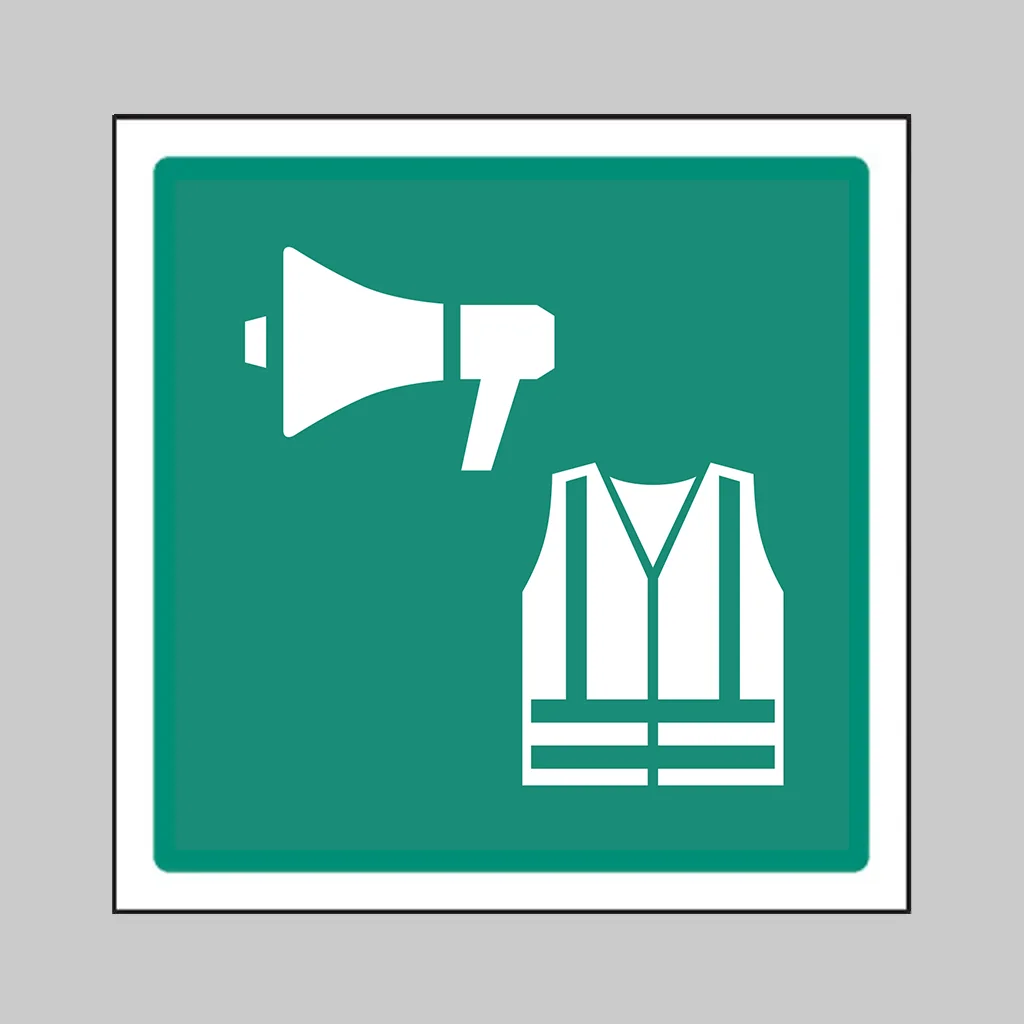 | E076 | Evacuation Equipment | The Evacuation Equipment symbol identifies the location of equipment provided to support an organised emergency evacuation. The pictogram features a megaphone and high-visibility waistcoat, helping people recognise where items used by evacuation marshals, wardens or other responsible personnel are stored. |
This symbol may be used in workplaces, schools, public buildings, factories, warehouses and other premises where dedicated evacuation equipment forms part of the emergency arrangements. It should be positioned at or close to the storage point so that the equipment can be located quickly when an evacuation procedure is activated. During an emergency, designated personnel may need immediate access to equipment used for directing occupants, communicating instructions or making themselves clearly identifiable. The E076 symbol helps reduce searching and makes the designated evacuation equipment point easier to distinguish from ordinary storage areas or general safety equipment. Using the E076 symbol supports more organised emergency response by providing a consistent visual reference for evacuation resources. Clear identification can help wardens and other trained personnel access the equipment more efficiently, improve coordination during evacuation and strengthen overall emergency preparedness throughout a site. As this is a relatively new ISO 7010 symbol, a supplementary text sign should be used to increase comprehension unless its meaning is established through manuals, instructions or training. |
Understanding ISO 7010 Emergency Escape Symbol Codes
• The letter E identifies ISO 7010 safe condition signs covering evacuation routes, the location of safety equipment or safety facilities, and safety actions.
• Each registered symbol has a unique number such as E001.
• ISO 7010 standardises graphical safety signs.
• UK users commonly encounter them through BS EN ISO 7010.
• Emergency Escape symbols, First Aid symbols and Marine & Water Emergency symbols fall under the E-series.
Fire Exit - Up / Straight On Safety Signs
Provide clear and simple guidance to people during emergencies, indicating that the nearest fire exit lies straight ahead and / or involves moving upward, such as going up a flight of stairs. This straightforward direction helps occupants quickly understand the evacuation route without hesitation, which is crucial when every second counts in a fire or emergency situation. These signs are best..
Assembly Point with Channelling - Select Number or Letter Safety Signs
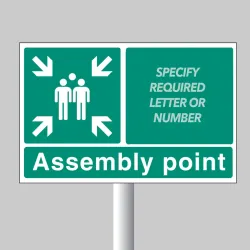
When buying an Assembly Point Sign with Channelling, having the option to choose a number or letter is particularly useful for organising multiple assembly points on a large site or campus. Using letters (e.g., Assembly Point A, B, C) or numbers (e.g., Assembly Point 1, 2, 3) helps differentiate between various designated areas. This is crucial in environments with many departments, buildings, or..
In Case of Fire Break Glass for Key Safety Signs
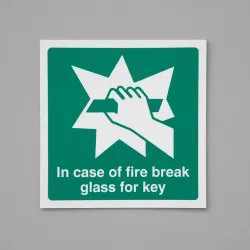
Clearly indicate the location of a key needed to unlock a door or gate during an emergency, such as a fire. In many buildings, certain exits or fire escape routes are kept locked for security reasons, and the key is stored in a break-glass box nearby. This sign informs people that the key can be accessed by breaking the glass, providing critical guidance during high-stress situations when fast act..