
ISO 7010 Prohibition Symbols: Meanings and Uses
Written by the Technical Team at Caledonia Signs
Last reviewed: July 2026
What Are Prohibition Safety Signs and Why Are They Important?
Prohibition safety signs are an essential part of effective workplace safety communication, clearly identifying actions and behaviours that are not permitted in order to help prevent accidents, injuries, and exposure to hazards. Unlike warning or mandatory signs, prohibition signs inform people of activities, actions, or behaviours that must be avoided, such as not smoking, not entering restricted areas, or not using unauthorised equipment. By providing clear visual instructions, they help employees, visitors, contractors, and members of the public understand the restrictions they must follow when entering or working within a particular area.
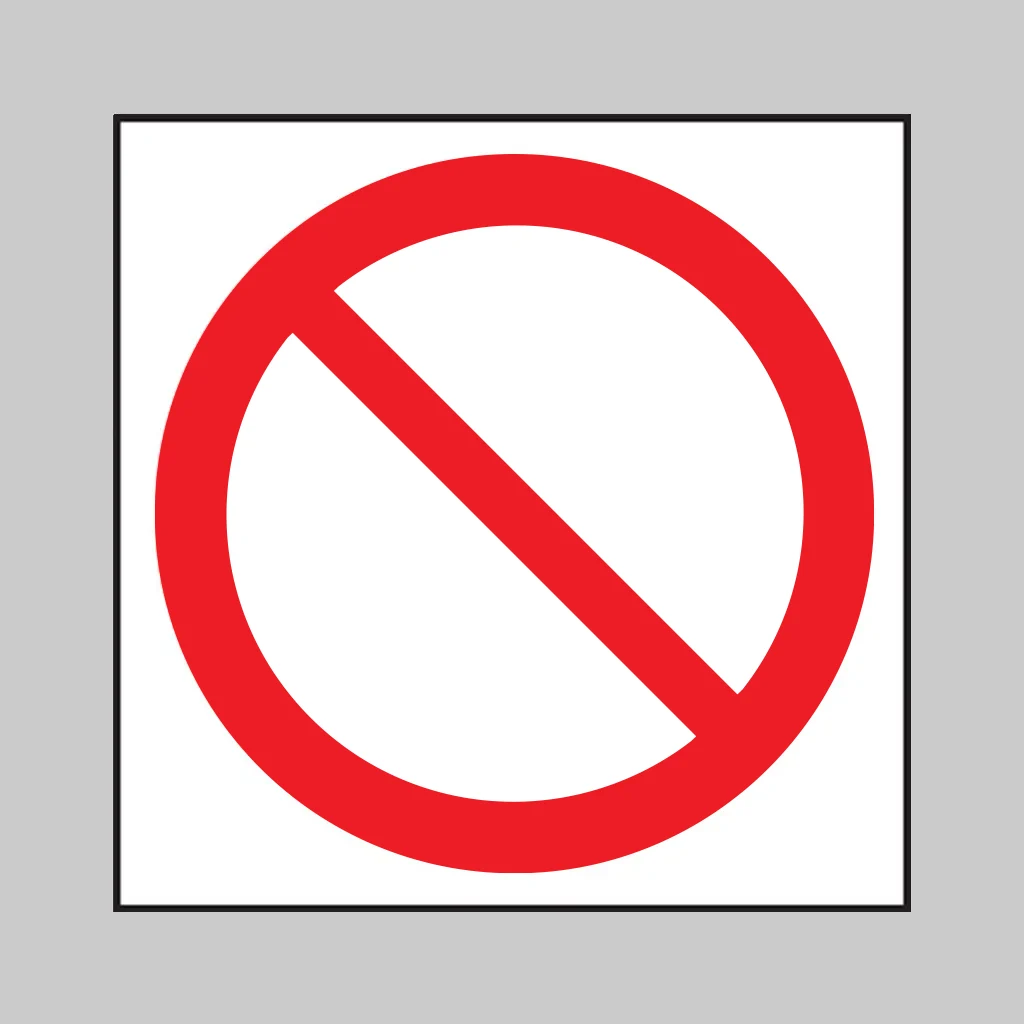
Based on the internationally recognised ISO 7010 standard, prohibition safety signs feature a black symbol inside a white circular background with a red border and diagonal line, making them instantly recognisable regardless of language or nationality. Their consistent design helps ensure important safety restrictions can be understood quickly, reducing the likelihood of unsafe actions and supporting safer working practices across a wide range of industries and environments.
This directory provides a comprehensive guide to prohibition safety signs, including their symbols, meanings, and common uses. Whether you are looking to identify a specific prohibition symbol or understand where it should be displayed, this guide explains each sign and the restriction it communicates, helping organisations select the correct signage, control workplace risks, improve safety awareness, and support compliance with relevant health and safety legislation.
| Symbol | Code | Name | Meaning | Typical use |
|---|---|---|---|---|
| P001 | General Prohibition | The General Prohibition symbol shows that a particular action, behaviour or activity is not permitted. It is intended for situations where no more specific prohibition symbol is available, so it should be displayed with a clear written instruction identifying exactly what people must not do. | It is commonly used in workplaces, factories, laboratories, public buildings, construction sites and other controlled environments where a site-specific restriction needs to be communicated. The accompanying wording can be adapted to cover machinery, activities, access arrangements or local operating rules. The symbol is especially useful when a recognised graphical sign does not adequately describe the prohibited action. The written message should be brief, direct and easy to understand so employees, visitors and contractors can recognise the restriction without uncertainty. Place the sign where it can be seen before anyone enters the affected area, approaches the equipment or begins the prohibited activity. Where ignoring the instruction could result in serious harm, support the sign with barriers, supervision, access controls or other suitable safety measures. |
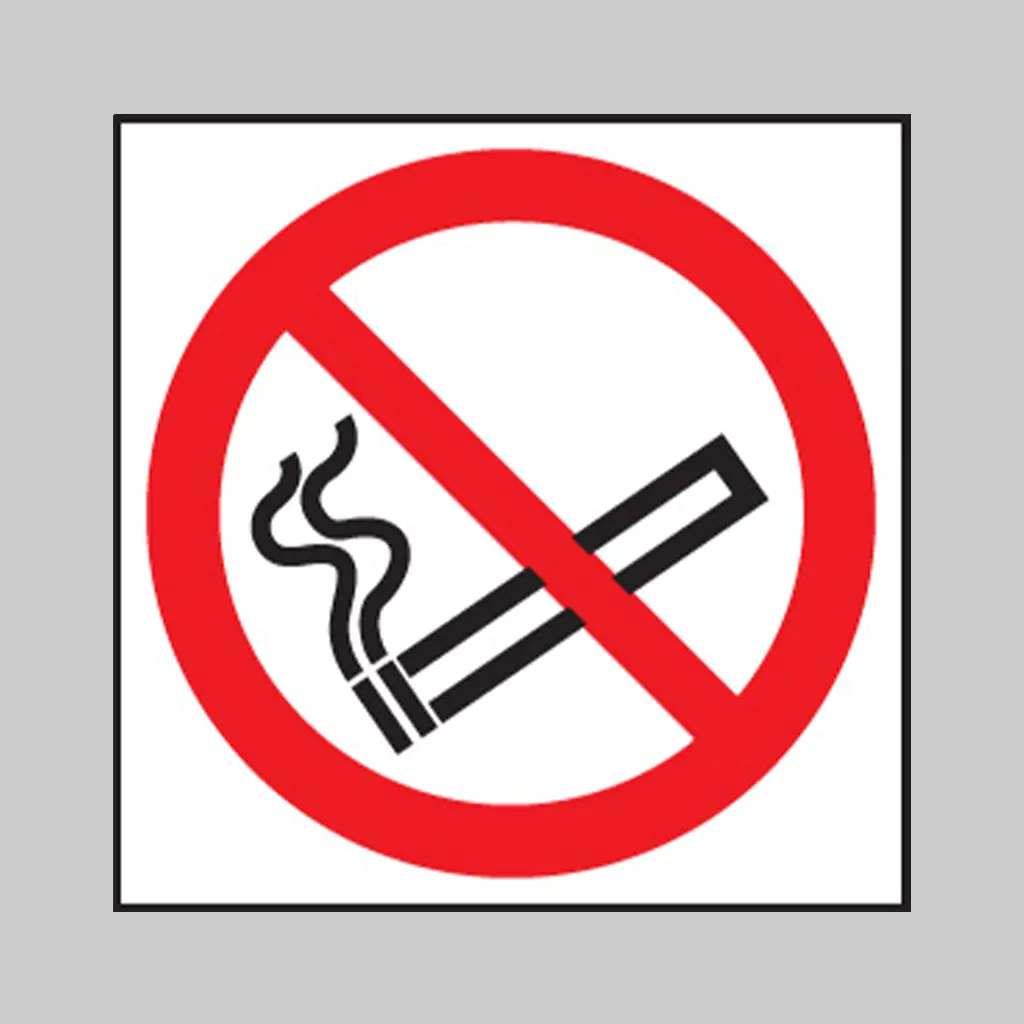 | P002 | No Smoking | The No Smoking symbol shows that cigarettes, cigars, pipes and other smoking products must not be lit or used in the designated area. Where required, additional wording may be included to confirm that electronic cigarettes, vaping devices and similar products are also prohibited. | It is commonly used in offices, hospitals, schools, factories, warehouses, transport facilities and enclosed public spaces. The sign helps establish smoke-free areas, protect occupants from second-hand smoke and reinforce workplace or building policies. It is particularly important near fuels, gases, solvents, combustible materials and processes that may produce flammable vapours. In these environments, a cigarette, match or lighter could provide an ignition source and cause a fire or explosion. Display the sign at entrances, reception points, loading areas and other locations where people need to be informed before smoking. In larger premises, repeat the sign throughout the controlled area and support it with designated smoking arrangements or enforcement procedures where appropriate. |
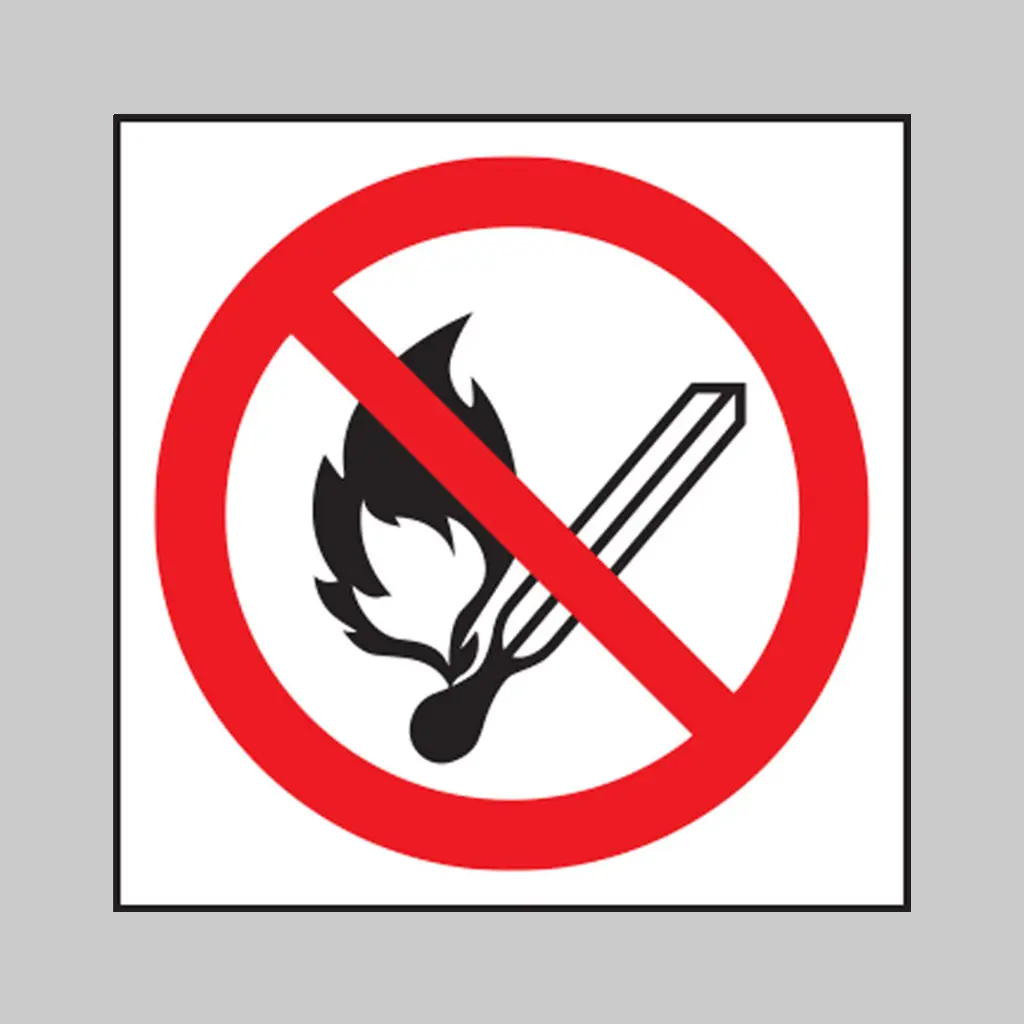 | P003 | No Open Flame | The No Open Flame symbol shows that naked flames and exposed ignition sources are prohibited. Matches, lighters, candles, burners, blowtorches and similar equipment must not be used, and activities capable of producing sparks or intense heat may also be restricted. | It is commonly used in fuel stores, gas-cylinder compounds, chemical plants, flammable-liquid storage areas and locations where combustible vapours may be present. The restriction helps prevent accidental ignition during routine work, maintenance, loading or storage operations. The symbol may also be appropriate near battery-charging stations, paint stores, solvent-handling areas and processes involving explosive atmospheres. Where hot work is controlled by a permit system, the sign can reinforce that flames and spark-producing tools must not be introduced without authorisation. Position the sign at entrances, access gates, loading points and close to the identified hazard so it is visible before an ignition source is brought into the area. Where the danger is significant, support it with physical controls, safe storage procedures and clearly marked hazardous zones. |
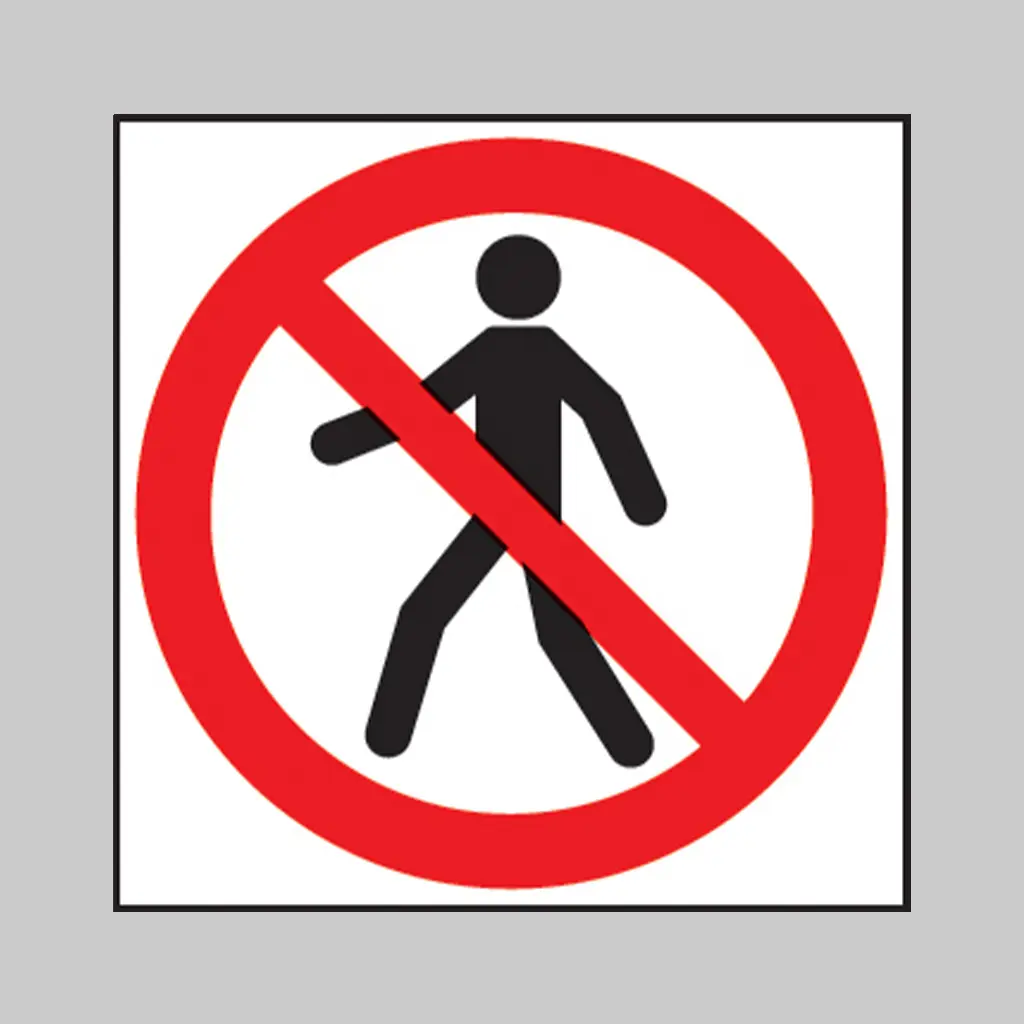 | P004 | No Thoroughfare | The No Thoroughfare symbol shows that pedestrians must not use the marked doorway, route or passage. The area beyond may be unsafe, temporarily closed, reserved for authorised personnel or unsuitable as a normal means of access. | It is commonly used at staff-only corridors, plant rooms, maintenance areas, warehouses, construction zones and closed walkways. The sign helps prevent people from entering routes that may contain machinery, vehicle movements, unfinished work or other hazards. It may also be displayed on doors, gates and passageways that appear to provide access but do not form part of an approved pedestrian route. Where an alternative route is available, directional information should be provided so people can continue safely without entering the prohibited area. Install the sign at the point where access stops, allowing enough time for pedestrians to turn back or choose another route. Where unauthorised entry could lead to serious injury, use barriers, locked doors, controlled access or supervision in addition to the sign. |
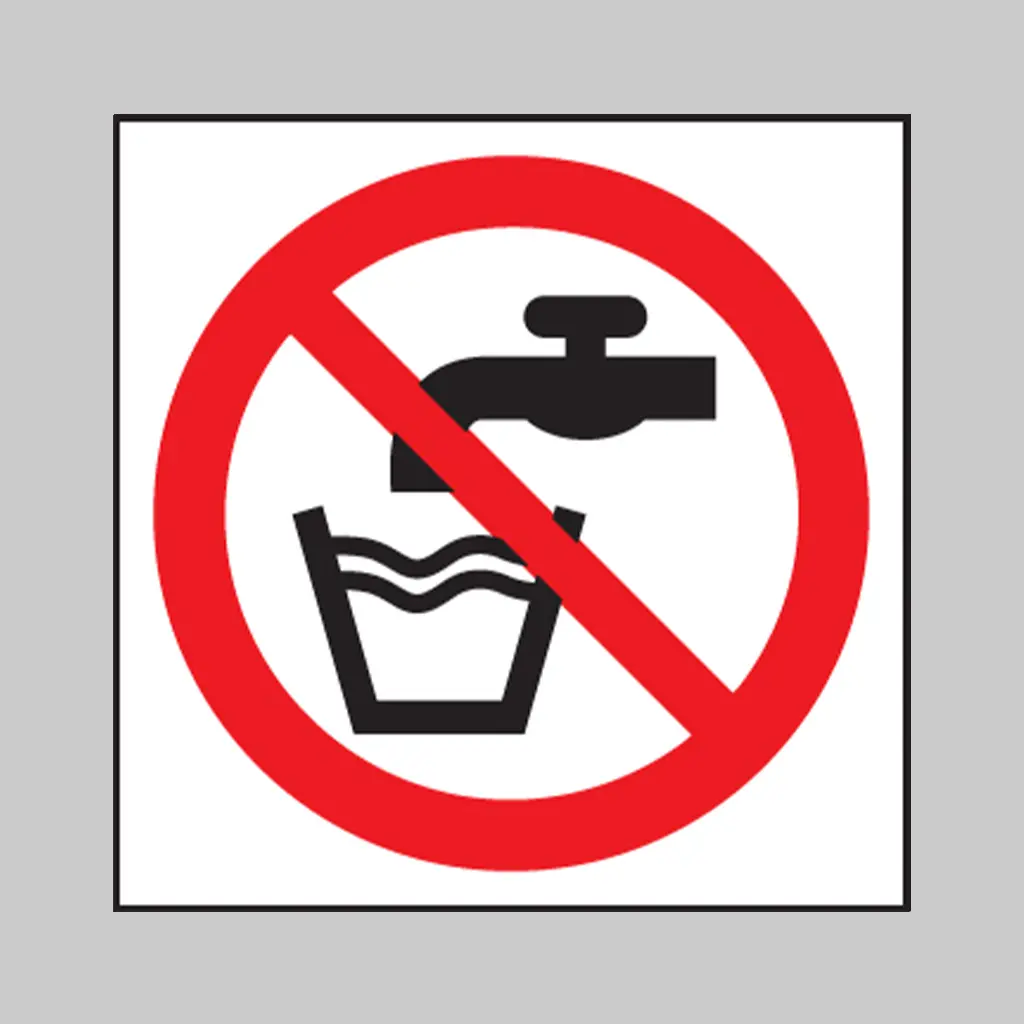 | P005 | Not Drinking Water | The Not Drinking Water symbol identifies a water supply that is unsafe or unsuitable for human consumption. Water from the marked outlet must not be drunk or used for preparing food, making beverages, brushing teeth or any other activity that could result in it being swallowed. | It is commonly used beside untreated water supplies, laboratory sinks, industrial wash points, irrigation systems, storage tanks and recycled-water outlets. The sign distinguishes these supplies from normal drinking-water facilities and reduces the risk of accidental consumption. The symbol may also be required where water is intended only for cleaning, cooling, testing, firefighting or process use. It is particularly important when the outlet resembles an ordinary tap or is located near kitchens, welfare facilities or other areas where potable water would normally be expected. Place the sign directly beside the relevant tap, pipe, tank or container so there is no uncertainty about which supply is affected. Where several outlets are connected to the same non-potable system, label each accessible point and provide suitable drinking-water facilities nearby where necessary. |
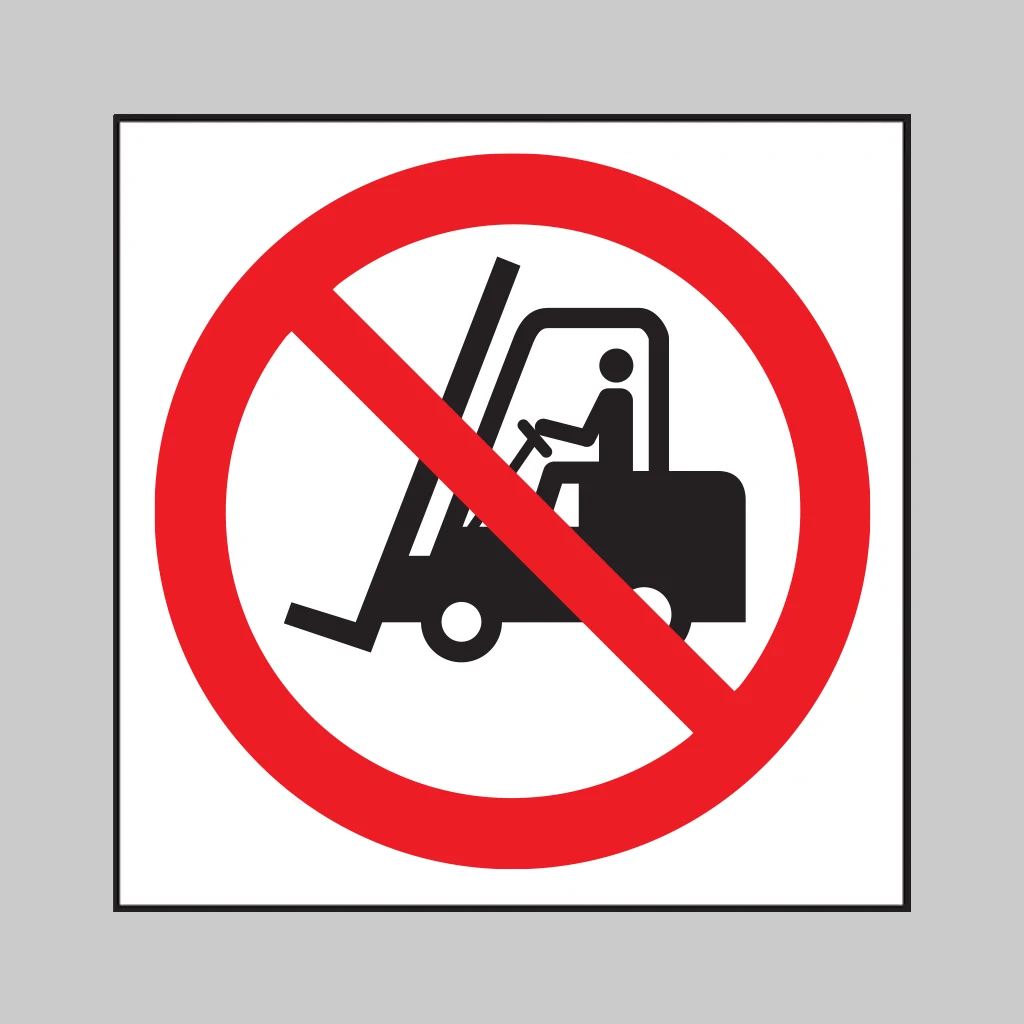 | P006 | No Access for Forklift Trucks | The No Access for Forklift Trucks symbol shows that forklift trucks and similar powered handling vehicles must not travel or operate beyond the marked point. The restriction may protect pedestrians, prevent collisions or keep heavy vehicles away from an unsuitable route, floor or structure. | It is commonly used at pedestrian walkways, narrow passages, storage rooms, offices, production areas and loading-zone boundaries. The sign helps maintain separation between powered vehicles and people working or walking nearby. It may also identify floors, ramps, lifts, doorways or platforms that cannot safely accommodate a forklift’s weight, dimensions, mast height or turning space. In other cases, the restriction may protect sensitive equipment, clean areas or processes that could be disrupted by vehicle access. Place the sign clearly at the point where forklift access ends and where drivers have enough room to stop or turn safely. Where vehicle entry could create a serious risk, support the sign with barriers, bollards, gates, floor markings or traffic-management controls. |
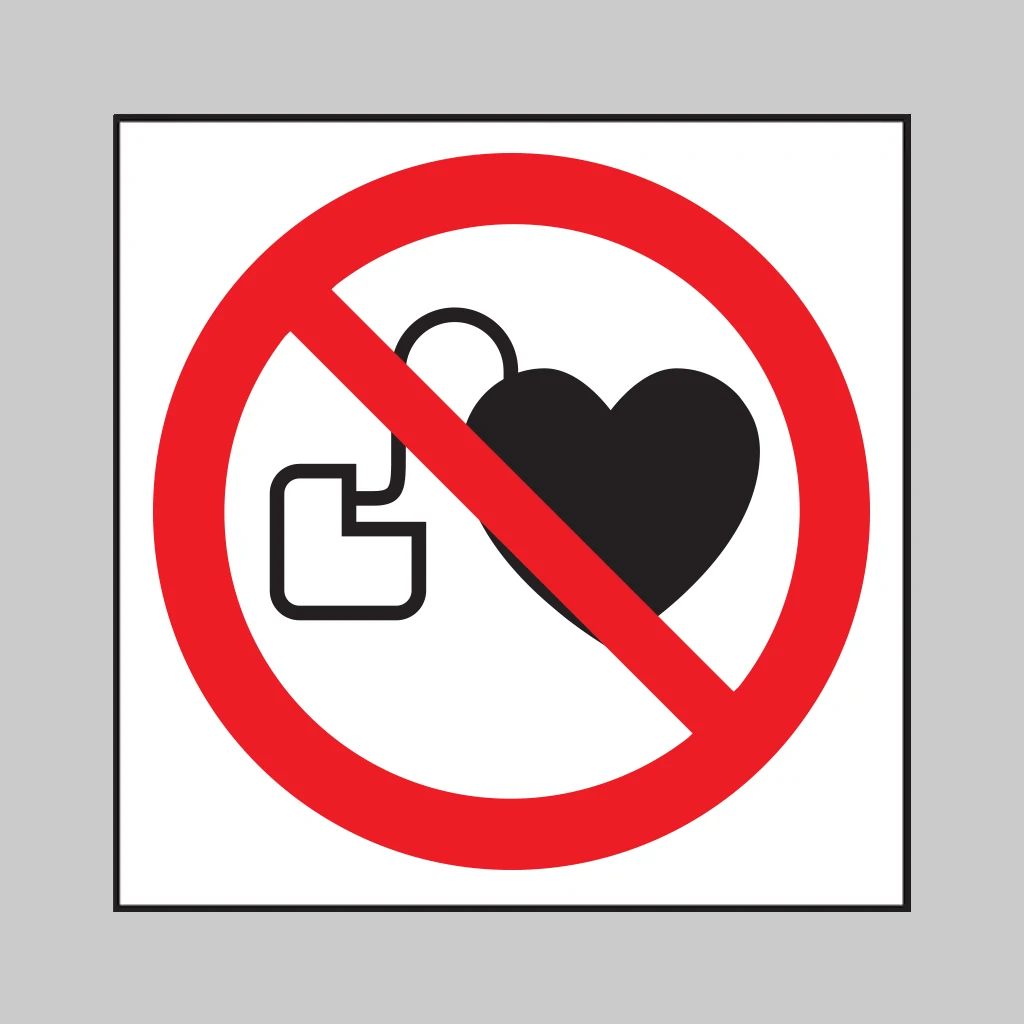 | P007 | No Access for People with Cardiac Devices | The No Access for People with Cardiac Devices symbol shows that anyone fitted with a pacemaker, implanted defibrillator or similar medical device must not enter the marked area. Magnetic or electromagnetic fields may interfere with the implant and affect its safe operation. | It is commonly used near MRI equipment, powerful magnets, induction systems, radio-frequency installations and certain types of industrial machinery. These environments may produce fields strong enough to disrupt implanted cardiac devices or cause them to operate incorrectly. The sign may also be required around welding equipment, electrical substations, research facilities and specialist testing areas where electromagnetic interference has been identified. The exact exclusion distance should be determined through the site’s risk assessment and equipment guidance. Position the sign before the hazardous field is reached so affected individuals have time to stop and seek assistance. Where appropriate, provide a contact point or written instruction directing visitors and employees to authorised staff for further guidance before entering. |
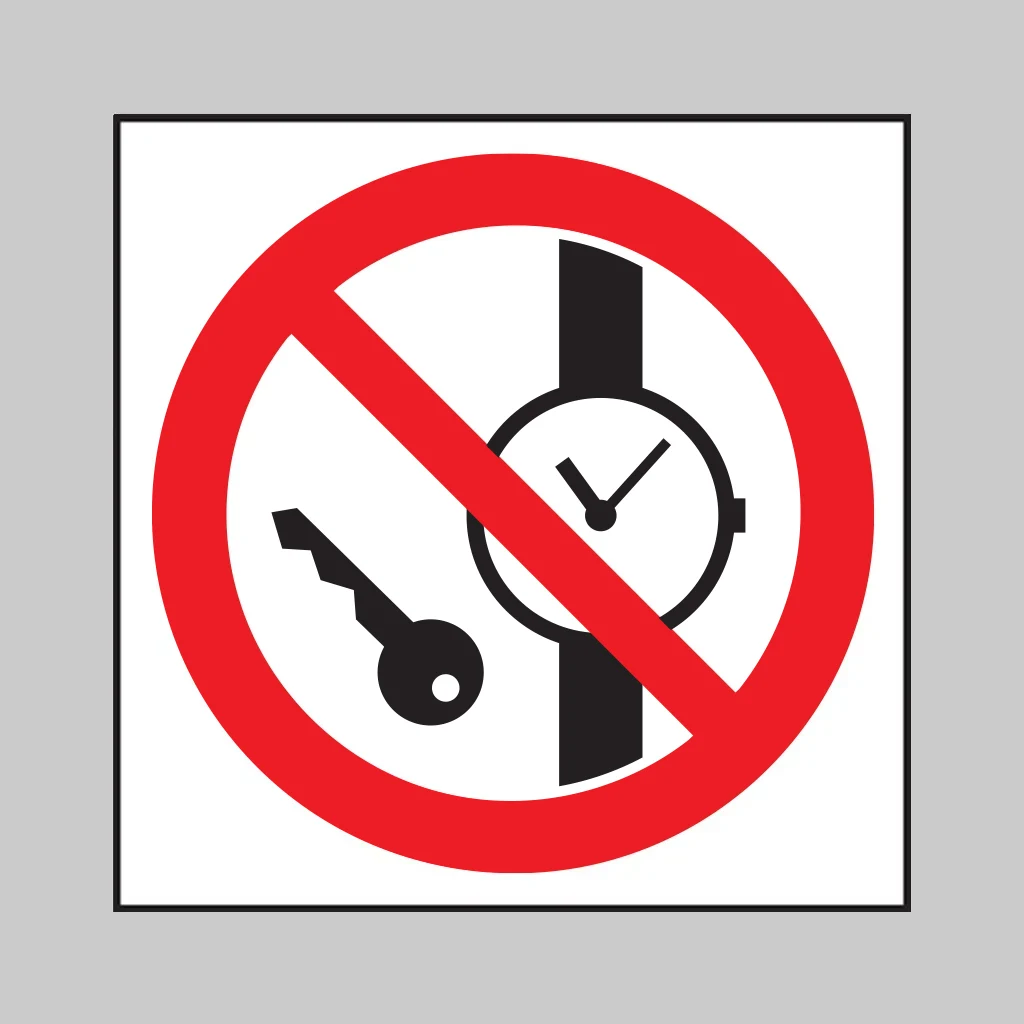 | P008 | No Metallic Articles or Watches | The No Metallic Articles or Watches symbol shows that watches, jewellery, keys, tools and other metal objects must be removed before proceeding. The restriction may prevent objects from being attracted by powerful magnets, interfering with sensitive equipment or introducing contamination into a controlled area. | It is commonly used at MRI facilities, laboratories, cleanrooms, electromagnetic testing rooms, secure areas and workplaces containing sensitive machinery. The sign prompts people to check their clothing, pockets and personal belongings before entering. The restriction may apply to rings, necklaces, piercings, belts, coins, mobile devices, tools and clothing containing metallic fasteners. Site instructions should explain which articles are prohibited and whether approved lockers, changing facilities or alternative equipment are available. Install the sign far enough in advance of the entrance to allow people to remove and store affected items safely. Where overlooked metal objects could cause serious harm, support the sign with screening procedures, staff checks, controlled access and secure storage arrangements. |
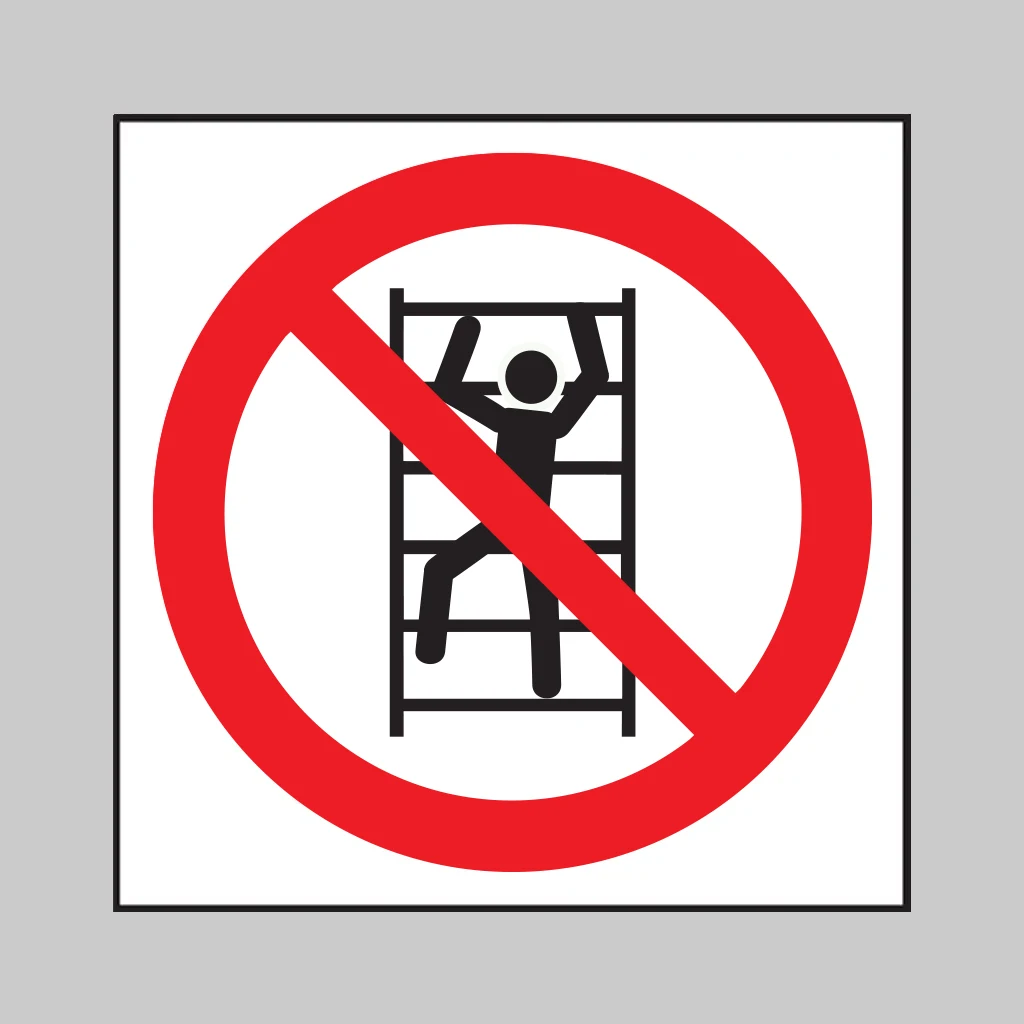 | P009 | No Climbing | The No Climbing symbol shows that people must not climb onto, over or up the marked structure, equipment or barrier. Although the object may appear accessible, it may not be designed to support a person safely, and climbing could result in a fall, contact with machinery or entry into a hazardous area. | It is commonly used on fences, storage racks, scaffolding, machinery, towers, roofs, gates and protective barriers. The sign is particularly useful where rails, frames or structural features could be mistaken for safe handholds or footholds. It may also be displayed near conveyor systems, tanks, platforms and restricted enclosures where climbing could bypass protective measures. Where access at height is necessary for maintenance, a separate safe method such as a ladder, platform or authorised access system should be provided. Mount the sign close to the most likely climbing point and where it can be noticed before an attempt is made. Where the consequences could be severe, support the warning with secure fencing, anti-climb measures, locked access points or additional written instructions. |
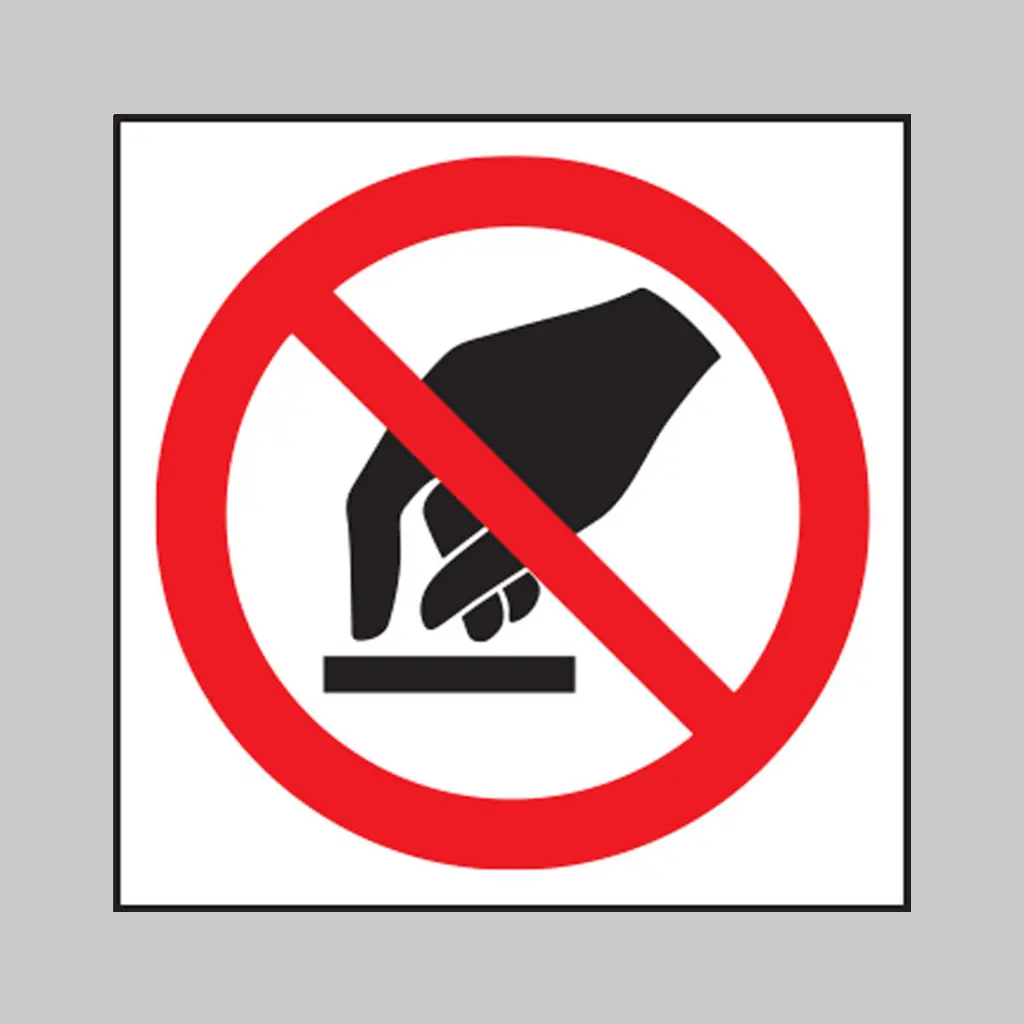 | P010 | Do Not Touch | The Do Not Touch symbol shows that people must avoid physical contact with the marked object, surface or piece of equipment. Touching it may expose someone to heat, electricity, chemicals, sharp edges, moving parts or contamination, or it may damage a delicate component or disrupt a controlled process. | It is commonly used on machinery, electrical panels, hot surfaces, laboratory apparatus, control systems, fragile displays and restricted components. The symbol can also identify equipment that may only be handled by trained or authorised personnel. It may be appropriate in cleanrooms, museums, medical environments, production facilities and testing areas where contact could contaminate, damage or alter an item. The sign should clearly identify the specific surface or component covered by the restriction. Place the sign directly on or beside the relevant object so there is no uncertainty about what must not be touched. Where contact could cause serious injury, use guarding, covers, isolation procedures, restricted access or other physical safeguards in addition to the sign. |
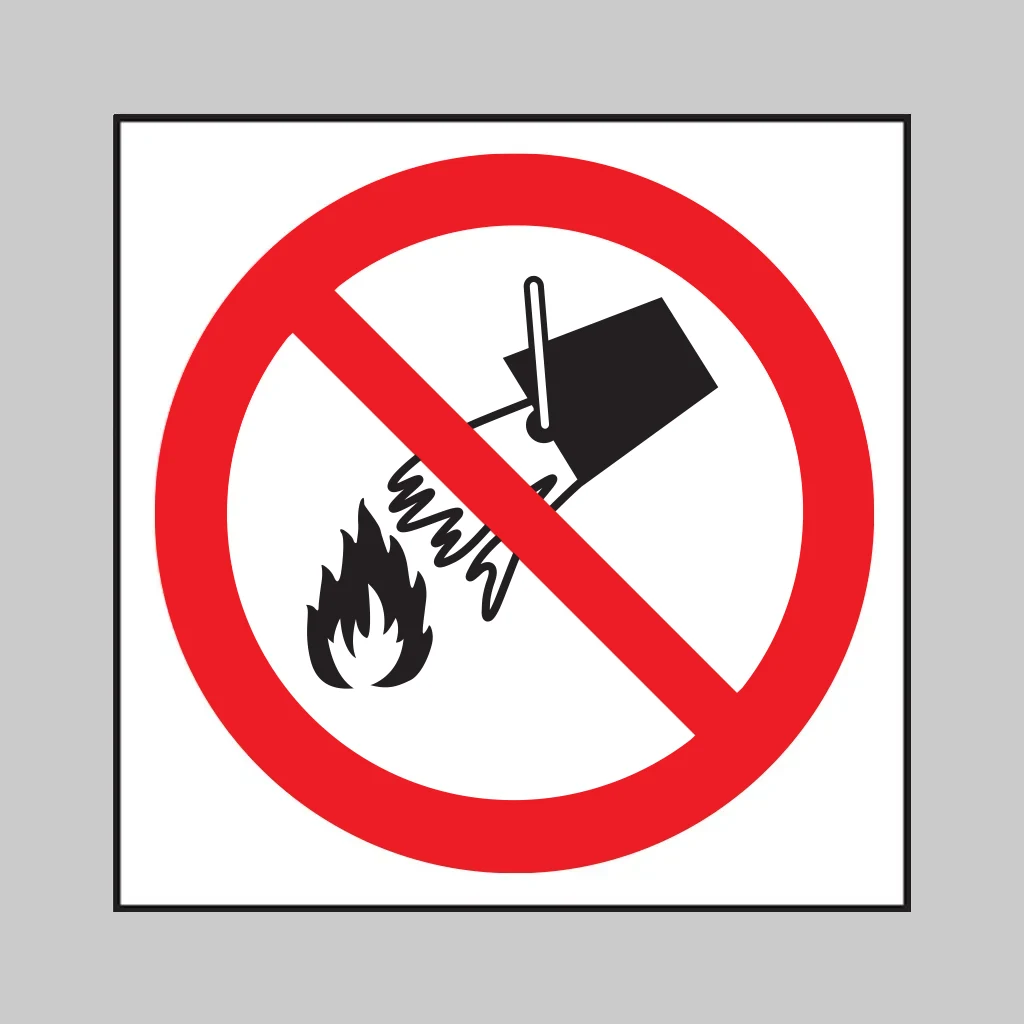 | P011 | Do Not Extinguish with Water | The Do Not Extinguish with Water symbol shows that water must not be used to fight a fire involving the marked equipment, substance or area. Water may conduct electricity, spread burning oils or flammable liquids, or react dangerously with certain chemicals. Using it in the wrong situation could intensify the fire, release hazardous substances or expose the user to electric shock. | It is commonly used near live electrical installations, switch rooms, chemical stores, laboratories, workshops and locations containing water-reactive materials. The symbol warns employees, visitors and emergency responders that an alternative extinguishing method is required. It may also be displayed beside machinery, cooking-oil equipment, battery systems and storage areas containing substances that could react violently with water. A suitable fire extinguisher should be positioned nearby in accordance with the site’s fire-risk assessment. Place the sign where it can be seen before anyone selects or operates firefighting equipment. Where practical, provide supplementary information identifying the correct extinguishing medium, such as carbon dioxide, dry powder or another specialist agent, and reinforce the instruction through emergency procedures and staff training. |
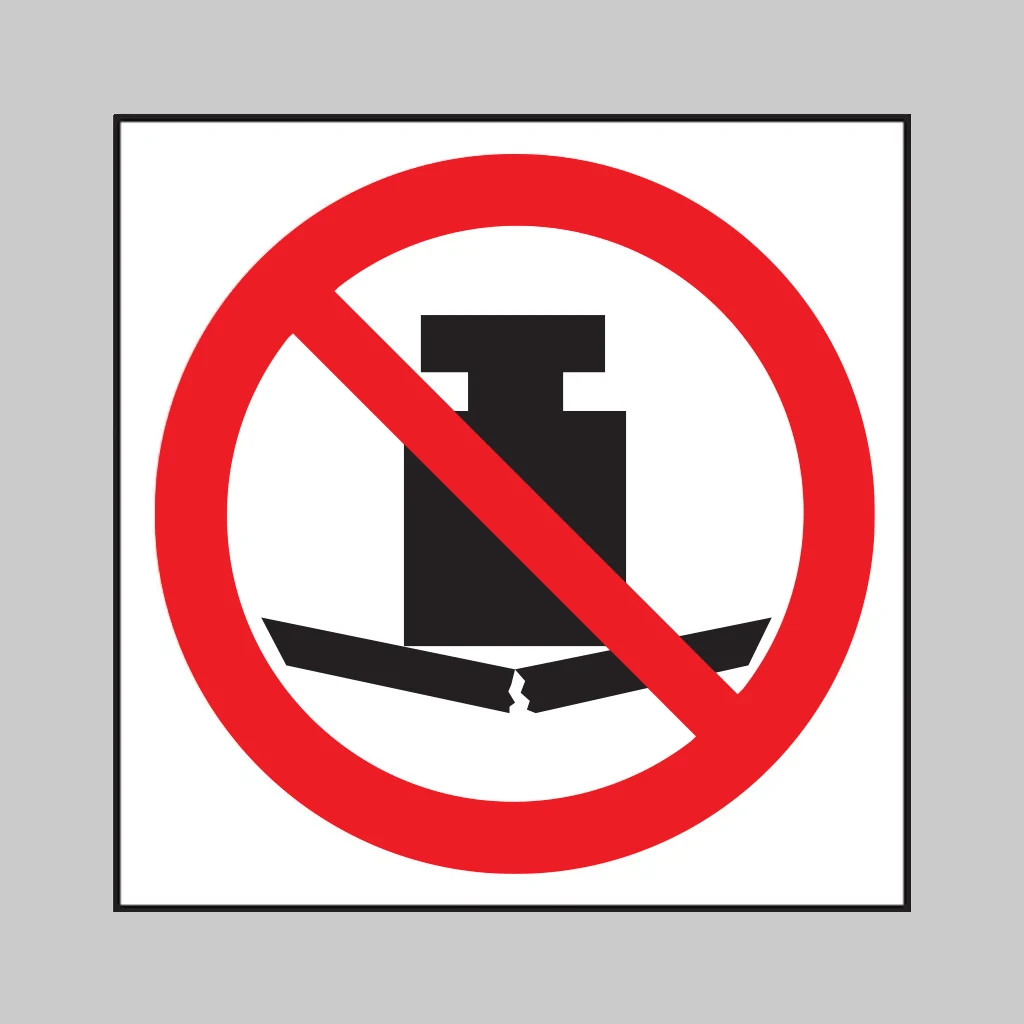 | P012 | No Heavy Load | The No Heavy Load symbol shows that heavy objects, machinery, vehicles or stored materials must not be placed on or moved across the marked surface or structure. The area has a restricted load-bearing capacity, and excessive weight could cause bending, cracking, instability or structural collapse. Overloading may also create a risk of falling materials and serious injury. | It is commonly used on platforms, bridges, walkways, lifts, temporary floors, shelving systems, loading areas and other structures with limited strength. The restriction helps prevent loads from being placed where the supporting surface cannot carry them safely. It may also identify routes that are suitable for pedestrians or light equipment but not for heavy vehicles, machinery or concentrated loads. Where loading conditions vary, the site’s assessment should consider the total weight, its distribution and any movement or impact forces. Position the sign before the affected area so loads can be reduced, divided or redirected before reaching it. Where a specific maximum weight applies, display the permitted limit and any relevant loading conditions alongside the prohibition symbol. |
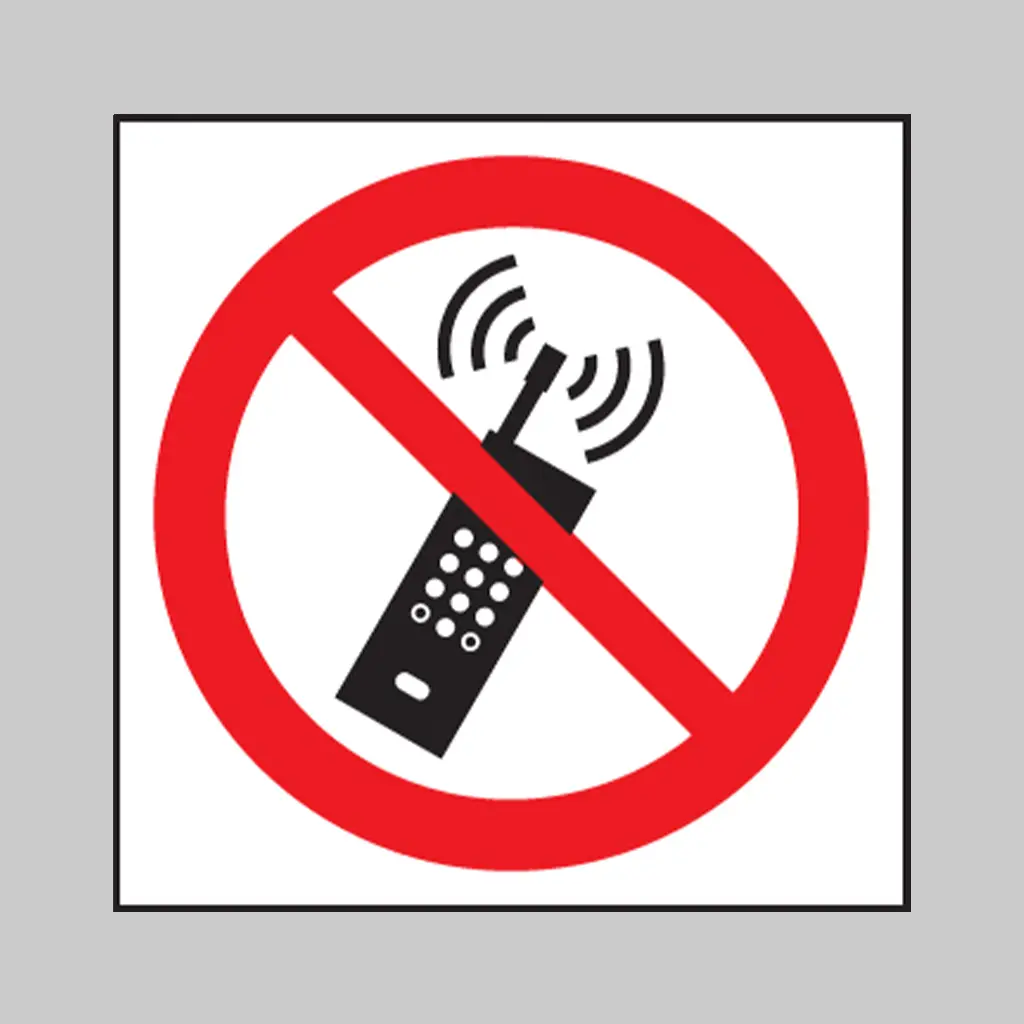 | P013 | No Activated Mobile Phones | The No Activated Mobile Phones symbol shows that mobile phones must be switched off within the designated area. Placing a device on silent may not be sufficient because it can continue transmitting or receiving signals in the background. These transmissions could interfere with sensitive equipment, compromise security or privacy, distract personnel or disrupt controlled operations. | It is commonly used in hospitals, laboratories, aircraft, examination rooms, secure facilities, fuel-handling areas and premises containing specialist electronic or medical equipment. The sign helps ensure that devices are fully deactivated before people enter a controlled environment. It may also be appropriate where wireless communication, photography, audio recording or data transmission is restricted. Similar controls can apply in confidential meetings, research areas, production facilities and locations where mobile-phone use could distract workers from safety-critical tasks. Display the sign before the entrance so users have enough time to switch off their devices completely. Where exemptions or alternative settings are permitted, supplementary instructions should explain whether flight mode, approved equipment or emergency use is acceptable. |
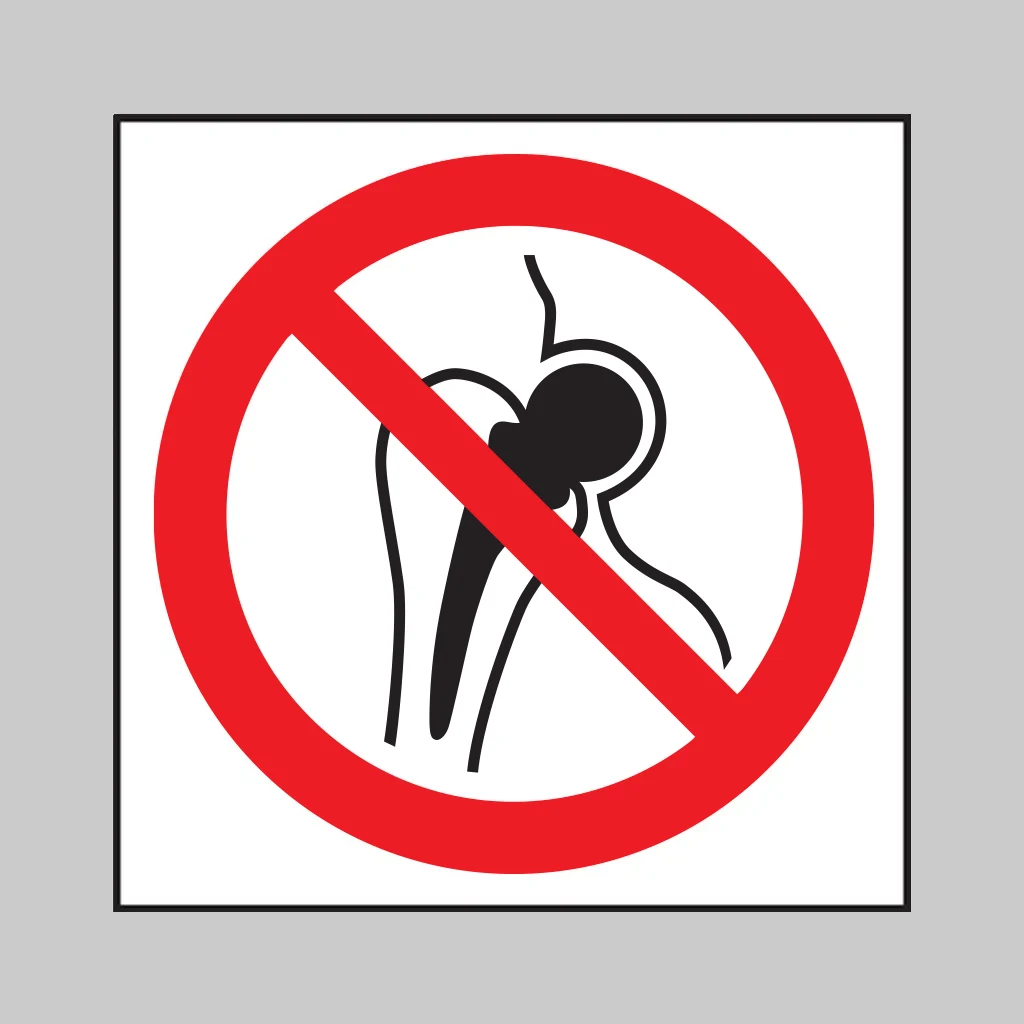 | P014 | No Access for People with Metallic Implants | The No Access for People with Metallic Implants symbol shows that anyone with an implant or implanted medical device that could be affected by strong magnetic or electromagnetic fields must not enter the marked area. Depending on its design and materials, an implant may move, heat up or malfunction. Potentially affected items can include certain surgical clips, artificial joints, metal plates, implanted pumps and other medical devices containing metallic components. | It is commonly used before MRI suites, magnetic testing rooms, research facilities, industrial electromagnet installations and other controlled environments containing powerful magnetic equipment. The restriction protects people whose implants may not be compatible with the fields generated in these areas. It may also be required near specialist machinery, induction equipment and testing systems that produce significant electromagnetic fields. Because implant designs and materials vary, suitability should be confirmed through appropriate medical, technical or manufacturer guidance rather than assumed. Position the sign outside the hazardous zone so affected individuals can stop safely and notify authorised personnel. Entry should proceed only after the implant has been identified and competent guidance has confirmed that the person can enter without unacceptable risk. |
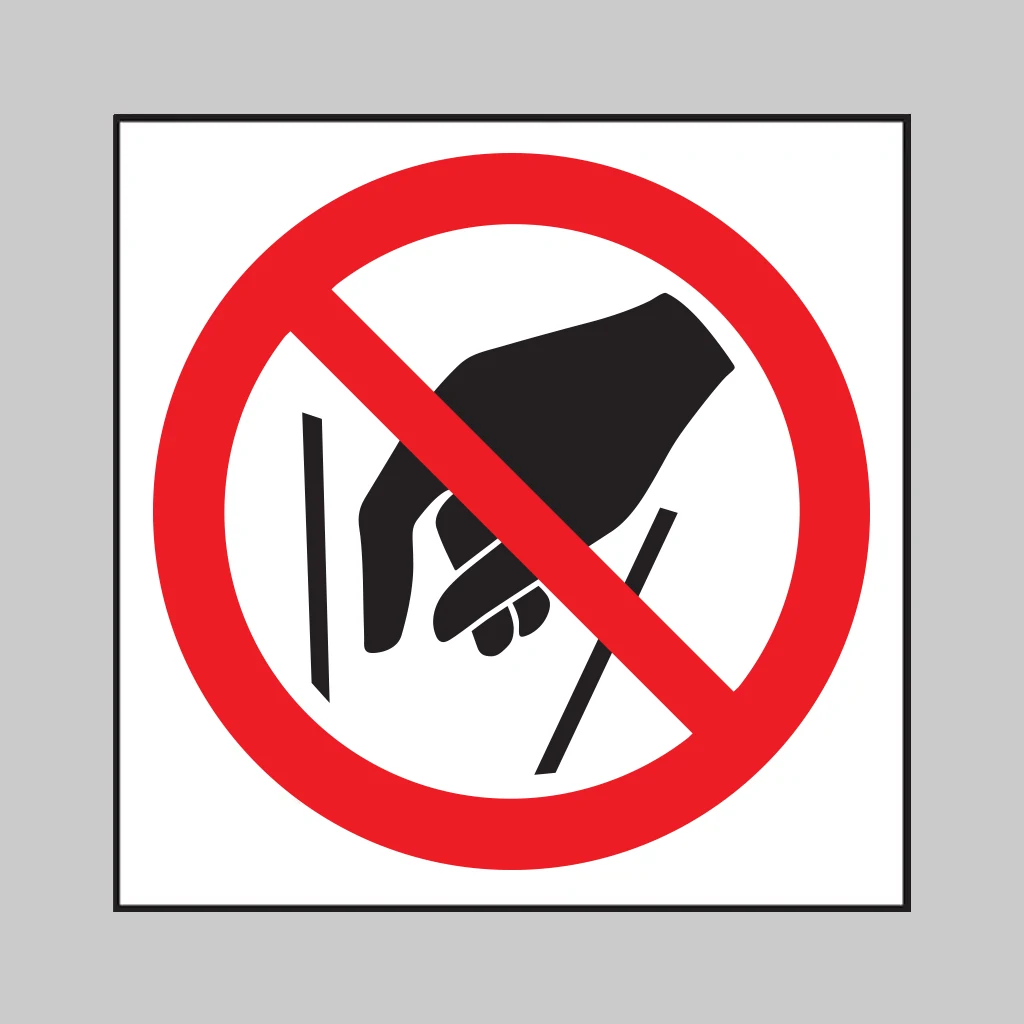 | P015 | No Reaching In | The No Reaching In symbol shows that hands, arms and other parts of the body must be kept outside the marked opening, enclosure or operating space. Internal components may move unexpectedly, continue operating after shutdown or retain stored energy. Reaching inside could expose someone to cutting, crushing, trapping, shearing, electrical or burn hazards. | It is commonly used on conveyors, presses, packaging machines, production equipment, guarded machinery, access panels and material-feed openings. The sign warns operators not to place any part of the body inside areas containing moving or hazardous components. It is particularly important where users may be tempted to retrieve dropped items, clear blockages or reposition materials by hand. Appropriate tools, isolation procedures or authorised maintenance methods should be provided for tasks that cannot be completed safely from outside the enclosure. Fix the symbol close to the opening and within the operator’s normal line of sight. Before authorised cleaning, inspection or maintenance begins, the equipment should be stopped, isolated and secured against unexpected movement or the release of stored energy. |
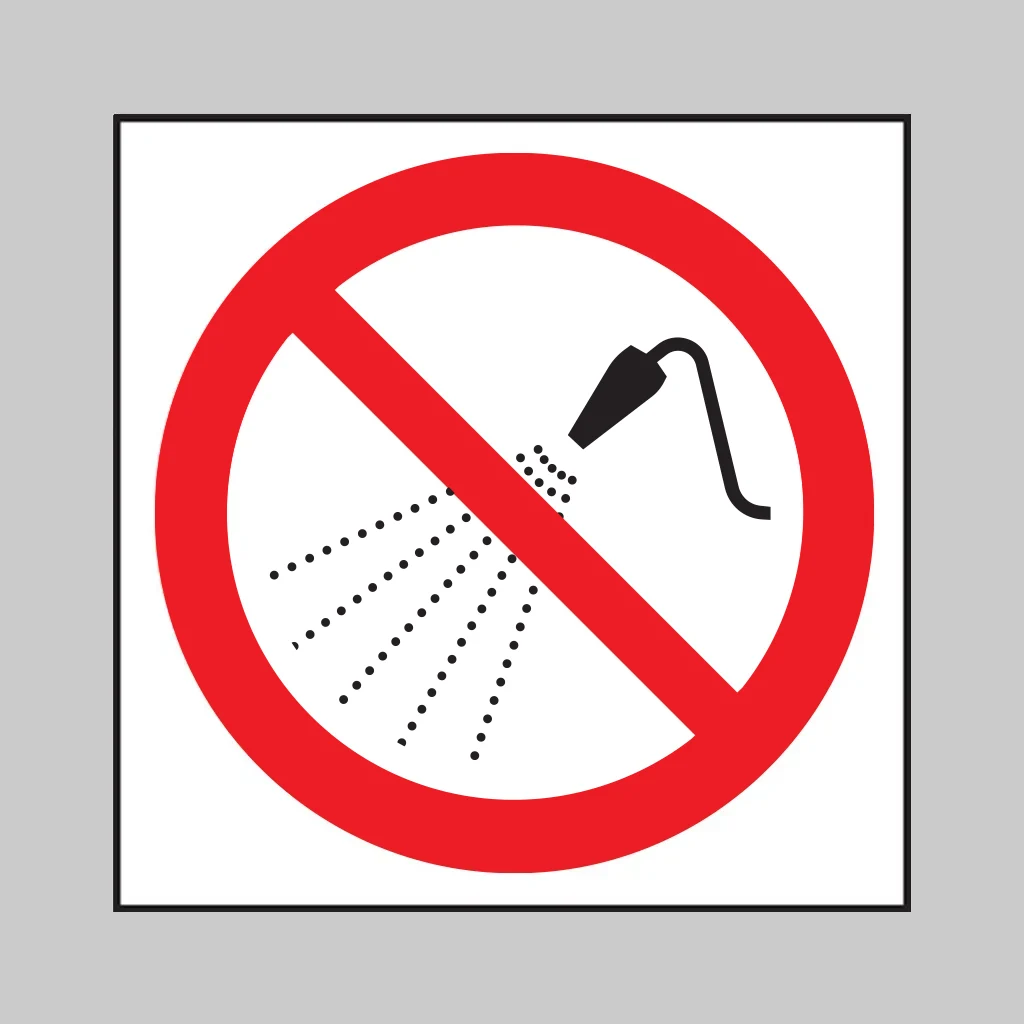 | P016 | Do Not Spray with Water | The Do Not Spray with Water symbol shows that the marked equipment, material or area must not be exposed to water from a hose, pressure washer, sprinkler or similar source. Spraying may create an electrical hazard, introduce contamination, cause corrosion, damage sensitive components or trigger a dangerous chemical reaction. | It is commonly used around electrical installations, sensitive machinery, laboratories, chemical stores, production lines and equipment that is not designed for wet cleaning. The symbol helps prevent inappropriate washing or spraying during routine cleaning and maintenance. It may also be displayed near control panels, electronic instruments, battery systems, dry-process equipment and materials that react adversely with moisture. Alternative cleaning methods should be specified where surfaces still require regular inspection or decontamination. Place the sign directly on or beside the affected equipment and at any point where hoses or pressure-washing systems are normally used. Where necessary, provide written instructions identifying approved cleaning products, methods and isolation procedures. |
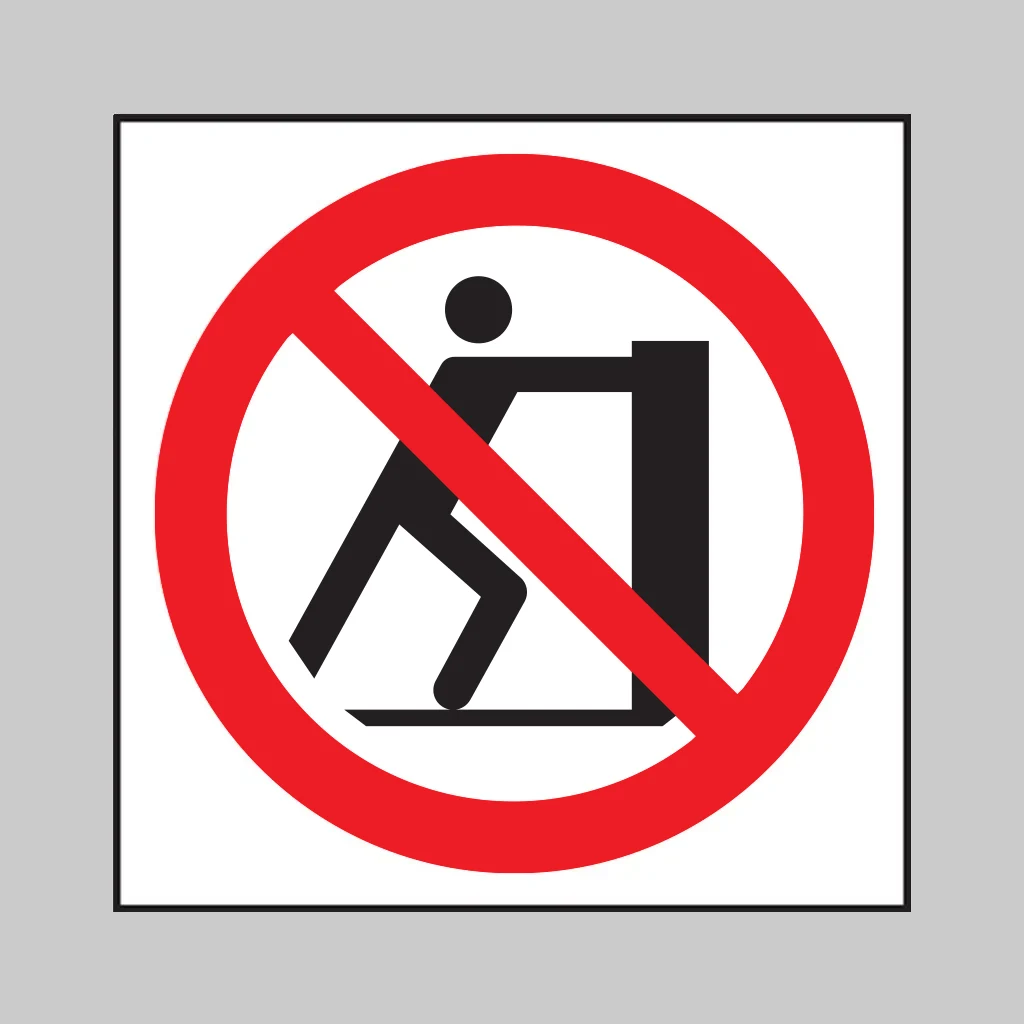 | P017 | No Pushing | The No Pushing symbol shows that people must not push other individuals, objects, doors, barriers or equipment in the designated location. Uncontrolled force could result in falls, collisions, crushing injuries, property damage or movement into a hazardous area. | It is commonly used in queues, entrances, stairways, narrow passages, platforms, transport facilities and event venues where crowding or hurried movement could cause an accident. The sign encourages people to move calmly and maintain a safe distance from others. It may also be displayed in workplaces near machinery, exposed edges, movable barriers or equipment that could become unstable if pushed. Where the instruction relates to a particular object, the sign should be positioned so the prohibited action is immediately clear. Install the symbol before the point where congestion or unsafe movement is likely to occur. In busy or high-risk areas, support it with barriers, queue-management systems, supervision or additional instructions controlling the direction and flow of people. |
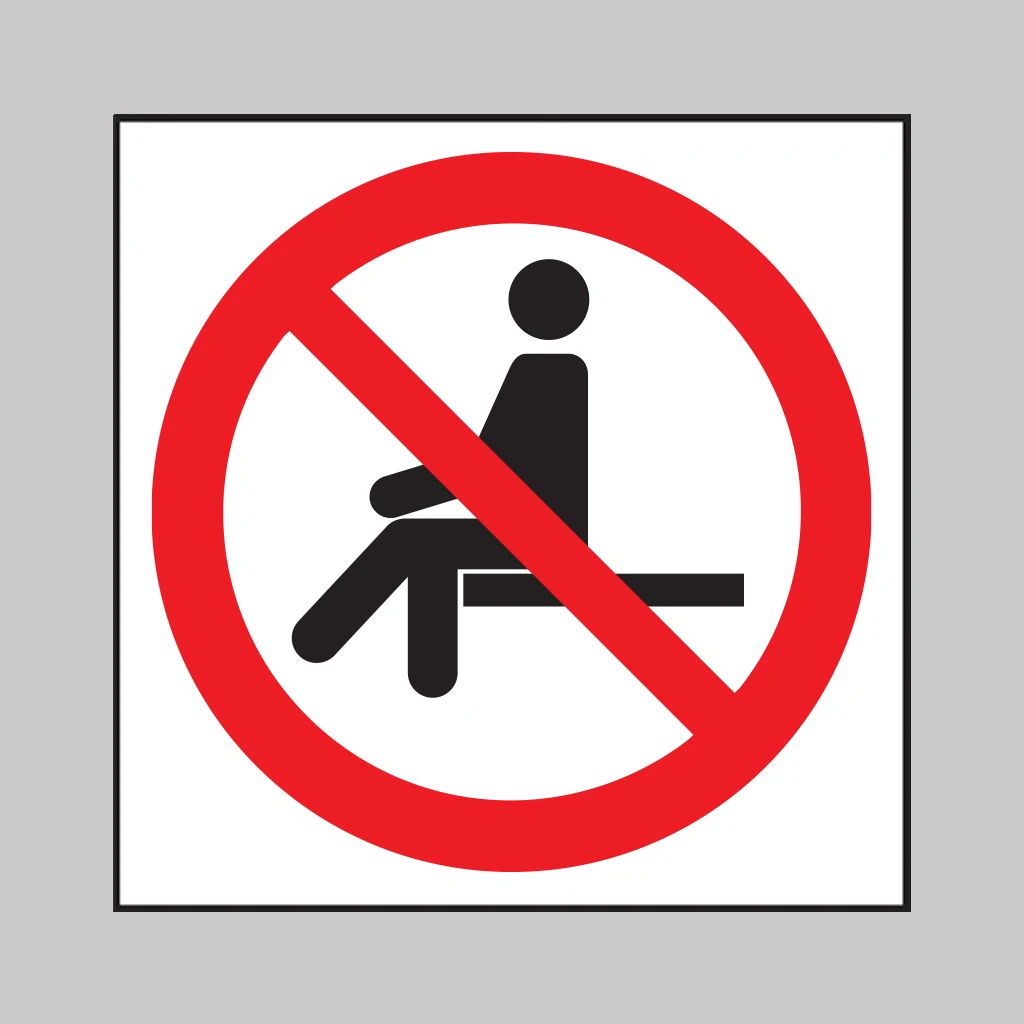 | P018 | No Sitting | The No Sitting symbol shows that the marked surface, structure or location must not be used as a seat. The item may be unstable, unsuitable for supporting a person, connected to operating equipment or required to remain unobstructed. | It is commonly used on machinery, conveyors, barriers, handrails, storage units, ledges, worktops and equipment housings. These surfaces may appear suitable for sitting even though they are not designed to support a person safely. It may also be displayed in operational zones, emergency access areas, platforms and busy pedestrian routes where sitting could obstruct movement or interfere with work. Keeping the area clear can also preserve access to controls, equipment and emergency facilities. Place the sign directly beside or on the surface concerned so there is no uncertainty about where the restriction applies. Where sitting could expose someone to moving equipment, falls or other serious hazards, use guarding or restricted access as additional protection. |
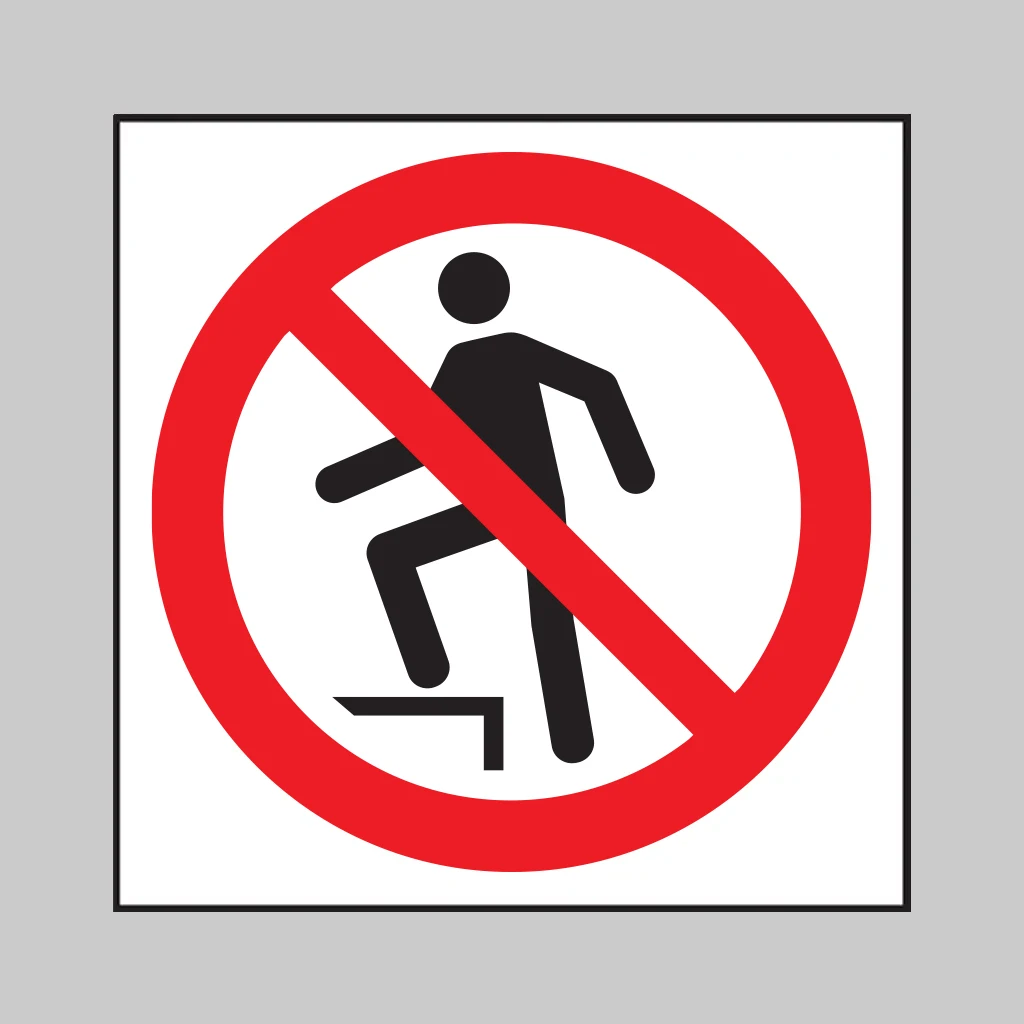 | P019 | No Stepping on Surface | The No Stepping on Surface symbol shows that people must not stand, walk or place their body weight on the marked surface. Although it may appear accessible, the surface may be fragile, unstable, movable or not designed to support a person safely. | It is commonly used on machine covers, skylights, fragile roofs, equipment housings, storage containers, inspection panels and other surfaces that could collapse, break or move when stepped on. The sign warns people not to treat the marked area as a walkway or working platform. It may also identify surfaces beneath which hazardous components, electrical equipment or moving machinery are located. Where access is required for inspection or maintenance, a suitable platform, crawling board, walkway or other safe means of support should be provided. Place the sign near the most likely access point and where it can be seen before anyone steps onto the surface. Where there is a significant risk of falling or contacting hazardous components, support the warning with barriers, guardrails or clearly designated walkways. |
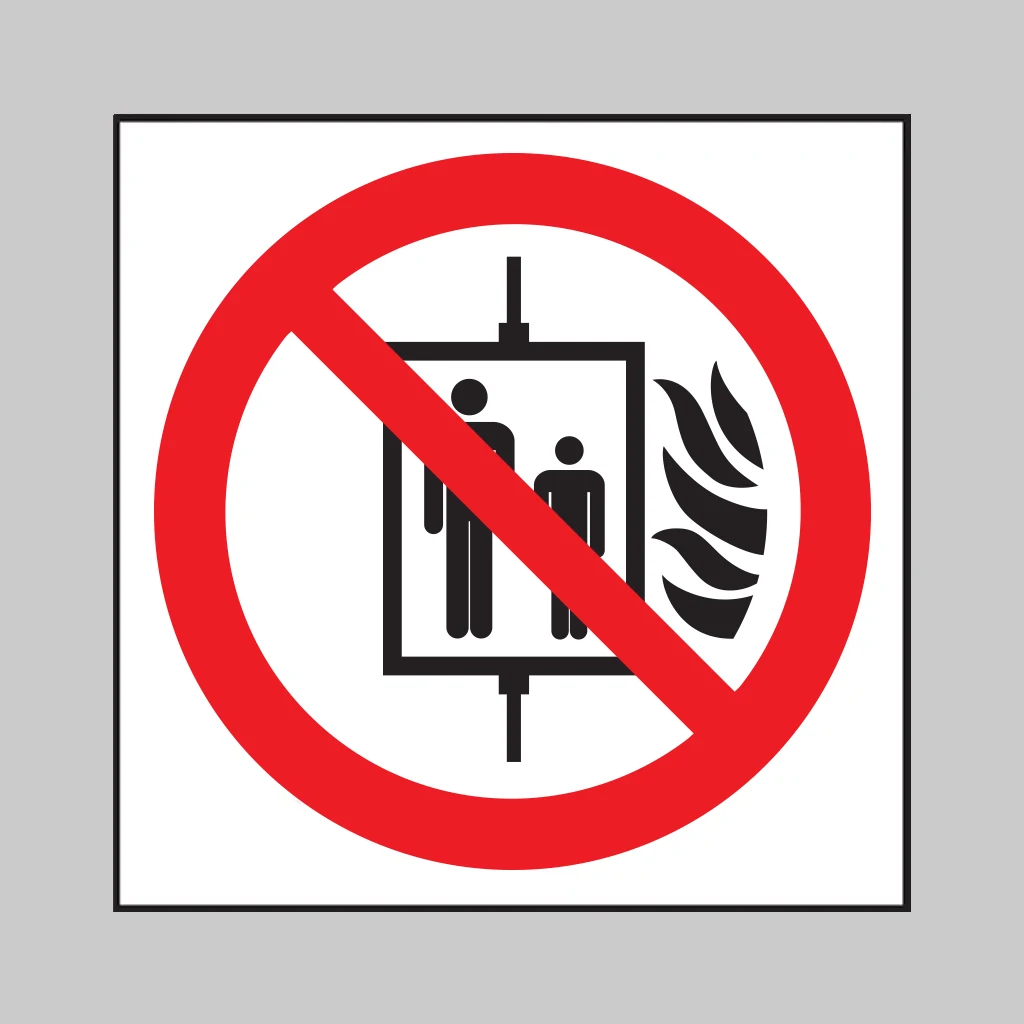 | P020 | Do Not Use Lift in the Event of Fire | The Do Not Use Lift in the Event of Fire symbol shows that occupants must not use the lift when a fire occurs or the fire alarm is activated. Unless specifically directed otherwise under an approved evacuation plan, people should follow the designated escape route and use the stairs. | It is commonly used beside lift call buttons, on lift doors and in lift lobbies throughout offices, residential buildings, hotels, hospitals, shopping centres and other multi-storey premises. The sign reminds occupants to choose the approved evacuation route during a fire emergency. A fire may interrupt the power supply, fill the lift shaft with smoke or cause the doors to open onto a dangerous floor. Passengers could become trapped, delayed or exposed to heat and smoke while attempting to leave the building. Display the symbol prominently at every level where the lift can be accessed and ensure it remains visible during an emergency. It should be supported by clear escape-route signs, maintained stairway access and evacuation procedures that address people who may require assistance. |
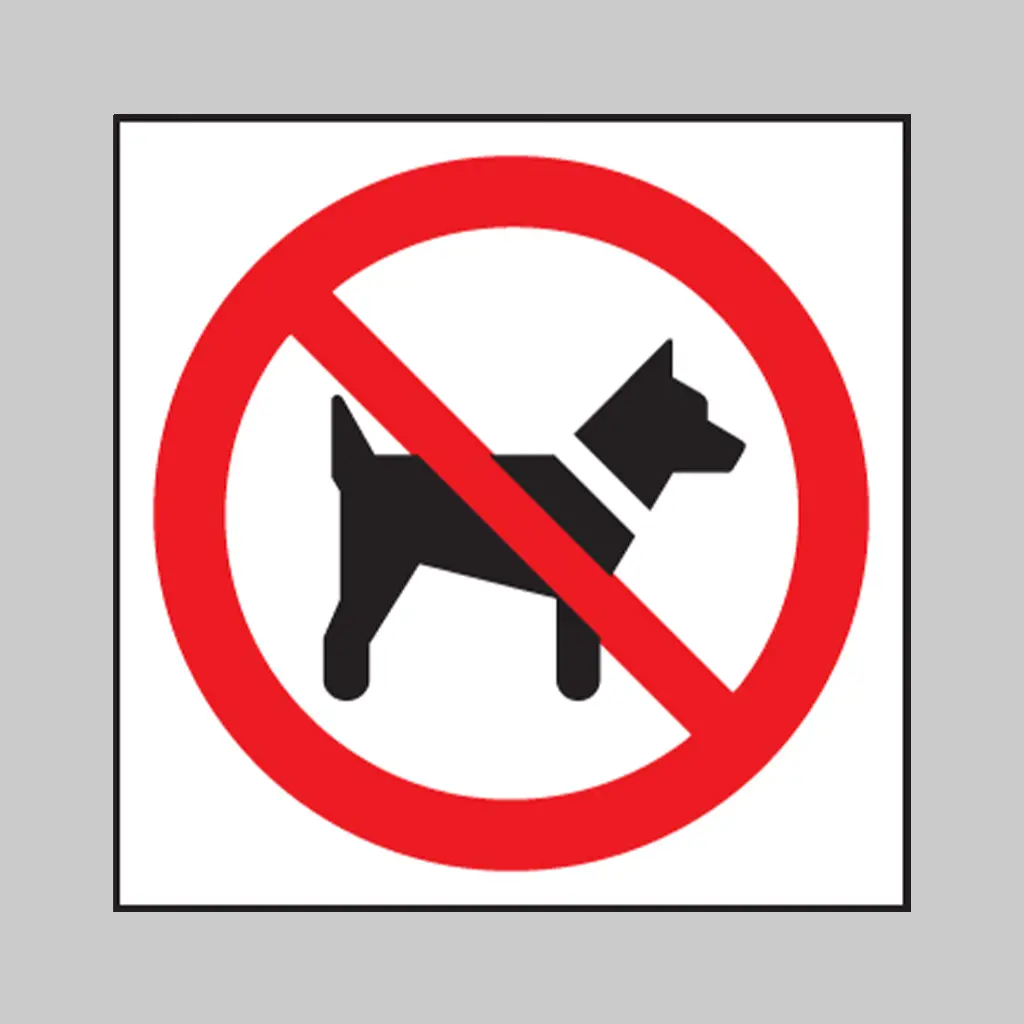 |
P021 | No Dogs | The No Dogs symbol shows that dogs must not enter or remain in the identified area. The restriction may apply to all dogs, although recognised assistance dogs may be exempt where legislation or site policy permits. |
It is commonly used in food-preparation areas, playgrounds, sports grounds, nature reserves, farms, livestock enclosures, beaches and premises with strict hygiene controls. The restriction can help prevent contamination, disturbance, damage or unwanted contact between dogs, people and other animals. The symbol may also be appropriate in conservation areas where dogs could disturb nesting birds, wildlife or protected habitats. At farms and animal enclosures, it can reduce the risk of livestock being frightened, chased or exposed to disease. Display the sign at gates, entrances and other normal access points so owners are aware of the rule before entering. Any exemptions, seasonal restrictions or requirements to keep dogs on leads should be stated separately in clear written instructions. |
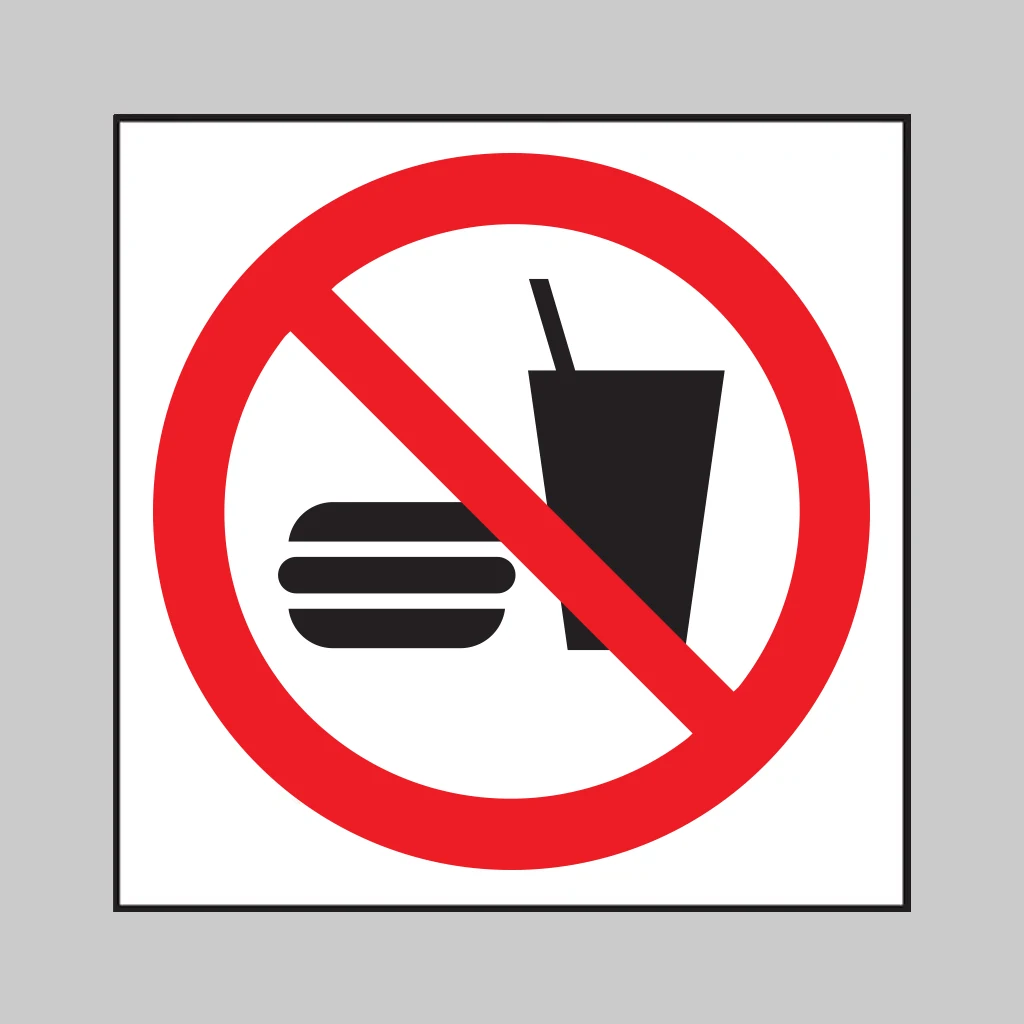 |
P022 | No Eating or Drinking | The No Eating or Drinking symbol shows that food and beverages must not be consumed in the designated area. Depending on local rules, bringing uncovered food, drinks or drinking containers into the space may also be prohibited. |
It is commonly used in laboratories, workshops, production areas, cleanrooms, chemical stores, healthcare environments and locations where contamination must be controlled. The restriction protects food and drink from contact with hazardous substances while also protecting controlled processes from contamination. The symbol may also be displayed near machinery, electrical equipment or sensitive materials where spilled liquids or discarded food could create a safety problem. In some workplaces, the rule helps prevent accidental ingestion of chemicals transferred from contaminated hands, gloves or surfaces. Display the sign at entrances and repeat it within larger work areas where necessary. Clearly identified break rooms or welfare facilities should be provided so employees and visitors know where eating and drinking can take place safely. |
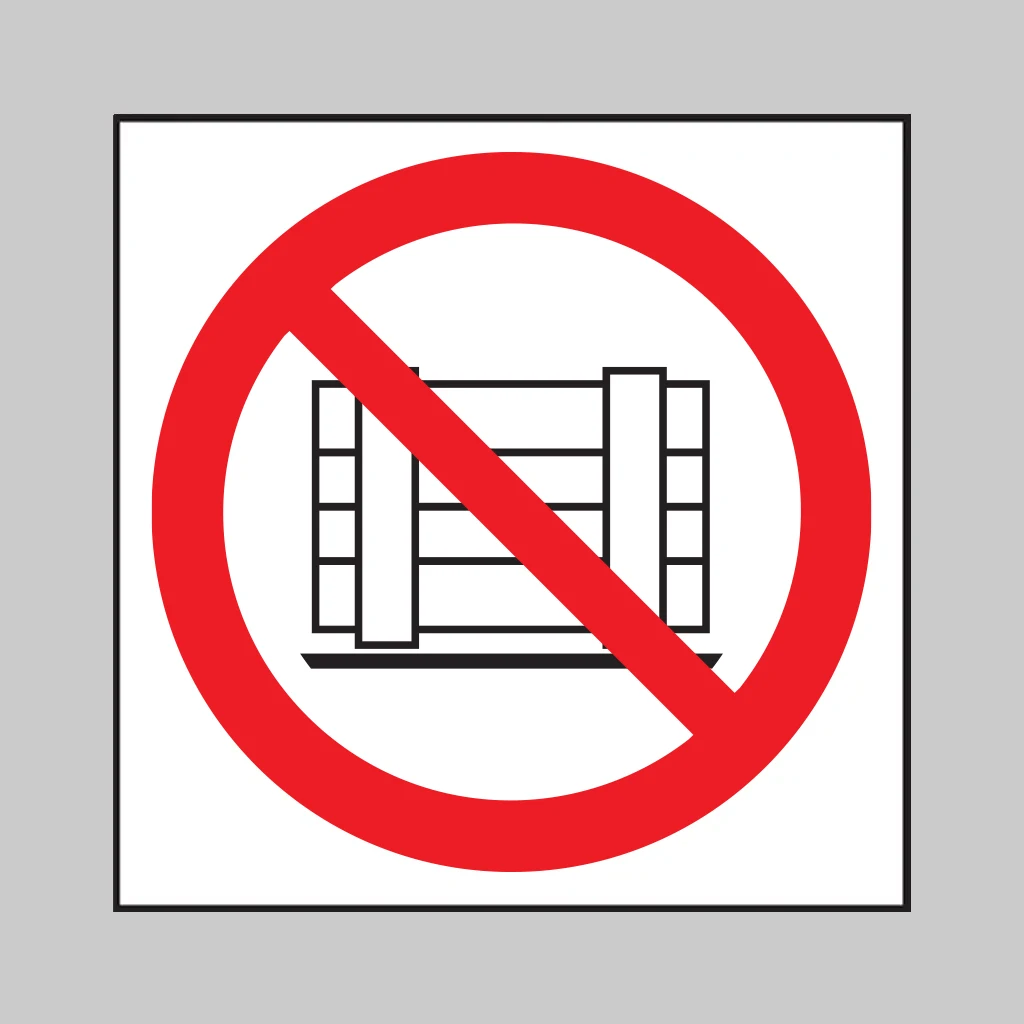 |
P023 | Do Not Obstruct | The Do Not Obstruct symbol shows that the marked route, doorway, access point or item of equipment must remain clear. Materials, vehicles, furniture, waste and other objects must not be left where they could restrict access, delay an emergency response or interfere with normal operation. |
It is commonly used near emergency exits, fire doors, escape routes, extinguishers, control panels, ventilation openings, loading areas and machinery access points. Keeping these locations clear ensures that essential equipment and routes remain immediately available. The symbol may also identify areas needed for maintenance, inspection, deliveries, vehicle manoeuvring or access by emergency services. Even temporary storage can create a serious obstruction if it prevents doors from opening, blocks visibility or narrows a designated route. Keep the sign visible when the surrounding area is busy or used for storage. Floor markings, barriers or hatched exclusion zones may be added to define the space that must remain unobstructed and make the restriction easier to follow. |
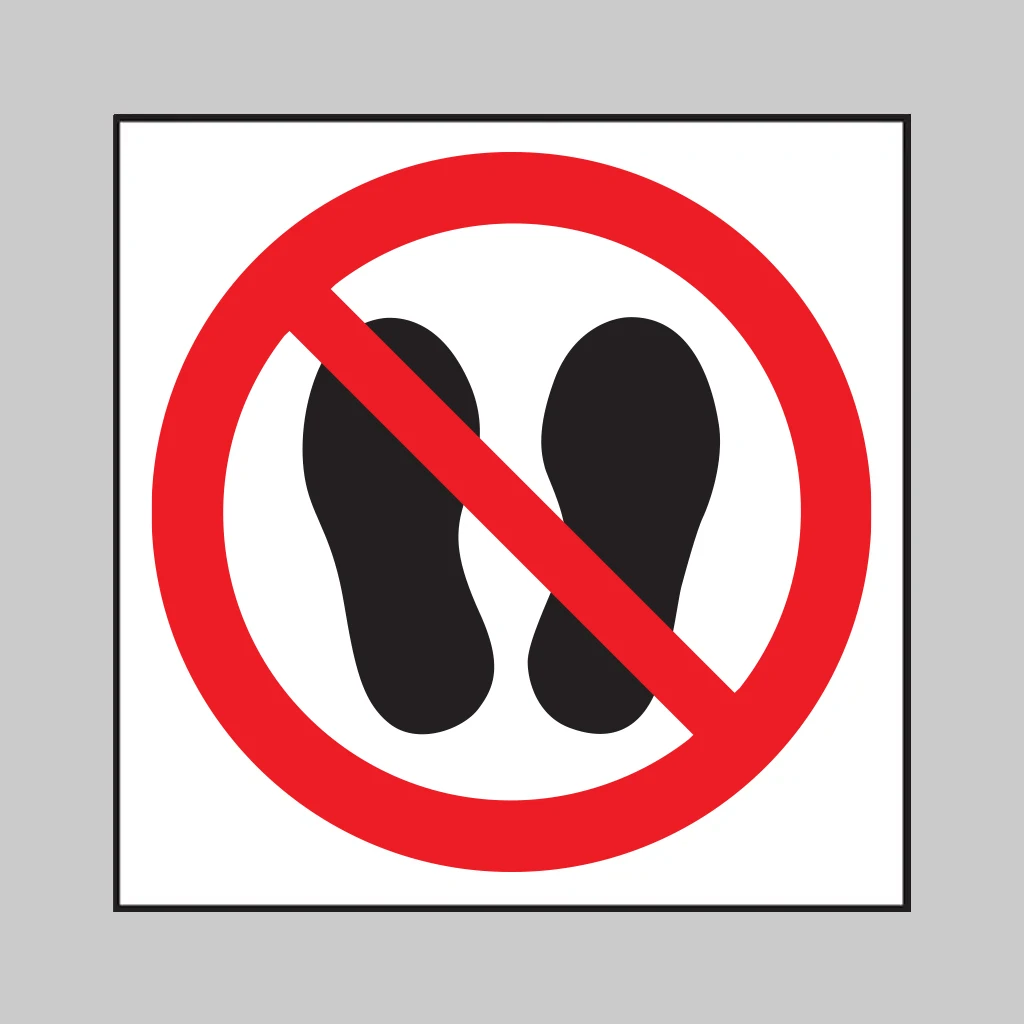 |
P024 | Do Not Walk or Stand Here | The Do Not Walk or Stand Here symbol shows that pedestrians must not enter, cross or occupy the marked area. Remaining within the space, even briefly, could place someone in the path of machinery, vehicles, suspended loads or another operational hazard. |
It is commonly used around loading bays, crane operating zones, production lines, vehicle routes, automated equipment, railway areas and locations exposed to falling objects. The restriction helps separate pedestrians from hazards that may move, operate or appear without warning. The symbol may also identify machinery sweep zones, door movement areas, lifting operations or spaces where operators require an unobstructed view. Where the unsafe area changes during different tasks, temporary signs and barriers may be needed to reflect the current conditions. Position the sign at every normal approach to the restricted area and before pedestrians enter the danger zone. Reinforce it with barriers, guardrails, floor markings or controlled access where a sign alone would not provide sufficient protection. |
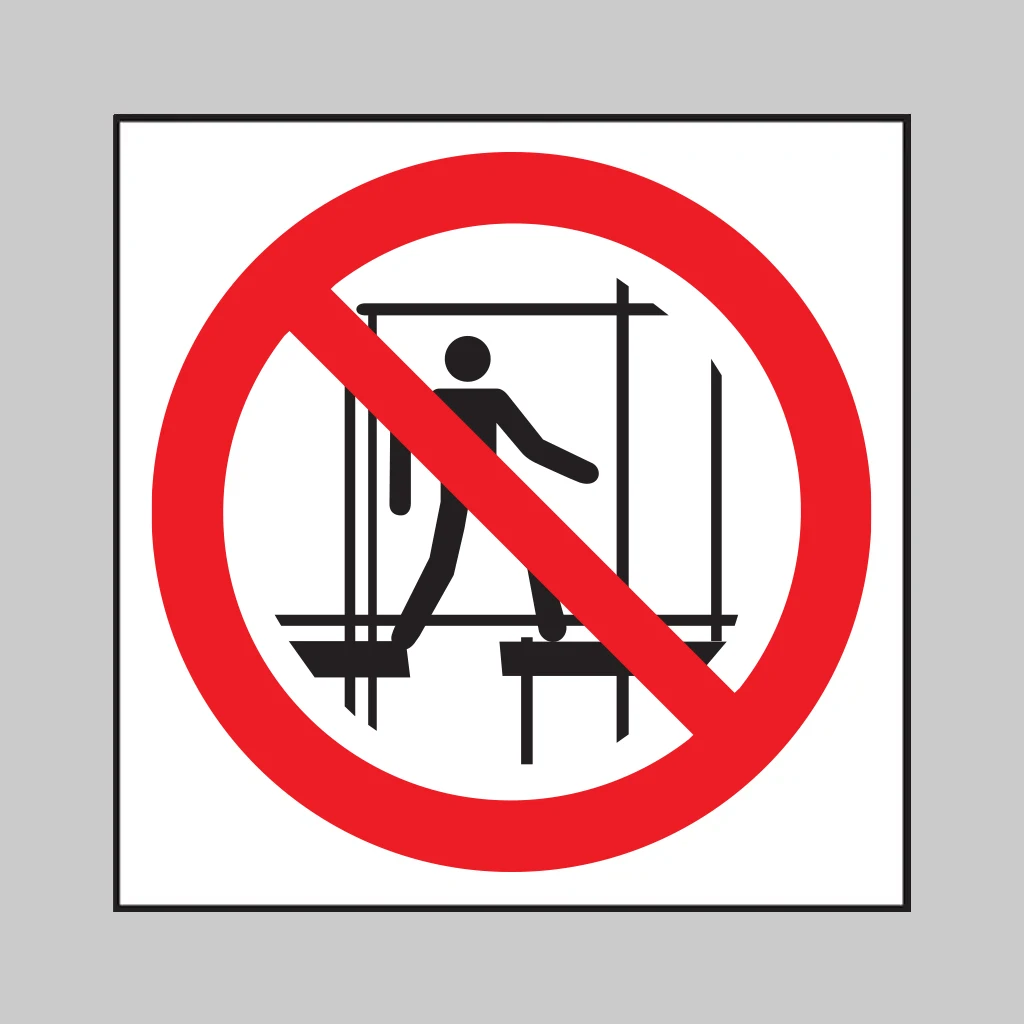 |
P025 | Do Not Use Incomplete Scaffolding | The Do Not Use Incomplete Scaffolding symbol shows that the scaffold is not ready for access or work. It may be undergoing assembly, alteration, inspection or repair and must not be climbed, occupied or loaded until it has been completed and formally released for use. |
It is commonly used on scaffolding at construction, maintenance and industrial sites while the structure is incomplete or awaiting inspection. Missing platforms, guardrails, toe boards, ties or access components can expose users to falls, instability and dropped materials. The symbol should be attached to access ladders, stair towers, gates and other entry points so workers cannot enter without seeing the restriction. Additional barriers or locked access may be needed where unauthorised use is likely. Keep the prohibition in place until a competent person has inspected and approved the scaffold. Once released for use, remove or replace the warning with the appropriate inspection or status information so workers are not given conflicting instructions. |
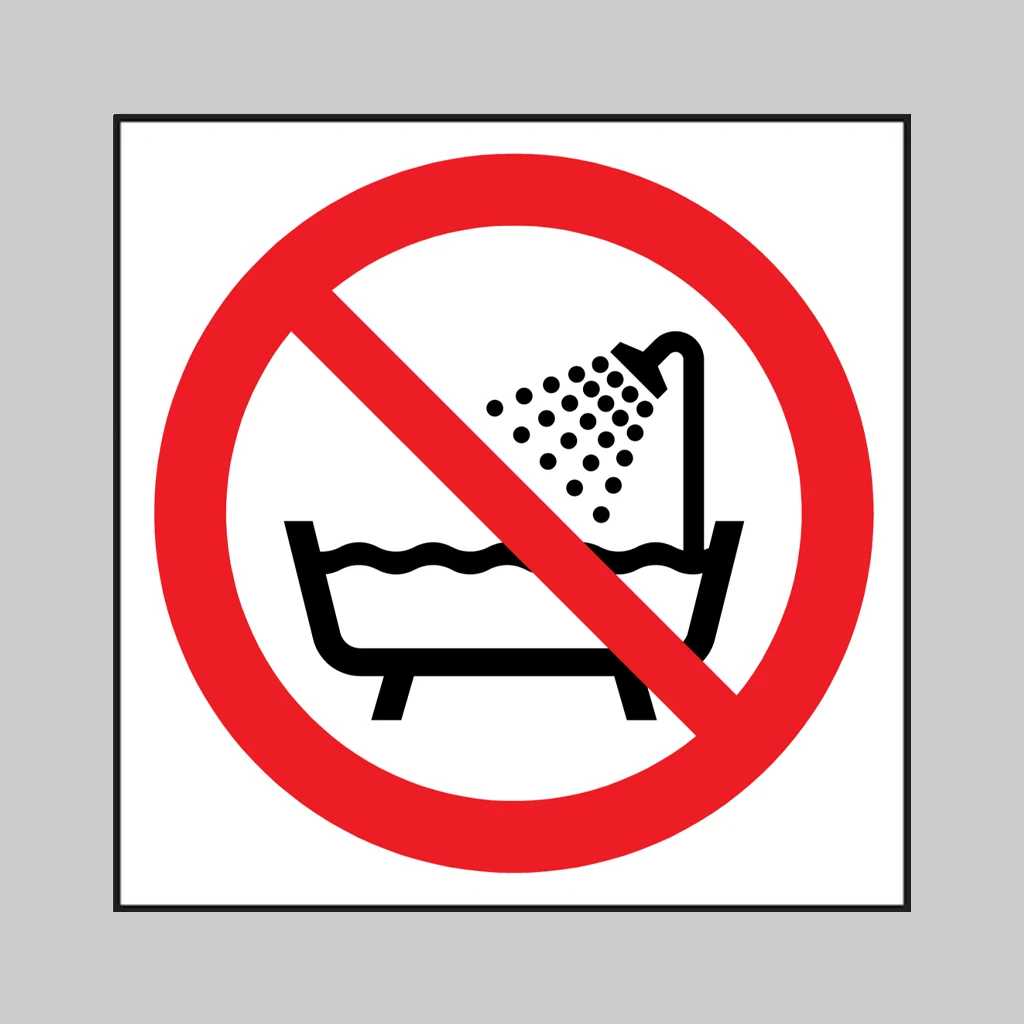 |
P026 | Do Not Use This Device in a Bathtub or Shower | The Do Not Use This Device in a Bathtub or Shower symbol shows that the electrical device must not be operated in a bathtub, shower or any location where it could fall into or come into contact with water. Moisture may allow electricity to pass through the user, resulting in severe electric shock, burns or electrocution. |
It is commonly used on hairdryers, electric shavers, styling appliances, portable heaters and other mains-powered products that may be used near bathrooms or washing areas. The symbol reminds users that an appliance can remain dangerous even when only part of it is exposed to water. The warning may also appear on product packaging, plugs, instruction manuals and storage areas. Appliances should not be placed on the edge of a bath, shower tray, basin or another surface from which they could fall into water. Position the symbol where it can be seen before the appliance is connected or operated. Users should follow the manufacturer’s instructions and store the device at a safe distance from water when it is not in use. |
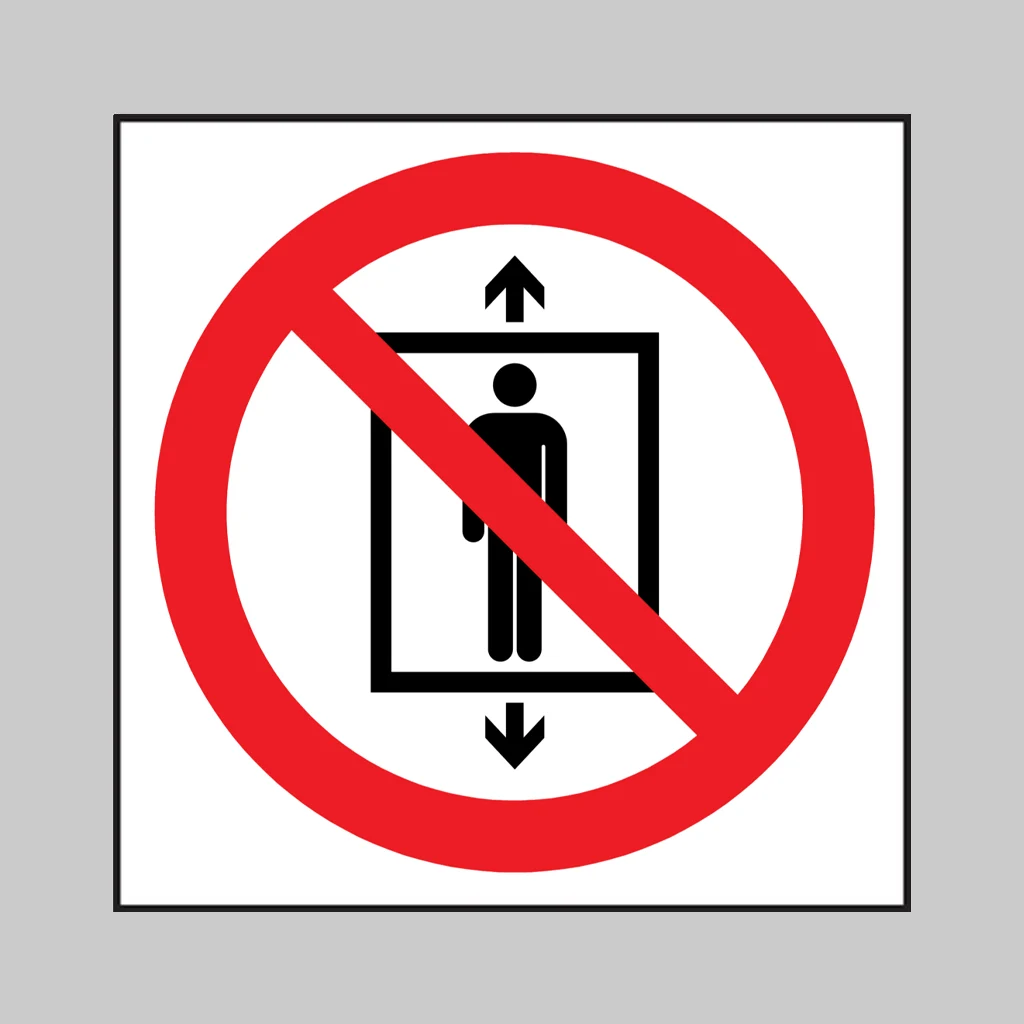 |
P027 | Do Not Use This Lift for People | The Do Not Use This Lift for People symbol shows that the goods lift, platform lift or hoist is not designed or approved to carry passengers. People must not enter, ride on or travel inside the equipment, including when accompanying materials or operating the controls. |
It is commonly used on freight-only lifts in warehouses, factories, construction sites, retail premises and storage facilities. These lifting systems may lack the doors, controls, protective devices or emergency arrangements required for passenger use. The symbol may also be displayed on material hoists, service lifts and lifting platforms intended solely for goods. Even short journeys can be dangerous if a person enters equipment that has not been designed or tested for human occupancy. Display the sign on doors, gates, control stations and loading points so it is visible before anyone enters or operates the lift. Where unauthorised access remains possible, use interlocked gates, barriers or controlled operating procedures as additional protection. |
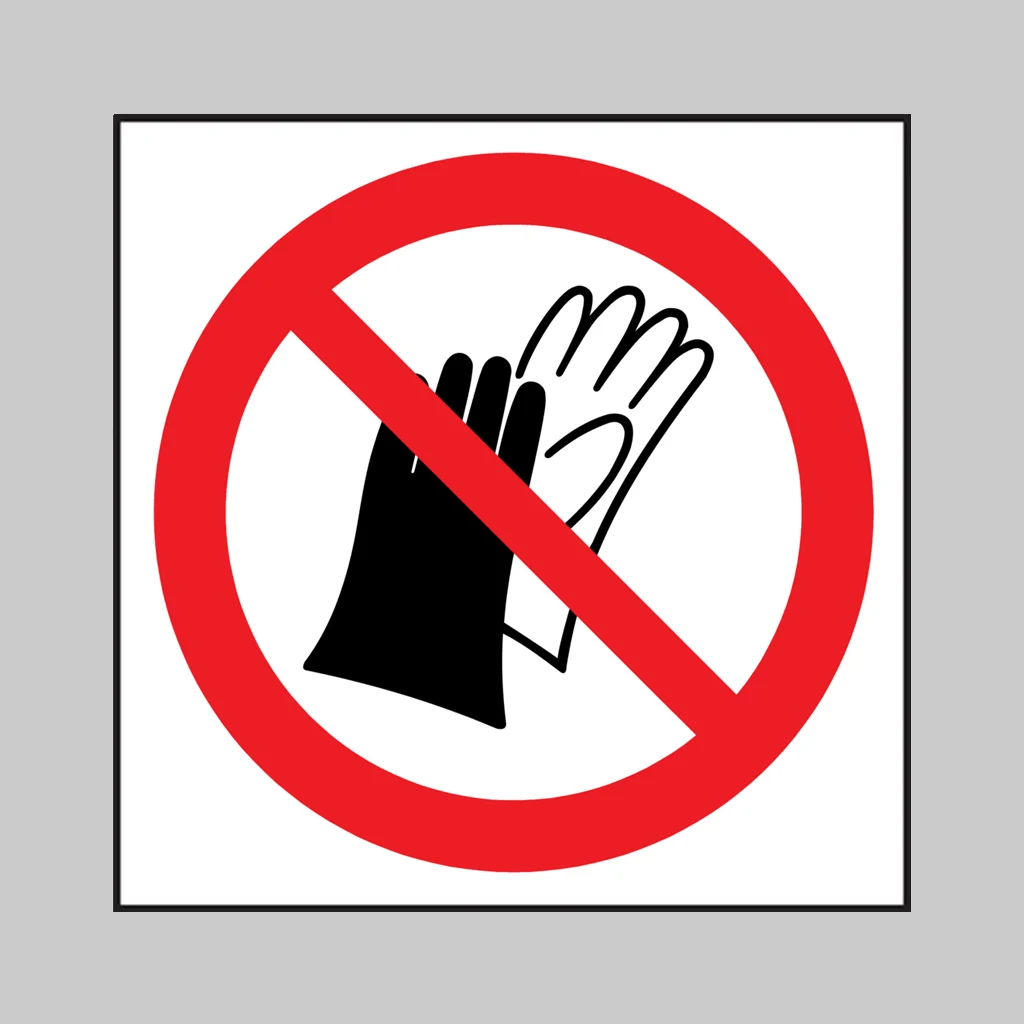 |
P028 | Do Not Wear Gloves | The Do Not Wear Gloves symbol shows that gloves must be removed before operating, adjusting or approaching the marked equipment. Loose or flexible glove material can become caught in rotating or moving components and pull the wearer’s hand or arm into the machinery. |
It is commonly used near lathes, drills, milling machines, rollers, rotating spindles and other equipment that presents an entanglement risk. The prohibition applies where gloves could increase rather than reduce the likelihood or severity of injury. The symbol may be displayed at machine controls, workstations, tool stores and training areas. It does not remove the need for other protective measures, and gloves may still be required for separate tasks such as handling sharp materials when the machine is safely isolated. Place the sign close to the operator’s normal working position so it is visible before the equipment is started. Safe working instructions should clearly explain when gloves must be removed and when other hand protection may be used. |
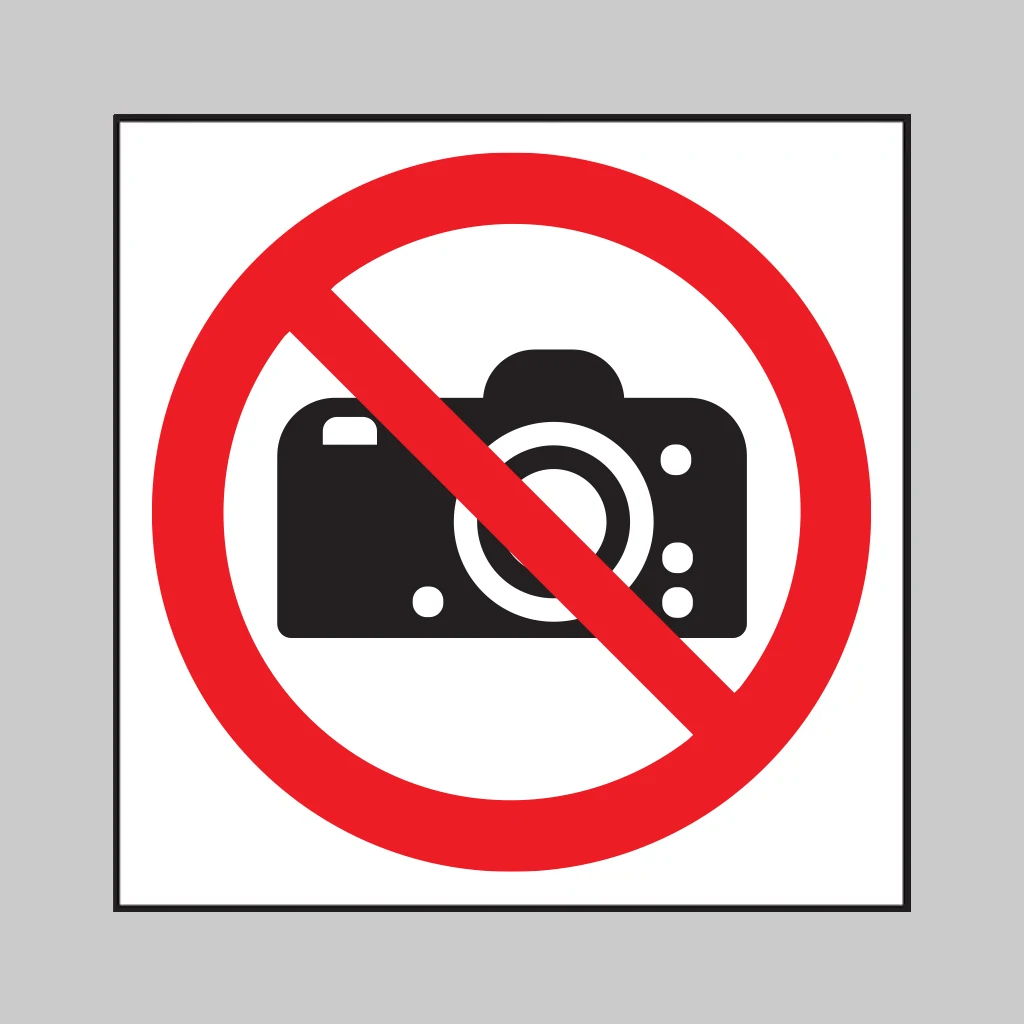 |
P029 | No Photography | The No Photography symbol shows that photographs must not be taken in the designated area. The restriction applies to conventional cameras as well as mobile phones, tablets, smart glasses and other devices capable of capturing images. |
It is commonly used in secure facilities, laboratories, manufacturing areas, museums, healthcare environments, private premises and locations containing confidential information or sensitive equipment. The restriction helps protect privacy, intellectual property, security arrangements and controlled processes. The symbol may also be appropriate at performances, exhibitions, examination centres and locations where photography could distract people or damage light-sensitive items. Site rules should make clear whether the restriction applies only to photographs or to all forms of recording. Display the sign at entrances and other prominent points before visitors reach the protected area. Where video, audio recording or the use of electronic devices is also prohibited, provide additional wording so the full extent of the restriction is clear. |
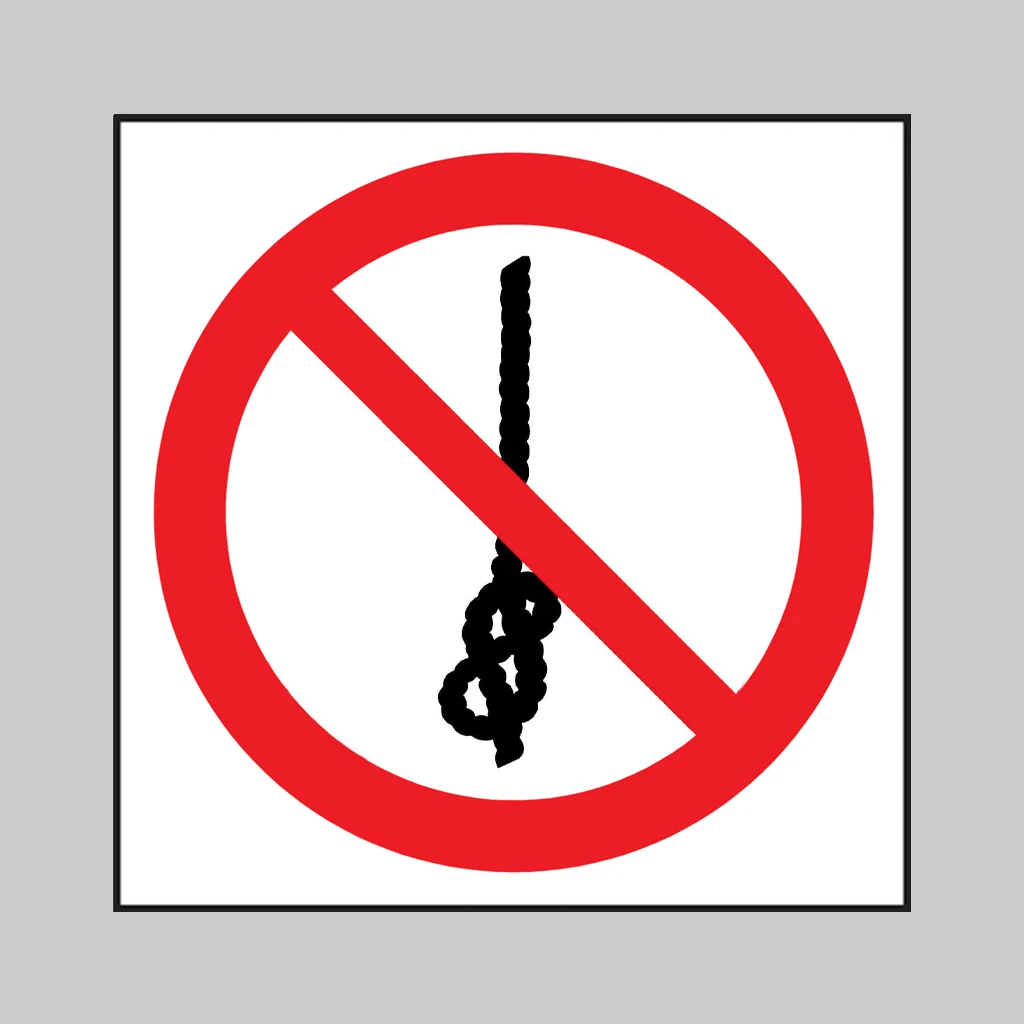 |
P030 | Do Not Tie Knots in Rope | The Do Not Tie Knots in Rope symbol shows that knots must not be formed in the identified rope, line or cord. A knot can alter the distribution of forces, reduce the rope’s effective strength, cause localised wear or prevent it from moving correctly through equipment. |
It is commonly used on rope systems employed for lifting, hoisting, winching, restraint, rescue and other applications where only approved terminations and connectors are permitted. The restriction helps preserve the rope’s rated performance and reliability. The symbol may also appear near capstans, pulleys, fall-protection systems and specialist access equipment. An unauthorised knot can jam within the mechanism, interfere with tensioning or make later inspection of the rope more difficult. Place the sign close to the rope storage point, operating station or equipment on which the rope is used. Suitable connectors, splices or termination methods should be provided, and damaged or knotted ropes should be removed from service and assessed by a competent person. |
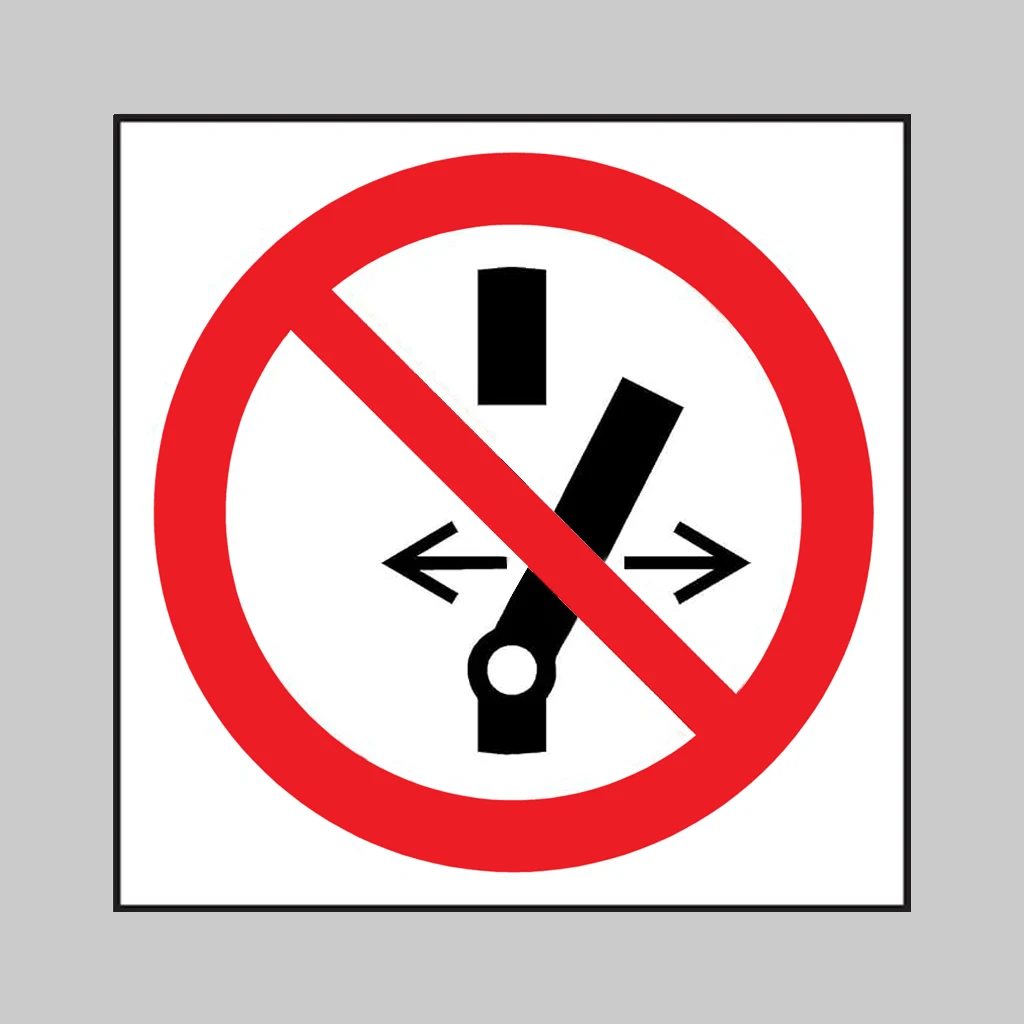 |
P031 | Do Not Alter the State of the Switch | The Do Not Alter the State of the Switch symbol shows that the marked switch must remain in its current position. It must not be turned on, turned off, reset or otherwise operated without proper authorisation, as doing so could energise equipment, interrupt a process or defeat an established safety condition. |
It is commonly used during maintenance, inspection, testing, calibration and fault-finding when changing the switch could start machinery or restore electrical power unexpectedly. The sign warns others that the current switch position is deliberate and must not be disturbed. The symbol may also be displayed on controls serving ventilation, alarms, pumps, safety systems or continuous production processes. Altering the setting could interrupt an essential service, damage equipment or invalidate the work being carried out. Attach the sign directly to or beside the relevant switch so there is no uncertainty about which control is affected. Where unexpected operation could cause injury, use an appropriate lockout or isolation system rather than relying on the sign alone. |
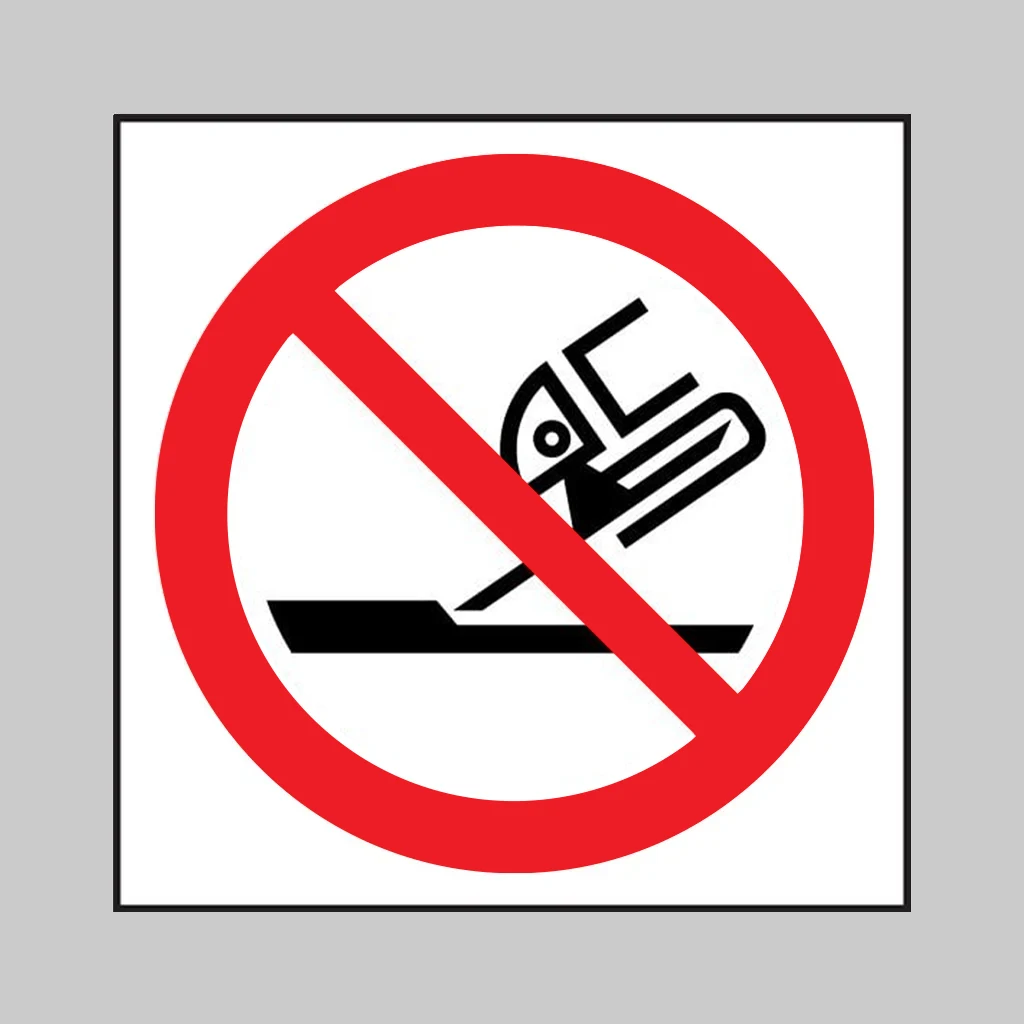 |
P032 | Do Not Use for Face Grinding | The Do Not Use for Face Grinding symbol shows that the abrasive wheel must not be used on its flat side. Grinding pressure must be applied only to the working surface specified by the manufacturer, which is normally the outer edge of the wheel. |
It is commonly used on grinding wheels and machines fitted with abrasive products that are not designed to withstand side loading. Applying force to the wheel’s face can create stresses for which the product has not been constructed. The symbol may appear on the wheel label, packaging, machine guard or operating station. Incorrect use can damage the abrasive, produce cracking or cause the wheel to break apart at high speed, creating a serious risk from flying fragments. Ensure the warning remains visible when the wheel is installed and provide the correct type of abrasive for any face-grinding operation. Operators should also inspect the wheel, use the required guards and follow the manufacturer’s operating limits. |
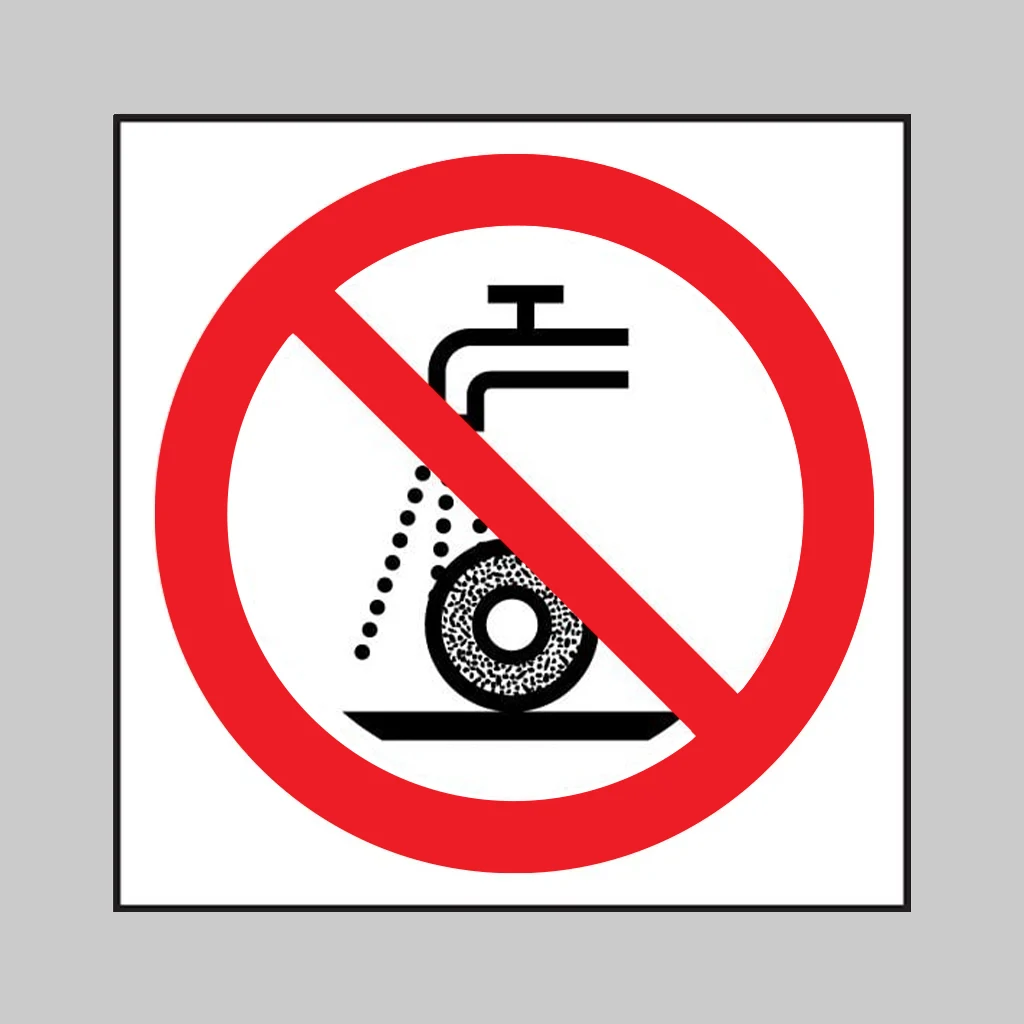 |
P033 | Do Not Use for Wet Grinding | The Do Not Use for Wet Grinding symbol shows that the abrasive product or grinding equipment is intended for dry operation only. Water, coolant and other grinding fluids must not be applied while it is in use because moisture could weaken the abrasive, affect its balance or damage the equipment. |
It is commonly used on grinding wheels, machine guards, product packaging and operating stations where the abrasive has not been designed for wet use. The restriction helps ensure that the wheel is operated under the conditions for which it was manufactured and tested. The symbol may also be required where liquids could enter electrical components, create corrosion or combine with grinding residue to form a separate hazard. Operators should use dust extraction or another approved control method where dry grinding produces airborne particles. Place the warning where it remains visible before the machine is started and before coolant can be introduced. Only abrasive products specifically approved for wet grinding should be used where a liquid grinding process is required. |
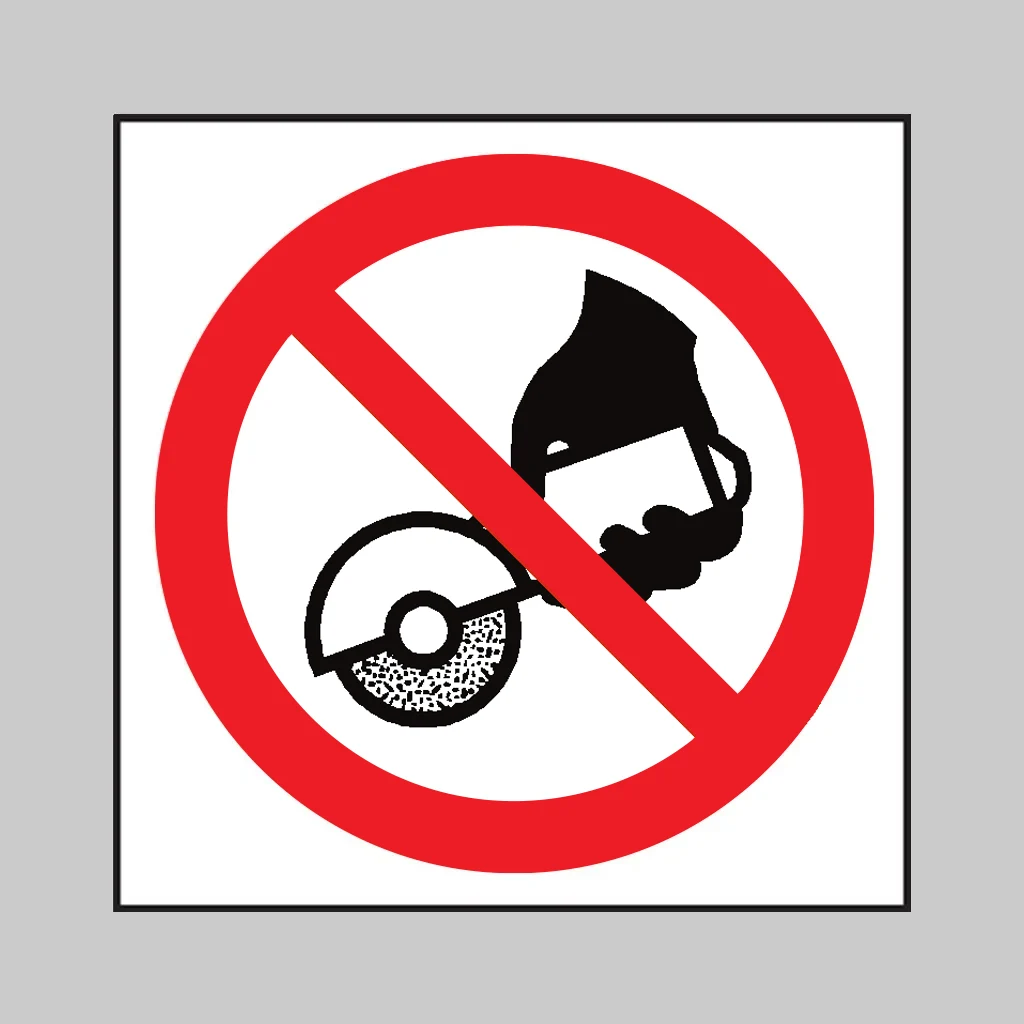 |
P034 | Do Not Use with Hand-held Grinding Machine | The Do Not Use with Hand-held Grinding Machine symbol shows that the marked abrasive wheel or accessory must not be fitted to or operated with a portable grinder. The product has been designed for use with an appropriate fixed or stationary machine and may not withstand the speeds, forces or operating angles produced by hand-held equipment. |
It is commonly used on abrasive wheels, cutting discs and specialist grinding accessories intended exclusively for fixed machinery. The restriction helps prevent products from being installed on equipment for which they have not been designed or tested. The symbol may also appear on packaging, storage racks, workshop displays and product documentation. Using the accessory with an unsuitable grinder could expose it to excessive speed, incorrect mounting pressure or uncontrolled side loading, increasing the likelihood of breakage. Keep the warning visible until the product is selected and installed, and store restricted accessories separately from those approved for portable tools. Operators should always check the manufacturer’s specifications, maximum operating speed and machine compatibility before use. |
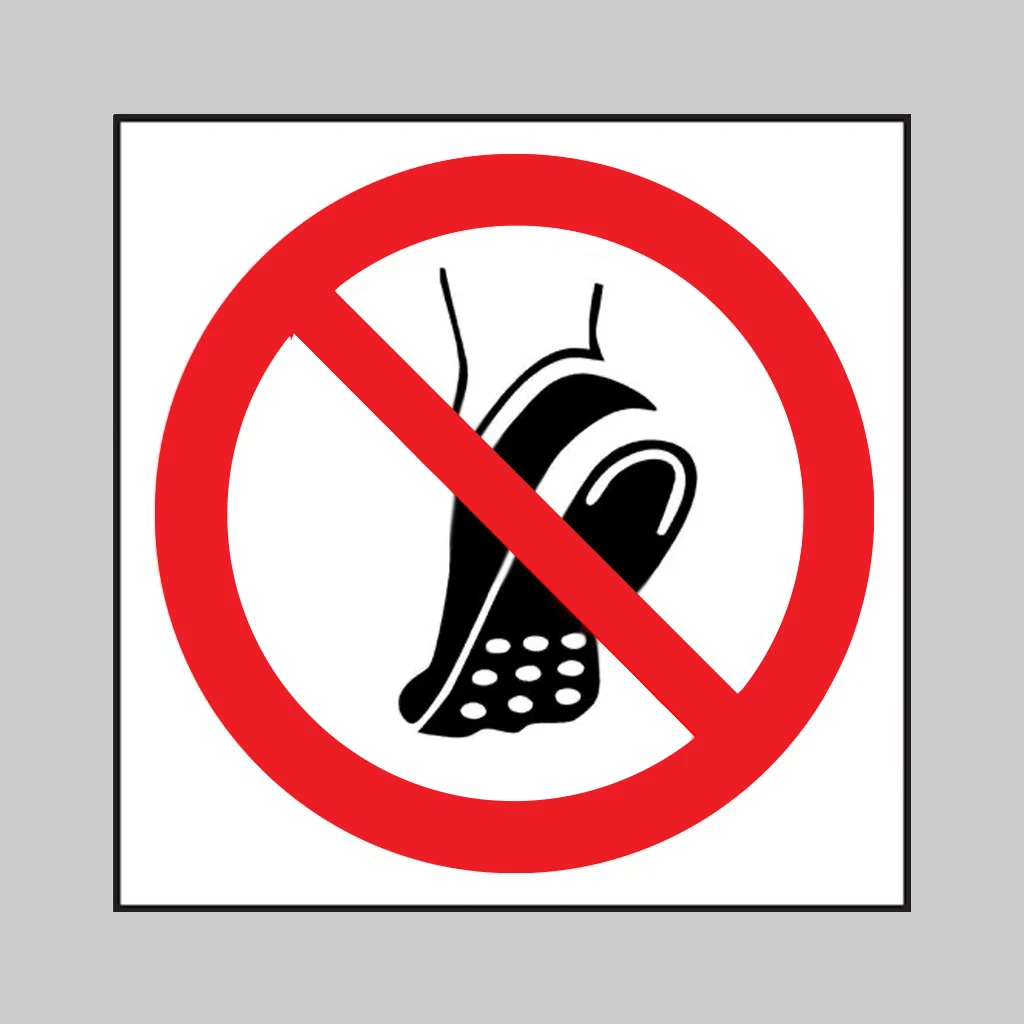 |
P035 | Do Not Wear Metal-studded Footwear | The Do Not Wear Metal-studded Footwear symbol shows that shoes or boots fitted with exposed metal studs, nails, cleats or similar components must not be worn in the designated area. Metal fittings may produce sparks, conduct electricity, damage sensitive surfaces or introduce contamination. |
It is commonly used at entrances to explosive atmospheres, fuel and chemical storage areas, powder-handling facilities, cleanrooms and electrically sensitive locations. The restriction reduces the risk of sparks, electrical contact or contamination being introduced by unsuitable footwear. The symbol may also be appropriate in premises with delicate flooring, specialist coatings or surfaces that could be scratched or punctured by metal studs. Site rules should explain whether alternative footwear, overshoes or protective covers are available. Position the sign before entry so users have enough time to inspect and change their footwear. Where the risk is significant, support the warning with supervised access, changing facilities and checks to ensure only approved footwear is worn. |
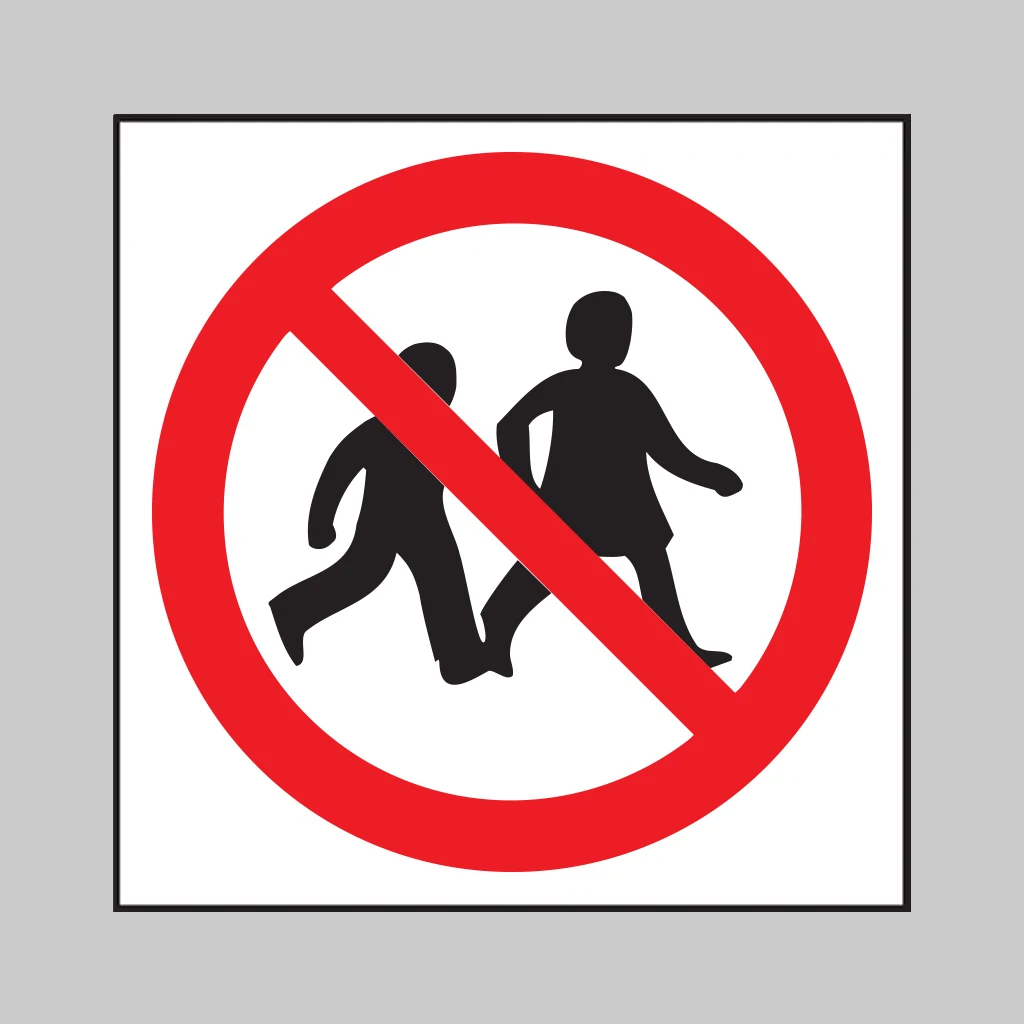 |
P036 | No Children Allowed | The No Children Allowed symbol shows that children must not enter or remain in the identified area. It is used where younger visitors may be unable to recognise the hazards, follow the necessary instructions or use the required protective equipment safely. |
It is commonly used at factories, construction sites, laboratories, farms, loading bays, plant rooms, workshops and other controlled premises. These environments may contain machinery, moving vehicles, hazardous substances, electrical equipment or extreme temperatures. The symbol may also be displayed at storage compounds, maintenance areas and restricted events where children cannot be supervised safely. Any age limit or exemption should be explained separately where the term “children” could be interpreted differently. Install the sign at every normal entrance and access route so the restriction is clear before entry. Where the potential consequences are serious, use doors, gates, barriers, supervision or other access controls rather than relying on the sign alone. |
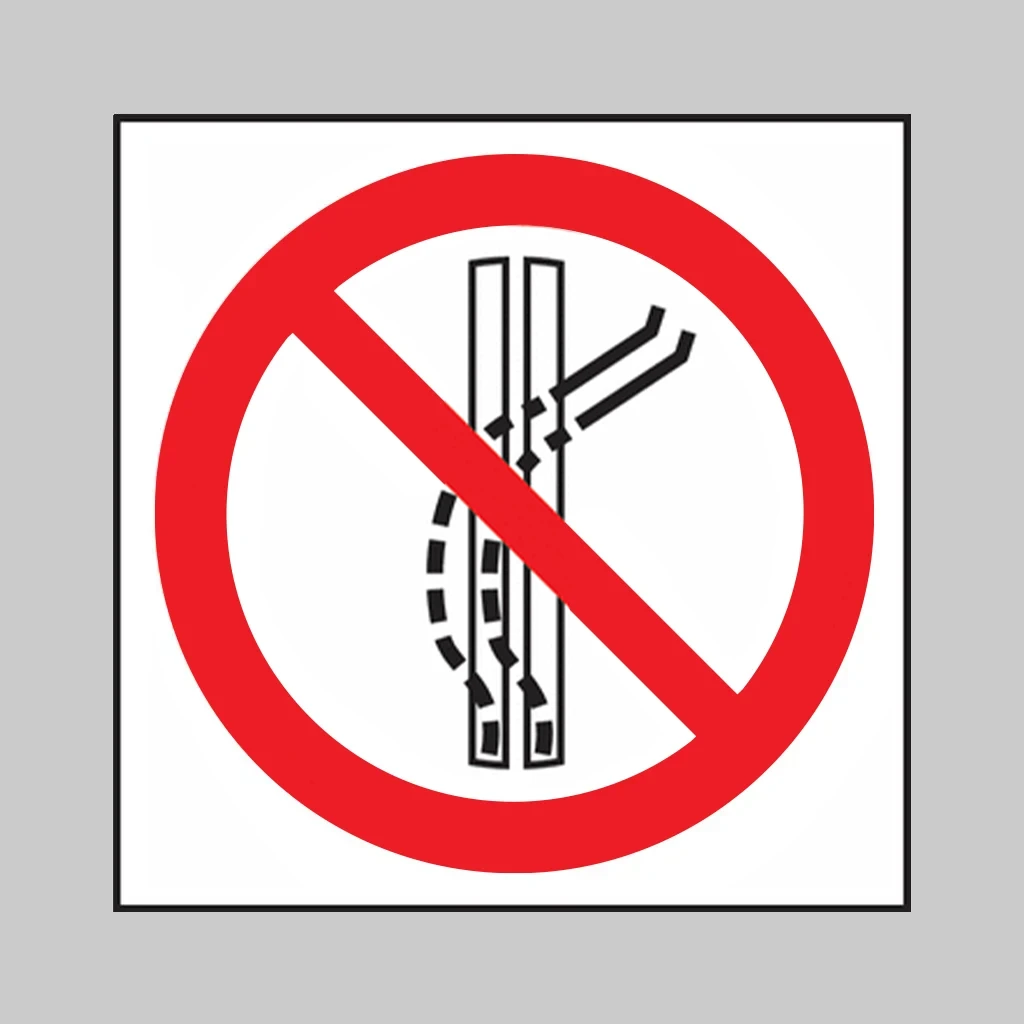 |
P037 | Do Not Leave the Tow-track | The Do Not Leave the Tow-track symbol shows that users of a surface lift must remain within the designated route while being pulled uphill. Skiers and snowboarders must not deliberately move outside the prepared track or release the towing device before reaching an authorised unloading point. |
It is commonly used on ski slopes served by tow ropes, button lifts, platter lifts and T-bar systems. The instruction helps users remain within the route designed for safe operation of the lift. The symbol may be positioned at the loading station, along the tow track and near sections where users might be tempted to leave early. Moving outside the prepared route can result in falls, collisions, equipment damage or interference with other passengers. Repeat the warning where the route changes direction or passes close to obstacles. Lift operators should also provide clear loading and unloading instructions and stop the system where a fallen user creates a hazard for others. |
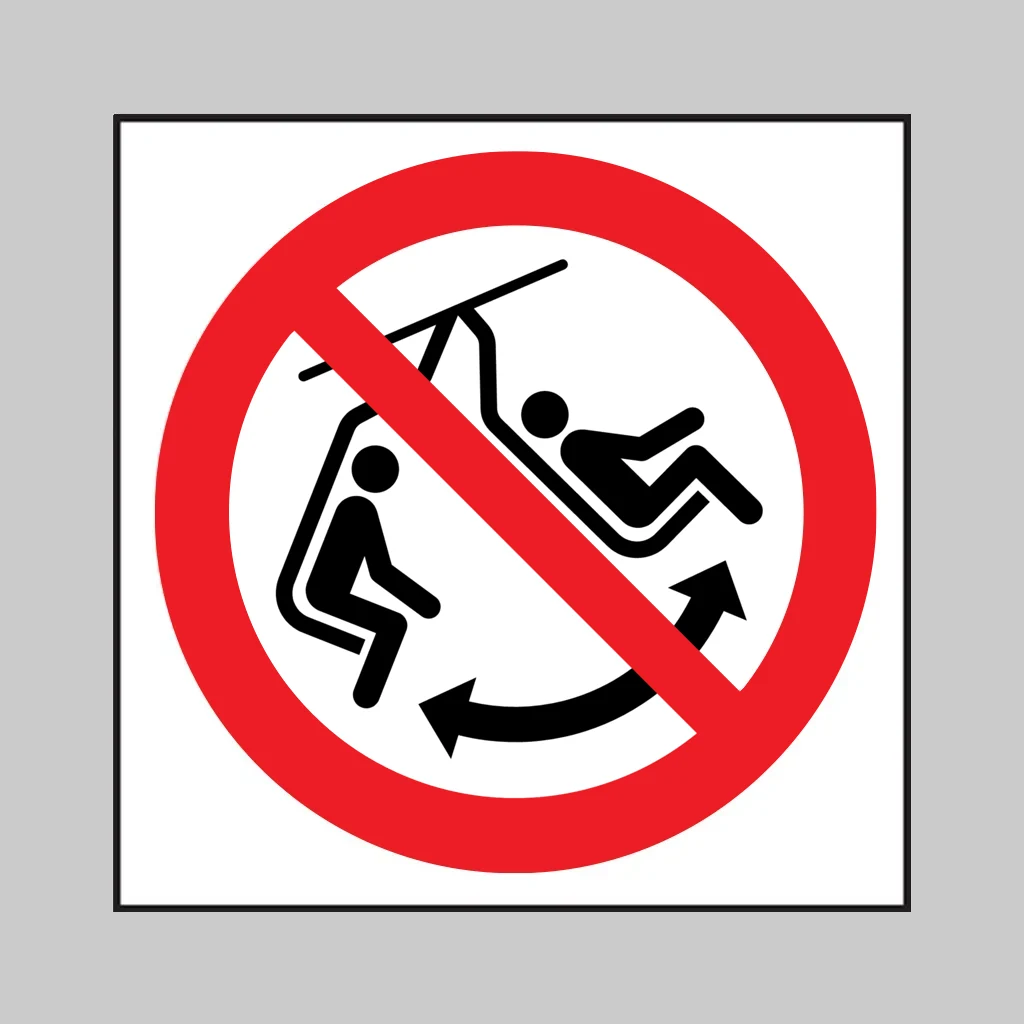 |
P038 | Do Not Swing the Chair | The Do Not Swing the Chair symbol shows that chairlift passengers must not rock, bounce or deliberately swing the chair while travelling. Sudden or repeated movement can destabilise occupants, affect the restraint system and increase the risk of a person or loose item falling. |
It is commonly used on aerial chairlifts at ski resorts and similar passenger ropeway installations. The restriction encourages passengers to remain seated calmly throughout the journey. The symbol may be displayed at loading points, on chair backs, near restraint bars and at intervals along the lift route. It is especially important where children, groups or inexperienced passengers may be tempted to create unnecessary movement. Passengers should keep the restraint in the required position, secure loose belongings and follow all instructions until the unloading point is reached. Lift staff should reinforce the warning where unsafe behaviour is observed. |
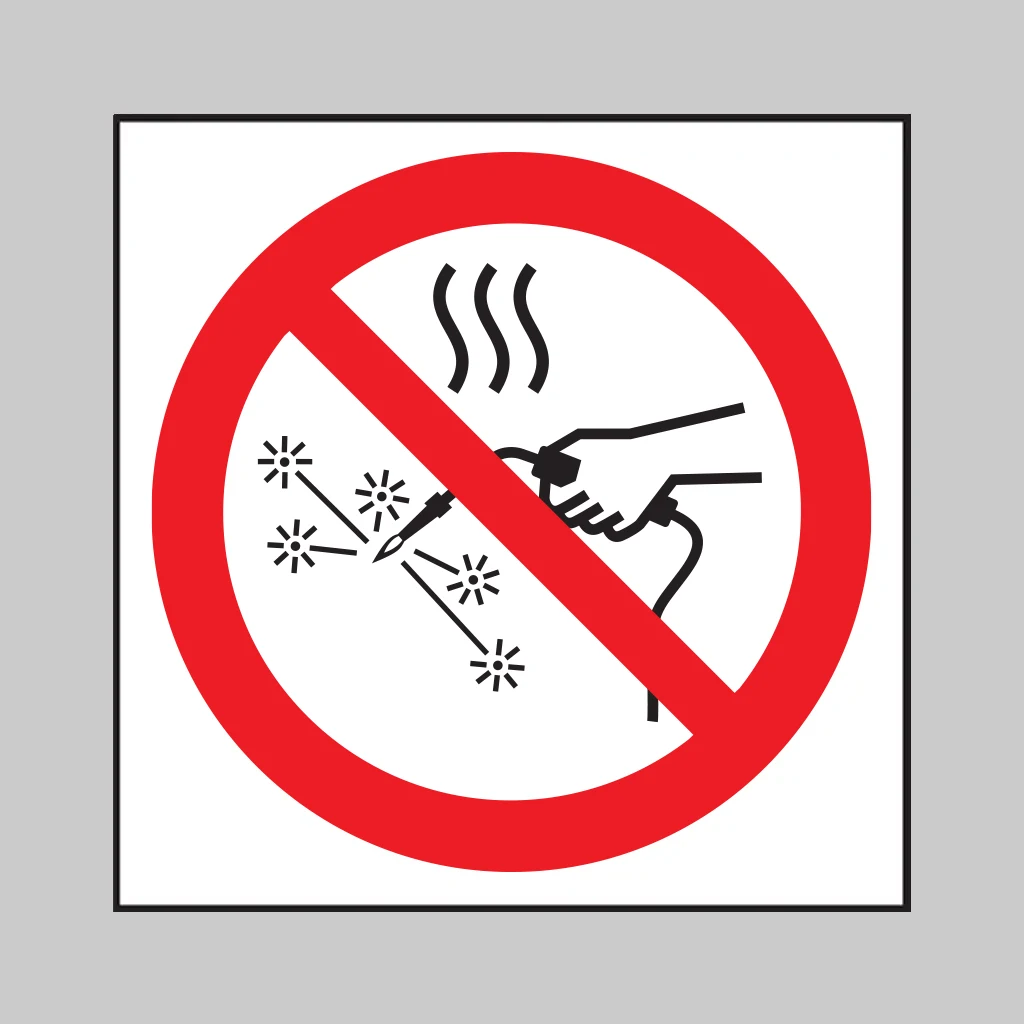 |
P039 | Hot Works Prohibited | The Hot Works Prohibited symbol shows that activities capable of producing flames, heat, sparks or hot debris must not be carried out in the marked area. The restriction may include welding, flame cutting, brazing, soldering, torch heating and spark-producing grinding or cutting. |
It is commonly used near fuel stores, chemical plants, paint and solvent areas, gas installations, processing facilities and combustible-material warehouses. These locations may contain materials or vapours that could ignite when exposed to heat or sparks. The symbol may also define a temporary exclusion zone while hazardous substances, residues or flammable atmospheres are present. Where hot work is sometimes permitted, it should take place only under an approved permit system and after suitable precautions have been established. Display the sign at entrances and work-access points before tools or equipment are brought into the area. Support it with supervision, atmosphere testing, removal of combustible materials and other controls required by the site’s fire-risk assessment. |
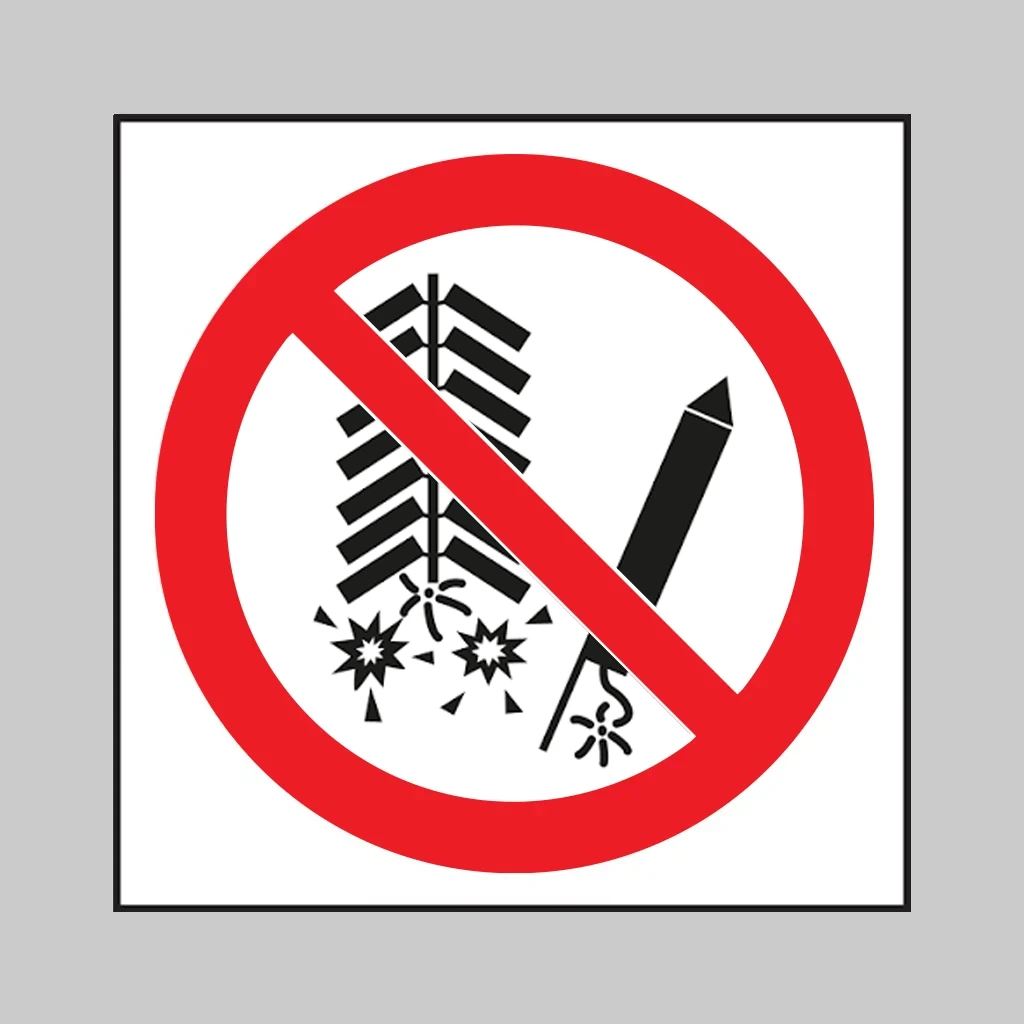 |
P040 | Do Not Set Off Fireworks | The Do Not Set Off Fireworks symbol shows that fireworks, firecrackers, rockets and similar pyrotechnic devices must not be ignited or discharged in the designated area. These items can produce flames, sparks, heat, noise and flying debris, creating a risk of fire, burns, injury or disturbance. |
It is commonly used in parks, forests, nature reserves, campsites, fuel-storage areas, industrial premises and residential developments. The prohibition reduces the risk of uncontrolled fires and injuries caused by falling or misdirected pyrotechnics. The symbol may also be displayed near livestock, wildlife habitats, hospitals and other locations where loud noise could cause distress or disruption. Seasonal restrictions may be introduced during periods of dry weather or elevated wildfire risk. Place the sign at entrances, parking areas, gathering points and other locations where fireworks might otherwise be used. Any permitted display should be managed separately by authorised personnel under appropriate safety controls. |
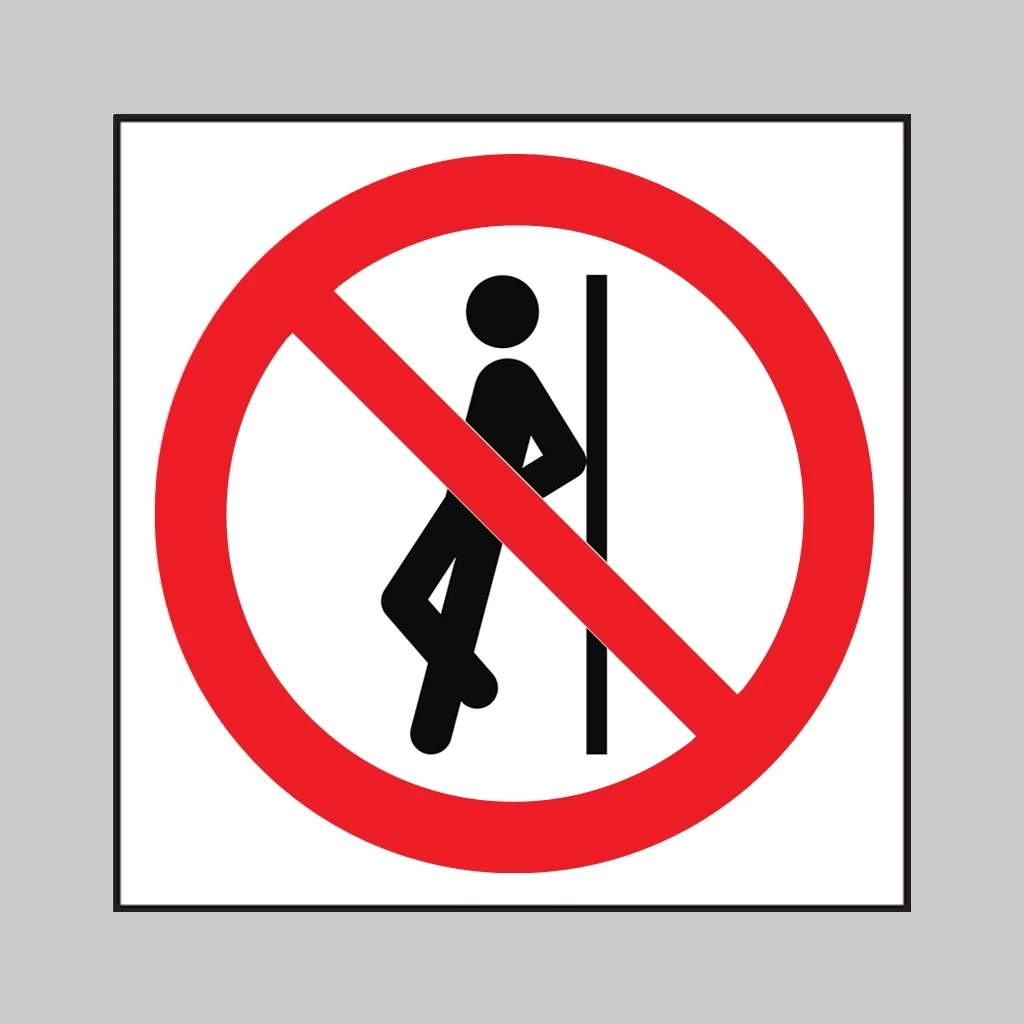 |
P041 | Do Not Lean Against | The Do Not Lean Against symbol shows that people must not rest their body weight against the marked object, barrier or surface. The item may be unstable, fragile, movable or unable to withstand the additional force safely. |
It is commonly used on temporary barriers, machine guards, glass panels, lightweight partitions, railings, storage systems and equipment enclosures. These structures may appear capable of supporting a person even though they have not been designed for that purpose. The symbol may also identify gates, covers or protective screens that could move, collapse or expose hazardous equipment if pressure is applied. Where the object is transparent or difficult to see, the warning can also help draw attention to its presence. Fix the sign directly to or beside the affected structure so the restriction is unambiguous. Where leaning could result in a fall, collapse or contact with machinery, use stronger guarding, secure anchoring or controlled access as additional protection. |
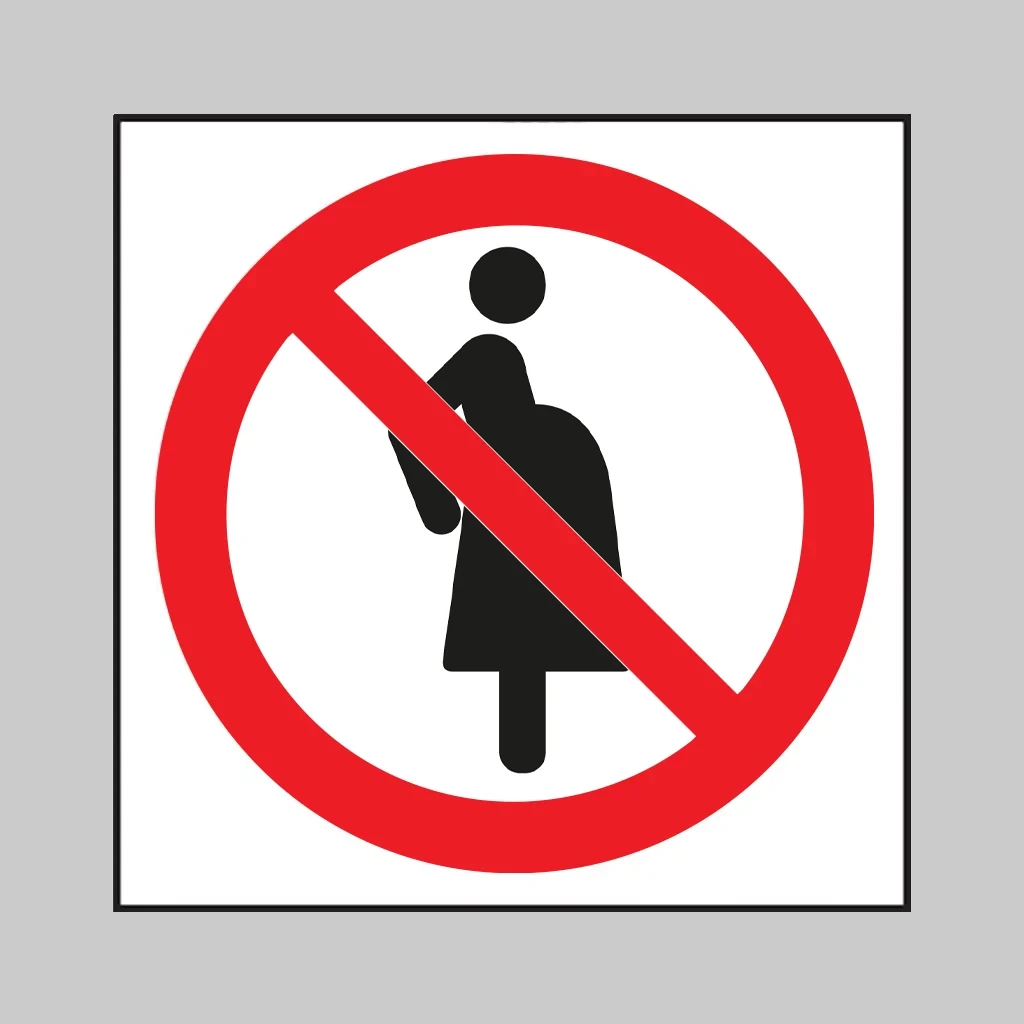 |
P042 | Not for Pregnant Women | The Not for Pregnant Women symbol shows that the marked activity, facility or area is unsuitable for pregnant women because it may expose them or their unborn child to an identified risk. The restriction should be based on a suitable assessment and supported by clear information about the relevant hazard. |
It is commonly used at amusement rides, specialist medical or testing facilities, industrial processes and laboratories where pregnancy may increase the potential consequences of exposure. Relevant hazards may include intense movement, radiation, strong fields, chemicals or other conditions identified by the operator. The symbol may also appear before activities that involve sudden acceleration, impact or physical restraint. Where the restriction depends on individual circumstances, users should be directed to seek appropriate professional or site-specific advice. Display the sign before admission, booking or entry so individuals can make an informed decision and choose a safe alternative. Staff should be trained to explain the restriction respectfully and apply the site’s policy consistently. |
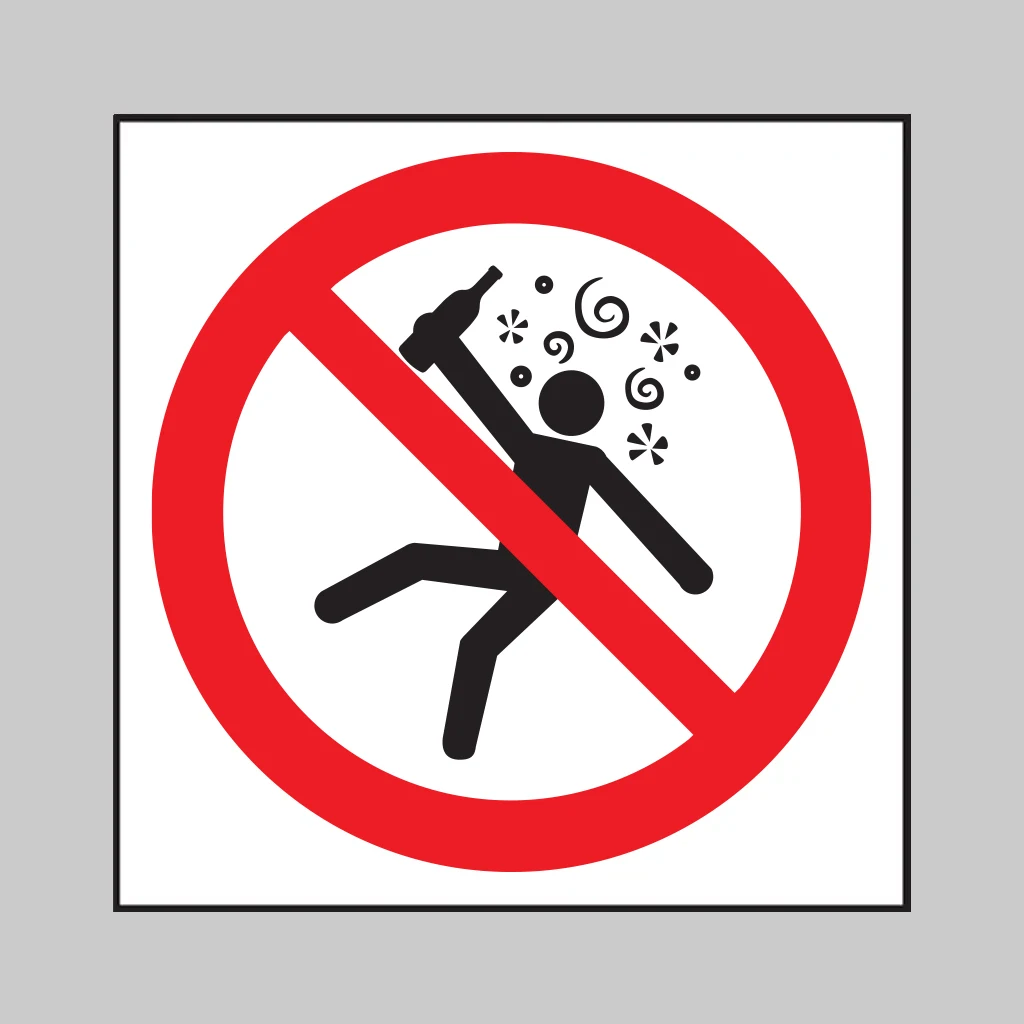 |
P043 | Not for People in the State of Intoxication | The Not for People in the State of Intoxication symbol shows that anyone whose judgement, balance, coordination or awareness is impaired by alcohol, drugs or another intoxicating substance must not enter, participate or use the marked equipment. |
It is commonly used at workplaces, construction sites, industrial facilities, transport areas, amusement attractions and leisure venues. These environments require people to recognise hazards, follow instructions and respond safely to changing conditions. The symbol may also be displayed near machinery, specialist equipment, water activities and locations where impaired balance or reaction time could create a serious risk. The restriction applies regardless of whether the intoxicating substance is legal or illegal. Place the sign at entrances, admission points and operating stations so access can be refused before the person is exposed to danger. Staff should follow an established procedure for handling refusals calmly and obtaining assistance where necessary. |
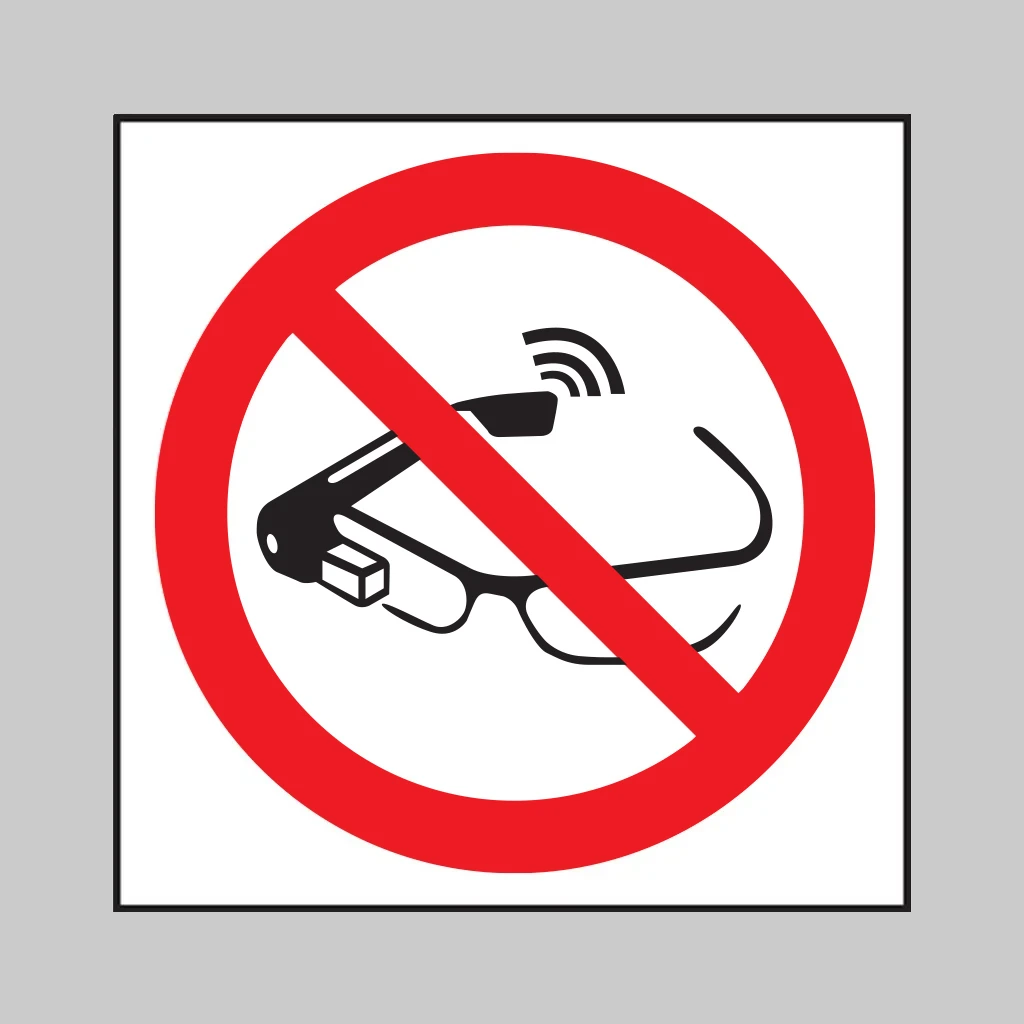 |
P044 | Use of Smart Glasses Prohibited | The Use of Smart Glasses Prohibited symbol shows that smart glasses must not be worn or operated within the marked area. This includes eyewear capable of taking photographs, recording video or audio, displaying digital information, transmitting data or providing augmented-reality functions. |
It is commonly used in research laboratories, production facilities, secure offices, data centres, healthcare settings, examination rooms and sites handling confidential information. The restriction can protect privacy, intellectual property, security-sensitive operations and controlled processes. The symbol may also be appropriate in changing areas, courtrooms and workplaces where digital displays could distract the wearer or obstruct their vision. Site instructions should explain whether devices must be switched off, removed completely or placed in secure storage. Display the sign at entrances and access-control points before people enter the restricted area. It may also be placed near reception desks, security checkpoints, lockers and individual rooms, with the rule reinforced through visitor and employee policies. |
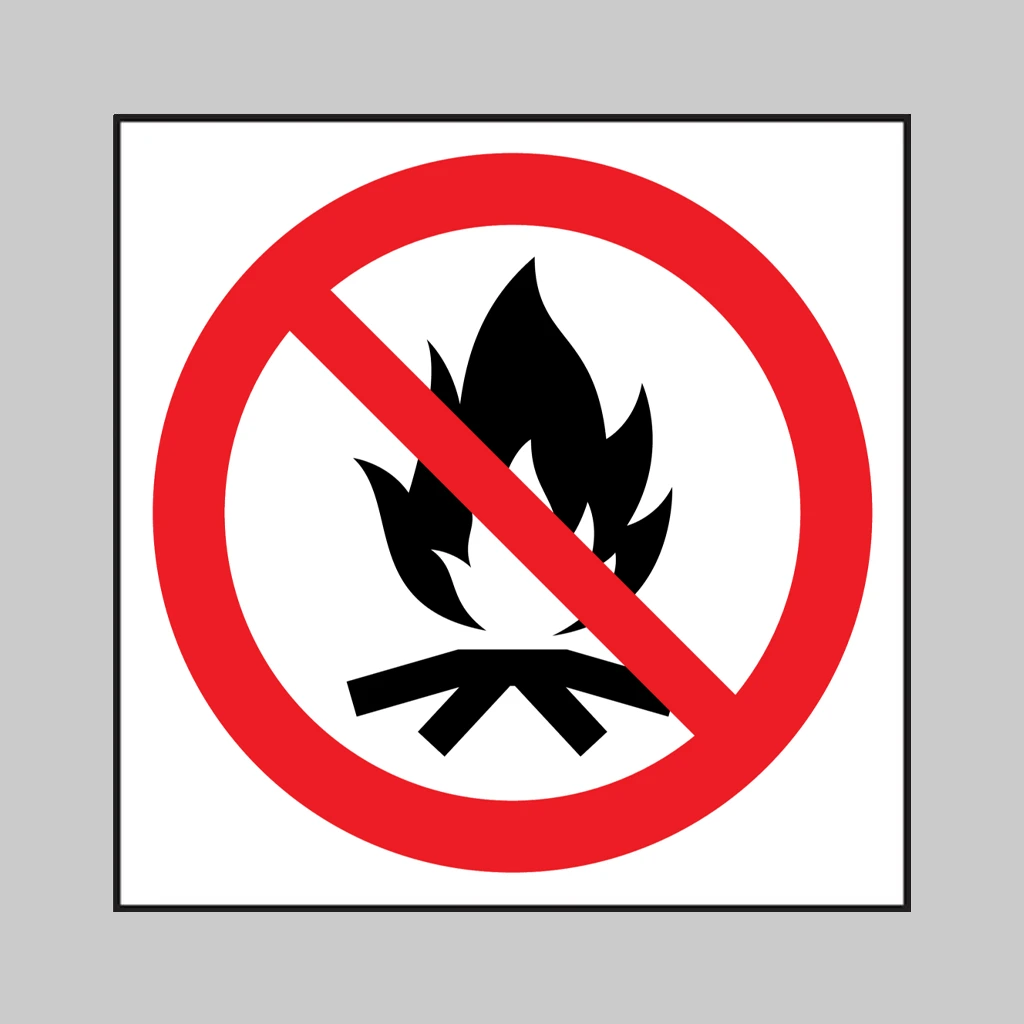 |
P045 | No Campfires | The No Campfires symbol shows that open fires must not be lit for cooking, heating, warmth or recreation. The restriction normally covers campfires, fire pits, burning wood and other outdoor fires that could spread beyond their intended location. |
It is commonly used in forests, woodland, nature reserves, campsites, parks and dry grassland vulnerable to wildfire. The sign helps prevent flames and embers from igniting vegetation, tents or nearby structures. The symbol may also be required near fuel stores, timber yards, protected habitats and locations where smoke could create a nuisance or visibility problem. Restrictions may be permanent or introduced seasonally during periods of dry or windy weather. Position the sign at entrances, parking areas, camping pitches and popular gathering points. Where cooking is permitted, clearly identify approved appliances or designated areas so visitors understand what alternatives are allowed. |
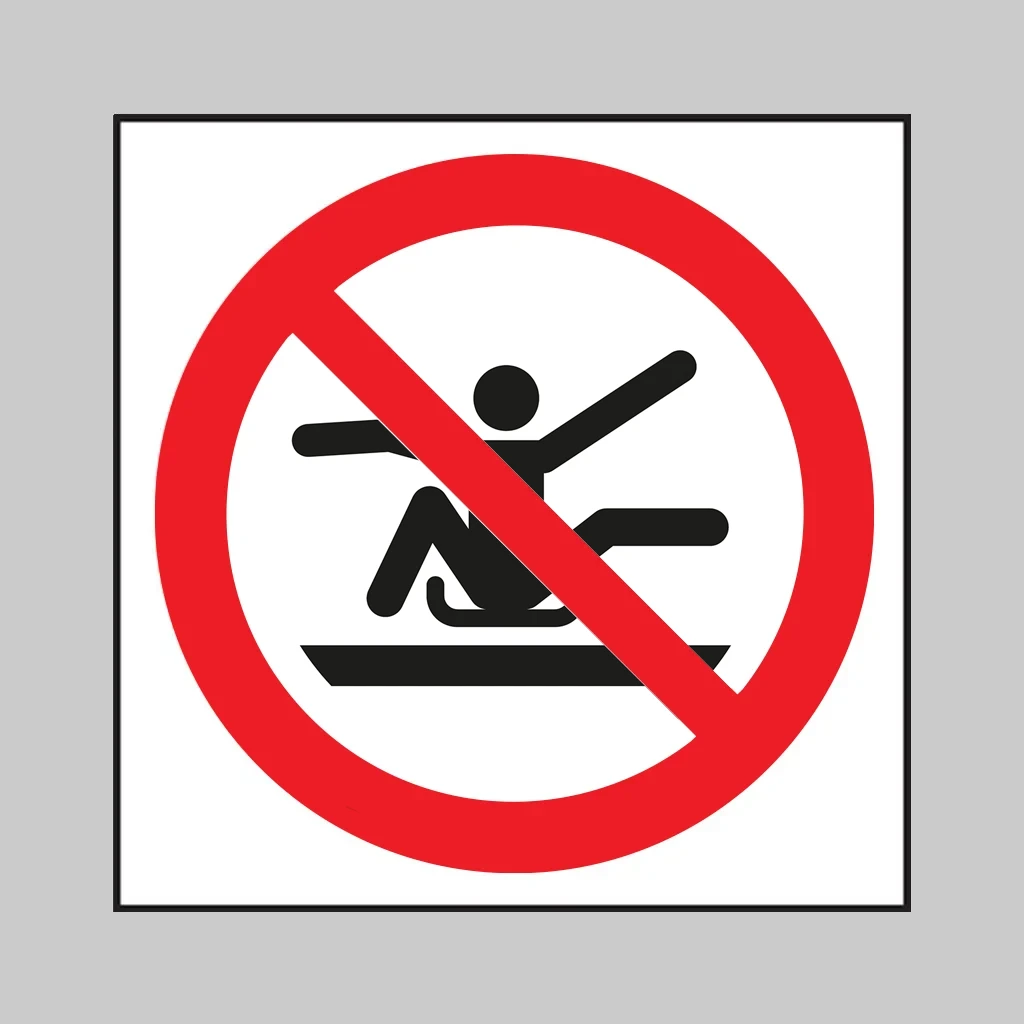 |
P046 | Do Not Stretch Out of Toboggan | The Do Not Stretch Out of Toboggan symbol shows that riders must keep their arms, legs and other parts of the body inside the toboggan while it is moving. Reaching or leaning outside could result in contact with the track, barriers, surrounding structures or another vehicle. |
It is commonly used on alpine coasters, toboggan runs, sled systems and similar controlled attractions. The instruction helps riders maintain the approved seating position throughout the journey. The symbol may be displayed at the boarding point, on the vehicle and along the route. It is especially important before narrow sections, bends and areas where the vehicle passes close to fixed structures. Riders should remain seated, keep restraints fastened and follow all operating instructions until the toboggan has stopped at the designated exit. Staff should explain the rule before departure where passengers may not easily see the sign while travelling. |
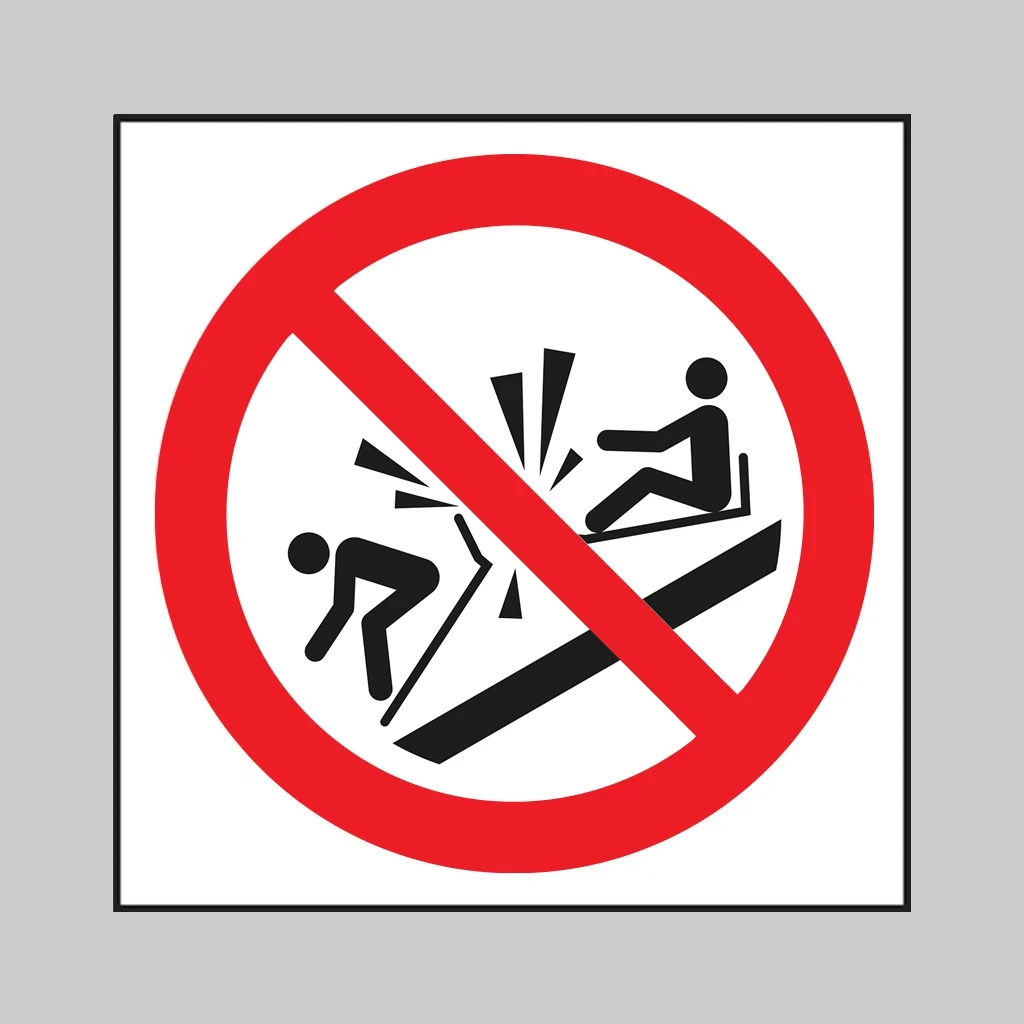 |
P047 | Do Not Ram into Toboggan | The Do Not Ram into Toboggan symbol shows that riders must not deliberately collide with, bump or travel too closely behind another toboggan. Each user must control their speed and maintain the required separation throughout the journey. |
It is commonly used on alpine coasters, toboggan tracks, sled runs and other controlled downhill attractions. Maintaining sufficient distance gives riders time to slow down when the vehicle ahead reduces speed or stops. The symbol may be displayed at starting points, on vehicles and at suitable intervals along the course. Additional warnings are particularly useful before bends, gradients and sections where riders may not have a clear view of the track ahead. Operators should state the required minimum separation and explain how the braking system is used. Where a rider stops unexpectedly, procedures should be in place to prevent following vehicles from entering the affected section. |
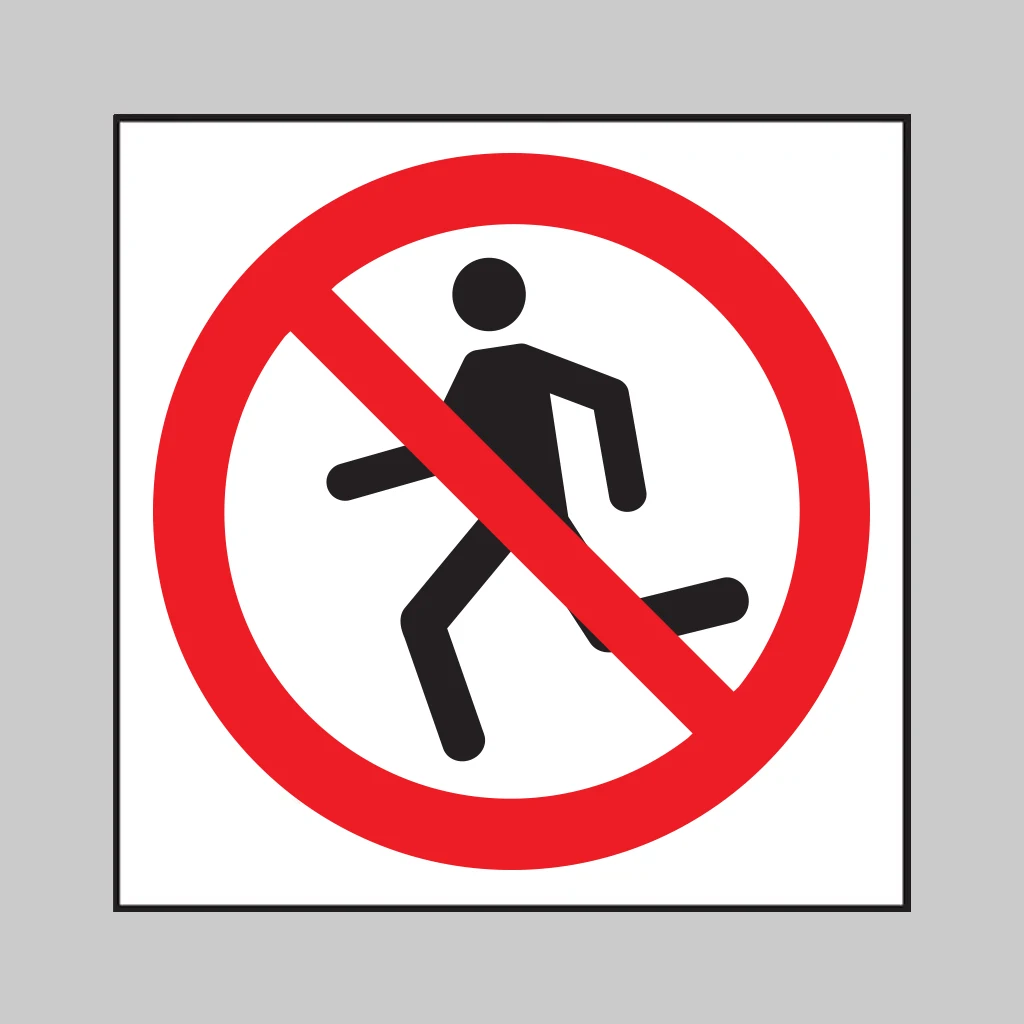 |
P048 | No Running | The No Running symbol shows that people must proceed at a controlled walking pace. Running, rushing, chasing and other fast movement are prohibited because they can reduce awareness and make it more difficult to avoid hazards. |
It is commonly used in swimming pools, leisure centres, schools, hospitals, factories, warehouses and transport facilities. The restriction helps prevent slips, trips, collisions and falls in busy environments. The symbol is particularly important near wet or uneven floors, stairs, doorways, machinery and congested pedestrian routes. It may also be used where sudden movement could disrupt work or place someone in the path of equipment. Position the sign where people enter the affected area or are most likely to begin running. Where necessary, support it with supervision, non-slip flooring, barriers or layout changes that encourage a controlled walking pace. |
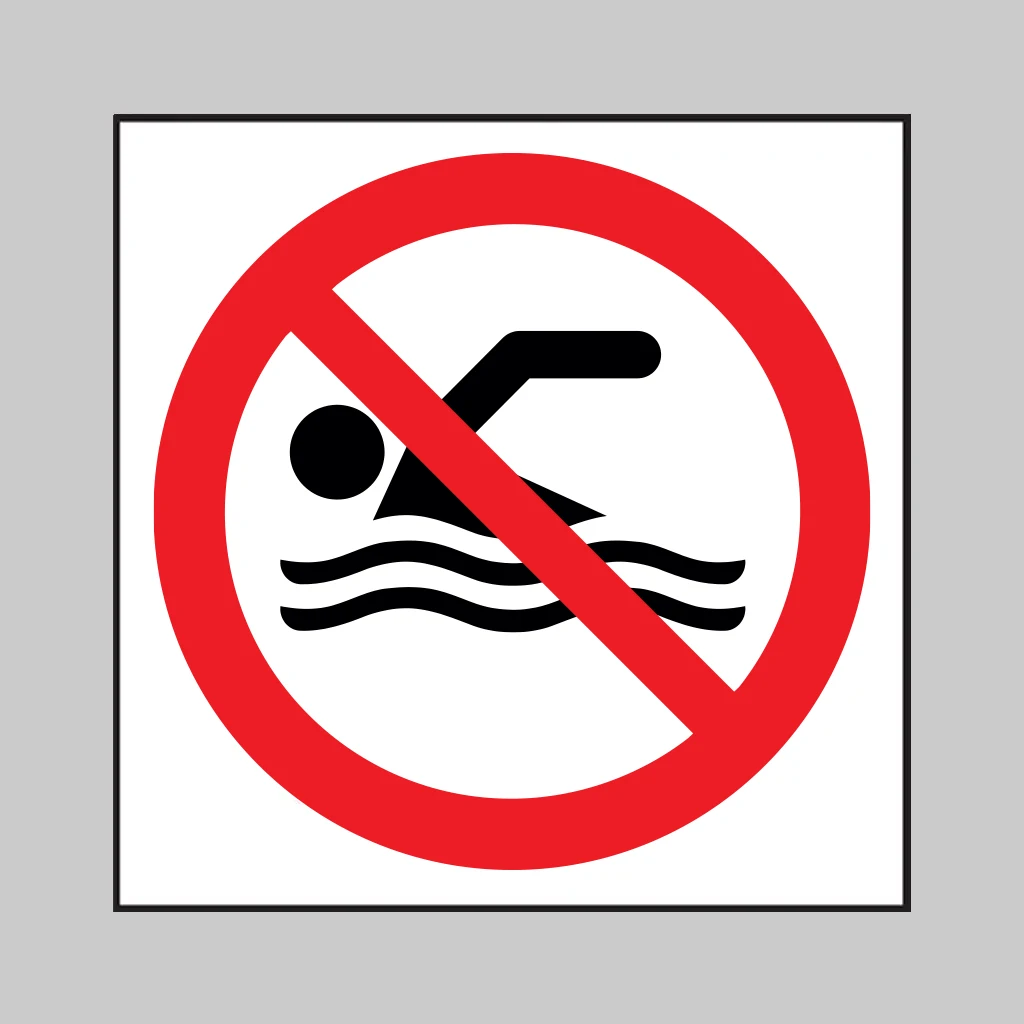 |
P049 | No Swimming | The No Swimming symbol shows that people must not enter the water for swimming, bathing or recreational activity. The restriction applies even when the water appears calm, shallow or easily accessible. |
It is commonly used beside reservoirs, canals, rivers, docks, quarries and industrial water tanks that are unsuitable for public swimming. The water may contain hazards that are not visible from the shore. Potential dangers include strong currents, sudden depth changes, contamination, cold water, submerged objects, boat traffic and limited rescue access. The symbol may also identify temporarily closed sections of beaches, pools and leisure facilities. Display the sign at access points, paths, viewing areas and locations where people are likely to approach the water. Where entry remains possible, use fencing, barriers or additional warnings to explain the principal hazards. |
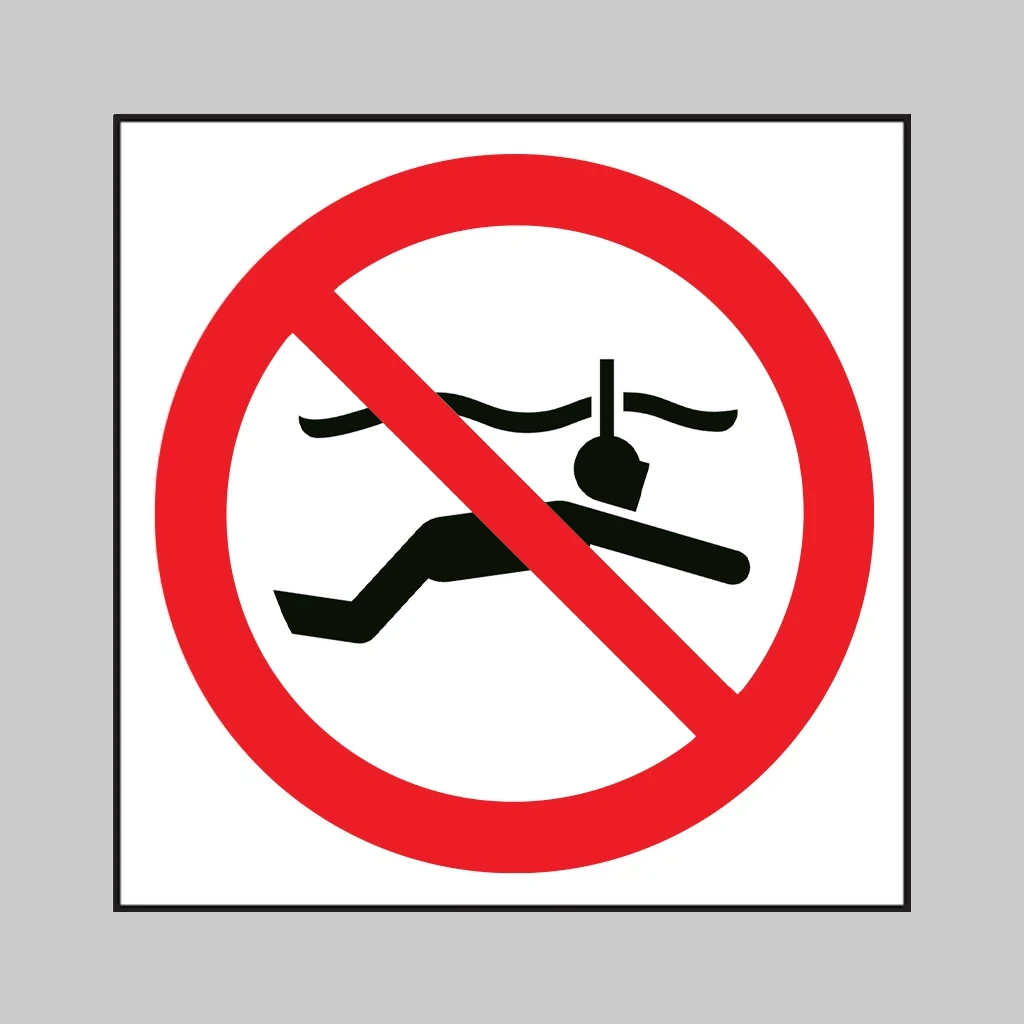 |
P050 | No Snorkelling | The No Snorkelling symbol shows that swimming at the surface while using a snorkel, mask or similar breathing equipment is not permitted in the marked water area. Users must remain outside the restricted zone and choose an approved location instead. |
It is commonly used at beaches, harbours, docks, lakes, reservoirs, managed swimming areas and water-sports facilities. The restriction may separate snorkellers from vessels, machinery or other activities taking place nearby. The symbol may also be required where currents, poor visibility, changing water levels or underwater hazards make surface swimming unsafe. Local conditions can prevent snorkellers from seeing danger or being seen by boat operators. Place the sign at entry points, beaches, pontoons and launch areas before users enter the water. Where another part of the site is suitable for snorkelling, provide clear directions to the authorised area. |
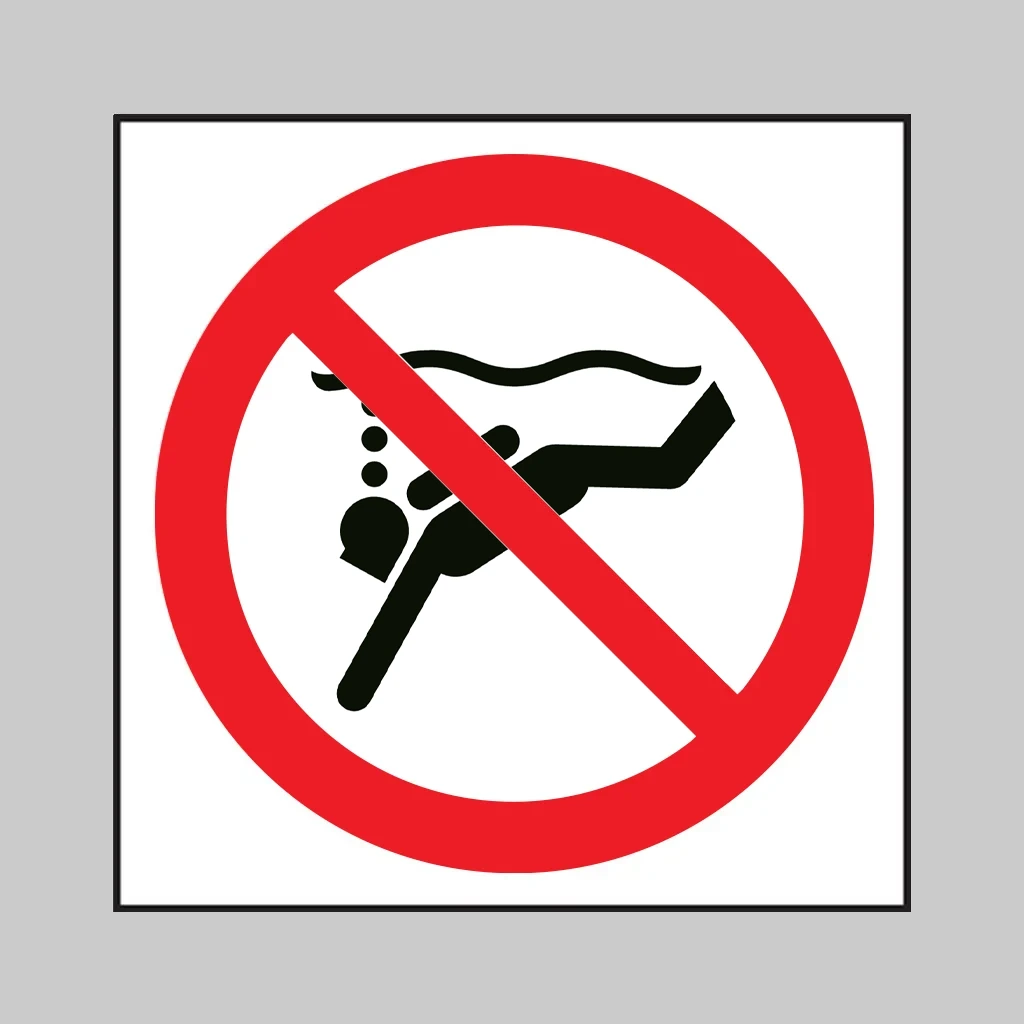 |
P051 | No Sub-aqua Diving | The No Sub-aqua Diving symbol shows that underwater diving with breathing apparatus is prohibited. This includes scuba equipment and other systems that allow a person to remain submerged for an extended period. |
It is commonly used at ports, marinas, reservoirs, industrial waterways, protected habitats and controlled leisure areas. The restriction prevents divers from entering water where underwater operations or environmental conditions create unacceptable risks. Potential hazards include strong currents, restricted visibility, contamination, submerged structures, vessel traffic and operational machinery. Diving may also be restricted to protect wildlife, infrastructure or secure areas beneath the water. Display the sign at launch points, quays, beaches and other normal water-access locations. Where authorised diving is permitted under controlled conditions, separate instructions should identify the approval process and designated entry area. |
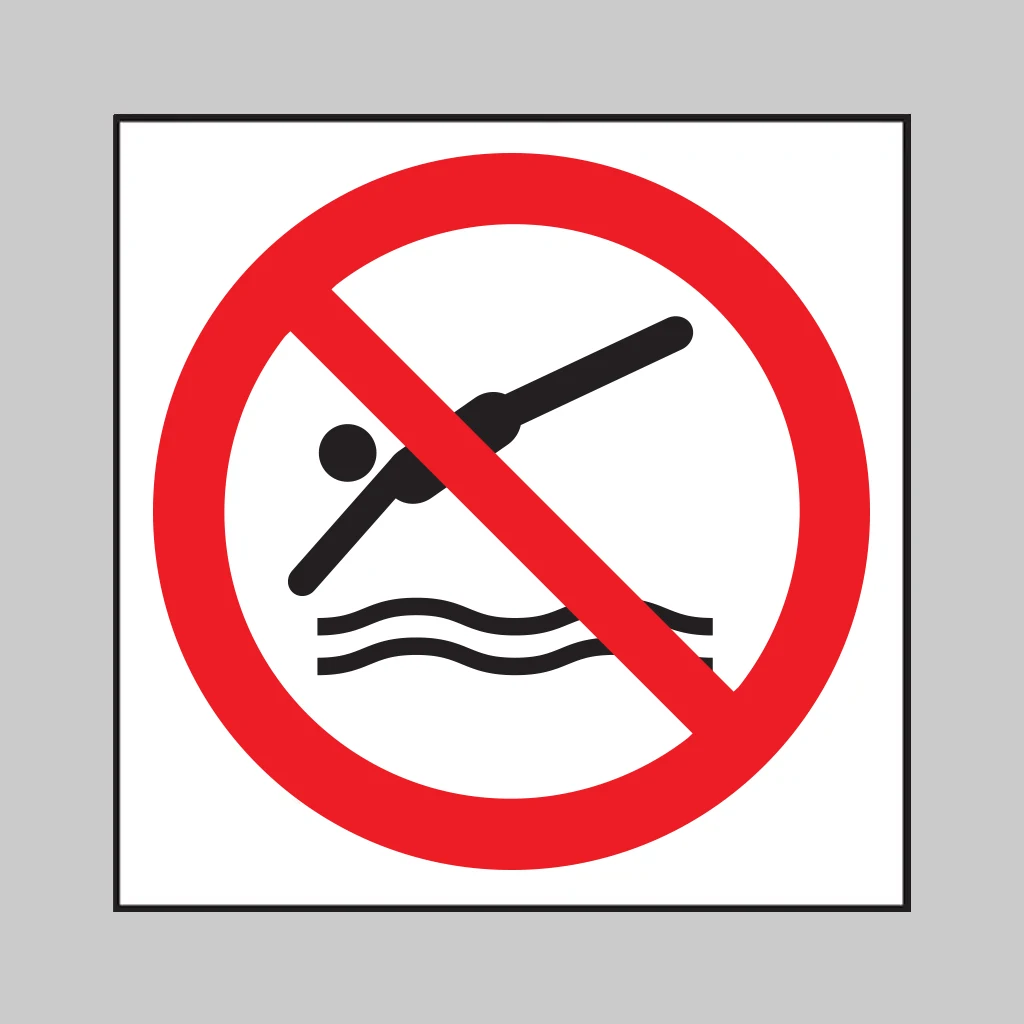 |
P052 | No Diving | The No Diving symbol shows that people must not dive or enter the water head-first. Anyone using the area should enter only through an approved method, such as steps, a ladder or a designated access point. |
It is commonly used beside swimming pools, lakes, rivers, docks, quarries and other waterside locations where the depth or underwater conditions make diving dangerous. The water may be too shallow to allow a safe head-first entry. Hidden obstacles, uneven surfaces and changing water levels can cause serious injuries to the head, neck and spine. The sign may also be used where diving could bring a person into contact with swimmers, vessels or equipment. Place the symbol close to the water’s edge and at any point that may appear suitable for diving. Where necessary, repeat it around the perimeter and provide depth markings, barriers or designated safe-entry instructions. |
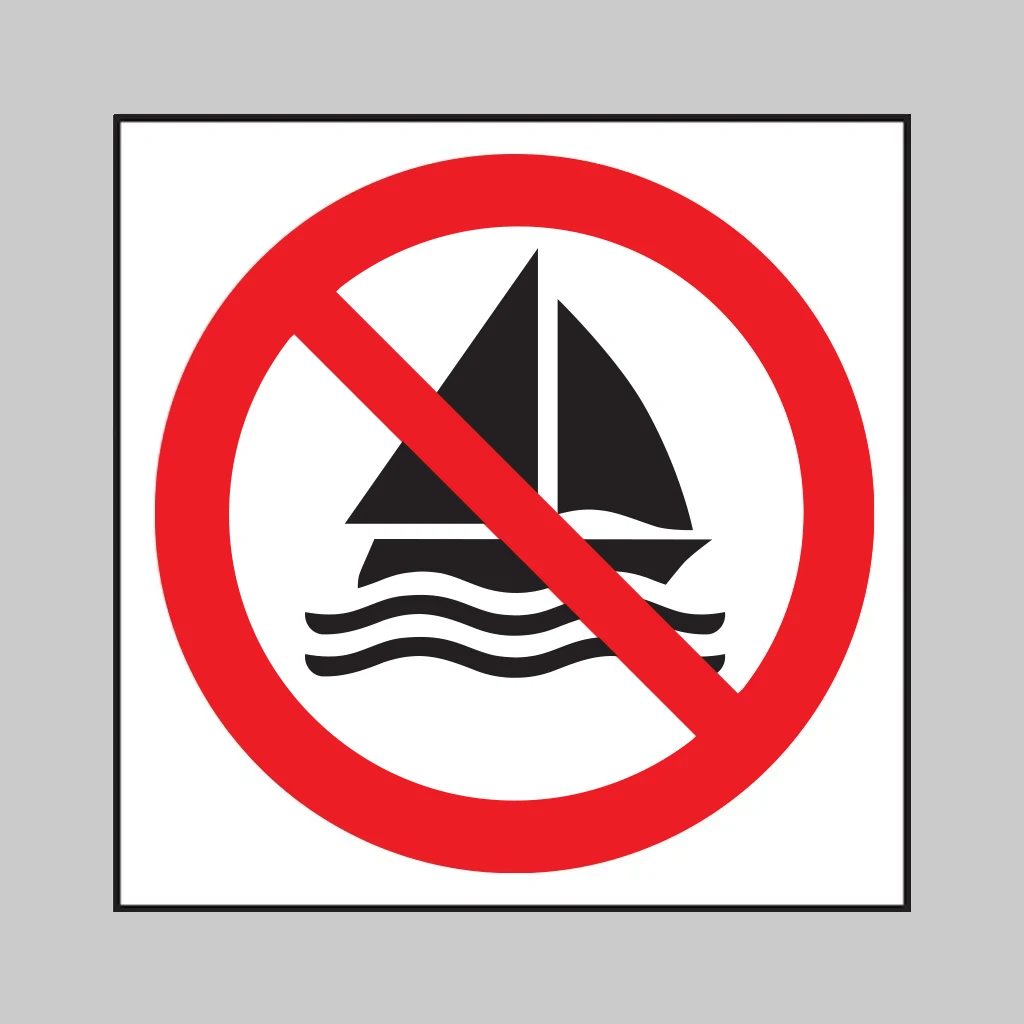 |
P053 | No Sailing | The No Sailing symbol shows that sail-powered boats and other craft relying primarily on sails must not be launched, operated or brought into the designated water area. Sailors should use an approved alternative location. |
It is commonly used on reservoirs, lakes, harbours, canals, protected waterways and managed recreation zones. The restriction may separate sailing craft from swimming areas, commercial traffic or other water-based activities. Sailing may also be prohibited because of narrow channels, underwater hazards, strong currents, overhead obstructions, wildlife protection or operational equipment. Local wind conditions can make particular sections unsuitable even where sailing is allowed elsewhere. Display the sign at launch points, beaches, slipways, car parks and access routes. Where another area is available for sailing, provide clear directions and any relevant operating conditions or permit requirements. |
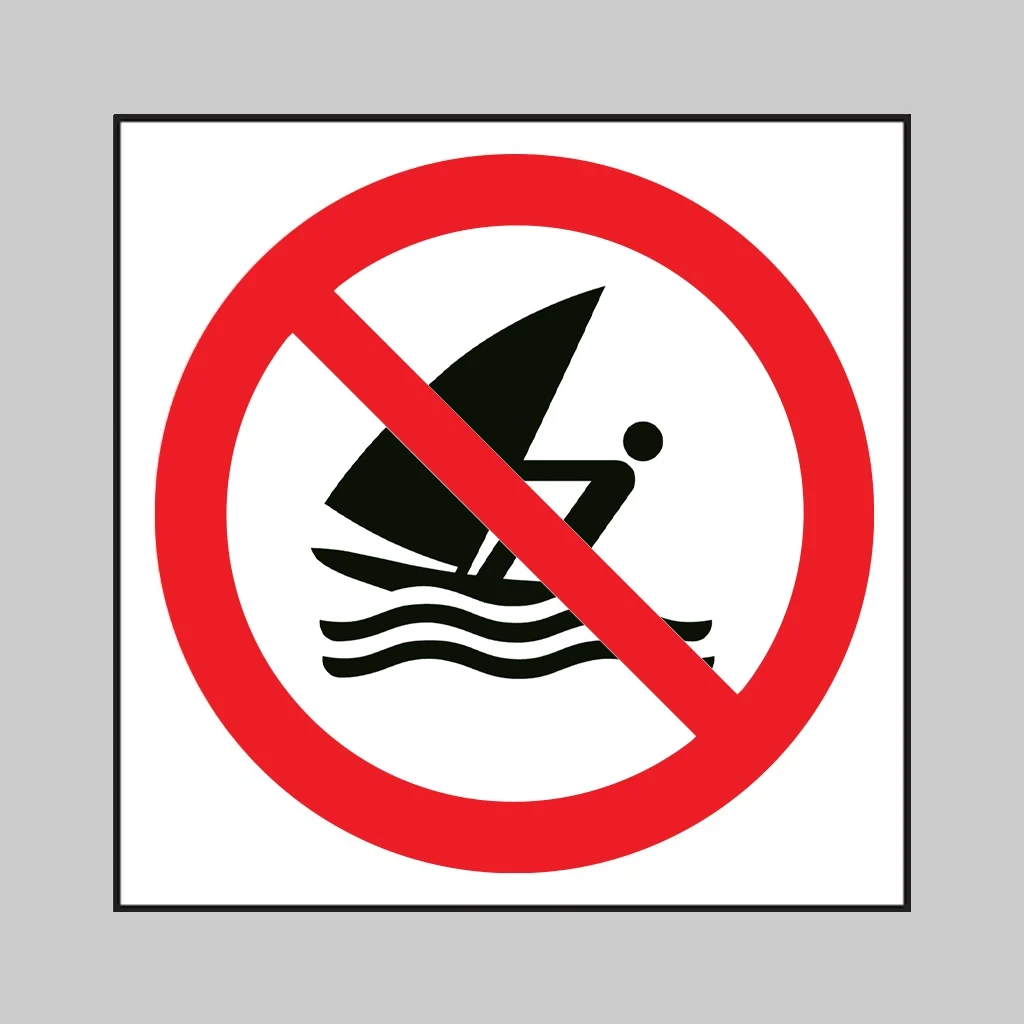 |
P054 | No Windsurfing | The No Windsurfing symbol shows that windsurfing equipment must not be launched or used in the marked area. Riders must remain outside the restricted water zone and use an authorised location instead. |
It is commonly used near shipping routes, swimming zones, protected habitats, reservoirs, harbours and managed recreation areas. The restriction helps separate windsurfers from vessels, swimmers and other activities. The symbol may also be required where strong winds, currents, submerged obstacles or limited rescue access make windsurfing unsafe. Environmental restrictions may apply where boards and sails could disturb wildlife or damage sensitive habitats. Position the sign at beaches, slipways, reservoir car parks and other normal launching points. Where windsurfing is permitted elsewhere, provide directions to the approved area and display any conditions relating to weather, equipment or operating times. |
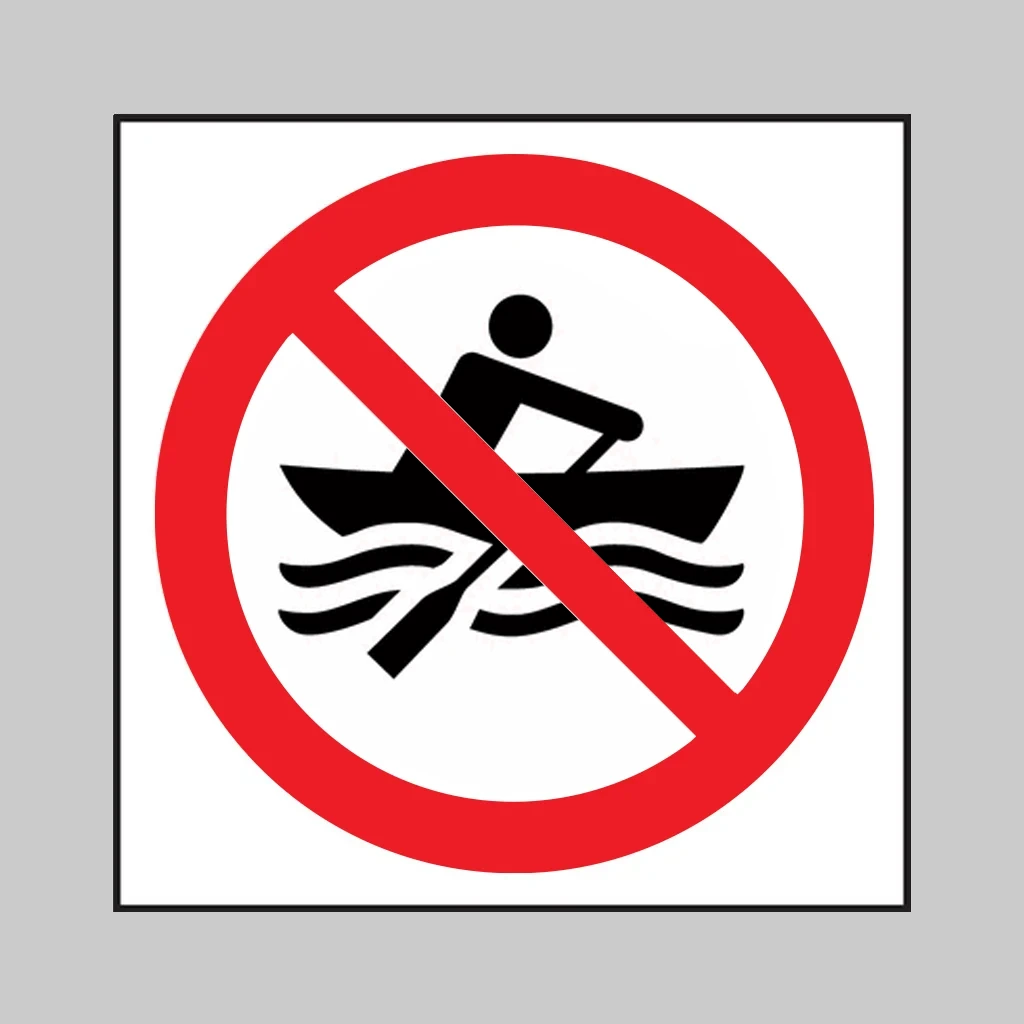 |
P055 | No Manually Powered Craft | The No Manually Powered Craft symbol shows that watercraft propelled by human effort must not be launched, operated or brought into the designated area. The restriction may include canoes, kayaks, rowing boats, pedal boats, paddleboards and similar craft that operate without a motor or sail. |
It is commonly used in harbours, canals, reservoirs, rivers and restricted sections of lakes or coastal waters. These areas may contain conditions that make small, slow-moving craft difficult to control or vulnerable to other water users. The restriction may be required because of strong currents, commercial vessel movements, industrial operations, water intakes or limited space. Manually powered craft may also be prohibited where their presence could interfere with swimming, conservation work or authorised activities. Display the sign at launch points, slipways, shoreline entrances and other places where craft can be carried to the water. Where an alternative route or authorised paddling area is available, provide clear directions and any relevant operating conditions. |
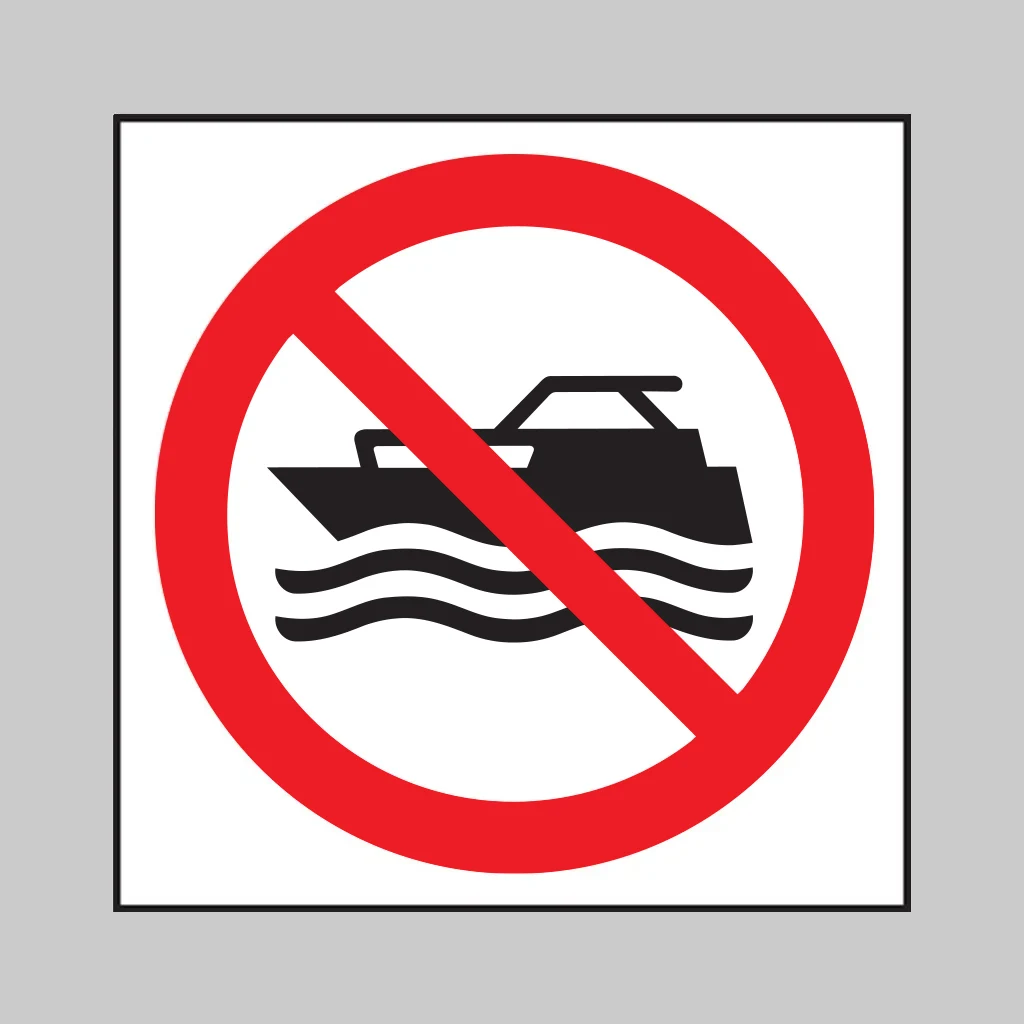 |
P056 | No Mechanically Powered Craft | The No Mechanically Powered Craft symbol shows that boats and other vessels driven by an engine or motor must not enter, launch or operate within the designated water area. The restriction may apply to petrol-powered, diesel-powered and electrically powered craft. |
It is commonly used at lakes, reservoirs, canals, nature reserves and environmentally sensitive waterways. Preventing motorised access can protect swimmers, wildlife, water quality and quieter recreational activities. The symbol may also identify areas where vessel speed, noise, exhaust emissions or propeller movement would create an unacceptable hazard. Mechanically powered craft may be excluded from shallow water, conservation zones and locations with limited manoeuvring space. Position the sign at slipways, boat ramps, shoreline access points and the boundaries of the restricted area. Where powered craft are permitted elsewhere, provide directions to the approved launching and operating zone. |
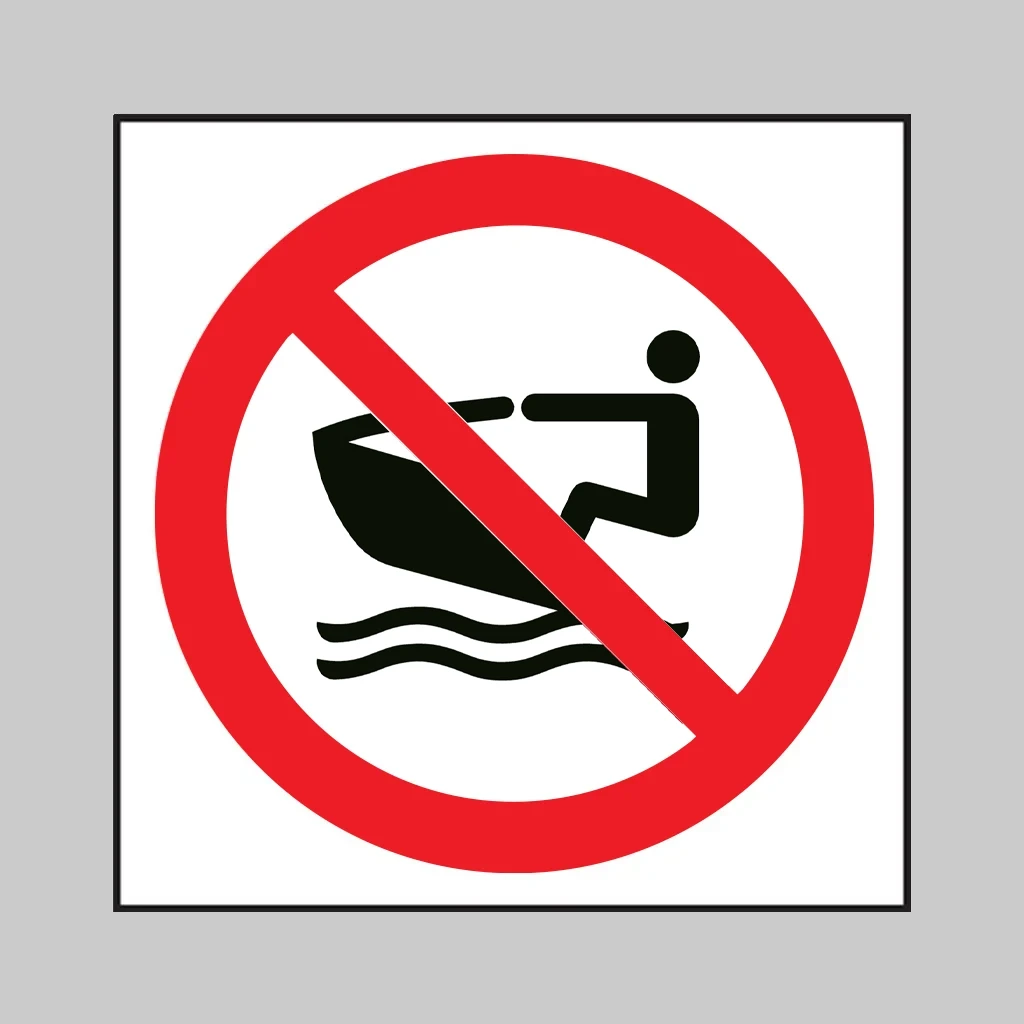 |
P057 | No Personal Water Craft | The No Personal Water Craft symbol shows that jet skis, water scooters and similar small motorised craft must not be launched or operated in the designated area. The restriction applies to powered watercraft designed to carry one or a small number of riders. |
It is commonly used around swimming areas, harbours, reservoirs, wildlife zones, beaches and managed waterways. Personal watercraft may travel quickly and change direction suddenly, creating a risk to swimmers, boats and other water users. The restriction may also reduce noise, wake, shoreline erosion and disturbance to wildlife. It can be introduced in areas with heavy vessel traffic, limited visibility or insufficient space for powered recreational craft to operate safely. Install the sign at launching areas, shoreline access points, car parks and the boundaries of the restricted zone. Where personal watercraft are permitted elsewhere, provide directions to the approved area and any applicable speed or operating rules. |
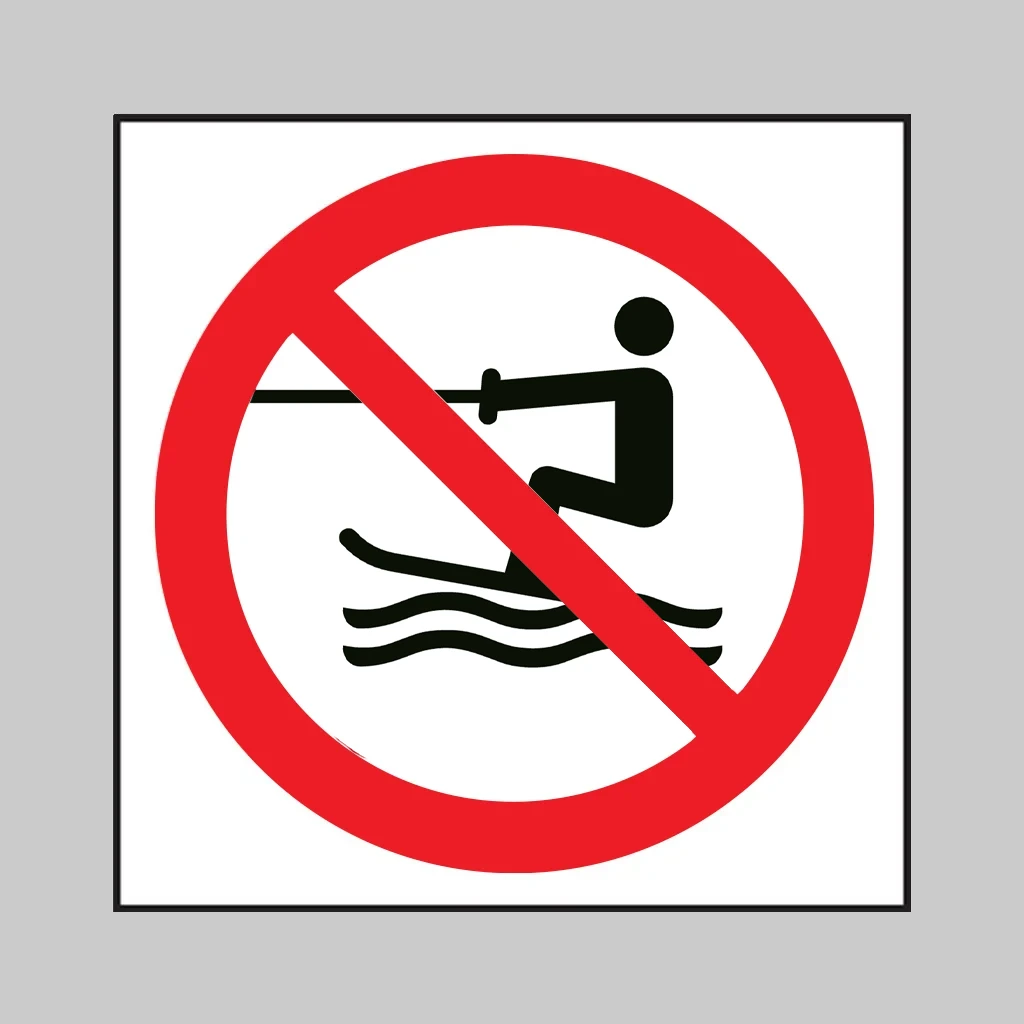 |
P058 | No Towed Water Activity | The No Towed Water Activity symbol shows that activities involving a person or object being pulled behind a powered boat are prohibited. This includes water skiing, wakeboarding, kneeboarding and the use of towed inflatable equipment. |
It is commonly used on reservoirs, lakes, rivers, coastal waters and managed recreation sites. Towed activities require considerable operating space and can create a collision risk where other vessels, swimmers or fixed hazards are present. The restriction may be necessary because of heavy boat traffic, narrow channels, protected wildlife, submerged obstacles or limited rescue access. Wake and tow lines can also affect nearby craft and people using the shoreline. Display the sign at boat ramps, marinas, beaches and recognised activity-launching points. Where towing is permitted in another part of the water, clearly identify the approved zone and any speed, direction or supervision requirements. |
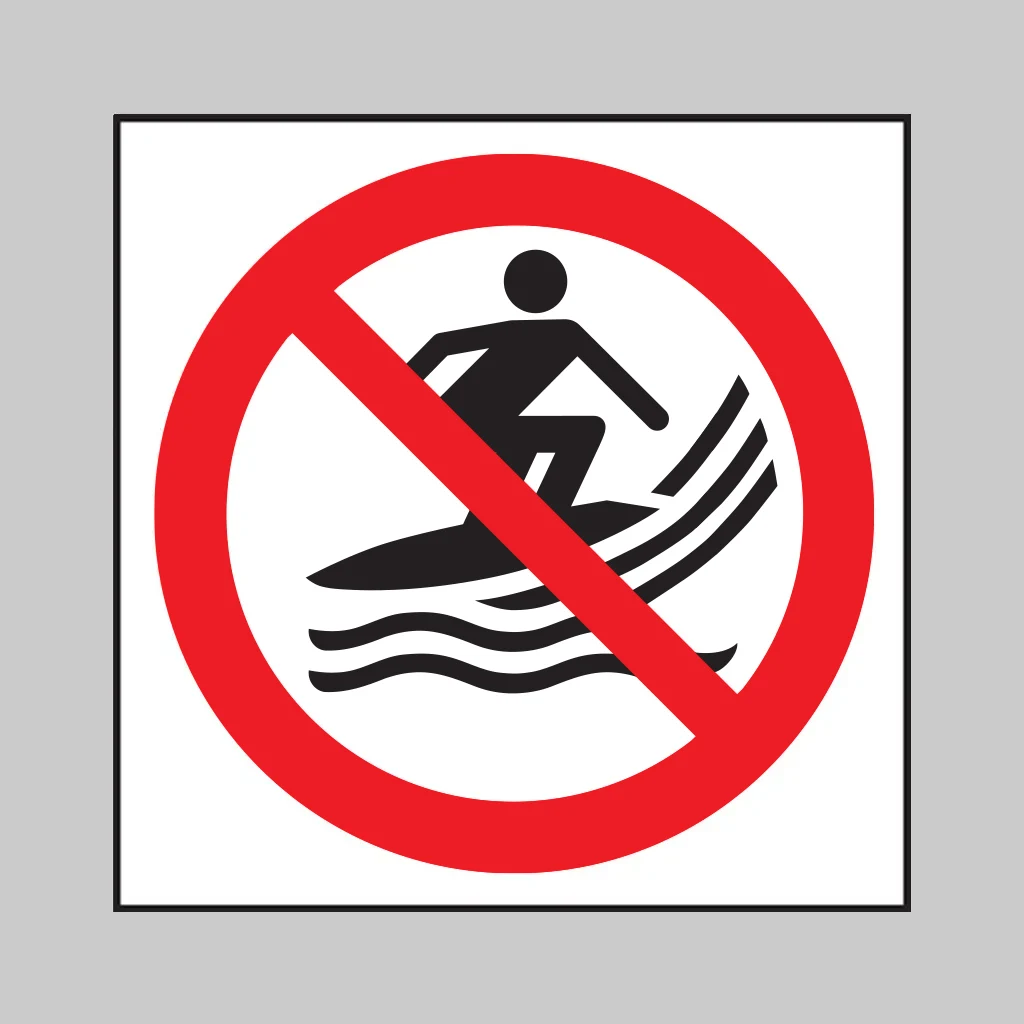 |
P059 | No Surf Craft | The No Surf Craft symbol shows that surfboards, bodyboards and similar wave-riding equipment must not be used in the designated section of water. Users must remain outside the restricted zone and move to an authorised surfing area. |
It is commonly used at beaches and coastal recreation areas where surfing must be separated from swimmers, boats or other water users. The restriction helps reduce collisions involving boards, fins and riders moving at speed. The symbol may also protect conservation zones, bathing areas or sections of water affected by rocks, currents and operational hazards. Temporary restrictions can be introduced during events, rescue operations or periods of unusually hazardous conditions. Display the sign at shoreline entrances, beach access points and beside the limits of the restricted zone. Flag systems, buoys or additional written instructions may be used to identify where surf craft can be used safely. |
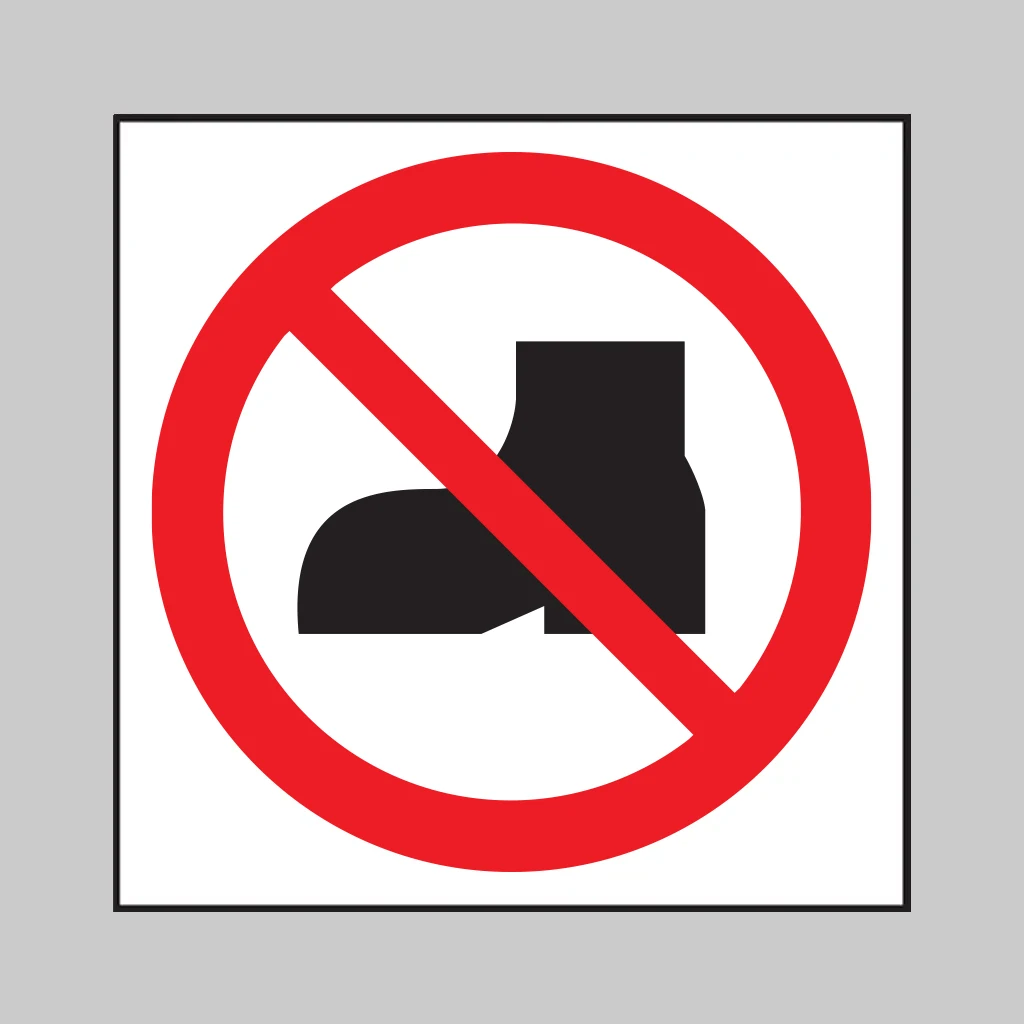 |
P060 | No Outdoor Footwear | The No Outdoor Footwear symbol shows that shoes or boots worn outside must be removed before entering the controlled area. Clean indoor footwear, overshoes or another approved alternative may be required beyond the marked point. |
It is commonly used at cleanrooms, laboratories, healthcare areas, food-production facilities, childcare settings, prayer rooms and premises with sensitive flooring. Outdoor footwear can carry dirt, moisture, bacteria, chemicals and other contaminants into these spaces. The restriction may also protect specialist floor coverings from scratches, mud or abrasive particles. Site instructions should explain whether visitors must remove their shoes, use disposable covers or change into dedicated indoor footwear. Position the sign beside the changing area, shoe rack or footwear station so the instruction can be followed before entry. Provide suitable seating, storage and replacement footwear where these facilities are necessary for compliance. |
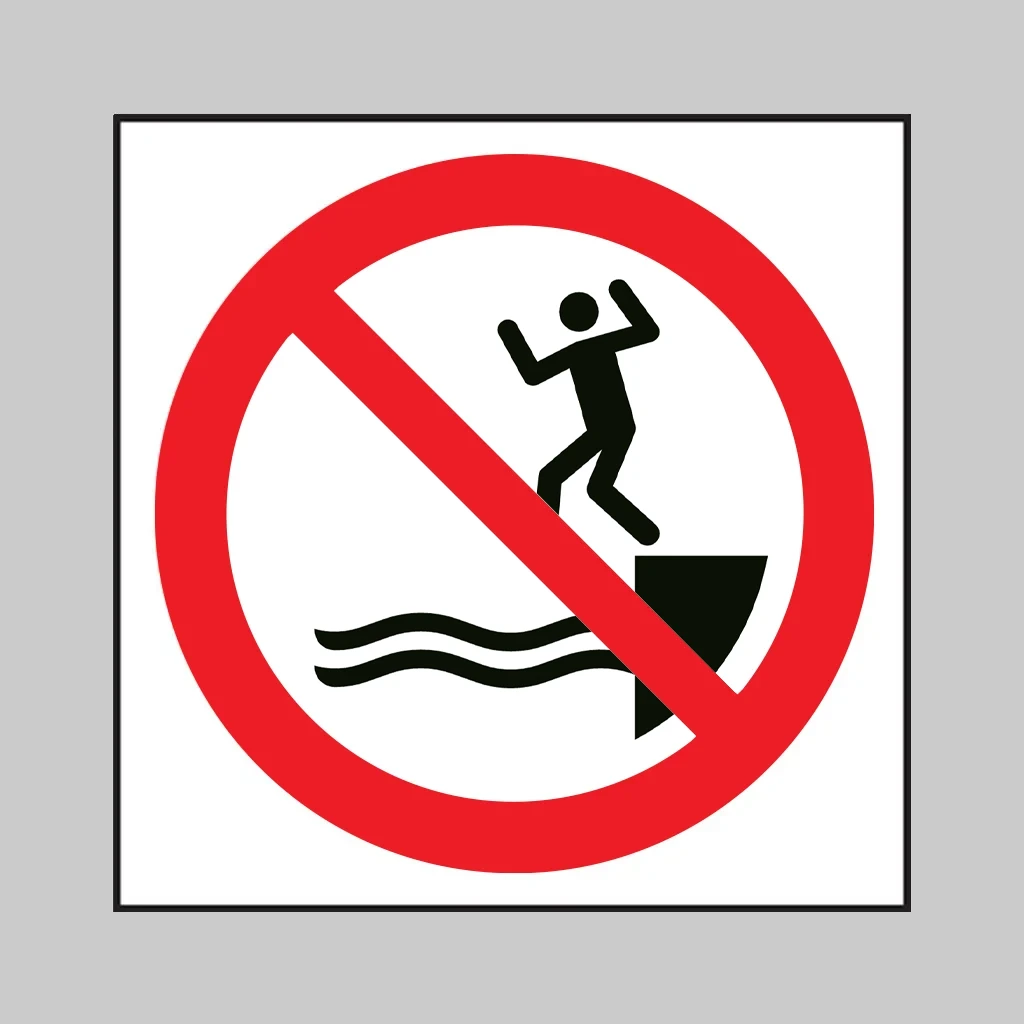 |
P061 | No Jumping into Water | The No Jumping into Water symbol shows that people must not leap, jump or drop into the water from the marked location. This includes feet-first entry from banks, platforms, bridges, rocks, pool edges and similar raised surfaces. |
It is commonly used beside swimming pools, docks, lakes, canals, rivers, quarries and waterfront structures. The restriction is appropriate where the water or surrounding area does not provide a safe landing and recovery space. Potential hazards include shallow water, submerged objects, strong currents, changing water levels and restricted overhead or side clearance. Jumping may also place swimmers below at risk of being struck. Place the sign close to the edge and at every point that may appear suitable for jumping. Where unauthorised access remains likely, support the warning with barriers, supervision or directions to an approved water-entry point. |
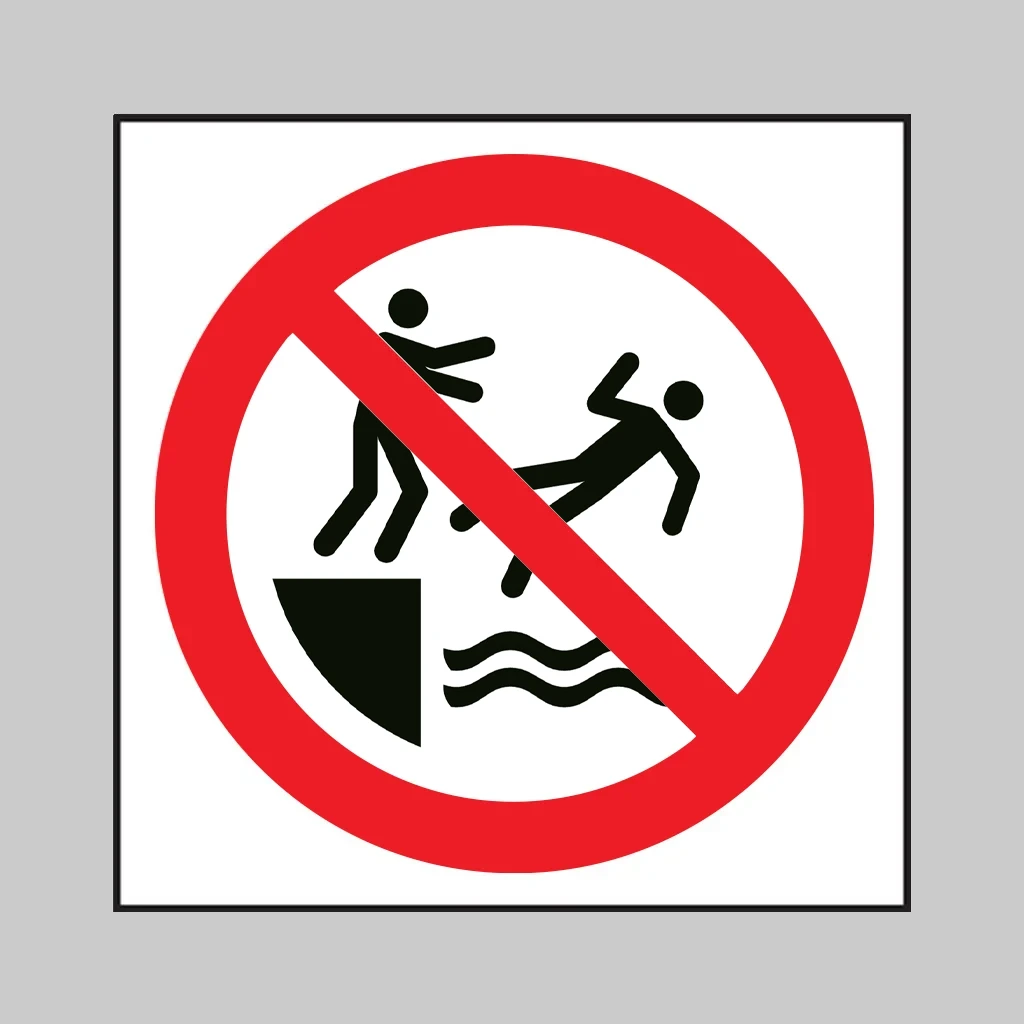 |
P062 | No Pushing into Water | The No Pushing into Water symbol shows that people must not push, shove or deliberately cause another person to fall into the water. Unexpected entry can result in injury, panic, drowning or contact with underwater hazards. |
It is commonly used at swimming pools, docks, piers, marinas, canals, rivers, lakes and other waterside locations where people gather near an exposed edge. The restriction discourages horseplay and unsafe physical behaviour. It is particularly important where the water is deep, cold, fast-moving, contaminated or difficult to exit safely. A person who is pushed may also strike the edge, another swimmer, a vessel or a submerged object. Position the sign near pool surrounds, platforms, railings and other areas where pushing is likely to occur. In supervised facilities, reinforce the instruction through staff monitoring and clearly communicated behaviour rules. |
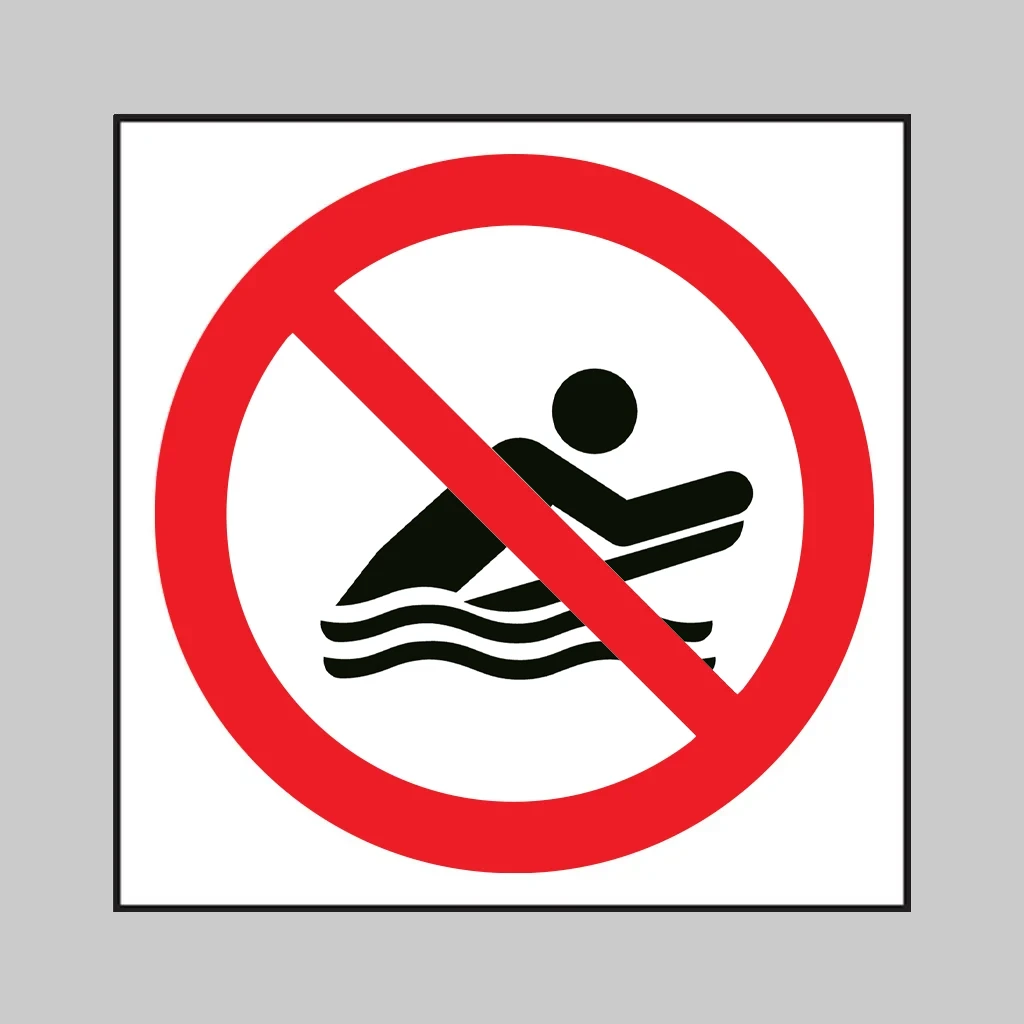 |
P063 | No Body Boarding | The No Body Boarding symbol shows that bodyboards and similar small wave-riding boards must not be used within the designated section of water. Riders must use an approved alternative area where the activity is permitted. |
It is commonly used at beaches, swimming areas and managed coastal recreation zones. Separating bodyboarders from swimmers can reduce the risk of collisions caused by riders and boards moving quickly through breaking waves. The restriction may also apply where rocks, strong currents, vessel movements or local wave conditions make bodyboarding unsafe. Temporary controls can be introduced when weather, tides or crowded conditions increase the risk. Install the sign at beach entrances and along the boundaries of the affected area. Where bodyboarding is permitted nearby, use flags, markers or written directions to identify the authorised zone. |
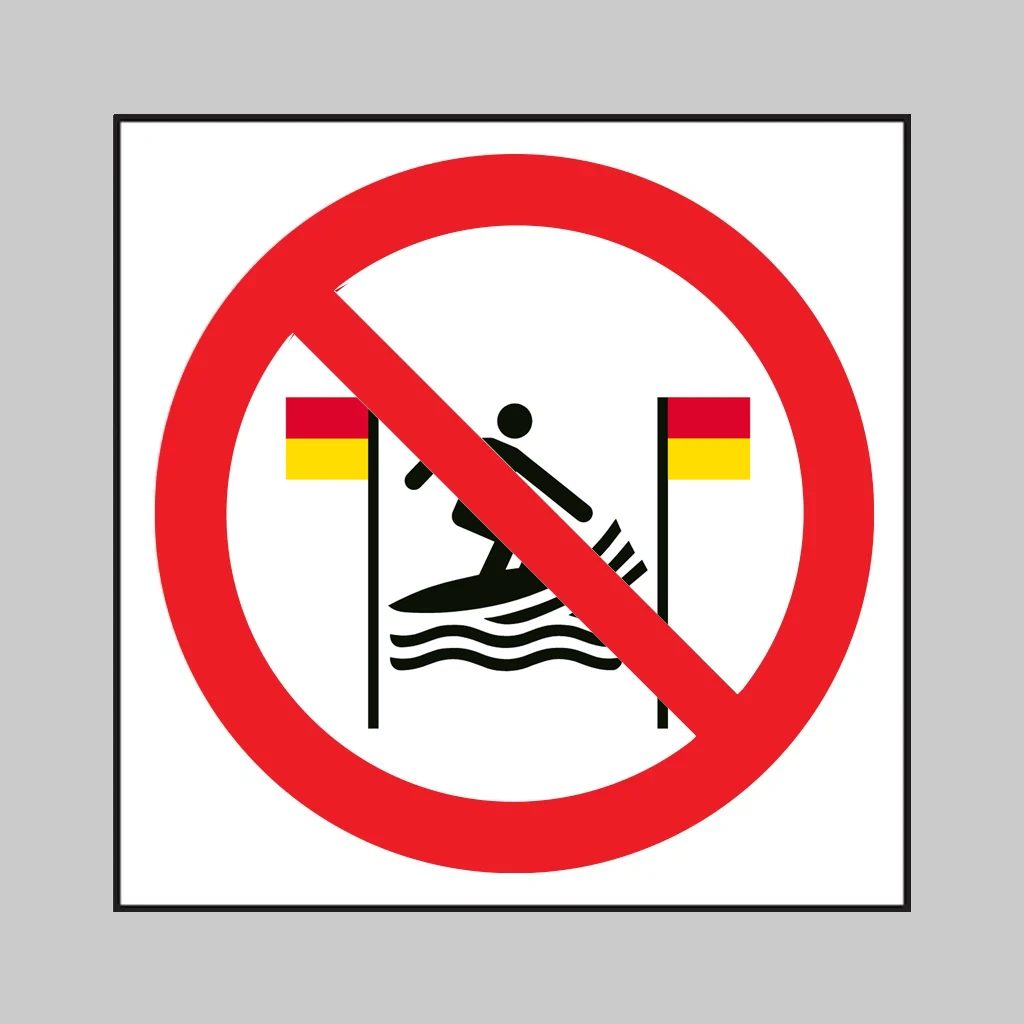 |
P064 | No Surfing Between the Red-and-Yellow Flags | The No Surfing Between the Red-and-Yellow Flags symbol shows that surfers and surf craft must remain outside the section of water marked by red-and-yellow beach flags. This zone is normally reserved for swimming and bathing under lifeguard supervision. |
It is commonly used at patrolled beaches where swimmers and surf craft need to be separated. Boards travelling through a bathing area can cause serious injuries if they collide with people in the water. The restriction may apply to surfboards, bodyboards and other craft according to local beach rules. Lifeguards may move the flagged area as tides, weather and water conditions change throughout the day. Position the sign near beach access points, flag lines and equipment-launching areas. Surfers should follow lifeguard instructions and use the designated surf zone outside the red-and-yellow flags. |
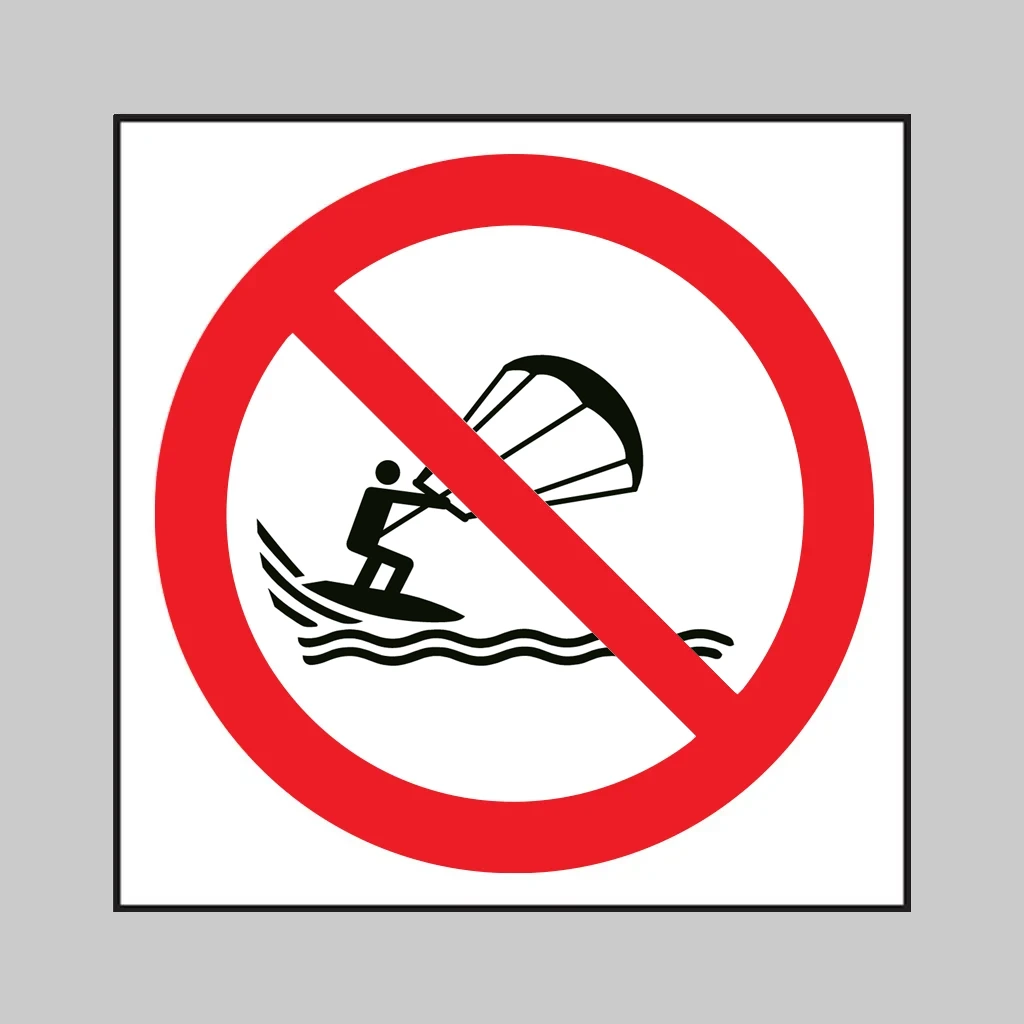 |
P065 | No Kite Surfing | The No Kite Surfing symbol shows that kiteboards, traction kites and related kite-surfing equipment must not be launched or operated in the marked area. Users must keep the kite, control lines and board outside the restricted zone. |
It is commonly used near swimming areas, busy beaches, harbours, wildlife habitats and locations with limited launching or landing space. Kite-surfing equipment can travel quickly and its extended lines may endanger other beach and water users. The restriction may also be required near roads, buildings, power lines, airports and protected habitats. Sudden changes in wind direction can cause a kite to move beyond the rider’s intended operating area. Position the sign at car parks, beach entrances, slipways and recognised launching points. Where kite surfing is permitted elsewhere, provide directions to the authorised zone and any weather, insurance or competency requirements. |
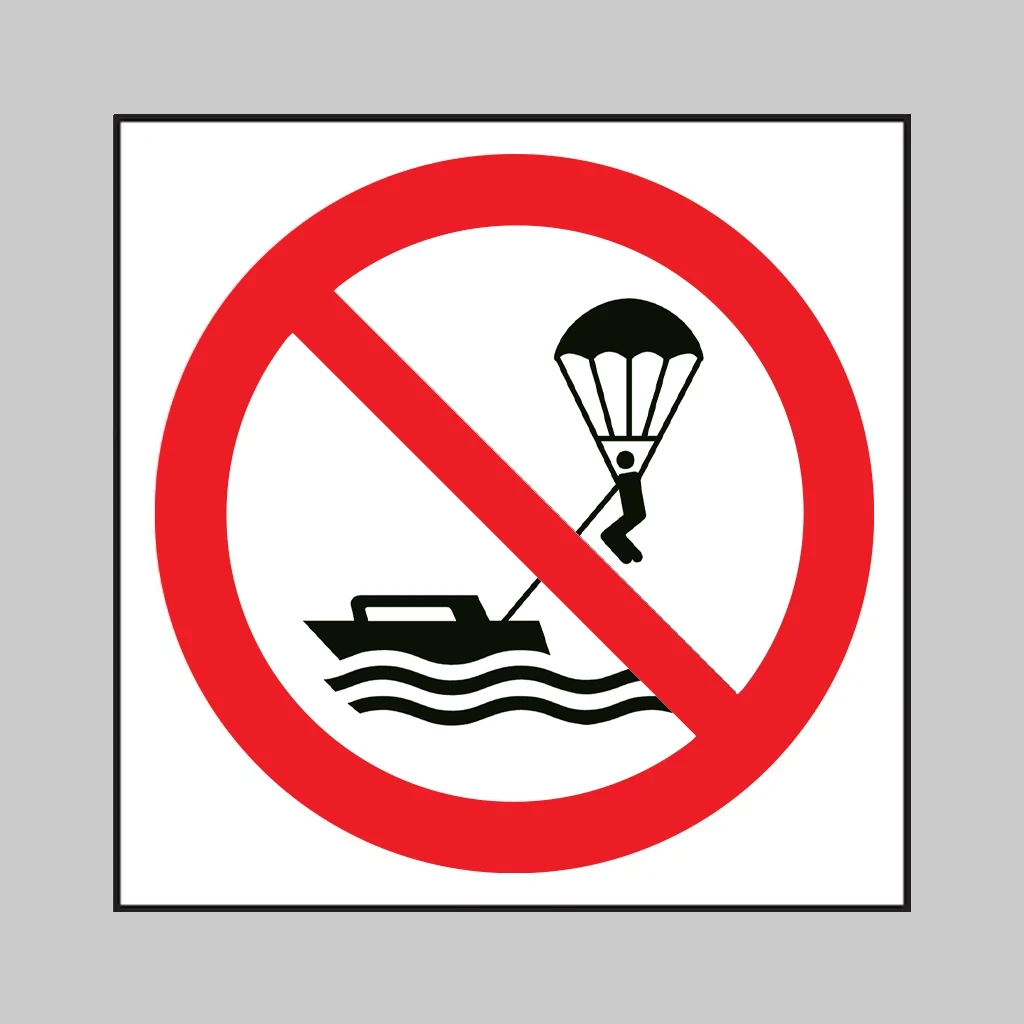 |
P066 | No Parasailing | The No Parasailing symbol shows that activities in which a person wearing a parachute-style canopy is towed behind a boat or another powered vehicle are prohibited. Parasailing equipment must not be launched, operated or recovered within the designated area. |
It is commonly used near harbours, shipping routes, protected coastlines, airports and waterways with insufficient space or clearance. Parasailing requires a large operating area both on the water and in the air. The restriction may be imposed because of vessel traffic, overhead hazards, wildlife protection, changing winds or limited emergency access. Tow lines and descending canopies can also create hazards for nearby boats and shoreline users. Display the sign at marinas, beaches, boat-launching points and recognised operating areas. Where parasailing is authorised elsewhere, provide clear directions and any applicable permit, weather or operator requirements. |
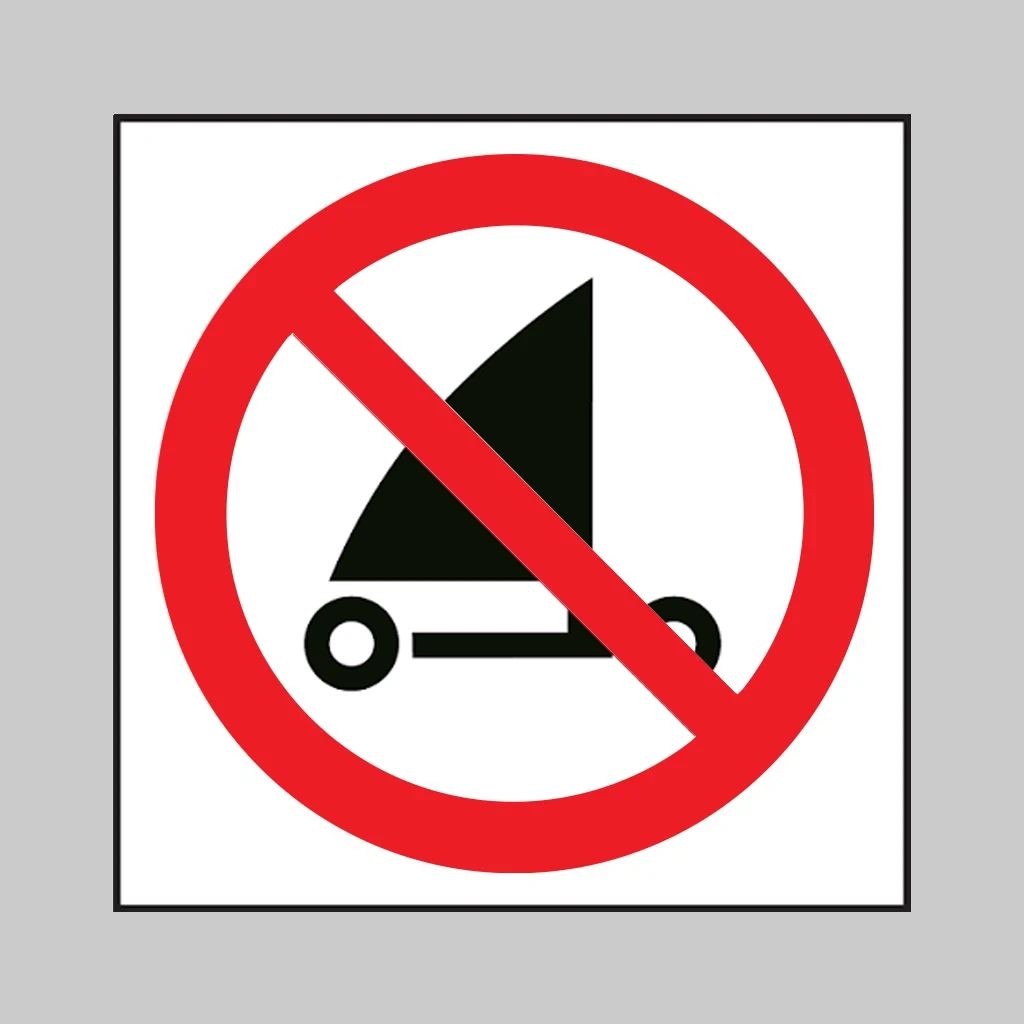 |
P067 | No Sand Yachting | The No Sand Yachting symbol shows that wheeled, wind-powered craft must not be driven across the marked beach, shoreline or open land. The restriction includes sand yachts and similar vehicles that use sails to travel over firm ground. |
It is commonly used on beaches, dunes, coastal paths, nature reserves and recreational areas. Fast-moving craft can endanger pedestrians, animals and other visitors who may not hear or see them approaching. The restriction may also protect nesting areas, fragile dunes and surfaces unsuitable for wheeled craft. Sand yachting may be limited during busy periods, wildlife breeding seasons or weather conditions that reduce visibility and control. Place the sign at vehicle access points, car parks, beach entrances and the boundaries of protected areas. Where the activity is permitted elsewhere, direct users to the designated operating zone and display any time or weather restrictions. |
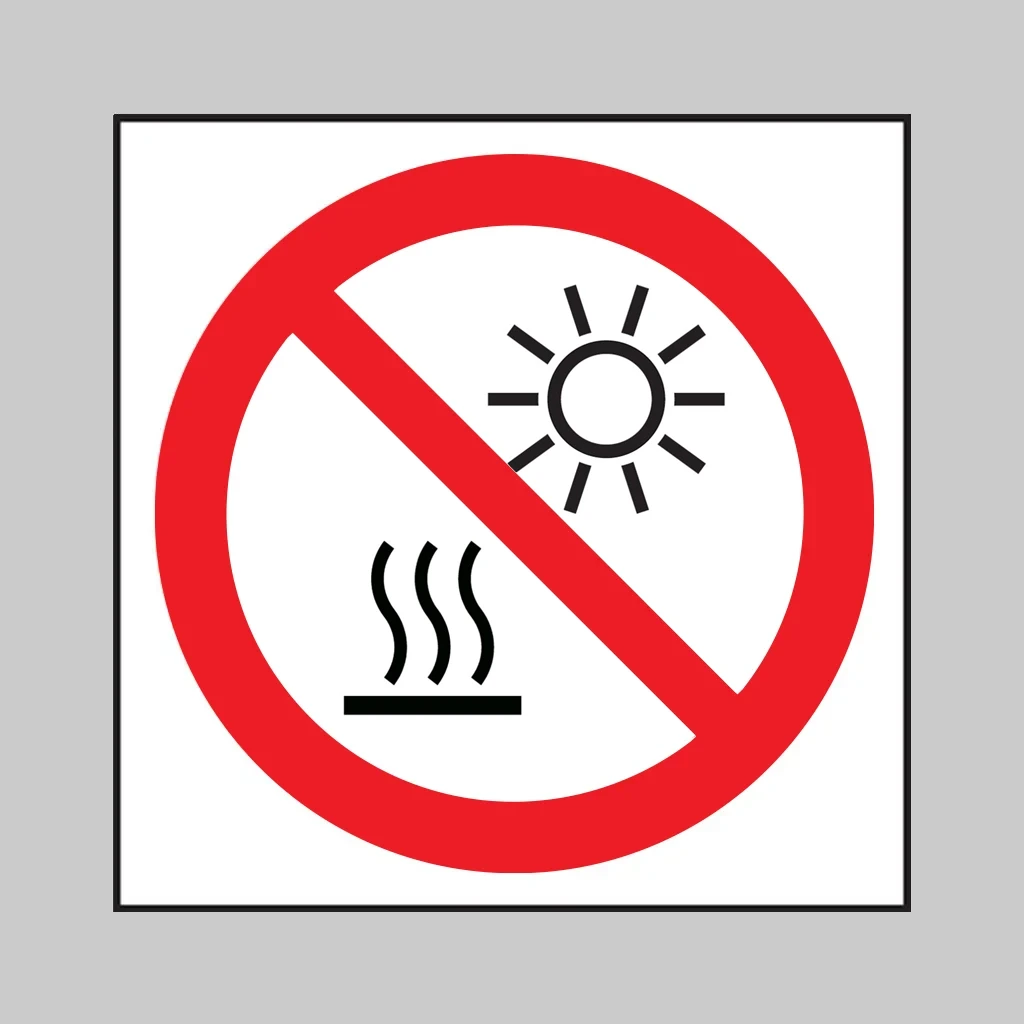 |
P068 | Do Not Expose to Direct Sunlight or Hot Surface | The Do Not Expose to Direct Sunlight or Hot Surface symbol shows that the marked item must be protected from direct sunlight and contact with hot surfaces. Excessive heat may increase internal pressure, damage components, alter the contents or cause the item to leak, rupture or malfunction. |
It is commonly used on heat-sensitive equipment, pressurised containers, batteries, medical products, chemicals and materials with specified storage-temperature limits. The warning helps preserve the safety and performance of the product. The symbol may appear on packaging, containers, storage cabinets and transport documentation. Relevant heat sources can include radiators, vehicle interiors, machinery, windows receiving strong sunlight and exposed outdoor storage areas. Keep the item in the temperature range stated by the manufacturer and position the warning where it remains visible during storage and handling. Where necessary, provide shaded, ventilated or temperature-controlled storage. |
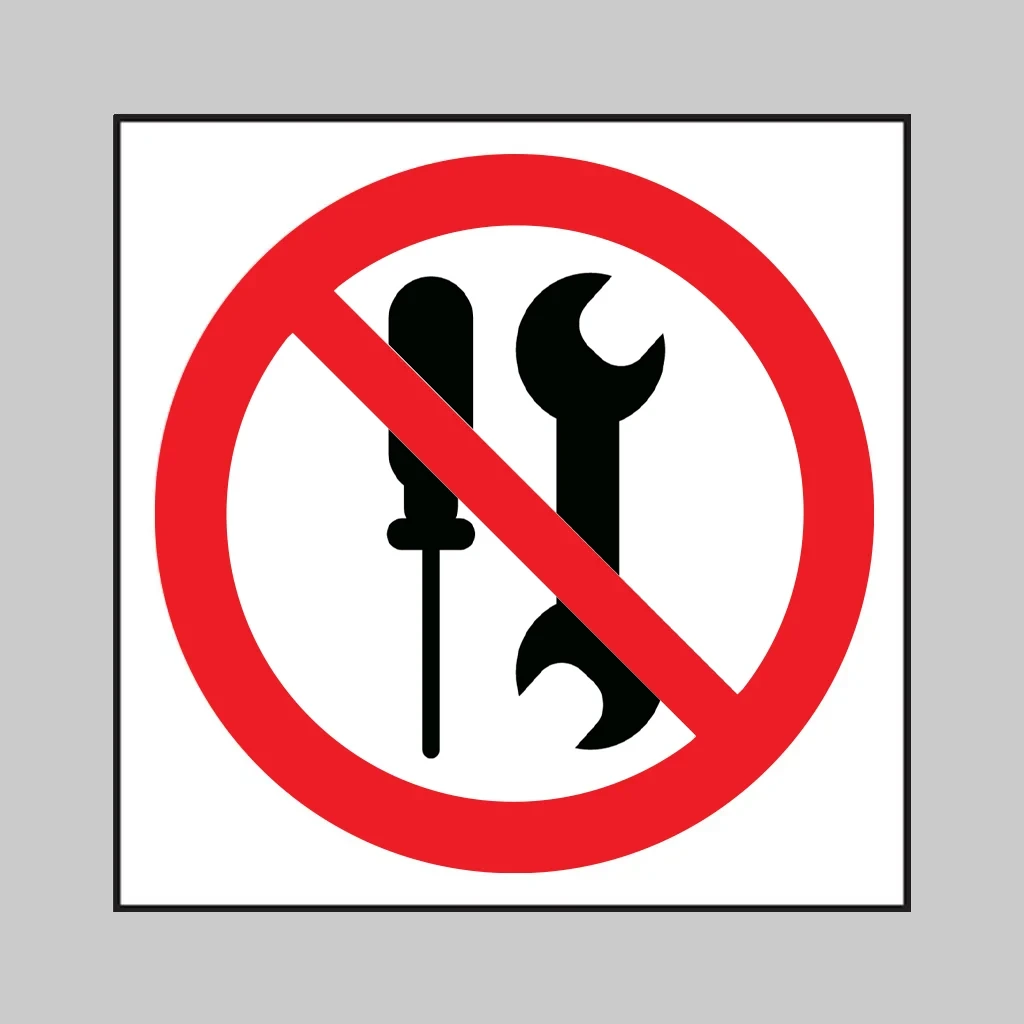 |
P069 | Not to Be Serviced by Users | The Not to Be Serviced by Users symbol shows that the equipment must not be opened, dismantled, repaired or internally adjusted by its normal user. Servicing must be carried out only by the manufacturer, an approved technician or another suitably authorised person. |
It is commonly used on electrical, electronic, medical and specialist technical equipment. Internal parts may contain hazardous voltage, stored energy, pressurised components, lasers or sensitive assemblies. The symbol may be displayed on access covers, service panels, product labels, packaging and operating instructions. Unauthorised servicing could expose the user to injury, damage calibrated components or invalidate safety protections and warranties. Place the warning close to any panel or fastener that could provide access to internal components. Faulty equipment should be switched off, isolated where appropriate and referred through the approved service procedure. |
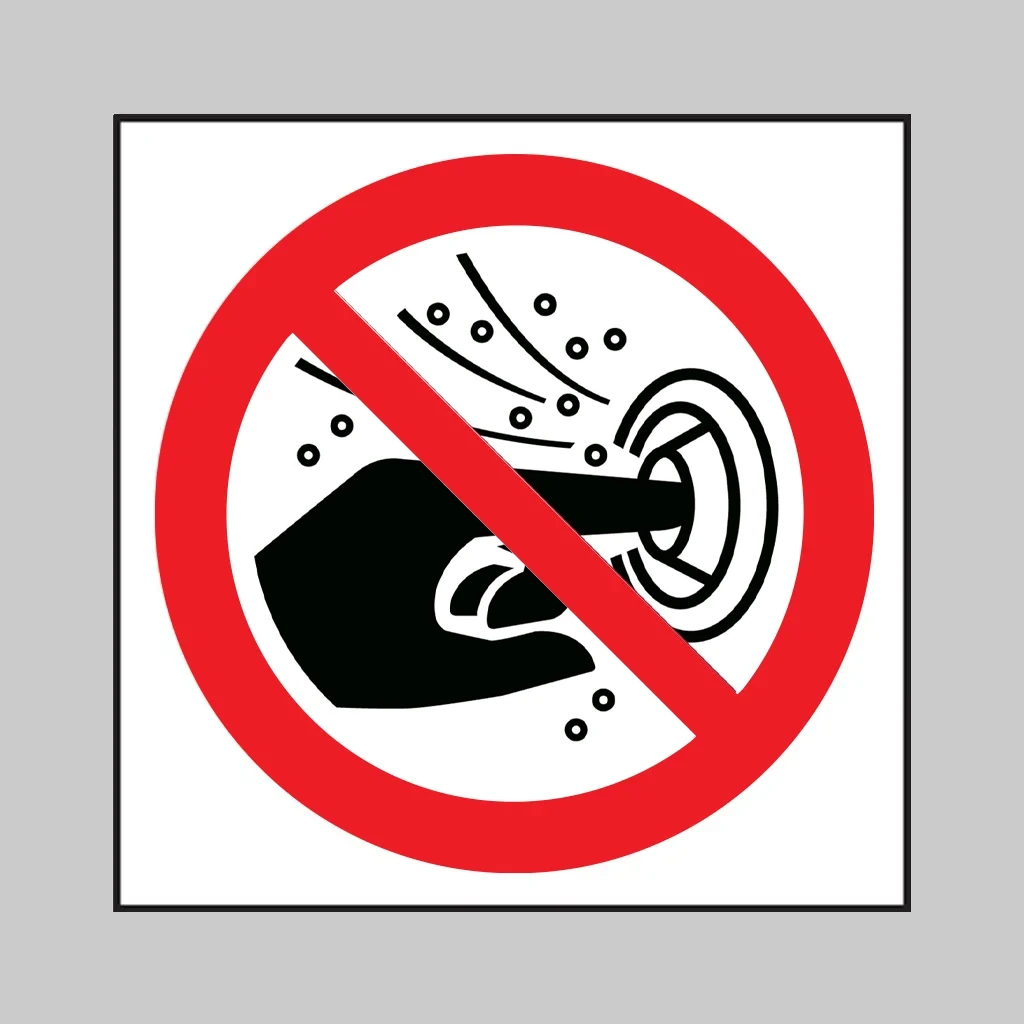 |
P070 | Do Not Put Finger into the Nozzle of a Hydromassage | The Do Not Put Finger into the Nozzle of a Hydromassage symbol shows that bathers must not insert their fingers into a hydromassage water jet, outlet or nozzle. Water pressure, suction, sharp internal parts or moving components could trap or injure the finger. |
It is commonly used in whirlpool baths, spas, hot tubs, hydrotherapy pools and similar installations fitted with powered massage jets. The warning discourages users from touching or investigating outlets while the system is operating. The symbol may be placed beside jets that have removable or adjustable fittings. Children may be particularly likely to explore openings and should be supervised whenever they use the facility. Position the symbol on or immediately beside the nozzle and repeat the instruction in the facility’s user guidance where appropriate. Damaged, loose or uncovered outlets should be reported to staff and inspected only after the system has been safely isolated. |
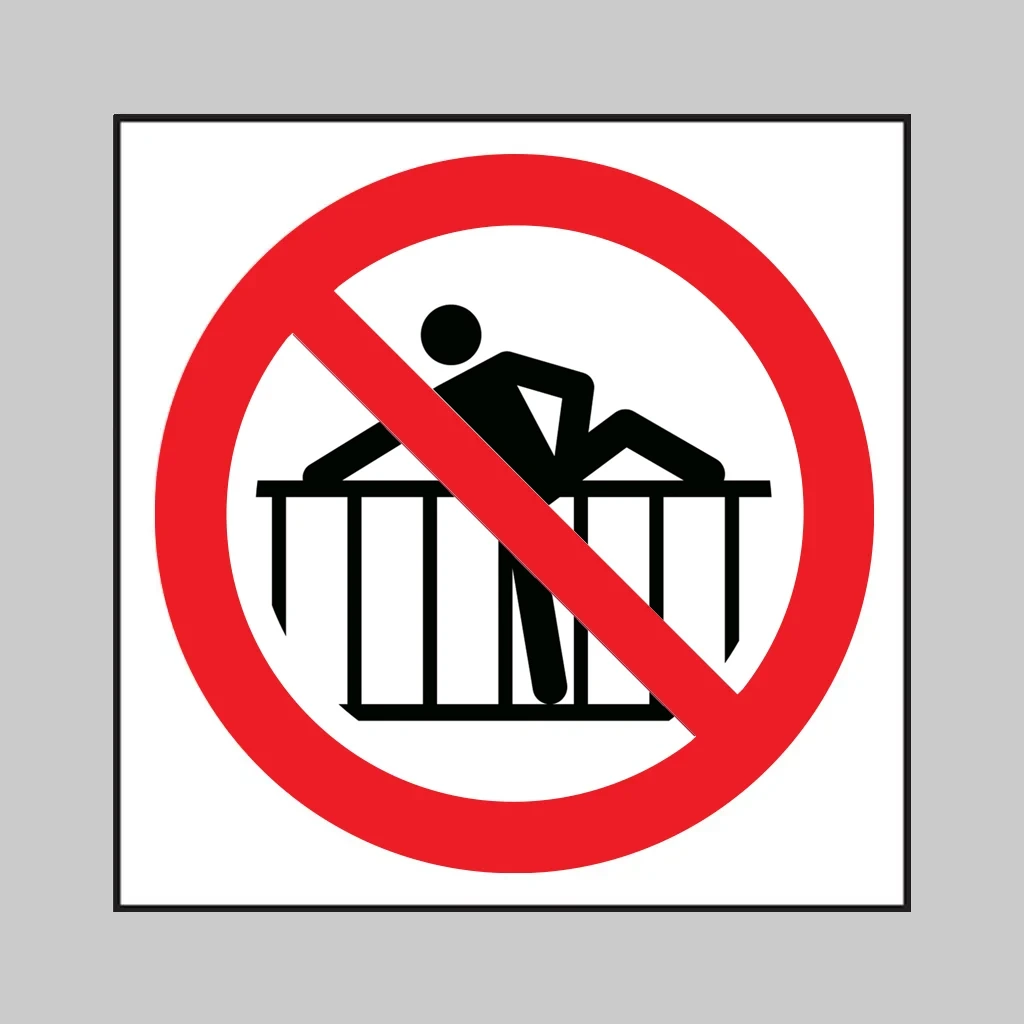 |
P071 | Do Not Cross Barrier | The Do Not Cross Barrier symbol shows that people must not climb over, pass through, move around or otherwise cross the marked fence, railing or protective boundary. The barrier defines an area that is hazardous, restricted or reserved for authorised access. |
It is commonly used around construction work, machinery, railway areas, unstable ground, electrical installations, crowd-control zones and waterside hazards. Crossing the barrier may place a person beyond the protection provided by the site’s normal controls. The restriction may also apply to temporary exclusion zones established during maintenance, lifting operations, emergencies or public events. The area beyond the barrier may contain hazards that are not immediately visible. Attach the sign directly to the barrier and position it at likely crossing points. Where unauthorised entry could result in serious harm, use secure fencing, locked gates, supervision or controlled access in addition to the warning. |
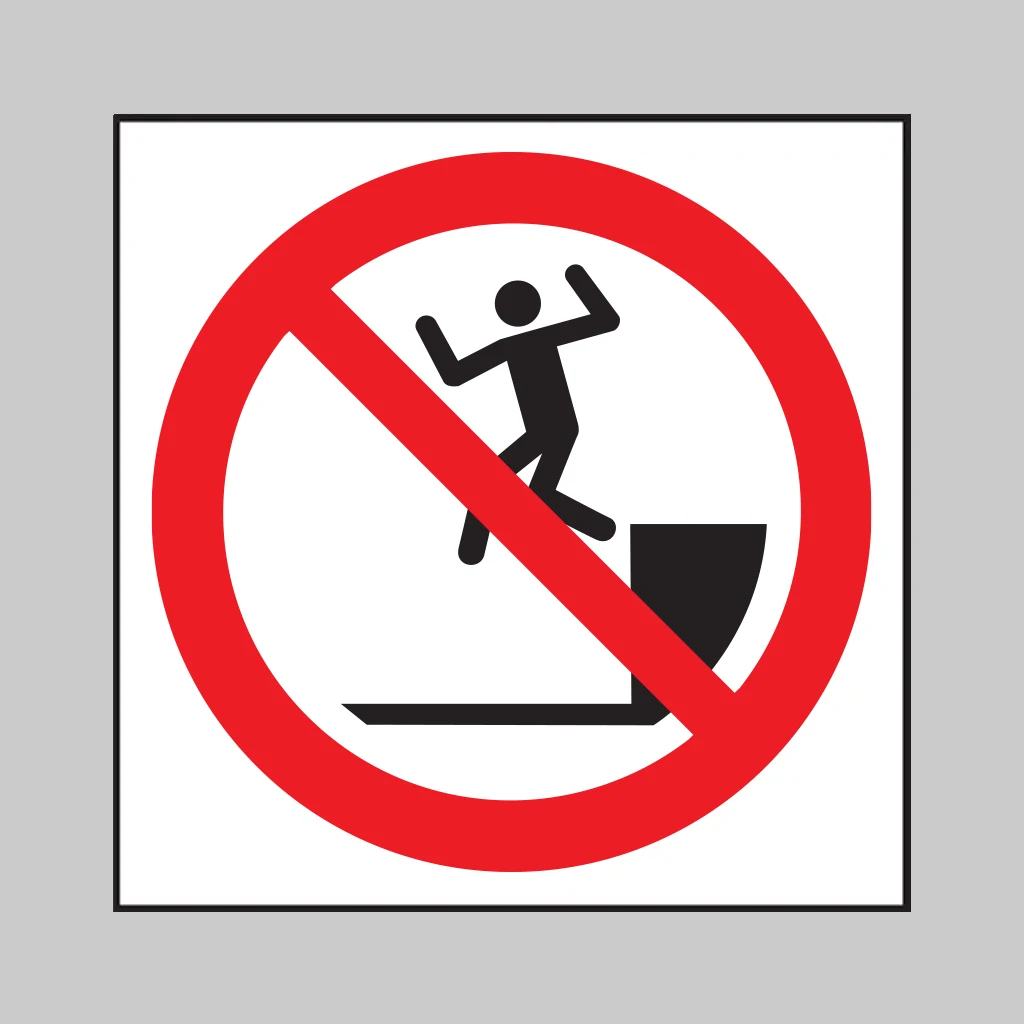 |
P072 | No Jumping Down | The No Jumping Down symbol shows that people must not jump from the marked platform, structure, ledge or raised position. A suitable ladder, staircase, ramp or other designated access route must be used to return safely to a lower level. |
It is commonly used on loading bays, vehicle beds, scaffolding, machinery, storage platforms and raised walkways. Workers may otherwise be tempted to jump down as a quicker alternative to using the approved access route. Even a relatively short jump can cause a sprain, fracture, head injury or loss of balance. The risk is increased where the landing surface is hard, slippery, uneven or obstructed by tools and materials. Position the symbol near edges and locations where someone may be tempted to take a shortcut. Ensure ladders, steps and other safe access equipment are available, maintained and conveniently positioned. |
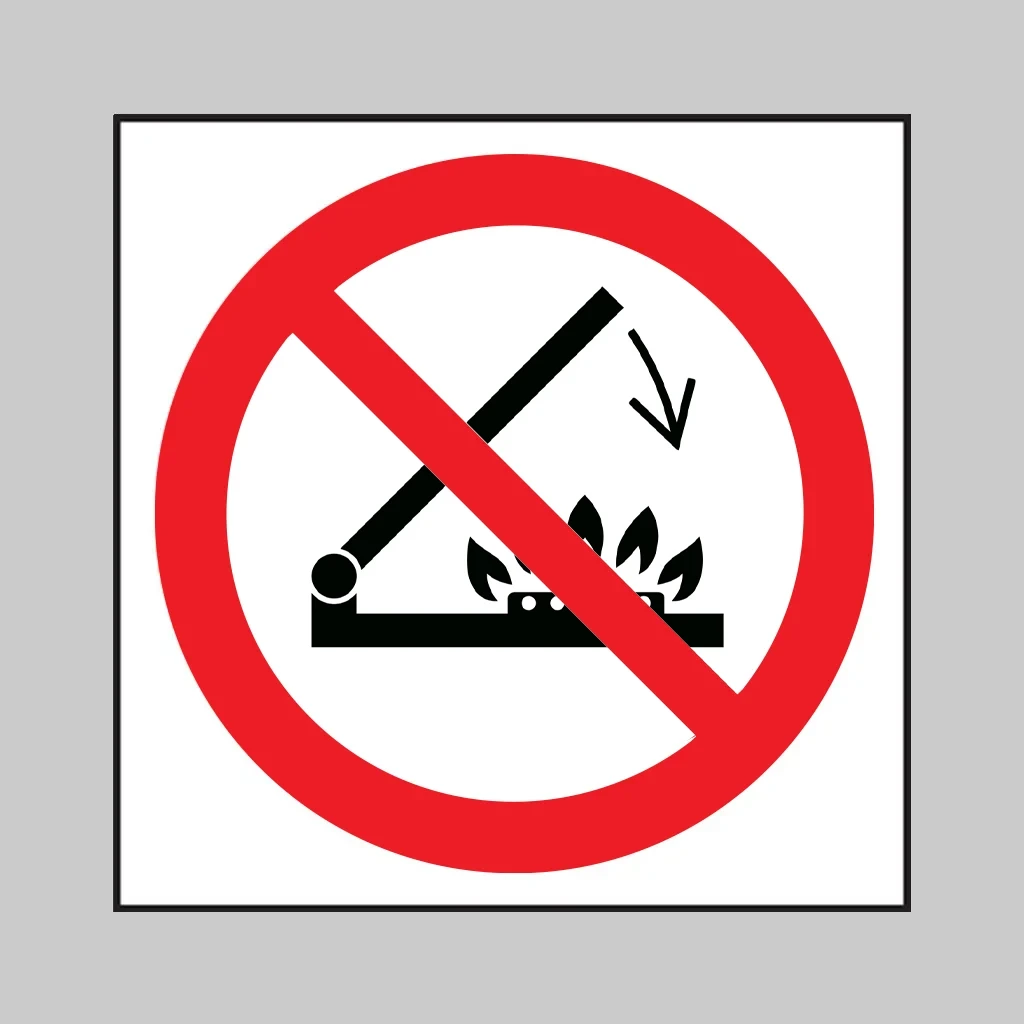 |
P073 | Do Not Shut Lid When Burners Are Operating | The Do Not Shut Lid When Burners Are Operating symbol shows that the lid of a cooker, hob or similar appliance must not be closed while one or more burners are alight or producing heat. Closing it may trap heat, damage the cover or create a fire, explosion or gas-accumulation hazard. |
It is commonly used on cooking appliances fitted with hinged glass or metal covers. Examples include domestic cookers, caravan hobs, marine galley equipment and portable catering units. The warning is particularly important where the closed cover sits directly above gas burners or hot electric elements. Residual heat may also damage the lid after the burner has been switched off. Place the symbol on or near the cover so it is visible before the user attempts to close it. The burners should be turned off and allowed to cool in accordance with the manufacturer’s instructions before the lid is lowered. |
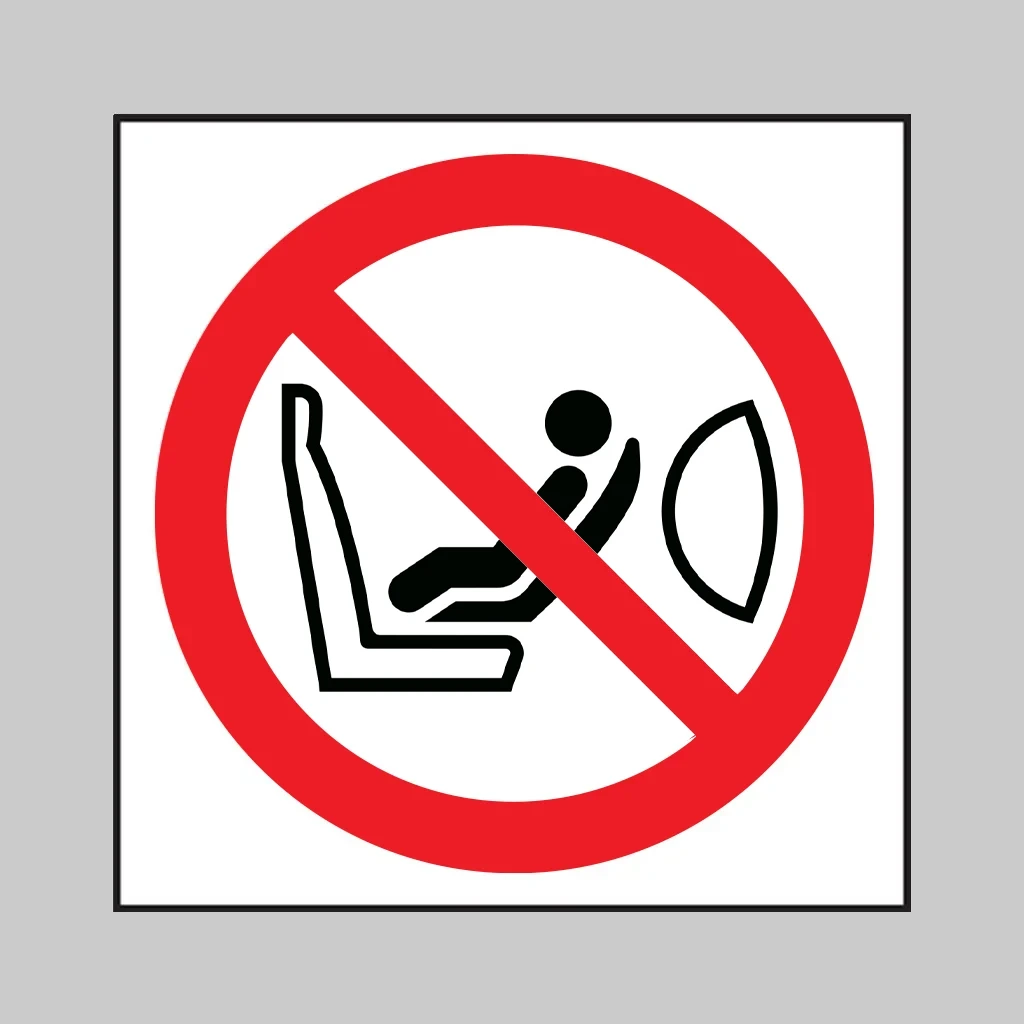 |
P074 | Child Seat Installation Prohibited | The Child Seat Installation Prohibited symbol shows that a rear-facing child restraint must not be fitted in the indicated passenger position. The restriction commonly applies where an active frontal airbag or another vehicle-design feature could endanger the child. |
It is commonly used on vehicle dashboards, sun visors, door frames and passenger seats. The marking identifies seating positions in which a rear-facing child seat cannot be installed safely under the stated vehicle configuration. The symbol may also appear in the manufacturer’s handbook and child-restraint instructions. Requirements can vary according to the seat position, airbag status, restraint type and vehicle model. Keep the warning visible before a child seat is installed and follow the vehicle and restraint manufacturers’ instructions. Use an approved alternative seating position unless the relevant guidance expressly confirms that installation is permitted. |
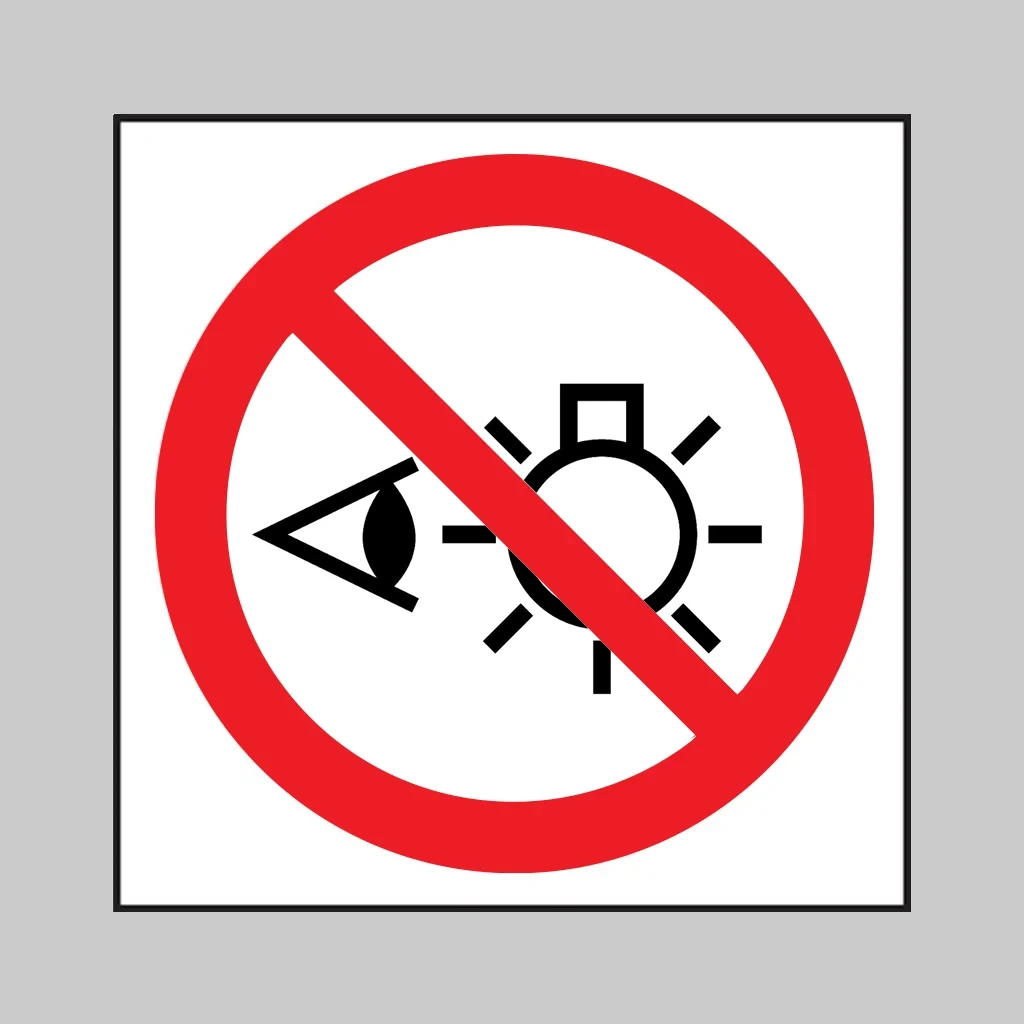 |
P075 | Do Not Stare at Light Source | The Do Not Stare at Light Source symbol shows that people must not look directly into the marked beam or illuminated component. High-intensity visible light, ultraviolet radiation or other optical radiation may cause temporary visual disturbance, discomfort or damage to the eyes. |
It is commonly used on powerful LED lamps, projectors, inspection equipment, curing systems, laboratory instruments, medical devices and specialist industrial lighting. The warning identifies sources that may be harmful when viewed directly at close range. The symbol may also be appropriate near testing equipment, optical systems and lamps that emit radiation outside the normally visible range. Reflections from mirrors or polished surfaces may present an additional risk in some installations. Place the sign on or beside the light source and where it can be seen before the equipment is activated. Use guards, shields, interlocks or suitable eye protection where direct exposure cannot otherwise be prevented. |
|
P075 | Do Not Stare at Light Source | The Do Not Stare at Light Source symbol shows that people must not look directly into the marked beam or illuminated component. High-intensity visible light, ultraviolet radiation or other optical radiation may cause temporary visual disturbance, discomfort or damage to the eyes. |
It is commonly used on powerful LED lamps, projectors, inspection equipment, curing systems, laboratory instruments, medical devices and specialist industrial lighting. The warning identifies sources that may be harmful when viewed directly at close range. The symbol may also be appropriate near testing equipment, optical systems and lamps that emit radiation outside the normally visible range. Reflections from mirrors or polished surfaces may present an additional risk in some installations. Place the sign on or beside the light source and where it can be seen before the equipment is activated. Use guards, shields, interlocks or suitable eye protection where direct exposure cannot otherwise be prevented. |
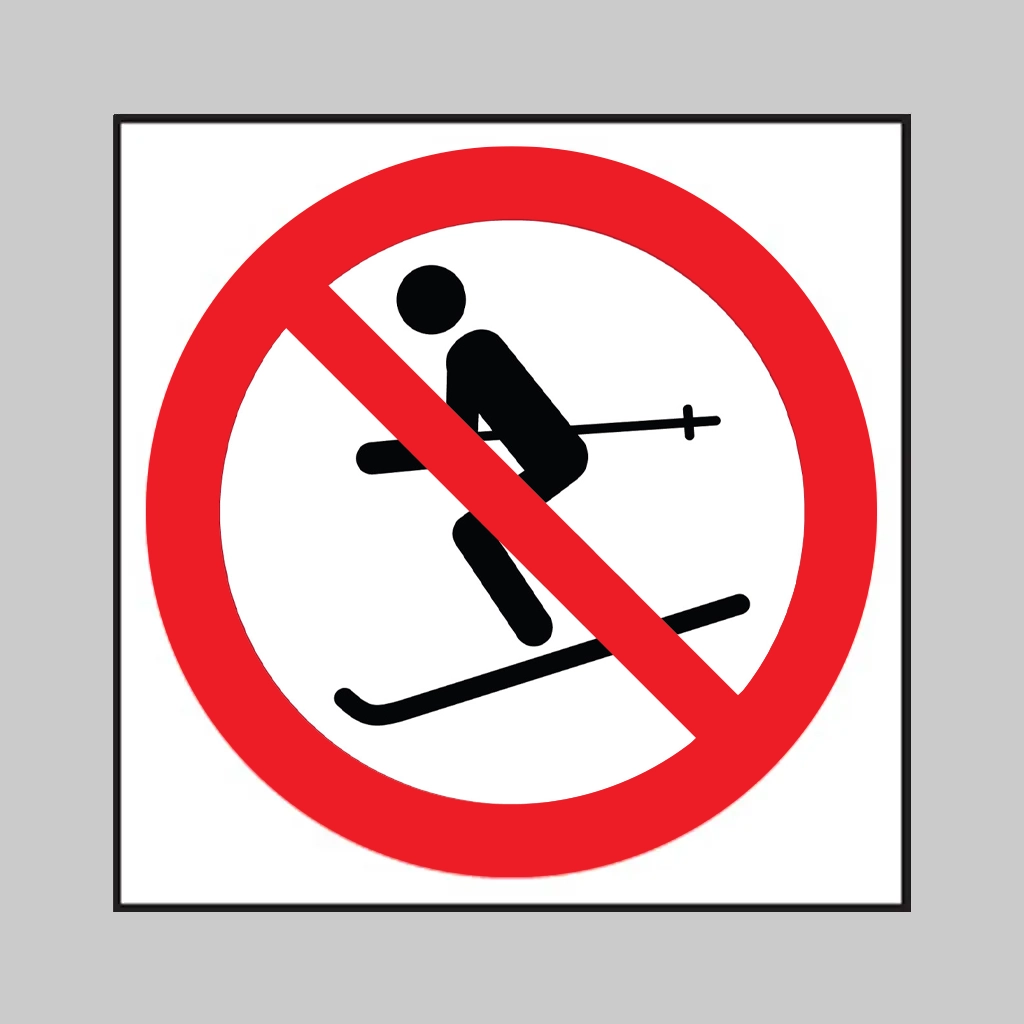 | P076 | No Skiing | The No Skiing symbol shows that skiing is prohibited within the marked area or along the identified route. The restriction may apply because the ground, slope or surrounding environment is unsuitable for skiing, or because skiers could interfere with pedestrians, vehicles, machinery or other activities. | It is commonly used on closed ski runs, pedestrian routes, access roads, resort service areas, protected land and locations where skiing would expose people to unsafe terrain or operational hazards. The sign helps direct skiers away from areas that have not been prepared, inspected or approved for recreational use. The symbol may also be displayed near avalanche-control zones, construction or maintenance work, snowmaking equipment, vehicle routes and environmentally sensitive areas. Restrictions may be permanent, seasonal or temporary depending on weather, snow conditions and site operations. Place the sign at the beginning of the restricted route and at other likely access points before skiers enter the area. Where an alternative run or authorised route is available, provide clear directional signs, barriers or piste markings to guide users safely away from the prohibited zone. |
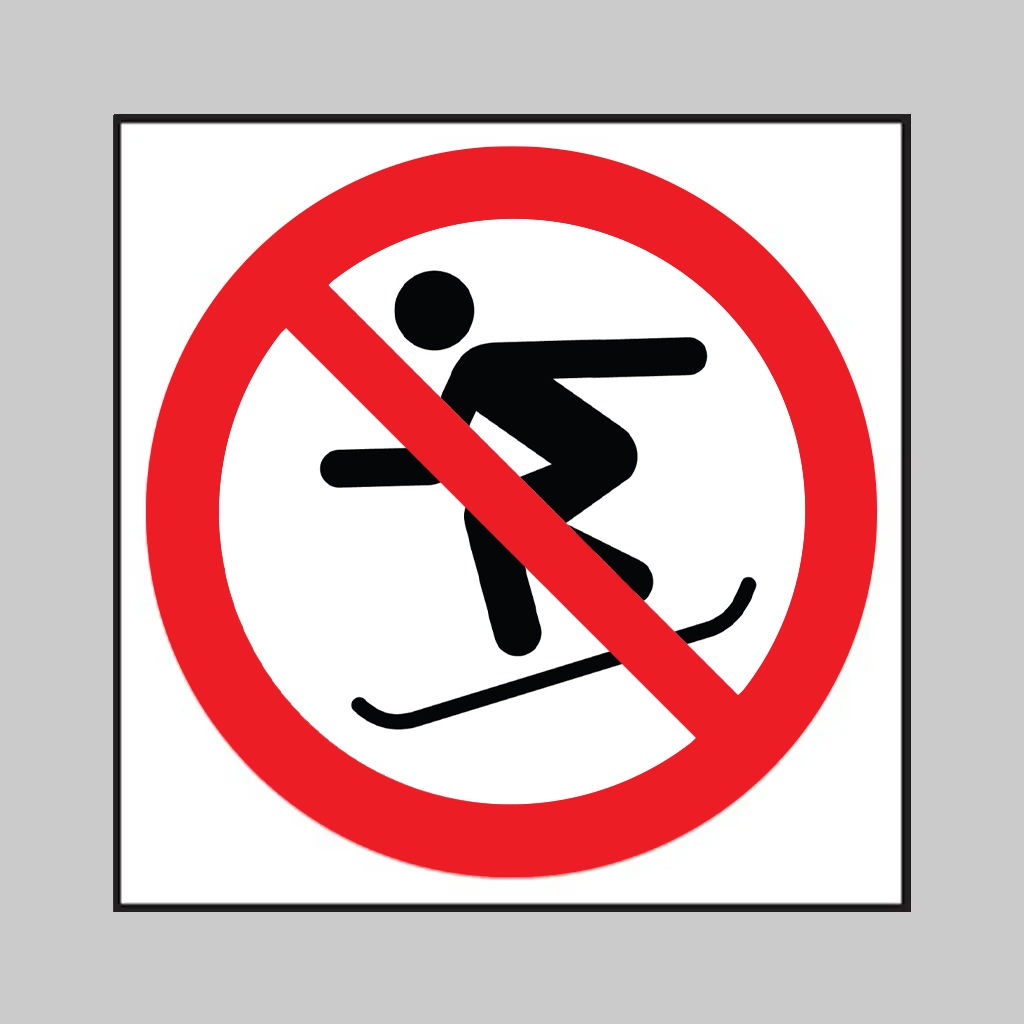 | P077 | No Snowboarding | The No Snowboarding symbol shows that snowboarding is prohibited within the marked area or along the identified route. The restriction may apply because the slope, surface or surrounding environment is unsuitable for snowboarders, or because their presence could conflict with pedestrians, skiers, vehicles or other activities. | It is commonly used on ski runs, tow tracks, pedestrian routes, resort access roads and areas reserved for skiing or other specific activities. The sign helps direct snowboarders away from routes that have not been designed, prepared or approved for snowboard use. The symbol may also be displayed near maintenance zones, competition courses, beginner areas, narrow trails, protected land and locations containing machinery or operational hazards. Restrictions may be permanent, seasonal or temporary depending on snow conditions, visibility and resort operations. Place the sign at the beginning of the restricted route and at every likely access point before snowboarders enter the area. Where an alternative run or authorised snowboarding zone is available, provide clear directional signs, barriers or piste markings to guide users safely. |
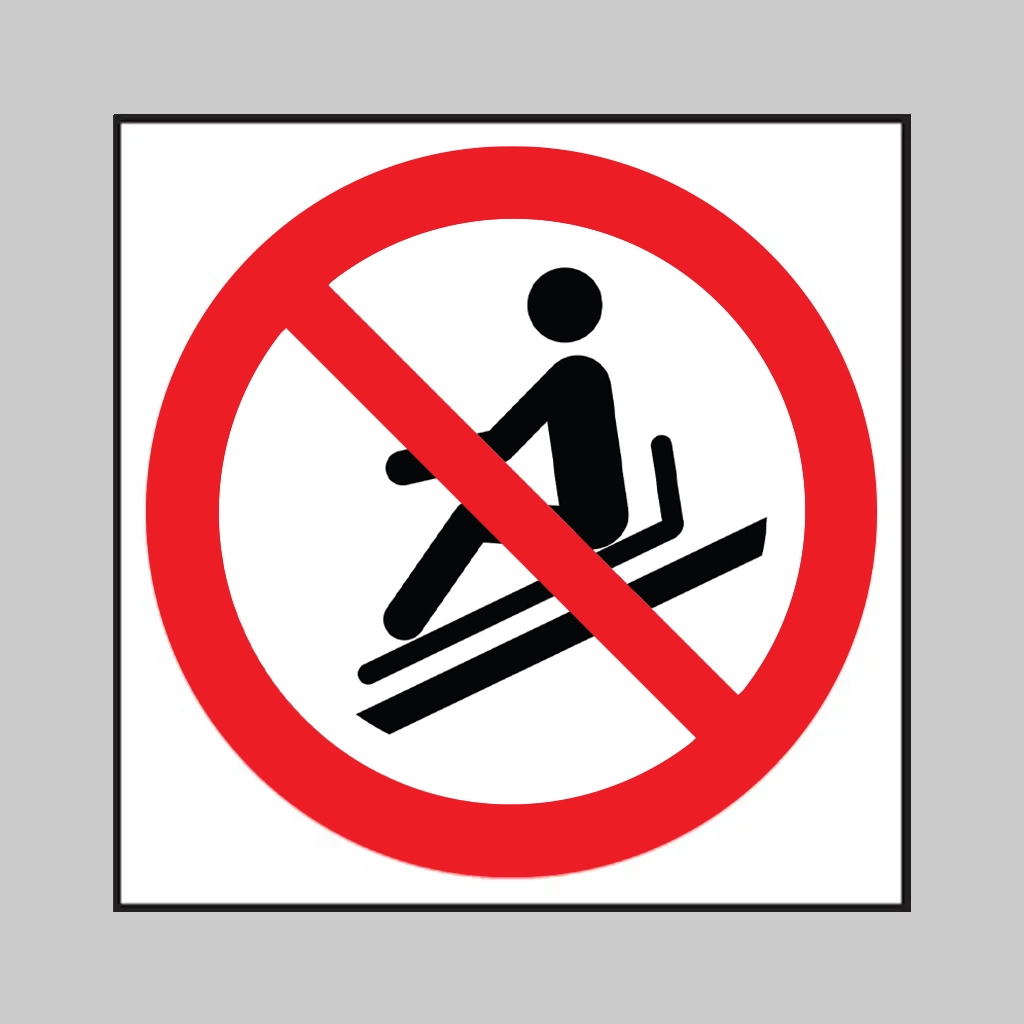 | P078 | No Tobogganing or Sledding | The No Tobogganing or Sledding symbol shows that toboggans, sledges and similar downhill snow-riding equipment must not be used within the marked area or along the identified route. The restriction may apply because the slope, surface or surrounding environment is unsuitable, or because riders could collide with pedestrians, skiers, vehicles, structures or other users. | It is commonly used on ski slopes, pedestrian routes, resort access roads, service areas and locations reserved for skiing or other controlled activities. The sign helps keep sledges and toboggans away from routes that have not been prepared, inspected or approved for downhill riding. The symbol may also be displayed near steep drops, icy sections, roads, car parks, frozen water, maintenance zones and areas containing machinery or fixed obstacles. Restrictions may be permanent, seasonal or temporary depending on snow conditions, visibility and site operations. Place the sign at the top of the restricted slope and at every likely access point before riders enter the area. Where an approved sledding or tobogganing area is available, provide clear directional signs, barriers or route markings to guide users safely away from the prohibited zone. |
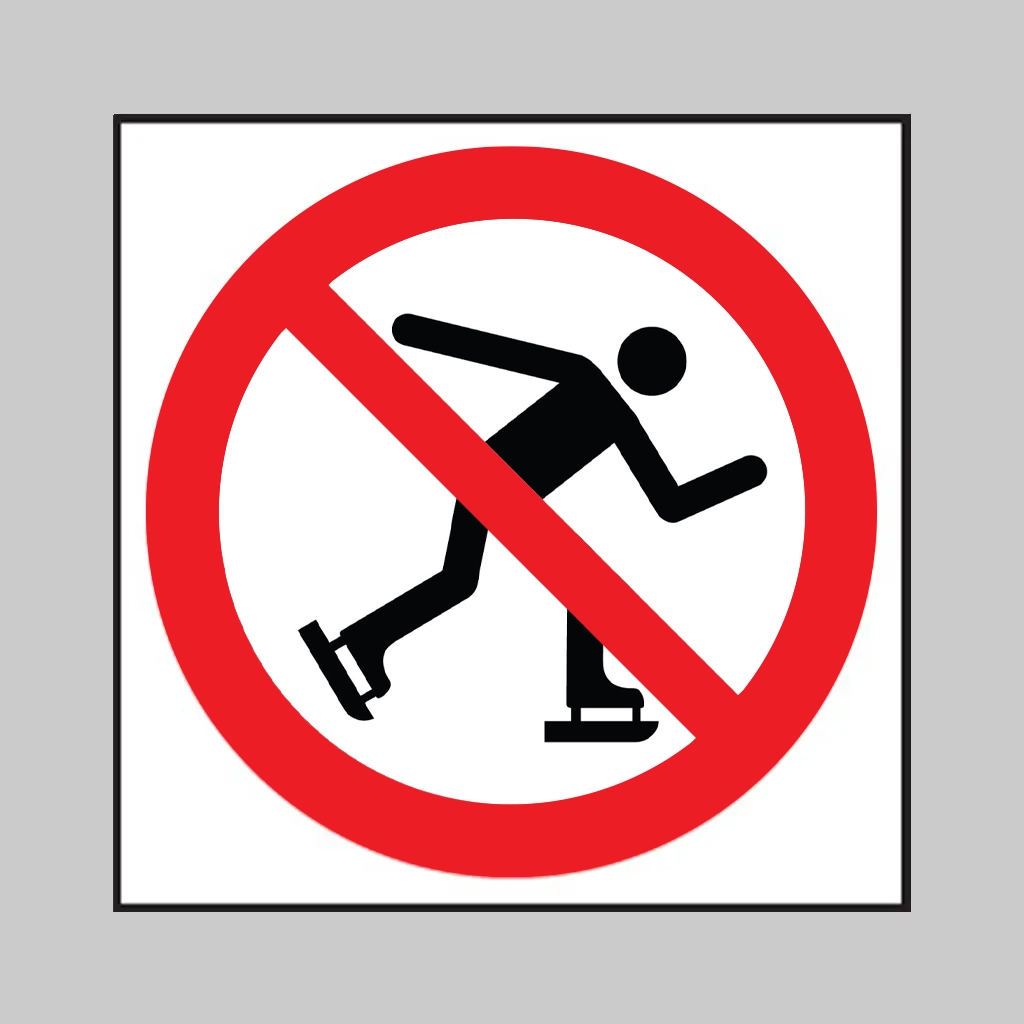 | P079 | No Ice Skating | The No Ice Skating symbol shows that ice skating is prohibited within the marked area or on the identified frozen surface. The restriction may apply because the ice is too thin, uneven, damaged or otherwise unsuitable, or because skaters could interfere with pedestrians, vehicles, maintenance work or other activities. | It is commonly used beside frozen lakes, ponds, reservoirs, canals, outdoor rinks and other areas where people may attempt to skate. The sign helps prevent access to ice that has not been inspected, prepared or approved for recreational use. The symbol may also be displayed near thawing ice, flowing water, drainage outlets, construction zones and areas used by maintenance vehicles or emergency services. Restrictions may be permanent, seasonal or temporary depending on temperature, ice thickness and changing weather conditions. Place the sign at shoreline entrances, access paths and other likely approach points before users step onto the ice. Where an approved skating area is available, provide clear directional signs, barriers or route markings to guide people towards the authorised location. |
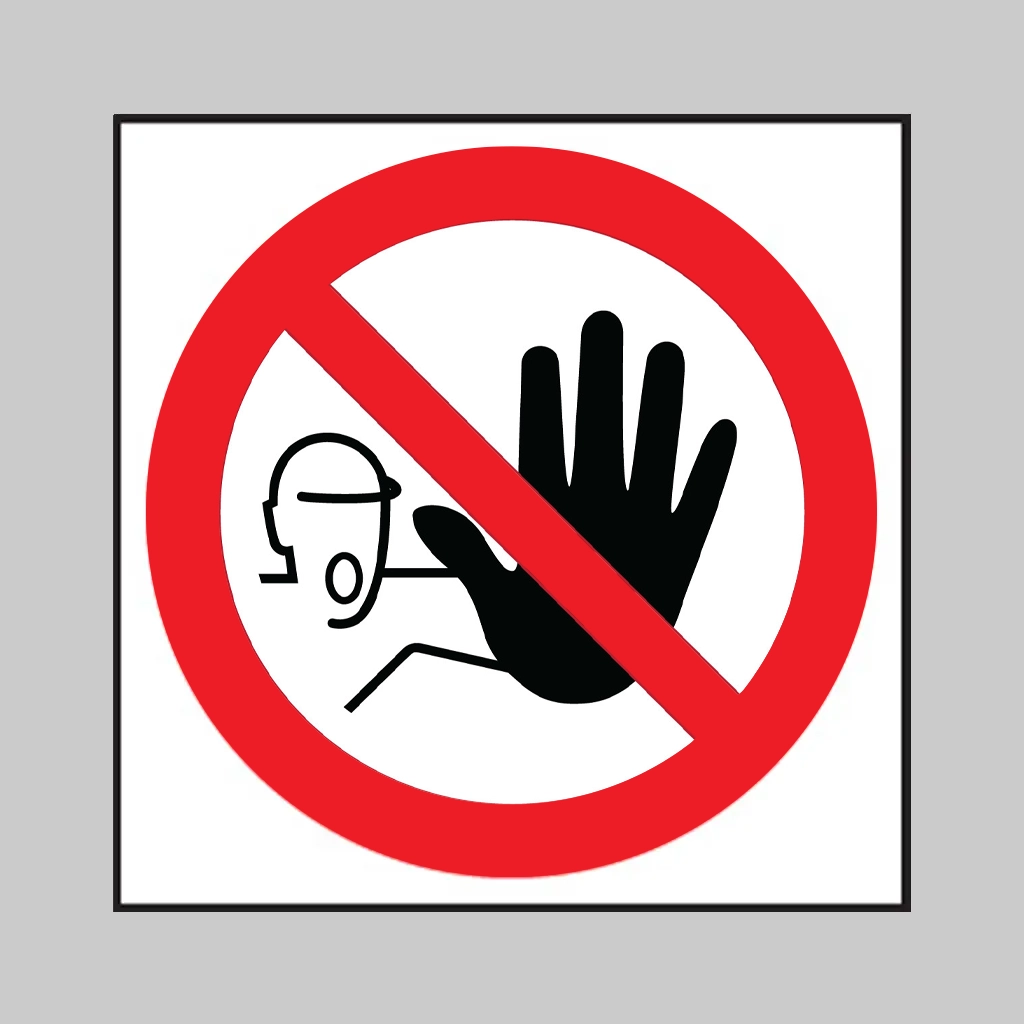 | P080 | No Access for Unauthorised People | The No Access for Unauthorised People symbol shows that only individuals who have received the necessary permission, clearance or approval may enter the marked area. Visitors, members of the public and other unauthorised people must not proceed beyond the designated access point. | It is commonly used at construction sites, factories, warehouses, laboratories, plant rooms, secure offices and other controlled premises. The restriction helps prevent people from entering areas containing machinery, hazardous substances, sensitive information or operations that require specialist training. The symbol may also be displayed at staff-only entrances, maintenance areas, utility compounds, storage facilities and locations protected for security or privacy reasons. Authorisation may depend on an access pass, security clearance, induction, permit or approval from the person responsible for the area. Place the sign at doors, gates, corridors and other normal approach points before unauthorised people can enter. Where access could result in serious harm or compromise security, support the warning with locked doors, barriers, access-control systems or supervision. |
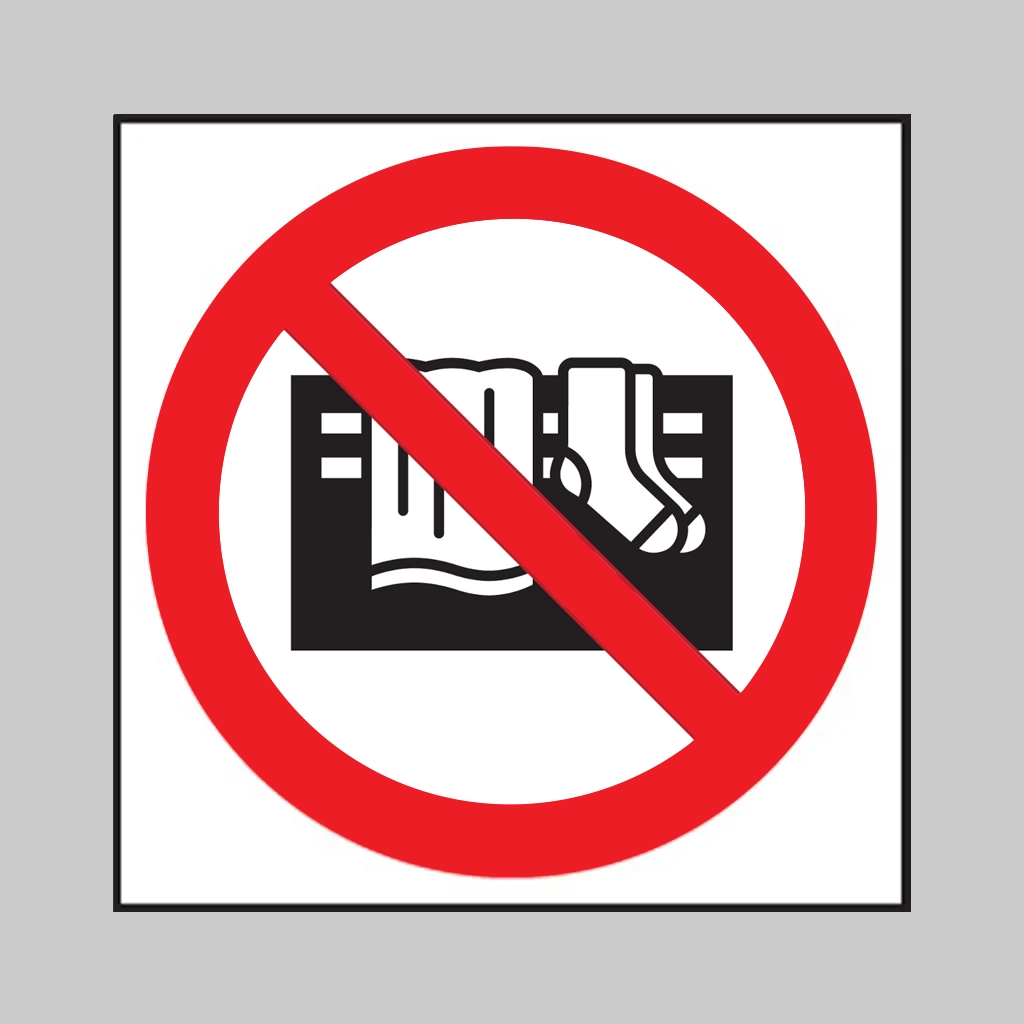 | P081 | Do Not Cover Appliance | The Do Not Cover Appliance symbol shows that the marked appliance must not be covered with clothing, towels, blankets or other materials while it is operating or cooling down. Covering the appliance may obstruct airflow, trap heat and cause overheating, damage, fire or unsafe operation. | It is commonly used on portable heaters, electric radiators, convector heaters, fan heaters and other appliances that rely on clear ventilation openings to release heat safely. The sign reminds users not to place items directly over the appliance or block its air inlets and outlets. The symbol may also be displayed in bathrooms, bedrooms, offices, accommodation units and drying areas where clothing or fabrics could accidentally be placed over heating equipment. Sufficient clearance should be maintained around the appliance in accordance with the manufacturer’s instructions. Place the symbol directly on the appliance or beside the relevant ventilation surface so it remains visible before and during use. Where necessary, support the warning with fixed guards, suitable positioning and written instructions explaining the minimum clearance required from curtains, furniture and combustible materials. |
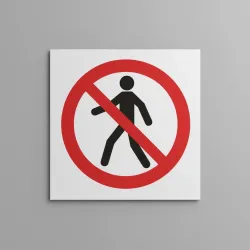
No Admittance Symbol Safety Signs
The No Admittance sign is primarily used to control access to certain areas where entry could pose a risk to individuals or compromise safety protocols. In environments like construction sites, laboratories, or areas with hazardous materials, limiting access ensures that only trained or authorised personnel enter, reducing the likelihood of accidents or injuries. This restriction helps maintain a ..
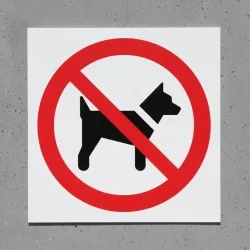
No Dogs (Symbol) Safety Signs
Used to clearly indicate that dogs are not allowed in a specific area. This restriction helps maintain hygiene, safety, and comfort for all visitors by preventing potential disturbances, allergies, or hazards related to dogs. These signs are commonly placed in places such as playgrounds, parks, nature reserves, sports fields, outdoor dining areas, or certain public buildings where the presenc..
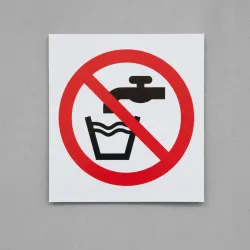
Not Drinking Water Symbol Safety Signs
Clearly indicate that the water from a specific source is not safe or intended for drinking. This helps prevent accidental consumption of contaminated, untreated, or non-potable water, protecting people from potential health risks such as illness or poisoning. These signs are typically placed near water taps, hoses, industrial pipes, irrigation systems, or any other water source that is unsui..
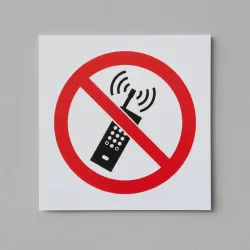
No Mobile Phones (Symbol) Safety Signs
Clearly communicate that the use of mobile phones is prohibited in a specific area. This restriction is important in places where mobile phone usage can cause distractions, interfere with sensitive equipment, or compromise safety. The symbol ensures the message is quickly understood by everyone, regardless of language or literacy levels. Such signs are commonly found in environments like hosp..