
First Aid Signs FAQs
Written by the Technical Team at Caledonia Signs
Last reviewed: July 2026
Welcome to the Caledonia Signs First Aid Signs Knowledge Centre
First aid safety signs play an essential role in helping people quickly locate medical assistance and emergency equipment in the workplace. In the event of an accident, injury, or sudden illness, clear and visible signage ensures that employees, visitors, and contractors can identify the location of first aid kits, first aid rooms, defibrillators, eyewash stations, and other essential facilities without delay.
Choosing and using the correct first aid signs can raise a number of questions, from understanding UK legal requirements to knowing where signs should be installed and which symbols and colours should be used. Factors such as compliance with safety standards, sign placement, visibility, materials, and the type of first aid facility being identified all play an important role in creating effective workplace safety communication.
This page answers some of the most frequently asked questions about first aid safety signs, including UK regulations, BS EN ISO 7010 symbols, colour requirements, installation guidance, customisation options, and the differences between first aid signs and other medical emergency signage. Whether you are responsible for an office, warehouse, factory, school, construction site, healthcare facility, or public building, this guide provides practical information to help you choose the right signage.
Using clear, compliant first aid safety signs is a simple but effective way to improve emergency response and support a safer working environment. From standard first aid location signs to customised and multi-message solutions, selecting the right signage helps ensure that essential medical support can be found quickly when it is needed most. Explore the questions and answers below to learn more about first aid safety signs and workplace requirements in the UK.
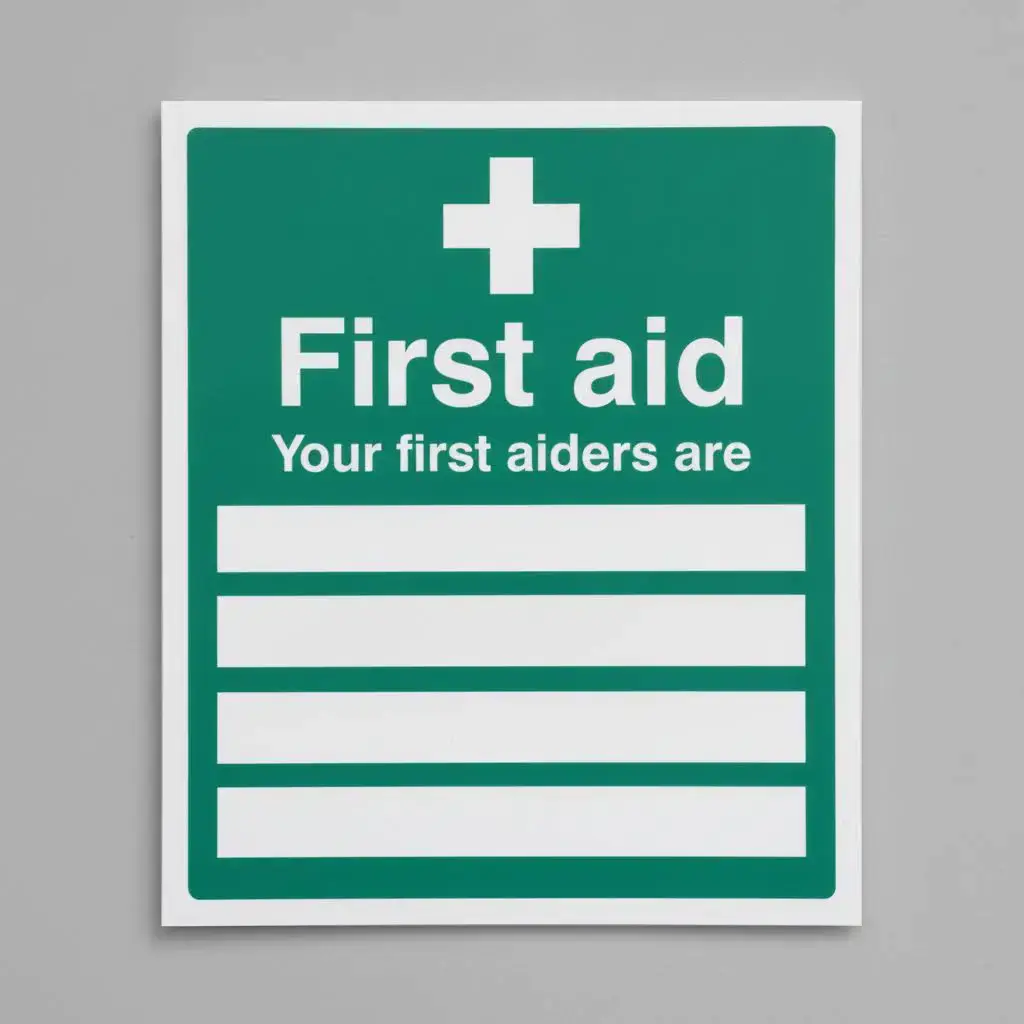
Why are first aid safety signs important in the workplace?
First aid safety signs are important in the workplace because they help employees, visitors, and contractors quickly locate essential first aid facilities during an emergency. In the event of an injury, illness, or accident, every second can matter, and clear, visible signage ensures that people can easily identify the location of first aid kits, first aid rooms, defibrillators, eyewash stations, and other emergency equipment.
Effective first aid signage supports a safer working environment by providing clear visual guidance that can be understood quickly, even by people who may be unfamiliar with the workplace layout. Standardised green and white first aid symbols, including those recognised under BS EN ISO 7010, help ensure that safety information is consistent and easily recognisable across different industries and locations.
In the UK, employers have a responsibility to provide appropriate information and arrangements for workplace first aid under the Health and Safety (First-Aid) Regulations 1981. Clearly displayed first aid signs form an important part of these arrangements by helping workers and visitors understand where assistance and emergency resources are available.
Well-positioned first aid safety signs can improve emergency response times, reduce confusion, and support workplace safety procedures. Whether used in offices, factories, warehouses, schools, construction sites, or public buildings, clear first aid signage helps ensure that essential medical support can be found quickly when it is needed most.
Are first aid signs required by UK law?
First aid signs are not specifically required in every workplace by UK law, but employers have a legal responsibility to ensure that suitable first aid arrangements are provided and that employees are aware of where first aid facilities are located. Clear first aid signage is an important way of meeting this responsibility by making first aid equipment, facilities, and trained personnel easy to identify during an emergency.
The Health and Safety (First-Aid) Regulations 1981 require employers to provide adequate and appropriate first aid equipment, facilities, and personnel based on the risks within their workplace. While the regulations do not state that every first aid kit or facility must display a sign, guidance from the Health and Safety Executive (HSE) recommends that first aid arrangements are clearly communicated so employees know where and how to access help.
Where safety signs are needed, they must comply with the requirements of the Health and Safety (Safety Signs and Signals) Regulations 1996. First aid safety signs typically use the recognised green and white emergency first aid symbol, which aligns with BS EN ISO 7010 standards for safety pictograms, helping people identify first aid locations quickly and consistently.
Using clearly visible first aid signs in workplaces such as offices, warehouses, factories, schools, construction sites, and public buildings helps improve emergency response and supports good health and safety practice. Although not always a legal requirement on their own, suitable first aid signs are a simple and effective way to ensure that employees, visitors, and contractors can quickly find essential medical assistance when required.
Do first aid signs need to comply with BS EN ISO 7010?
First aid signs in the UK should follow the recognised design principles of BS EN ISO 7010, which provides standardised safety symbols and pictograms to ensure safety information is easily understood. While BS EN ISO 7010 is not a law itself, it is the recognised standard for safety symbols and is widely used to help create consistent and clearly recognisable signage in workplaces and public environments.
The Health and Safety (Safety Signs and Signals) Regulations 1996 require employers to use safety signs where risks cannot be adequately controlled by other means and specify that signs should be clear, legible, and easily understood. Using ISO 7010-compliant first aid signs helps meet these requirements by providing a familiar green and white emergency symbol that people can quickly identify, regardless of language or nationality.
A compliant first aid sign typically uses the internationally recognised first aid symbol, consisting of a white cross on a green background, to indicate the location of first aid facilities such as first aid kits, first aid rooms, eyewash stations, and defibrillators. This consistent design reduces confusion and helps people locate emergency resources more quickly.
Although there may be older first aid signs still in use, choosing BS EN ISO 7010-compliant first aid safety signs is recommended for new installations and replacement signage. Using standardised signs helps businesses maintain effective safety communication, support workplace compliance, and ensure that first aid facilities can be found quickly when an emergency occurs.
Caledonia Signs Expert Tip
A first aid sign is only effective if people know where to find it quickly. Install first aid signs in prominent, well-lit locations near first aid kits, first aid rooms, defibrillators, eyewash stations, and other emergency equipment. Avoid placing signs behind doors, furniture, or in areas where they may be hidden from view.
For larger workplaces, consider using directional first aid signs to guide people from different areas of the building to the nearest first aid facility. Regularly check that signs remain clean, visible, and up to date, and use BS EN ISO 7010-compliant green and white first aid symbols to ensure they are easily recognised by employees, visitors, and contractors. A clear, correctly positioned first aid sign can save valuable time during an emergency.
What is the difference between a first aid sign and a medical emergency sign?
The main difference between a first aid sign and a medical emergency sign is the type of assistance or facility they are used to identify. A first aid sign indicates the location of basic first aid facilities, such as first aid kits, first aid rooms, trained first aiders, or emergency medical equipment. A medical emergency sign is generally used to provide information about urgent medical assistance or specific emergency response facilities.
First aid signs are typically recognised by the familiar green and white safety symbol, featuring a white cross on a green background, in line with the principles of BS EN ISO 7010 safety signage. They are commonly installed in workplaces, schools, warehouses, offices, and public buildings to show where people can access immediate first aid support for minor injuries, illness, or accidents.
Medical emergency signs may be used for more specific situations, such as identifying locations of defibrillators (AEDs), emergency treatment areas, medical assistance points, or specialist healthcare facilities. These signs help direct people to resources that may be required during a more serious incident, where rapid access to medical equipment or professional assistance is needed.
While both types of signs support workplace health and safety, choosing the correct sign depends on the facility or equipment being identified. Using clear, standardised signage ensures employees, visitors, and emergency responders can quickly locate the right support, helping improve response times and creating a safer environment.
What colour and symbol are used on first aid signs?
First aid signs use a green and white colour scheme to indicate the location of emergency first aid facilities and safe conditions. The standard first aid symbol is a white cross on a green background, which is widely recognised as an indicator for first aid equipment, first aid rooms, medical assistance points, and other emergency support locations.
The green safety colour is used to represent a safe condition or emergency assistance point, helping people quickly distinguish first aid information from other types of workplace signage. This colour coding forms part of recognised safety sign conventions and helps ensure that employees, visitors, and contractors can identify first aid facilities easily, even in unfamiliar environments.
In the UK, first aid signs should follow the principles of BS EN ISO 7010, which provides internationally recognised safety symbols and pictograms. The standardised first aid symbol helps overcome language barriers by providing a clear visual message that can be understood quickly by people from different backgrounds.
When installing first aid signs, it is important to position them where they are clearly visible and close to the equipment or facility they identify. Using compliant green and white first aid signage helps workplaces improve emergency response, support effective safety communication, and ensure that essential medical assistance can be located quickly when needed.
Can first aid signs be combined with other safety messages?
Yes, first aid signs can be combined with other safety messages where multiple pieces of safety information need to be communicated in the same area. Multi-message safety signs are often used in workplaces where employees and visitors need to identify first aid facilities alongside other important instructions, such as emergency procedures, PPE requirements, hazard warnings, or restricted access notices.
Combining messages onto one sign can help reduce visual clutter and make safety information easier to manage, particularly in busy workplaces such as factories, warehouses, construction sites, laboratories, and commercial buildings. For example, a single sign may indicate the location of a first aid kit, an emergency eyewash station, a defibrillator, and required PPE for entering a specific area.
When combining first aid information with other safety messages, it is important that the first aid symbol remains clear and easy to identify. The sign should use recognised safety colours and symbols, including the green and white first aid symbol in line with BS EN ISO 7010 principles, while ensuring that additional messages do not reduce readability or create confusion.
A well-designed combined safety sign can improve workplace communication by presenting essential information in a logical format. Whether using a multi-message sign or separate signs, the priority should always be clear visibility and quick recognition so employees, visitors, and emergency responders can locate first aid facilities and understand safety requirements without delay.
Looking for Safety Signs?
Caledonia Signs is one of the UK's leading trade-only manufacturers of safety signage, supplying an extensive network of distributors throughout the UK and overseas. If you're an end user looking to purchase safety signs, we'd still be delighted to help. Simply contact us with details of your requirements and we'll be happy to recommend a suitable distributor in your area. Interested in becoming a distributor? Contact our team to discuss opening a trade account and gaining access to our full product range, trade pricing and online ordering portal.
There are no products to list in this category.