
Farm Safety Signs FAQs
Written by the Technical Team at Caledonia Signs
Last reviewed: July 2026
Welcome to the Caledonia Signs Farm Safety Signs Knowledge Centre
Farming safety signs play a vital role in protecting workers, contractors, visitors, and members of the public from the many hazards found on agricultural sites. From moving machinery and livestock to chemical storage, electric fences, and deep water, farms present a wide range of risks that require clear and effective safety communication. The correct use of safety signage helps raise awareness, prevent accidents, and support safer working practices across all types of farming operations.
Choosing the right farm safety signs can raise many questions, including which signs are legally required, where they should be displayed, who is responsible for providing them, and how they help businesses comply with UK health and safety legislation. As farming activities and hazards often change with the seasons, it is important to ensure signage remains relevant, visible, and appropriate for the risks identified through regular workplace risk assessments.
This page answers some of the most frequently asked questions about farming safety signs, including UK regulations, BS EN ISO 7010 compliance, warning signs for agricultural hazards, legal responsibilities, and best practices for selecting, positioning, and maintaining safety signage. Whether you manage a livestock farm, arable farm, mixed agricultural business, or smallholding, this guide provides practical information to help you improve safety and meet your legal obligations.
Effective farming safety signage should always be used alongside risk assessments, employee training, safe working procedures, equipment maintenance, and appropriate personal protective equipment (PPE). By displaying clear, compliant, and well-maintained safety signs throughout your farm, you can improve hazard awareness, reduce the likelihood of accidents, and create a safer environment for everyone working on or visiting your premises.
What safety signs are required on a farm?
The safety signs required on a farm depend on the specific hazards, activities, and risks identified through a workplace risk assessment. UK farms often contain a wide range of potential dangers, including moving machinery, livestock, chemicals, electrical equipment, deep water, uneven ground, and authorised access areas. Safety signs help communicate these hazards to workers, contractors, visitors, and members of the public, reducing the risk of accidents and supporting safe working practices.
Common farm safety signs include warning signs for hazards such as moving vehicles, agricultural machinery, livestock, electric fences, pesticides, deep water, and overhead power lines. Prohibition signs, such as No Unauthorised Access, No Smoking, and Keep Out, help restrict access to hazardous areas or prevent activities that could create additional risks. Mandatory signs may instruct people to wear personal protective equipment (PPE), such as safety boots, eye protection, hearing protection, or high-visibility clothing, depending on the task being carried out.
Farms should also display fire safety signs, first aid signs, emergency exit signs, and information signs where appropriate. Chemical storage areas should be clearly identified, and hazardous substances should be labelled in accordance with the GB CLP Regulation using the appropriate GHS hazard symbols. Areas containing fuel tanks, slurry pits, confined spaces, grain silos, or electrical equipment may require additional warning signage to highlight specific risks.
In the UK, employers and farm operators have a duty to manage health and safety under legislation such as the Health and Safety at Work etc. Act 1974 and the Health and Safety (Safety Signs and Signals) Regulations 1996. Where risks cannot be adequately controlled by other measures, suitable safety signs should be provided. Using clear, well-maintained signs that follow recognised standards such as BS EN ISO 7010 where applicable helps improve safety awareness and supports a safer farming environment.
What warning signs should be displayed on farms?
Warning signs should be displayed on farms wherever there is a significant hazard that could pose a risk to employees, contractors, visitors, or members of the public. Farms contain a wide variety of potential dangers, many of which may not be immediately obvious. Clearly positioned warning signs help people recognise these hazards before entering an area or carrying out a task, allowing them to take appropriate precautions.
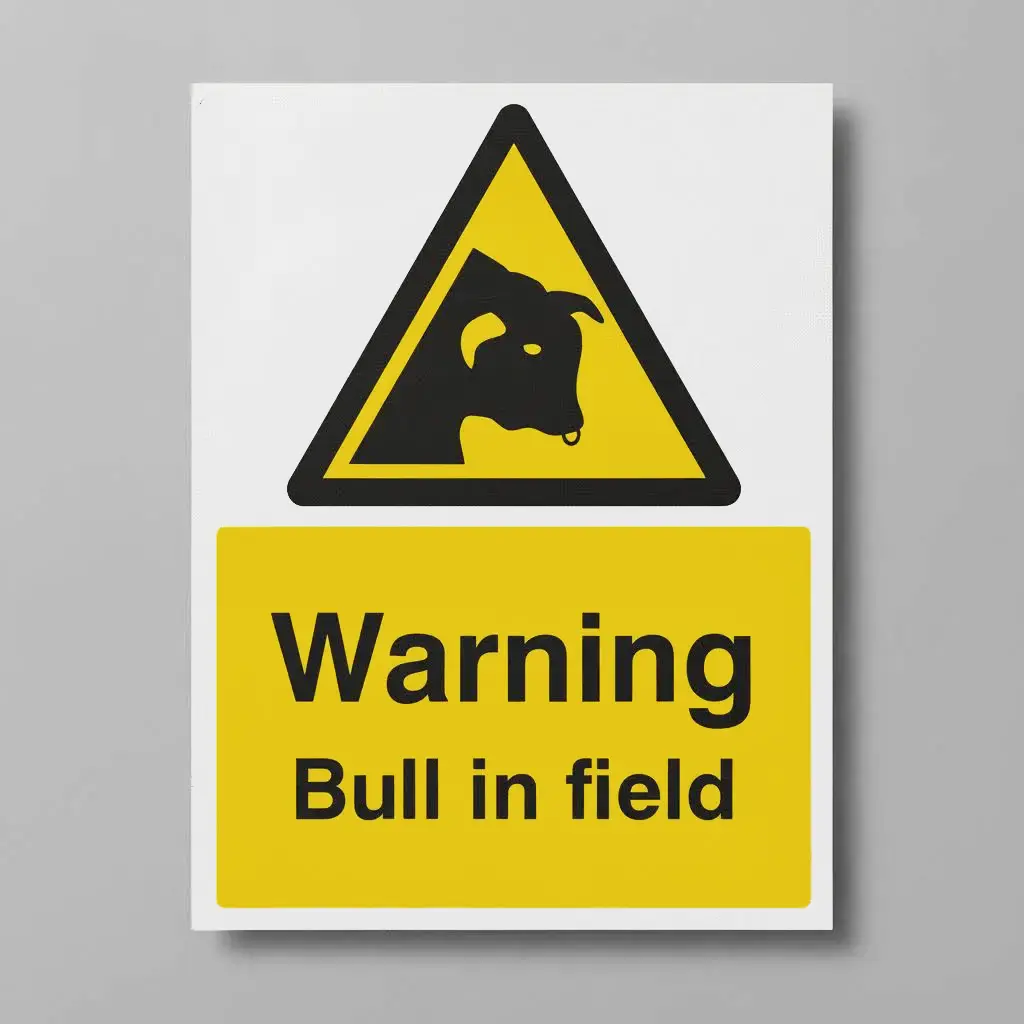
Common farm warning signs include Beware of Moving Vehicles, Agricultural Machinery, Beware of Livestock, Electric Fence, Deep Water, Slippery Surface, Overhead Power Lines, Danger – Chemicals, Pesticide Storage, and Biosecurity warning signs. Farms with grain silos, slurry pits, confined spaces, or unstable ground may also require additional warning signage to highlight these specific risks.
Warning signs should be positioned at entrances to hazardous areas, along vehicle routes, near machinery, chemical stores, livestock enclosures, water hazards, and any location where people may be exposed to danger. Many workplace warning signs follow BS EN ISO 7010, using a yellow triangular background with a black border and black pictogram to ensure hazards are recognised quickly and consistently.
The need for warning signs should be determined through a suitable farm risk assessment. Safety signage should be used alongside other control measures such as safe working procedures, staff training, physical barriers, and personal protective equipment (PPE). Regularly inspecting and maintaining farm warning signs helps ensure they remain visible, legible, and effective in communicating hazards throughout the year.
What are the penalties for inadequate farm safety signage?
Inadequate farm safety signage can increase the risk of accidents, injuries, and legal action if people are not properly warned about workplace hazards. Farms often contain risks such as moving machinery, livestock, chemicals, electrical equipment, slurry pits, and vehicle movements. Where appropriate safety signs are missing, damaged, or poorly positioned, employees, contractors, visitors, or members of the public may be exposed to unnecessary danger.
In the UK, farm operators have legal duties under the Health and Safety at Work etc. Act 1974 to protect the health and safety of employees and others who may be affected by their activities. The Health and Safety (Safety Signs and Signals) Regulations 1996 require suitable safety signs to be used where risks cannot be adequately controlled by other measures. If a farm fails to provide appropriate signage when it is needed, the Health and Safety Executive (HSE) may investigate and take enforcement action.
Depending on the circumstances, enforcement action may include improvement notices requiring safety issues to be corrected, prohibition notices stopping dangerous activities until risks are controlled, or prosecution for serious breaches of health and safety law. Courts can impose unlimited fines, and in the most serious cases involving gross negligence or fatal incidents, individuals or businesses may face additional legal consequences. A lack of appropriate signage can also increase the likelihood of civil compensation claims if someone is injured.
To reduce these risks, farms should carry out regular risk assessments, identify where safety signage is required, and ensure signs remain clearly visible, legible, and in good condition. Using recognised signage, including BS EN ISO 7010 symbols where applicable, alongside training, safe systems of work, and other control measures helps improve safety awareness and demonstrates a proactive approach to managing workplace risks.
Caledonia Signs Expert Tip: Change Signs with Seasonal and Changing Risks
Farm hazards change throughout the year, so your safety signage should too. Review signs before busy periods such as harvesting, lambing, calving, spraying, or silage making to ensure they accurately reflect current activities and risks. Temporary hazards, including moving machinery, pesticide application, livestock movements, and restricted access areas, should be clearly signed while work is taking place.
Position signs where people will see them before they encounter a hazard, such as at field entrances, farmyards, machinery sheds, chemical stores, livestock enclosures, and public rights of way. Use BS EN ISO 7010-compliant safety signs where applicable, keep them clean and clearly visible, and replace any that have become faded or damaged. Effective farm safety signage, combined with risk assessments, staff training, and safe working practices, helps protect workers, visitors, contractors, and the public throughout the year.
Who is responsible for providing farm safety signage?
Responsibility for providing farm safety signage lies with the farm owner, employer, or the person in control of the premises. In the UK, those responsible for managing a farm have a legal duty to protect the health and safety of employees, contractors, visitors, and anyone else who may be affected by farming activities. This includes identifying workplace hazards and providing appropriate safety signs where they are needed to communicate risks that cannot be adequately controlled by other measures.
Under the Health and Safety at Work etc. Act 1974, employers must take reasonably practicable steps to ensure a safe working environment. The Health and Safety (Safety Signs and Signals) Regulations 1996 require suitable safety signs to be used where they are necessary to warn people about significant hazards or provide essential safety information. The need for signage should always be based on a suitable farm risk assessment.
On farms, those responsible should ensure that warning signs are displayed for hazards such as moving agricultural machinery, livestock, electric fences, chemical storage, deep water, slurry pits, overhead power lines, and other dangerous areas. They should also provide mandatory PPE signs, prohibition signs where access needs to be restricted, and emergency information signs such as first aid and fire safety signage where appropriate.
Providing safety signs is only one part of effective farm safety management. Farm operators should regularly inspect signage to ensure it remains clean, visible, legible, and relevant to current activities. Combined with staff training, safe systems of work, maintenance, and appropriate protective measures, well-maintained safety signage helps create a safer farming environment and supports compliance with UK health and safety legislation.
Why are farming safety signs important?
Farming safety signs are important because they help identify hazards, communicate essential safety information, and reduce the risk of accidents in one of the UK's highest-risk industries. Farms contain a wide variety of dangers, including moving machinery, livestock, chemicals, electrical equipment, deep water, uneven ground, confined spaces, and vehicle movements. Clear safety signage helps employees, contractors, visitors, and members of the public recognise these risks and take appropriate precautions.
Many farm hazards are temporary or seasonal, making effective signage particularly valuable. During activities such as harvesting, spraying, silage making, or livestock handling, additional warning and information signs can alert people to changing conditions and restricted areas. Clearly displayed signs also help protect visitors who may be unfamiliar with the hazards commonly found on working farms.
Farm safety signs support employers in meeting their legal responsibilities under the Health and Safety at Work etc. Act 1974 and the Health and Safety (Safety Signs and Signals) Regulations 1996. Where risks cannot be adequately controlled through other measures, suitable safety signs provide important warnings and instructions that form part of a wider health and safety management system. Many workplace safety signs also follow BS EN ISO 7010, ensuring symbols are consistent and easily recognised.
While safety signs cannot eliminate hazards on their own, they are an essential part of reducing risk and promoting safe behaviour. When used alongside risk assessments, employee training, safe working procedures, maintenance, and appropriate personal protective equipment (PPE), farming safety signs help create a safer environment for everyone working on or visiting the farm.
Do farming safety signs need to comply with UK regulations?
Yes, farming safety signs should comply with relevant UK health and safety regulations where they are used to communicate workplace hazards, mandatory actions, emergency information, or prohibited activities. Farms are workplaces with a wide range of risks, and employers have a legal duty to provide suitable safety information where hazards cannot be adequately controlled through other measures. Using compliant safety signs helps ensure that important messages are clear, consistent, and easily understood.
The main legislation governing workplace safety signage is the Health and Safety (Safety Signs and Signals) Regulations 1996. These regulations require employers to use appropriate safety signs where there is a significant risk that cannot be avoided or reduced by other controls. Farm operators must also meet their general duties under the Health and Safety at Work etc. Act 1974 to protect employees, contractors, visitors, and others who may be affected by farming activities.
Where applicable, farming safety signs should follow BS EN ISO 7010, which sets out internationally recognised colours, shapes, and pictograms for workplace safety signs. For example, warning signs use a yellow triangle, mandatory signs use a blue circle, prohibition signs use a red circle with a diagonal bar, and safe condition signs, such as First Aid and Emergency Exit, use a green background. Using standardised symbols helps ensure safety messages are quickly recognised, even by people who may not speak English as their first language.
Safety signage should always form part of a wider risk management strategy rather than being relied upon as the only control measure. Regular risk assessments, staff training, safe working procedures, equipment maintenance, and appropriate personal protective equipment (PPE) should all work alongside clear, compliant signage to create a safer farming environment and support compliance with UK health and safety legislation.
Looking for Safety Signs?
Caledonia Signs is one of the UK's leading trade-only manufacturers of safety signage, supplying an extensive network of distributors throughout the UK and overseas. If you're an end user looking to purchase safety signs, we'd still be delighted to help. Simply contact us with details of your requirements and we'll be happy to recommend a suitable distributor in your area. Interested in becoming a distributor? Contact our team to discuss opening a trade account and gaining access to our full product range, trade pricing and online ordering portal.
There are no products to list in this category.