
Electric Vehicle Signs FAQs
Written by the Technical Team at Caledonia Signs
Last reviewed: July 2026
Welcome to the Caledonia Signs Electric Vehicle (EV) Signs Knowledge Centre
The Electric Vehicle (EV) Signs Knowledge Centre provides clear answers to common questions about electric vehicle signage, charging point signs, and safety information for EV charging environments. As electric vehicles become increasingly common in workplaces, car parks, commercial premises, and public areas, clear and effective signage plays an important role in helping users understand charging locations, restrictions, and safety requirements.
Understanding EV safety signs can raise many questions, including what signs are required at charging points, whether EV signs are a legal requirement, where they should be displayed, and who is responsible for providing them. Organisations need to consider the risks associated with electric vehicle charging and ensure that suitable information and warnings are available where needed.
This Knowledge Centre answers frequently asked questions about electric vehicle signs, including charging station signage, parking signs, warning signs, reflective options, UK safety responsibilities, legal considerations, and best practices for managing EV charging areas. Whether you manage an office, workplace, fleet depot, car park, service centre, or commercial facility, this guide provides practical information to help you make informed decisions about EV safety signage.
Effective EV signage forms part of a wider approach to managing electric vehicle safety. By using clear signs, maintaining charging equipment, providing appropriate user guidance, and carrying out suitable risk assessments, organisations can help create safer charging environments while supporting the continued growth of electric vehicle technology.
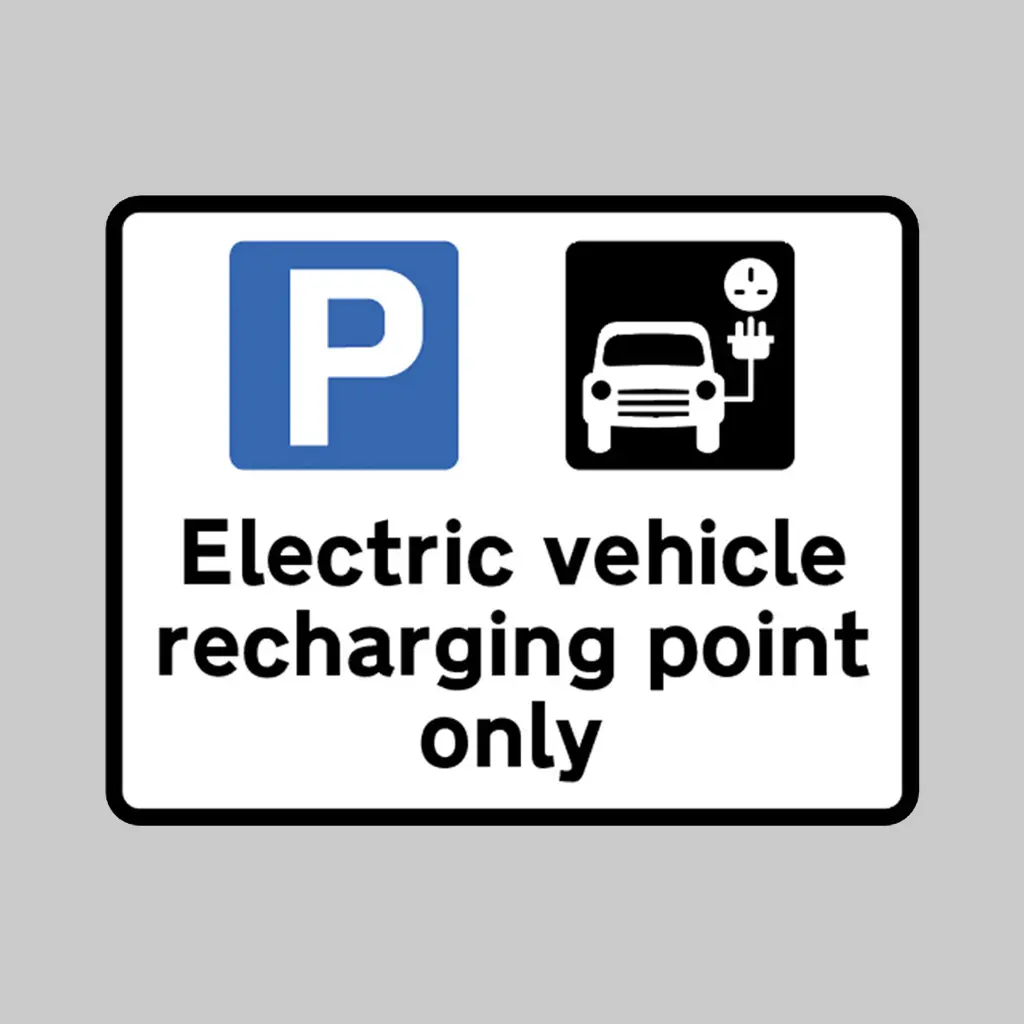
What electric vehicle (EV) safety signs are required?
Electric vehicle (EV) safety signs help communicate important information about charging areas, vehicle hazards, and safe working practices in locations where electric vehicles are present. The exact signs required will depend on the type of site, the activities taking place, and the risks identified through a suitable risk assessment.
Common EV safety signs include EV charging point signs, electric vehicle parking signs, no smoking signs, and warning signs identifying electrical hazards. Charging areas may also require information signs showing charging instructions, authorised use, parking restrictions, or guidance for users. Where maintenance or repair work is carried out on electric vehicles, additional warning and hazard signage may be needed to highlight risks associated with high-voltage systems.
Workplaces such as car parks, offices, warehouses, fleet depots, garages, and service centres should consider the risks associated with EV charging and storage. Signage may be required to identify charging locations, restrict access to authorised personnel, highlight emergency procedures, and help prevent unsafe activities around charging equipment.
EV safety signs should be clear, visible, and suitable for the environment where they are installed. Organisations should use signage as part of a wider safety approach that includes risk assessments, employee training, safe operating procedures, and appropriate maintenance of charging equipment to help protect employees, visitors, and the public.
Why are electric vehicle safety signs important?
Electric vehicle (EV) safety signs are important because they help communicate potential hazards, provide clear instructions, and improve awareness around electric vehicles and charging areas. As the use of electric vehicles continues to increase in workplaces, car parks, commercial sites, and service environments, effective signage helps people understand how to use these areas safely.
EVs and charging equipment can present specific risks, including electrical hazards, high-voltage systems, battery-related risks, and restricted access requirements. Clear safety signs help identify charging points, highlight areas where caution is required, and provide important information to employees, contractors, visitors, and emergency responders.
Safety signage also helps organisations manage EV-related activities by clearly marking charging locations, parking requirements, emergency information, and areas where additional controls may apply. Well-positioned signs can reduce confusion, prevent incorrect use of equipment, and support safer behaviour around electric vehicle infrastructure.
Although safety signs are only one part of a wider risk management approach, they play an important role alongside training, safe working procedures, equipment inspections, and emergency planning. Using appropriate EV safety signs helps businesses create safer environments while supporting the continued adoption of electric vehicle technology.
What signs should be displayed at EV charging points?
Signs displayed at EV charging points should provide clear information about the charging area, safe use of the equipment, and any potential hazards. The exact signage required will depend on the location, type of charging equipment, and risks identified through a suitable assessment, but effective signs help users understand how to use charging facilities safely.
Common EV charging point signs include electric vehicle charging point signs, EV parking signs, and instruction signs explaining how to operate the charger or any restrictions that apply. Where parking spaces are reserved for charging vehicles, clear markings and signs can help prevent unauthorised parking and ensure charging bays remain available for intended users.
Warning signs may also be required where there are electrical hazards, restricted access areas, or specific safety procedures that need to be followed. Additional information signs may include emergency contact details, guidance on reporting faults, safe operating instructions, or reminders not to use damaged charging equipment.
EV charging point signage should be clearly visible, easy to understand, and positioned where users can see it before and during use. Well-designed signage, combined with regular equipment checks, maintenance, and user guidance, helps create safer charging environments for employees, visitors, and members of the public.
Caledonia Signs Expert Tip: Provide the Most Guidance
The most effective electric vehicle (EV) signs are positioned where drivers, employees, and visitors can see them before they need the information. Place signs at charging point entrances, parking bays, access routes, and near charging equipment so users can quickly identify charging locations, understand restrictions, and follow safe operating procedures.
Make sure EV signs remain clear, visible, and easy to understand by regularly checking for damage, fading, dirt, or obstructions. A sign that cannot be easily seen or read may not provide the intended safety information and could lead to confusion or incorrect use of charging facilities.
Use EV signage as part of a wider safety approach that includes clear charging instructions, equipment maintenance, user awareness, and risk assessments. Well-planned signage helps prevent misuse of charging areas, improves safety awareness, and supports the safe operation of electric vehicle infrastructure.
Are EV charging station signs a legal requirement?
EV charging station signs are not all specifically required by UK law; however, organisations have a responsibility to manage risks associated with electric vehicle charging areas and provide suitable information, instruction, and warnings where necessary. The need for signage should be determined through a suitable risk assessment and consideration of the location, equipment, and users of the charging facility.
Where EV charging points are installed in workplaces, car parks, commercial premises, or public areas, clear signage is considered good practice to identify charging bays, provide instructions, and highlight any safety information users need to know. Signs can help prevent misuse of charging spaces, improve awareness, and support the safe operation of charging equipment.
UK health and safety legislation, including the Health and Safety at Work etc. Act 1974, places general duties on employers and those responsible for premises to protect employees and others who may be affected by their activities. Where hazards exist, appropriate warning and information signs may form part of the measures used to control those risks.
Although there is no single law requiring every EV charging point to display a specific set of signs, using clear and appropriate EV signage helps organisations demonstrate good safety management. Effective signs should be combined with suitable installation, maintenance, user instructions, and emergency procedures to support a safe charging environment.
Should EV charging signs be reflective?
EV charging signs do not always need to be reflective, but using reflective signage can be beneficial in locations where visibility in low-light conditions is important. The suitability of reflective signs depends on the environment, the location of the charging point, and the risks identified through a suitable assessment.
Reflective EV charging signs can improve visibility in areas such as outdoor car parks, multi-storey car parks, fleet depots, and locations used during darker hours. They can help drivers, pedestrians, and maintenance teams identify charging points more easily, improving awareness and reducing the likelihood of confusion or accidents.
For indoor charging areas or well-lit locations, standard non-reflective signs may be suitable if they remain clearly visible and easy to read. The key requirement is that safety information, charging instructions, and warnings can be understood quickly by the people who need to see them.
When choosing EV charging signs, organisations should consider factors such as lighting levels, viewing distance, weather exposure, and site conditions. Selecting signage that remains clear and visible in the intended environment helps support safer electric vehicle charging areas.
Who is responsible for providing EV safety signage?
Responsibility for providing EV safety signage usually sits with the person or organisation responsible for the premises, workplace, or electric vehicle charging installation. This may include employers, site owners, facilities managers, landlords, fleet operators, or charging point operators, depending on who controls the area and the associated risks.
Employers and those responsible for workplaces have a duty to protect employees, contractors, visitors, and other users who may be affected by workplace activities. Under UK health and safety requirements, they must assess risks and provide suitable information, instruction, and warnings where necessary. EV safety signs can form part of these control measures by highlighting charging locations, hazards, and safe operating requirements.
The installer or supplier of EV charging equipment may provide guidance on recommended signage, but the responsibility for ensuring the site has appropriate safety information remains with the organisation controlling the premises. A suitable risk assessment should determine what signage is needed based on factors such as the type of charger, location, access arrangements, and the people using the facility.
Regular checks should be carried out to ensure EV safety signs remain visible, accurate, and in good condition. Clear and well-maintained signage, combined with safe working procedures, user instructions, and equipment maintenance, helps organisations manage EV-related risks effectively.
Looking for Safety Signs?
Caledonia Signs is one of the UK's leading trade-only manufacturers of safety signage, supplying an extensive network of distributors throughout the UK and overseas. If you're an end user looking to purchase safety signs, we'd still be delighted to help. Simply contact us with details of your requirements and we'll be happy to recommend a suitable distributor in your area. Interested in becoming a distributor? Contact our team to discuss opening a trade account and gaining access to our full product range, trade pricing and online ordering portal.
There are no products to list in this category.