
Car Parking Signs FAQs
Written by the Technical Team at Caledonia Signs
Last reviewed: July 2026
Welcome to the Caledonia Signs Car Park Signs Knowledge Centre
This Car Park Safety Signs FAQs page answers the most common questions about car park signage, including what signs are required, whether safety signs are a legal requirement, what speed limits should be used, entrance sign requirements, visibility, materials, and best practices. Whether you manage a workplace car park, commercial parking area, private road, or public-access facility, our expert guidance will help you understand your responsibilities and choose the right signs to keep people safe.
Car park safety signs play an important role in managing vehicle and pedestrian movement, improving safety, and ensuring that important instructions are clearly communicated to everyone using the area. From private car parks and workplace parking areas to retail parks, industrial estates, hospitals, and commercial premises, the right signage helps reduce risks, prevent accidents, and create a safer environment for drivers, pedestrians, employees, and visitors.
Understanding which car park safety signs are required can be challenging, as the signage needed will depend on factors such as the size and layout of the car park, the number of users, traffic flow, and any hazards identified through a suitable risk assessment. Questions about speed limit signs, entrance signage, legal requirements, visibility, materials, and the correct placement of signs are important considerations for anyone responsible for managing a car park.
In the UK, car park signage should provide clear and effective information to help control risks and support safe movement around the site. While private car parks may not always follow the same requirements as public highways, those responsible for the area have a duty to manage hazards and provide appropriate safety measures. Choosing durable materials, ensuring good visibility, and maintaining signs properly all contribute to effective car park safety management.
What speed limit signs should be used in a car park?
The speed limit signs used in a car park should be appropriate for the layout, size, traffic levels, and risks identified within the area. Unlike public roads, private car parks do not always have legally prescribed speed limits, but suitable speed control measures should be introduced where there is a risk of collisions between vehicles, pedestrians, or other site users.
Most private car parks use 5 mph or 10 mph speed limit signs to help reduce vehicle speeds and improve safety. A 5 mph limit is commonly used in busy car parks with high pedestrian activity, narrow lanes, poor visibility, or areas where vehicles and pedestrians share the same space. A 10 mph limit may be suitable for larger car parks with clearer traffic routes and better separation between vehicles and pedestrians.
Speed limit signs should be clearly visible at car park entrances and repeated throughout the area where necessary, particularly near pedestrian crossings, junctions, blind corners, loading areas, and other locations where drivers need to reduce speed. Additional traffic management signs, such as pedestrian crossing signs, one-way system signs, and give way signs, may also be required depending on the layout and risks present.
When choosing car park speed limit signs, businesses and site operators should consider factors such as vehicle movements, pedestrian numbers, visibility, lighting, road surface conditions, and the results of a suitable risk assessment. Signs should be easy to understand, positioned where drivers have enough time to react, and maintained so they remain visible and effective.
Using appropriate speed limit signage in private car parks helps create safer environments for drivers, employees, visitors, and pedestrians while supporting good traffic management practices and reducing the risk of accidents.
What signs are required at a car park entrance?
Car park entrance signs are important for providing drivers and pedestrians with clear information before they enter the area. The signs required will depend on the type of car park, how it is used, the number of vehicles and pedestrians, and any hazards identified through a suitable risk assessment. While private car parks do not always have the same legal requirements as public roads, appropriate signage helps improve safety, manage traffic flow, and communicate important rules.
Common signs displayed at a car park entrance include car park identification signs, speed limit signs, and directional signs to guide drivers safely into the area. Where access is restricted, signs such as Private Car Park, Authorised Vehicles Only, Permit Holders Only, or No Unauthorised Access may be required to control who can enter.
Car park entrances may also need signs that communicate important safety information, including pedestrian crossing points, one-way traffic systems, height restrictions, delivery access instructions, and parking restrictions. Where there are specific risks, warning signs may be needed to highlight hazards such as moving vehicles, blind entrances, loading areas, or changes in road surface.
In workplaces, commercial premises, hospitals, schools, industrial estates, and retail car parks, entrance signage should also help separate vehicles and pedestrians and provide clear instructions for safe movement around the site. Disabled parking information, customer parking rules, and enforcement notices may also be displayed where relevant.
Car park entrance signs should be clearly visible, easy to understand, correctly positioned, and maintained in good condition. Regular reviews should be carried out to ensure signage remains suitable as traffic patterns, site layouts, and safety requirements change. Effective entrance signage helps drivers understand the rules immediately and supports a safer environment for everyone using the car park.
Are car park safety signs a legal requirement?
Car park safety signs can be a legal requirement where they are needed to manage risks and protect people using the area. In the UK, there is no single set of rules requiring every private car park to display a specific list of signs, but those responsible for managing a car park have a duty to identify hazards and take suitable steps to keep drivers, pedestrians, employees, and visitors safe.
Under workplace health and safety legislation, including the Health and Safety at Work etc. Act 1974 and the Management of Health and Safety at Work Regulations 1999, employers and those in control of premises must assess risks and implement appropriate safety measures. Where vehicle movements, pedestrian routes, restricted areas, or other hazards create a risk, suitable car park signage may be required as part of effective traffic management.
Signs that may be needed include speed limit signs, pedestrian crossing signs, one-way system signs, no entry signs, parking restriction signs, disabled parking signs, height restriction signs, and warning signs for hazards such as vehicle movements or loading areas. The exact signage required will depend on the layout, usage, and risks associated with the car park.
For public access car parks, commercial premises, workplaces, and industrial sites, clear and well-maintained signage helps ensure users understand parking rules, traffic routes, and safety instructions. Signs should be positioned where they can be easily seen, use clear symbols and wording, and be reviewed regularly to ensure they remain accurate and effective.
Although not every car park requires the same signs, providing appropriate safety signage is an important part of managing vehicle and pedestrian risks. A suitable risk assessment will help determine which signs are necessary to create a safe and well-managed car park environment.
Caledonia Signs Expert Tip: Visiblilty is Key
The most effective car park signs are placed where people have enough time to see, understand, and act on the information provided. Speed limit signs should be positioned near entrances, warning signs should appear before hazards, and pedestrian signs should clearly mark safe walking routes and crossing points.
Regularly check your car park signage to ensure signs are clean, undamaged, easy to read, and still relevant to the current layout and traffic flow. Faded, hidden, or outdated signs can create confusion and reduce their effectiveness.
Choosing the right signs, placing them in the correct locations, and maintaining them properly helps improve safety, reduce the risk of accidents, and create a safer environment for drivers, pedestrians, employees, and visitors.
Why are car park safety signs important?
Car park safety signs are important because they help manage the movement of vehicles and pedestrians, reduce the risk of accidents, and provide clear instructions to everyone using the area. Car parks often involve a mixture of moving vehicles, pedestrians, deliveries, and changing conditions, making effective signage essential for maintaining a safe environment.
Safety signs help drivers and pedestrians understand important information such as speed limits, traffic routes, parking restrictions, pedestrian crossing points, and potential hazards. Clear signage can help prevent collisions by guiding vehicles safely, highlighting areas where extra care is required, and separating pedestrian walkways from vehicle routes.
For businesses, workplaces, retail premises, hospitals, schools, and other private car parks, suitable signage also supports health and safety responsibilities by helping to control risks identified through a risk assessment. Signs such as speed limit notices, warning signs, one-way system signs, and access restriction signs help communicate rules and expectations before problems occur.
Effective car park safety signs should be clearly visible, easy to understand, correctly positioned, and maintained in good condition. Well-designed and properly installed signage improves traffic flow, reduces confusion, and helps create a safer environment for employees, visitors, drivers, and pedestrians.
What car park safety signs are required?
The car park safety signs required will depend on the size, layout, location, and use of the car park, as well as the risks identified through a suitable risk assessment. In the UK, there is no single list of signs that must be installed in every private car park, but those responsible for the area must take reasonable steps to manage risks and provide clear safety information for drivers and pedestrians.
Common car park safety signs include speed limit signs, which help control vehicle speeds and reduce the risk of collisions, and directional signs that guide drivers around the car park safely. Parking restriction signs, such as No Parking, Permit Holders Only, or Disabled Parking signs, help manage parking arrangements and ensure spaces are used correctly.
Where vehicles and pedestrians share the same area, additional signs may be required, including pedestrian crossing signs, walkway signs, keep clear notices, and vehicle movement warning signs. Car parks with specific hazards may also need warning signs for areas such as loading bays, height restrictions, blind corners, uneven surfaces, or restricted access points.
Commercial car parks, workplace car parks, industrial estates, hospitals, schools, and retail premises may require additional traffic management signage to control vehicle flow and protect users. This may include one-way system signs, no entry signs, delivery access signs, emergency access signs, and fire route signs where appropriate.
All car park safety signs should be clearly visible, easy to understand, correctly positioned, and maintained in good condition. The most effective signage strategy is based on a risk assessment that considers vehicle movements, pedestrian activity, site layout, and changing conditions to ensure the right signs are provided in the right locations.
What materials are best for outdoor car park signs?
The best materials for outdoor car park signs are those that can withstand changing weather conditions, remain clearly visible, and maintain their appearance over a long service life. Car park signs are exposed to rain, wind, sunlight, temperature changes, and potential impacts, so choosing a durable material is essential for maintaining effective safety communication.
Aluminium is one of the most commonly used materials for outdoor car park signs because it is lightweight, strong, rust-resistant, and suitable for long-term outdoor use. Aluminium signs are often used for traffic signs, parking restrictions, warning signs, and directional signage where durability and weather resistance are important.
Composite materials, such as aluminium composite panels, are also popular for car park signage. They provide a rigid, lightweight solution with good resistance to corrosion and are suitable for a wide range of applications, including private car parks, business parks, retail areas, and industrial sites.
For temporary car park signs or situations where signs may need to be moved or updated regularly, corrugated plastic or rigid PVC signs can be a practical option. These materials are lightweight and cost-effective, although they may not be as durable as aluminium for permanent outdoor installations.
Visibility is also an important consideration when selecting car park sign materials. Reflective finishes or reflective vinyl can improve visibility in low-light conditions and when illuminated by vehicle headlights, helping drivers and pedestrians identify important information at night or during poor weather.
Regardless of the material chosen, outdoor car park signs should be correctly installed, regularly inspected, and replaced if they become faded, damaged, or difficult to read. Selecting a suitable material helps ensure signs remain effective, improve safety, and continue to communicate essential information throughout their lifespan.
Looking for Safety Signs?
Caledonia Signs is one of the UK's leading trade-only manufacturers of safety signage, supplying an extensive network of distributors throughout the UK and overseas. If you're an end user looking to purchase safety signs, we'd still be delighted to help. Simply contact us with details of your requirements and we'll be happy to recommend a suitable distributor in your area. Interested in becoming a distributor? Contact our team to discuss opening a trade account and gaining access to our full product range, trade pricing and online ordering portal.

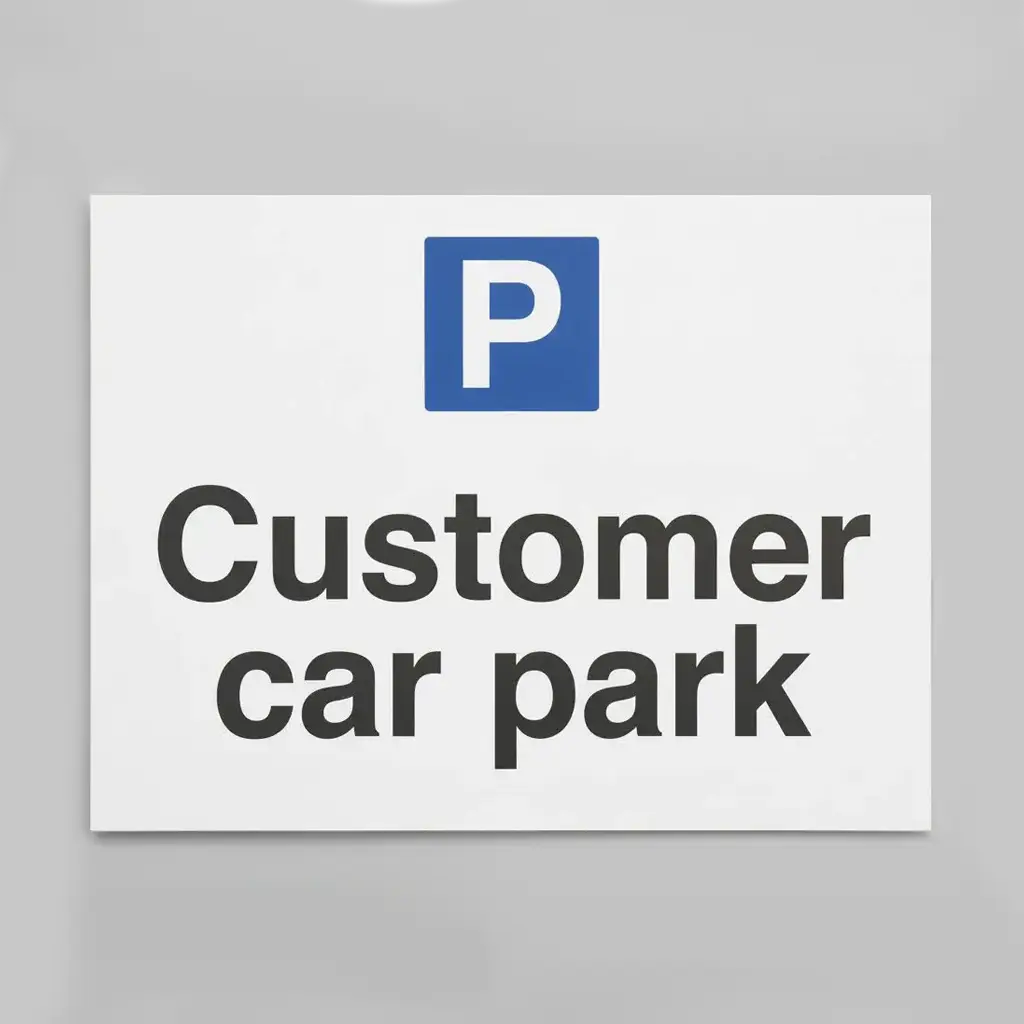
Customer Car Park Safety Signs
Designate parking spaces that are specifically reserved for customers of a business or facility. These signs are typically placed at the entrance to p..
Symbol: TSRGD Diagram: 801 - Parking Place Signs
Catalogue Page: 107 (EDITION 26)
Staff Car Park Safety Signs
Used to designate parking spaces that are reserved specifically for employees of a business or organisation. These signs are typically placed at the e..
Symbol: TSRGD Diagram: 801 - Parking Place Signs
Catalogue Page: 107 (EDITION 26)
Visitor Parking Safety Signs
Used to designate parking spaces specifically reserved for visitors to a building or facility. These signs are typically placed at the entrance of par..
Symbol: Safety Product
Catalogue Page: 107 (EDITION 26)
Director Parking Safety Signs
Used to reserve parking spaces specifically for directors or senior management within an organisation. These signs are typically placed at the entranc..
Symbol: TSRGD Diagram: 801 - Parking Place Signs
Catalogue Page: 107 (EDITION 26)
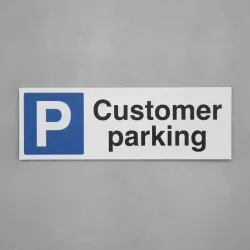
Customer Parking Safety Signs
Used to designate parking spaces specifically reserved for customers of a business or facility. These signs are typically placed at the entrance to a ..
Symbol: TSRGD Diagram: 801 - Parking Place Signs
Catalogue Page: 107 (EDITION 26)
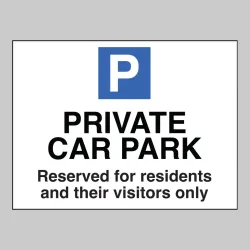
Private Car Park - Use of Residents and Visitors Only Safety Signs
A Private Car Park Use of Residents and Visitors Only sign is important for clearly indicating that the parking area is restricted to authorised indiv..
Symbol: TSRGD Diagram: 801 - Parking Place Signs
Catalogue Page: 85 (EDITION 26)