
Braille & Tactile Signs FAQs
Written by the Technical Team at Caledonia Signs
Last reviewed: July 2026
Welcome to the Caledonia Signs Braille & Tactile Signs Knowledge Centre
This Braille & Tactile Signs Knowledge Centre provides clear answers to common questions about accessible signage and how it helps create safer, more inclusive environments. Braille and tactile signs allow people who are blind or partially sighted to access important information through touch, helping them identify rooms, facilities, directions, and safety information independently in workplaces, public buildings, and shared spaces.
Understanding the requirements for Braille and tactile signage can raise many questions, including what these signs are, who needs them, where they should be installed, how they differ from standard signs, and what accessibility standards apply. Choosing the correct signage, using accurate Braille, and positioning signs appropriately are important considerations for creating accessible environments that support the needs of all users.
This Knowledge Centre answers frequently asked questions about Braille and tactile signs, including UK regulations, the Equality Act 2010, accessibility guidance, installation locations, differences between Braille and tactile elements, design considerations, and best practices. Whether you manage an office, healthcare facility, school, hotel, commercial building, or public space, this guide provides practical information to help you understand and implement effective accessible signage.
Accessible signage is an important part of inclusive design and should work alongside other measures such as clear building layouts, accessible routes, effective lighting, and wayfinding systems. By providing well-designed, correctly positioned, and properly maintained Braille and tactile signs, organisations can improve independence, safety, and accessibility for people with visual impairments while creating more welcoming environments for everyone.
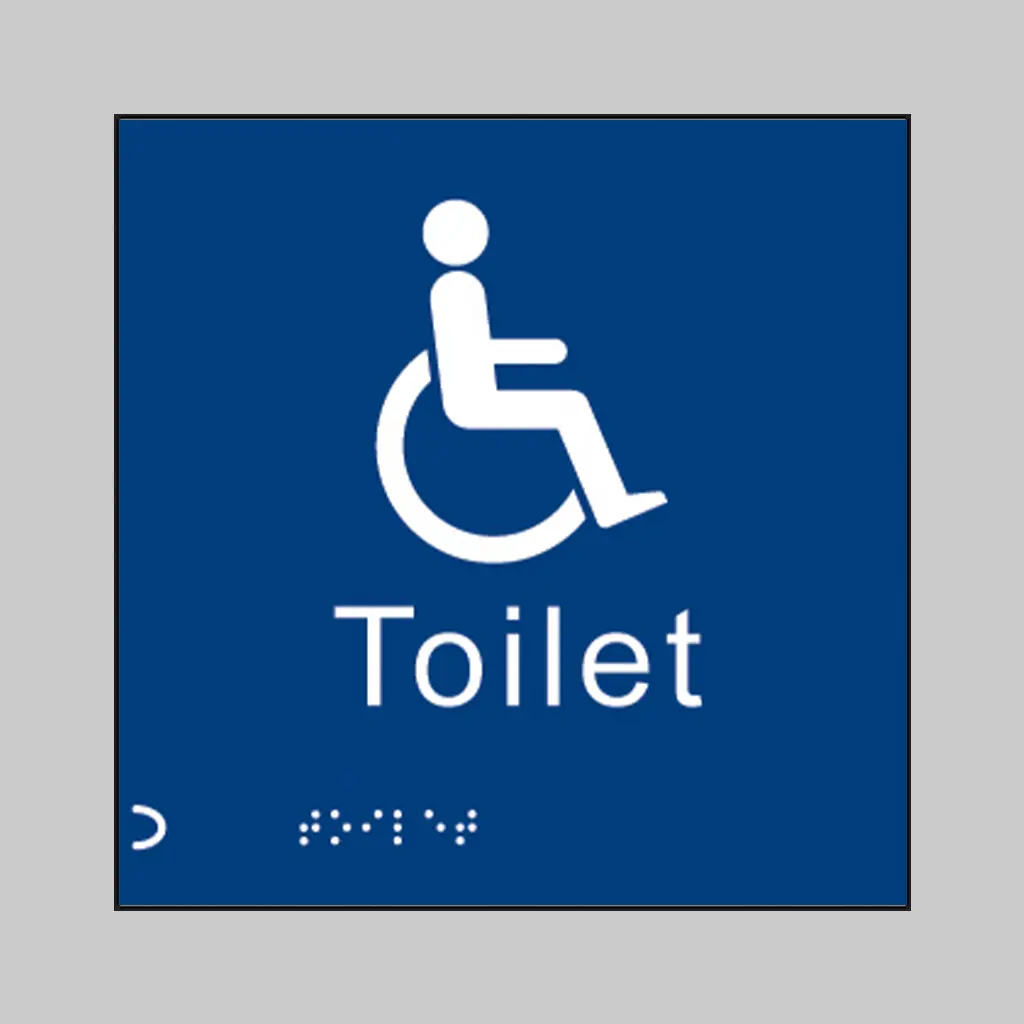
Why are Braille and tactile signs important?
Braille and tactile signs are important because they help people with visual impairments access essential information independently and safely. By using raised characters, tactile symbols, and Braille lettering, these signs allow people who are blind or partially sighted to identify rooms, facilities, directions, and safety information through touch. This improves accessibility and helps create more inclusive workplaces and public environments.
Clear tactile signage is particularly valuable in locations where people need to navigate unfamiliar buildings, such as offices, hospitals, schools, transport facilities, hotels, retail premises, and public buildings. Signs identifying toilets, lifts, meeting rooms, stairways, accessible facilities, and other important areas help visually impaired users move around buildings with greater confidence and independence.
Braille and tactile signs also support organisations in meeting their responsibilities under UK accessibility legislation, including the Equality Act 2010, which requires reasonable steps to prevent disabled people from being placed at a substantial disadvantage. Providing suitable accessible signage is an important part of creating environments that are usable for everyone.
When correctly designed, installed, and maintained, Braille and tactile signs improve communication, safety, and inclusivity. Using clear raised lettering, appropriate Braille, suitable contrast, and consistent placement helps ensure that important information can be accessed by as many people as possible, supporting safer and more accessible buildings.
What regulations apply to Braille and tactile signage in the UK?
In the UK, Braille and tactile signage is mainly influenced by accessibility legislation and design standards that help ensure buildings and facilities are accessible to people with visual impairments. While there is not one single law that requires every sign to include Braille or tactile features, organisations have responsibilities to provide accessible information where it is considered a reasonable adjustment.
The key legislation is the Equality Act 2010, which requires service providers, employers, and organisations responsible for buildings to make reasonable adjustments so that disabled people are not placed at a substantial disadvantage. This can include providing accessible signage, such as tactile lettering, raised symbols, and Braille, where appropriate for the building and its users.
Building design guidance, including Approved Document M (Access to and use of buildings), provides recommendations for making buildings accessible. Standards such as BS 8300, which covers the design of accessible and inclusive environments, provide guidance on features such as accessible signs, visual contrast, character size, positioning, and tactile information to help people navigate buildings safely.
Braille and tactile signs should be designed with the needs of users in mind, including correct Braille format, raised lettering, suitable contrast, and appropriate installation height and location. By following recognised accessibility guidance and considering the needs of people with visual impairments, organisations can improve inclusivity, support legal responsibilities, and create safer environments for everyone.
Where should Braille and tactile safety signs be displayed?
Braille and tactile safety signs should be displayed in locations where people need to identify important rooms, facilities, or safety information through touch. They are particularly important at points where visual information alone may not be accessible to people who are blind or partially sighted. Signs should be positioned consistently, clearly, and where users can easily locate and read them by touch.
Common locations for Braille and tactile signs include toilet entrances, accessible facilities, lift entrances, stairways, meeting rooms, office doors, reception areas, emergency information points, and other rooms or areas that require identification. In public buildings, workplaces, healthcare facilities, schools, hotels, and transport environments, tactile signage helps people navigate independently and confidently.
Room identification signs are usually placed beside doors rather than on the door itself, allowing users to find the sign while standing in a consistent position. Signs should be installed at a suitable height, in an accessible location, and positioned where they are not blocked by furniture, open doors, or other obstacles. Consistent placement throughout a building helps users know where to look for information.
The exact requirements for placement will depend on the type of building, the needs of its users, and relevant accessibility guidance. By installing Braille and tactile signs in logical, easy-to-reach locations and maintaining them in good condition, organisations can improve accessibility, support safer navigation, and create more inclusive environments for everyone.
Caledonia Signs Expert Tip: Consistent Throughout the Building
For Braille and tactile signs to be effective, install them in predictable and consistent locations so that blind and partially sighted people know where to find important information. Signs are typically positioned beside doors rather than on moving door surfaces, allowing users to locate them easily before entering a room or facility.
Use clear raised lettering, accurate Braille, good colour contrast, and appropriate sizing to make signs easier to identify by both touch and sight. Regularly check that signs remain clean, secure, and unobstructed, especially in busy areas such as offices, hospitals, schools, hotels, and public buildings.
Remember that accessible signage is most effective when it forms part of a wider inclusive design approach, including clear layouts, good lighting, accessible routes, and effective wayfinding. Well-designed Braille and tactile signs help create safer, more independent, and more welcoming environments for everyone.
What is the difference between Braille signs and tactile signs?
Braille signs use a system of raised dots that can be read by touch by people who are blind or have severe visual impairments. Tactile signs use raised letters, numbers, symbols, or pictograms that can be felt with the fingertips, allowing users to identify information through touch even if they do not read Braille.
Braille is a specific written language system made up of patterns of raised dots that represent letters, numbers, and words. It is often included on signs alongside raised text to provide additional accessibility. Examples include room identification signs, lift buttons, toilet signs, and facility signs where users may need to confirm a location independently.
Tactile signs are broader and include any signage that uses raised features that can be felt. These may include raised lettering, embossed symbols, directional arrows, and tactile pictograms. They are useful for people with limited vision as well as those who rely on touch rather than sight to understand their surroundings.
In many accessible environments, the most effective signage combines both Braille and tactile elements, providing information that can be understood by a wider range of users. By using accurate Braille, clear raised characters, suitable contrast, and consistent placement, organisations can improve accessibility and help create safer, more inclusive workplaces and public spaces.
Who needs Braille and tactile signs?
Braille and tactile signs are primarily needed by people who are blind or partially sighted and rely on touch to access important information about their surroundings. These signs help users identify rooms, facilities, and safety information independently, improving their ability to navigate buildings safely and confidently without relying solely on visual signs or assistance from others.
People who benefit from Braille and tactile signage include those with complete sight loss, reduced vision, age-related visual impairment, or conditions that make reading standard signs difficult. Tactile features such as raised lettering, symbols, and Braille provide an alternative way to access information in workplaces, public buildings, healthcare facilities, educational establishments, transport locations, and commercial premises.
Organisations responsible for buildings and services should consider the needs of disabled users when planning signage. Under the Equality Act 2010, employers, service providers, and organisations may need to make reasonable adjustments to ensure disabled people are not placed at a disadvantage. Providing accessible signage can be an important part of meeting these responsibilities.
Braille and tactile signs are not only beneficial for people with visual impairments; they also support inclusive design by making buildings easier to understand and navigate for a wider range of users. When combined with clear layouts, accessible routes, good lighting, and effective wayfinding, tactile signage helps create safer and more welcoming environments for everyone.
Do tactile signs need to comply with accessibility standards?
Yes, tactile signs should be designed in line with recognised accessibility standards and guidance to ensure they are effective for people who are blind or partially sighted. While there is not a single UK law that requires every tactile sign to follow one specific format, organisations have responsibilities to provide accessible information and make reasonable adjustments where necessary.
The Equality Act 2010 places duties on employers, service providers, and organisations responsible for buildings to consider the needs of disabled people and remove barriers where reasonably possible. Providing suitable tactile signage can form part of these reasonable adjustments by helping visually impaired users identify rooms, facilities, and important information independently.
Accessibility guidance such as BS 8300 and Approved Document M (Access to and use of buildings) provides recommendations for inclusive signage design, including features such as raised lettering, tactile symbols, Braille, colour contrast, character size, and suitable positioning. Following recognised guidance helps ensure signs are easier to locate, read by touch, and understand.
Compliant tactile signage should use accurate Braille, clear raised characters, appropriate contrast, and consistent installation methods. Regular checks should be carried out to ensure signs remain secure, clean, visible, and accessible. By following recognised accessibility standards, organisations can improve inclusion, support safer navigation, and create environments that are easier for everyone to use.
Looking for Safety Signs?
Caledonia Signs is one of the UK's leading trade-only manufacturers of safety signage, supplying an extensive network of distributors throughout the UK and overseas. If you're an end user looking to purchase safety signs, we'd still be delighted to help. Simply contact us with details of your requirements and we'll be happy to recommend a suitable distributor in your area. Interested in becoming a distributor? Contact our team to discuss opening a trade account and gaining access to our full product range, trade pricing and online ordering portal.
There are no products to list in this category.